Airbus invests €900 million near Toulouse to boost engine pylon production and prepare for 2030
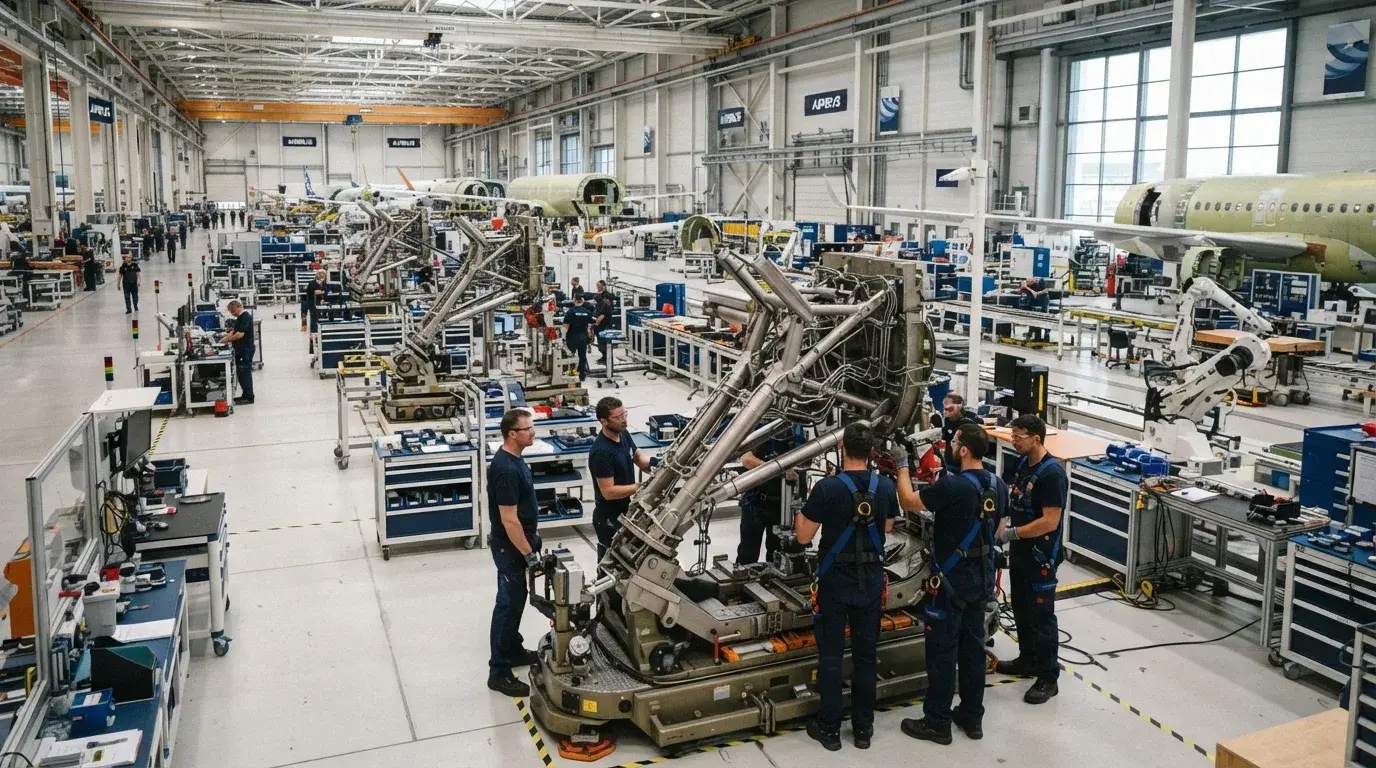
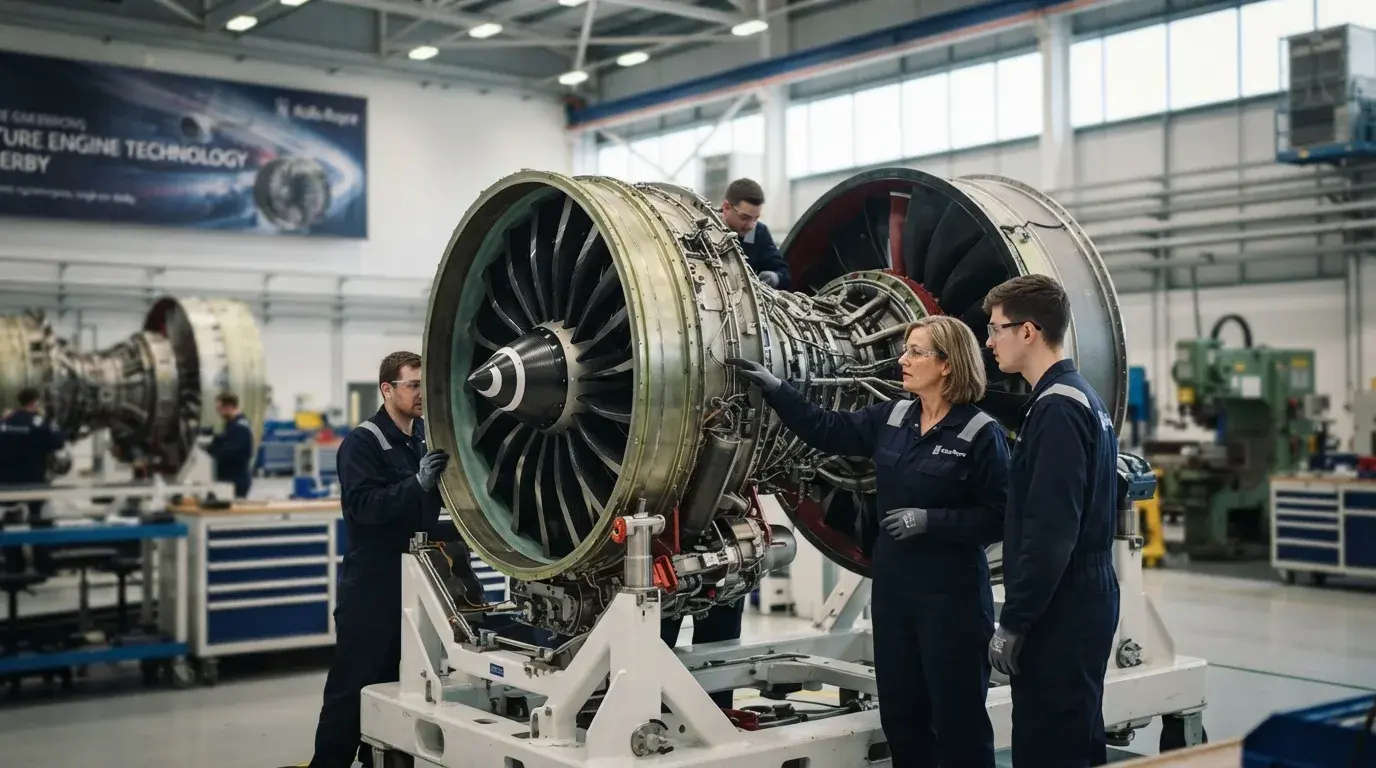
Near Toulouse, Airbus is preparing an industrial revolution. The European aircraft manufacturer has unveiled a colossal project in Cornebarrieu, just a few kilometers from Toulouse-Blagnac Airport: a new factory dedicated to producing engine pylons, critical yet often overlooked components that connect engines to aircraft wings. Dubbed « Saint-Éloi du futur », the site could represent an investment of up to €900 million and employ up to 3,500 workers by 2037.
The goal is clear: to strengthen Airbus’ production capacity beyond 2030, as current assembly lines show signs of strain. The historic Saint-Éloi site, in Toulouse’s Minimes district, is now saturated. « The historic Toulouse plant is saturated, and there is no room for us to grow at this site », explains Christophe Agostini, Director of Industrial Sites for Airbus Commercial Aircraft. The saturation of current infrastructure threatens the manufacturer’s ability to meet demand, particularly for flagship programs like the A320, A330, and A350.
The choice of Cornebarrieu is no coincidence. This 48-hectare plot, currently agricultural, would allow Airbus to bring production closer to key local industrial flows, including the Airlog logistics center and final assembly lines. The project is designed as complementary, not an immediate replacement for Saint-Éloi. « Our goal is to maintain engine pylon activity at this site, which we have no intention of stopping in the foreseeable future, at least for the next decade », Agostini adds. Some design and research activities could even be transferred to the new site, while production of A220 engine pylons—currently manufactured in the U.S.—would gradually be relocated to Toulouse.
The industrial timeline is ambitious. A first phase, slated to begin in March 2029, could see the first buildings operational by June 2031. Capacity would then ramp up progressively until 2037. The project is part of a broader transformation of Toulouse’s industrial tool, where Airbus already inaugurated a second A320 family assembly line at the Jean-Luc-Lagardère site in June 2026. This new engine pylon factory is primarily aimed at anticipating the needs of the next decade, as competition with Boeing and Comac intensifies.
Airbus presents this initiative as a strategic lever to maintain its technological and industrial edge. The manufacturer notes that the engine pylon is a major structural component, whose production must be secured to support growth in programs like the A320neo, A330neo, and A350. « This is a strategic project for Airbus to maintain our lead over competitors. It’s also key to Toulouse’s position and its role at the heart of Airbus’ operations », Agostini emphasizes.
The « Saint-Éloi du futur » project goes beyond a simple expansion. It involves a lasting reorganization of engine pylon manufacturing capacity while modernizing production tools. The new factory will include dedicated spaces for research and development, logistics, training, and tertiary activities. A preliminary consultation, open from November 24, 2026, to February 16, 2027, will examine industrial and environmental issues, including the impact on agricultural land, employee commutes, and infrastructure needs.
Airbus stresses that this project is ultimately about industrial survival. « Preparing for the post-2030 era rather than just the A320neo rate », Agostini summarizes. With an order book exceeding 8,000 aircraft and rising production, the manufacturer cannot afford to fall behind competitors. The new Cornebarrieu factory could thus become a symbol of Toulouse’s aerospace industry in full transformation, ready to meet tomorrow’s challenges.
A colossal investment to secure engine pylon production
The « Saint-Éloi du futur » project aligns with a strategy of controlled industrial growth. Airbus estimates the investment at €900 million, though this figure remains subject to consultation and approvals. The selected site, already owned by the manufacturer, covers 48 hectares in Cornebarrieu, bordering Colomiers. Ultimately, up to 260,000 m² of buildings could be constructed, including workshops, research spaces, logistics facilities, and tertiary zones.
The choice of Cornebarrieu serves a dual purpose. First, it helps alleviate pressure on the historic Saint-Éloi site, which is constrained by Toulouse’s urban expansion. Second, it brings production closer to Airbus’ key industrial flows, including the Airlog logistics center and final assembly lines for the A320, A330, and A350. « The future site will increase manufacturing capacity while securing the continuity of industrial and maintenance activities », Agostini explains.
The new factory will not immediately replace activity at Saint-Éloi. Airbus plans to maintain engine pylon production at the historic site at least until 2037. However, some design and research activities could be transferred to Cornebarrieu. The project also includes the gradual repatriation of A220 engine pylon production, currently manufactured in Wichita, U.S. A first step would see these pylons produced at an intermediate Toulouse site, dubbed « Saint-Éloi Satellite », before being integrated into the new factory.
This industrial reorganization aims to support the integration of the A220 into Airbus’ production setup. The single-aisle program, experiencing strong growth, requires additional capacity to meet customer demand. With an order book exceeding 8,000 aircraft, Airbus cannot afford to lag behind competitors like Boeing and Comac.
The « Saint-Éloi du futur » project is far more than a simple expansion: it is a cornerstone of Airbus’ industrial strategy for decades to come. By securing engine pylon production, the manufacturer ensures the continuity of its flagship programs and reinforces its leadership in the global market.
Cornebarrieu, Airbus’ new industrial heart in Occitanie
The choice of Cornebarrieu as the site for the future engine pylon factory underscores Airbus’ commitment to reorganizing its regional industrial fabric. Toulouse, already recognized as the world capital of aerospace, will see its role strengthened by this project. The future site is part of a broader modernization and diversification of industrial activities, while addressing sustainability and innovation challenges.
The 48-hectare plot, currently agricultural, will be transformed into a premier industrial hub. Ultimately, up to 260,000 m² of buildings could be constructed, including manufacturing workshops, research and development spaces, logistics facilities, and tertiary zones. The goal is to create an integrated ecosystem capable of meeting Airbus’ future needs.
A preliminary consultation, opening on November 24, 2026, will examine the project’s environmental and societal impacts. Key topics include the effect on agricultural land, employee commutes, and infrastructure needs. Two guarantors, Isabelle Barthe and Émilie Varraud, have been appointed to oversee this process. France’s National Commission for Public Debate (CNDP) has requested additional documentation on related infrastructure projects, led by Enedis and Teréga, as well as mobility challenges with Toulouse Métropole.
The project also includes collaboration with local stakeholders to ensure seamless integration into the region. Airbus is banking on a strong foothold in Occitanie, where it is already a major employer. The new factory could become a symbol of regional industrial innovation while boosting the area’s economic appeal.
With this project, Airbus reaffirms its commitment to shaping the future of France’s industrial landscape. The Cornebarrieu site could become a new pillar of France’s aerospace sector, alongside historic sites in Toulouse and Saint-Nazaire. One thing is certain: Occitanie, already the cradle of global aerospace, will see its role grow in the decades ahead.
An ambitious industrial timeline for boosted production
The timeline for the « Saint-Éloi du futur » project is ambitious. Airbus plans a two-phase rollout, pending necessary approvals. The first phase would focus on creating facilities for manufacturing basic components for engine pylon assembly and after-sales repair. The second phase would expand manufacturing capacity, with a gradual ramp-up through 2037.
According to the CNDP’s official presentation, construction could begin in March 2029, with the first buildings operational by June 2031. Site expansion would continue until 2037, with a progressive increase in activities. This timeline allows Airbus to anticipate future needs while securing production continuity.
The project aligns with a strategy of modernizing industrial tools, with a focus on sustainability and innovation. Airbus is investing in cutting-edge equipment and optimized processes to meet the challenges of tomorrow’s production. The new factory will include dedicated spaces for research and development to prepare for future technological innovations.
This industrial reorganization also aims to improve working conditions for employees. With a potential workforce of 3,500 by 2037, Airbus seeks to create a modern and attractive work environment. The project includes spaces for training and innovation to develop the skills needed for the coming decades.
Airbus’ industrial timeline is clear: anticipate future needs while securing production continuity. With an order book exceeding 8,000 aircraft, the manufacturer cannot afford delays. The « Saint-Éloi du futur » project represents a key step in this strategy, ensuring optimized and competitive production for decades to come.
A project that transcends the industrial framework
The « Saint-Éloi du futur » project extends beyond a simple expansion of production capacity. It represents a comprehensive reorganization of Toulouse’s industrial tool, with major economic, social, and environmental implications. Airbus is leveraging this project to prepare the future of France’s aerospace sector while reinforcing its global leadership.
The future Cornebarrieu site could become a symbol of regional industrial innovation. With spaces dedicated to research, training, and innovation, Airbus aims to create an integrated ecosystem capable of meeting the challenges of tomorrow’s production. The preliminary consultation, open from November 24, 2026, to February 16, 2027, will examine these issues to ensure the project’s harmonious integration into the region.
For Airbus, this project is ultimately about industrial survival. With an order book exceeding 8,000 aircraft and intensifying competition, the manufacturer cannot afford to fall behind. The « Saint-Éloi du futur » project is more than an investment: it is a cornerstone of Airbus’ industrial strategy for the decades ahead.
By securing engine pylon production, Airbus guarantees the continuity of its flagship programs and reinforces its leadership in the global market. This project could mark a turning point in the industrial history of Toulouse and Occitanie, further cementing the region’s role as the world capital of aerospace.
Be the first to comment on this article
On the same topic
- Air India Bets Big on Wide-Bodies to Revive International Network and Challenge Boeing & Airbus
- Airbus Calls for Streamlined Environmental Procedures to Stay Competitive Against Boeing and Comac
- FLY91 signs historic deal for 40 ATR 72-600s: Is the turboprop the future of European short-haul?
- Flynas and Saudi Arabia Bet $10 Billion on 25 Airbus Jets to Dominate Skies: How This Gamble Reshapes Travel
- Airbus Unveils Revolutionary Wings for Jets: The Future of Long-Haul Flights Will Be Faster and Cheaper
- Frontier Airlines Revolutionizes Airbus Fleet with Starlink Wi-Fi by 2027: What It Means for Budget Travel