Will American Airlines Choose Airbus or Boeing to Replace Its 777-200ER Fleet? The Battle That Could Reshape Global Skies
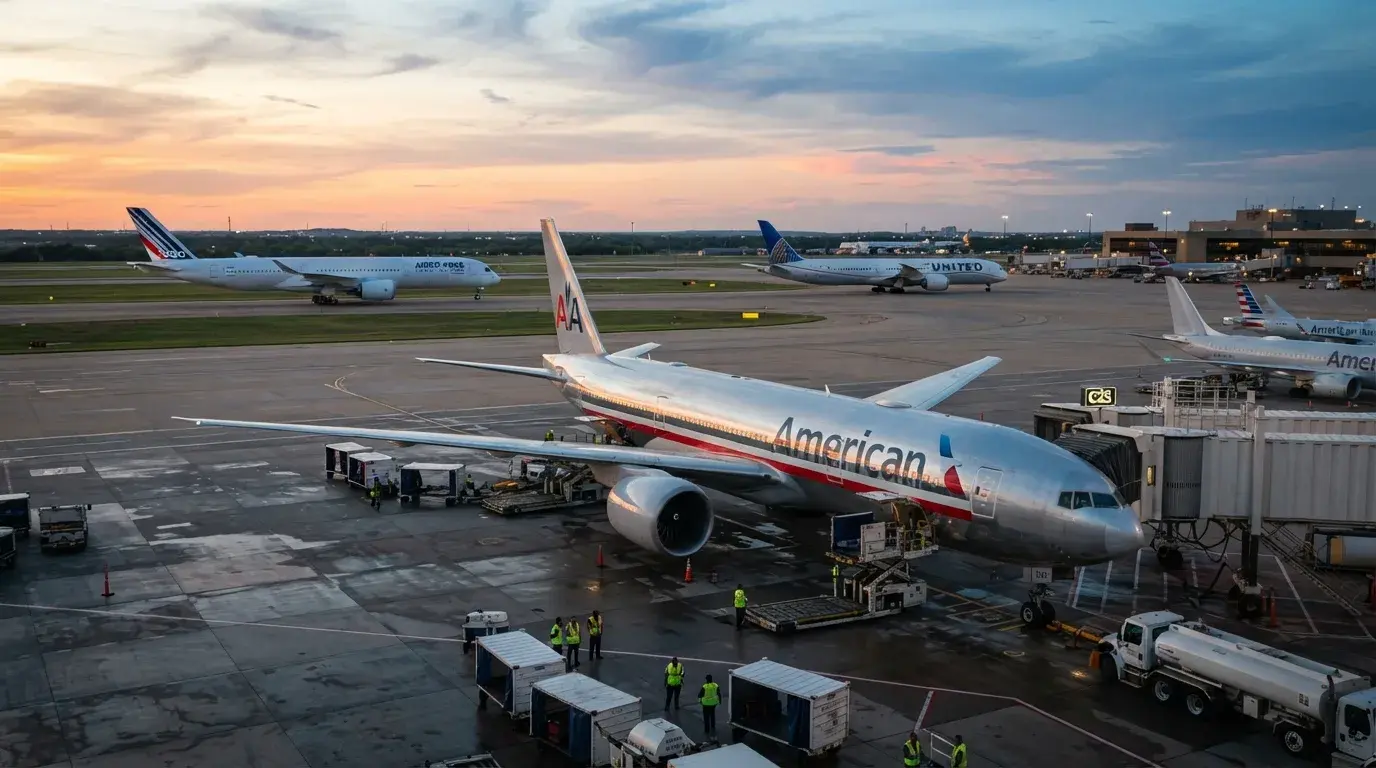
American Airlines stands at a critical crossroads as it prepares to replace 47 aging Boeing 777-200ER aircraft by the 2030s—a decision that could reshape the future of long-haul aviation. The U.S. carrier is considering an order of up to 65 new planes, igniting a fierce battle between Airbus and Boeing. Behind the numbers lies a high-stakes industrial and commercial showdown: which manufacturer will secure the largest single commercial aircraft order ever placed by a U.S. airline?
The selection process has accelerated significantly in recent months. According to Nat Pieper, American Airlines’ Senior Vice President of Fleet Planning, negotiations with both manufacturers have reached an advanced stage—"round seven or eight," a phrase that signals a decisive phase in talks. Yet the outcome remains uncertain: "The choice could swing either way," Pieper warned in an interview with FlightGlobal. What began as a routine fleet update has evolved into one of the most consequential bets in the global aviation industry.
This renewal is far from a simple replacement of aging aircraft. American Airlines has already begun refurbishing its Boeing 777-300ER fleet with 70 Flagship Suite business-class suites and 44 Premium Economy seats—a premium upgrade responding to surging demand for high-end products on transatlantic routes. The 777-200ERs, which entered service in 1999, require a complete overhaul to remain competitive until their successors arrive.
The modernization of these aging planes will coincide with the arrival of new aircraft, which must also support American Airlines’ growth strategy. The carrier has not ruled out ordering more than the 47 aircraft strictly needed to replace its current fleet, offering flexibility to increase capacity on key routes or launch new destinations.
Boeing Banks on Operational Advantages with the 787
Boeing holds a clear operational edge: American Airlines already operates the 787-8 and 787-9, meaning its maintenance and pilot teams are already familiar with the Dreamliner platform. Integrating additional 787s would build on this continuity, reducing training costs and accelerating service entry. The 787-9 and 787-10—both proven on the carrier’s long-haul network—are among the models under consideration.
The 787 Dreamliner boasts compelling advantages: 20% lower fuel consumption compared to previous-generation aircraft, quieter cabins, and optimized pressurization for passenger comfort. For American Airlines, these features translate into improved operational profitability and greater appeal to premium travelers. The 787 family has already demonstrated its reliability, with over 1,500 aircraft delivered worldwide since its 2011 entry into service.
Yet Boeing cannot rely solely on its track record. The manufacturer must convince American Airlines that the 787 offers the most competitive solution against the A350, both economically and in terms of payload capacity. Discussions also revolve around potential additional options or incentive pricing mechanisms to secure the deal.
The Airbus A350 Enters the Race: A Return of European Widebodies to U.S. Skies
A victory for the A350 would mark a symbolic turning point: it would represent the return of European widebodies to a major U.S. carrier’s fleet for the first time in over six years, since American Airlines retired its last A330s. The A350 family—including the A350-900 and A350-1000—offers greater capacity than the 787 while consuming less fuel than the 777-200ERs they would replace.
The A350-900 can carry up to 325 passengers in a standard configuration, while the A350-1000 accommodates 366 seats. These capacities allow American Airlines to serve high-demand routes to Asia or Latin America with improved profitability per seat. Airbus highlights the maturity of its platform, with over 1,000 firm orders and demonstrated operational reliability with carriers like Singapore Airlines, Qatar Airways, and Cathay Pacific.
The European manufacturer also emphasizes the A350’s cabin comfort advantages, particularly in business class, where its private suites with doors are considered among the best in the market. For American Airlines, which is prioritizing an upscale international offering, this could be the deciding factor in the final choice.
A win for the A350 would also strengthen Airbus’s foothold in the U.S. long-haul market—a segment traditionally dominated by American manufacturers. The contract could set a benchmark for other airlines, paving the way for future orders.
The Financial and Industrial Stakes Behind the Decision
The potential order—estimated between 50 and 70 aircraft—represents a deal worth over $20 billion at list prices. But beyond the nominal value, the industrial impact is immense. Both Boeing and Airbus need this order to secure their production rates and justify investments in factories and supply chains.
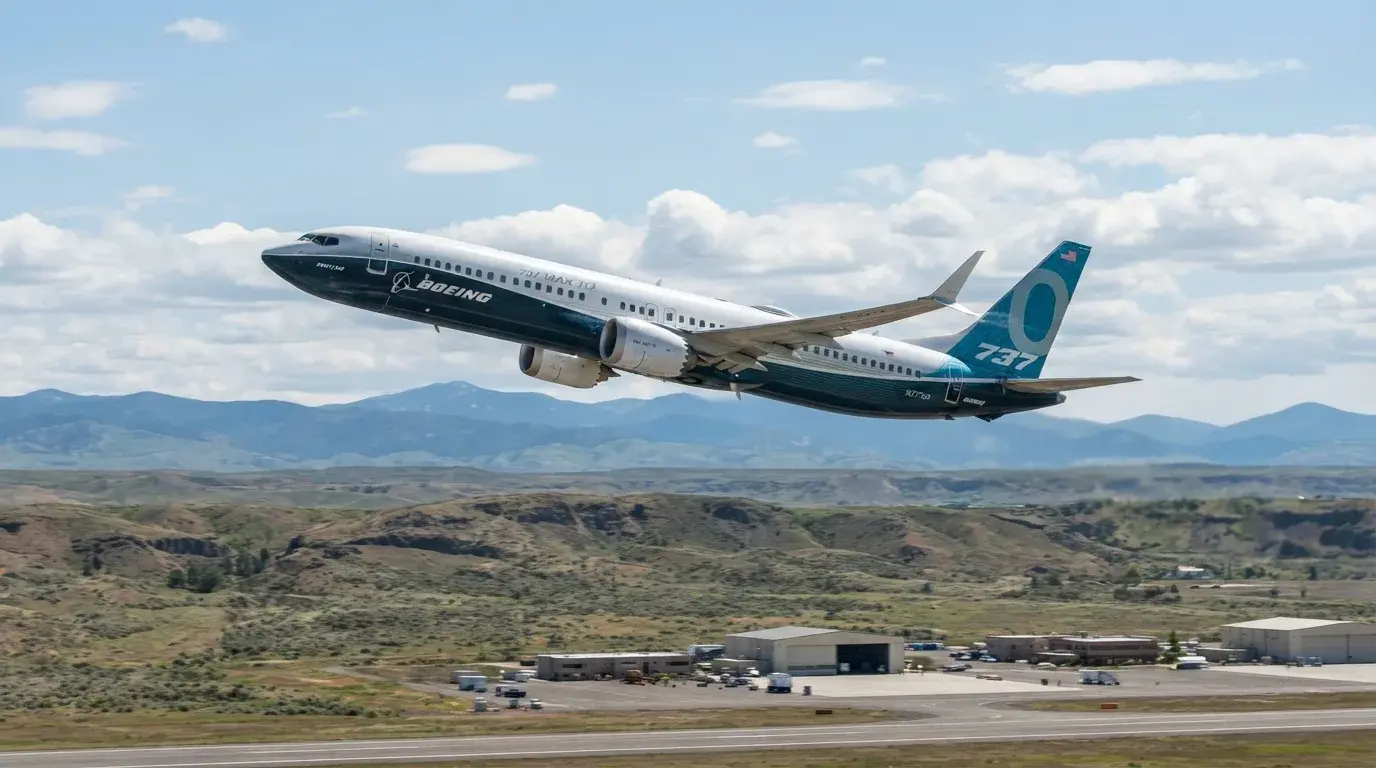
For Boeing, which has faced production delays on the 787 and intensified competition from the A350, this order could provide a much-needed boost to its commercial division. The manufacturer recently opened a fourth 737 MAX assembly line in Everett, Washington, and is ramping up production to meet demand. A win with American Airlines would strengthen its position against Airbus, which currently dominates the widebody segment with the A350.
For Airbus, a deal of this magnitude would validate its long-haul strategy. The European group has invested heavily in the A350 family, with dedicated factories in Germany and China and an optimized supply chain to meet growing demand. A victory with American Airlines would send a strong signal to other U.S. and Asian carriers, potentially encouraging them to diversify their suppliers.
A Decision That Could Influence the Global Market
American Airlines’ choice extends beyond fleet renewal—it could have far-reaching implications beyond U.S. borders, influencing renewal strategies for other major airlines. If American Airlines opts for the A350, it could encourage other U.S. or Asian carriers to view Airbus as a credible alternative to Boeing for future widebody replacements.
Conversely, a win for the 787 would solidify Boeing’s dominance in a key market segment while limiting Airbus’s progress in a region where it has struggled to gain traction against the American giant. The deal would serve as a technological showcase for the Dreamliner, already favored by many airlines for its reliability and operational efficiency.
Analysts expect American Airlines to announce its decision by the end of the year, potentially coinciding with the carrier’s quarterly earnings report. Either way, this strategic choice will mark a new chapter in the battle between the two aviation giants, with repercussions extending well beyond 2030.
American Airlines has indicated that deliveries of the first new aircraft are slated for the early 2030s, providing ample time to finalize negotiations and prepare for the operational transition. Yet in an industry where every order counts, this decision carries immense weight for the future of both manufacturers—and ultimately, the entire global aerospace sector.
What Lies Ahead for the 777 Family After the 200ERs Depart?
While replacing the 777-200ERs is an immediate priority, American Airlines must also consider the future of its 777-300ER fleet, introduced in 2012. These more recent and efficient aircraft do not require urgent renewal, but their modernization remains a topic of discussion. The carrier has already begun cabin refurbishments, integrating Flagship Suite business-class suites and Premium Economy seats, though deeper upgrades may be explored.
The future of the 777X family—whose development has faced delays and technical challenges—remains uncertain in American Airlines’ fleet plans. Neither the 777-8 nor the 777-9 has been officially considered by the carrier, which is prioritizing proven solutions like the 787 and A350. However, if Boeing overcomes current obstacles and certifies the 777X on schedule, American Airlines may reconsider the type for routes requiring higher capacity.
For now, American Airlines has several years to make its decision. But in a highly competitive and cost-sensitive environment, every day counts. The battle between Airbus and Boeing for this monumental contract is just beginning—and the stakes have never been higher.
Be the first to comment on this article
On the same topic
- Why European Airfares Will Skyrocket Until 2029: Expensive Fuel to Reshape the Industry
- American Airlines revolutionizes flights with Starlink: ultra-fast Wi-Fi arrives on 1,000 aircraft by 2027
- United Airlines and American Airlines launch global offensive on Southern Europe: these direct routes will transform your 2027 vacation
- Athens emerges as the new US gateway to Greece: Why this hub is winning over travelers
- American Airlines reinvents cabin experience: 4K screens and premium seats for more comfortable flights by 2028
- American Airlines pledges 32 aircraft to raise over $1 billion