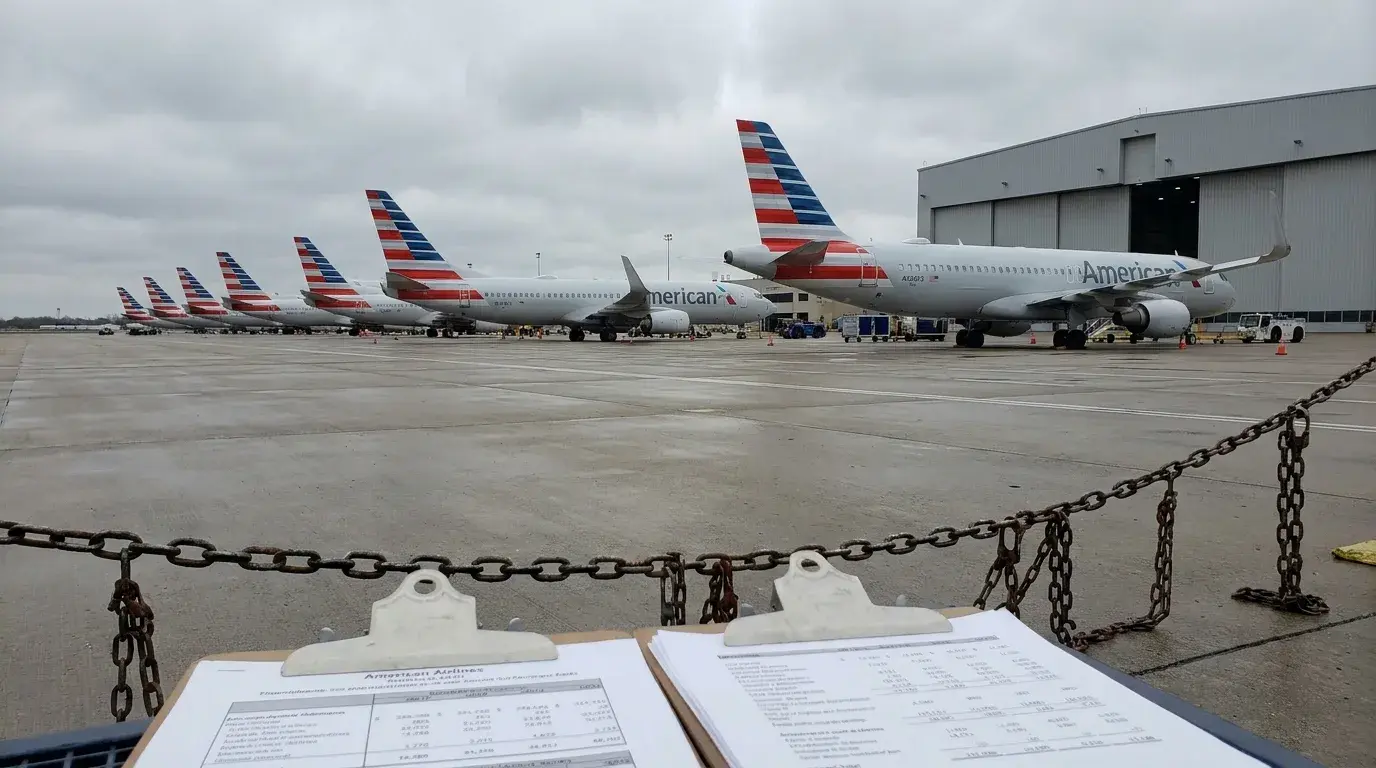
American Airlines is turning to a well-known financing tool in U.S. aviation: aircraft-backed bonds. The carrier aims to raise approximately $1.1 billion by pledging a portfolio of 32 Airbus and Boeing aircraft, amid mounting pressure on its operational costs, particularly fuel. The move highlights how airlines monetize the residual value of their fleets to bolster cash flow and sustain investments.
The financing structure takes the form of an enhanced equipment trust certificate (EETC) issuance. In this arrangement, the aircraft serve as collateral, providing investors with specific protections in the event of default. For American Airlines, the dual objective is to fund the arrival of new aircraft and refinance existing loans at more transparent costs compared to traditional bank financing. According to data from S&P Global Ratings and financial sources, the total transaction value reaches approximately $1.14 billion.
A financing structure tailored for the bond market
EETCs occupy a unique position in aeronautical finance. They enable airlines with lower credit ratings to access financing terms close to those of investment-grade issuers, thanks to the quality of the collateral. In this case, the aircraft are placed in dedicated entities that issue the securities. If the airline fails to meet its obligations, investors retain priority rights over the financed aircraft. This mechanism makes the structure attractive for both lenders and the issuer.
American Airlines is deploying this financing tool at a time when every funding lever matters. The carrier faces sharply rising costs, with fuel surcharges expected to exceed $4 billion by 2026 if prices remain elevated. In this context, converting part of its fleet into financial collateral helps preserve liquidity and smooth repayments. The goal is not merely to secure immediate cash but also to establish a more stable debt trajectory.
A collateral pool of 32 aircraft, from recent narrowbodies to amortized widebodies
The pledged portfolio includes 32 aircraft spanning multiple generations and missions. According to documentation reviewed by S&P Global Ratings, the fleet comprises 6 Airbus A321XLRs, 11 Boeing 737 MAX 8s, 12 Airbus A321ceos, and 3 Boeing 777-300ERs. This mix is far from random. It offers investors a diversified asset base, varying in age, operational use, and residual value.
The A321XLRs play a central role in American Airlines’ current strategy. These extended-range narrowbodies are designed to support transatlantic and intermediate long-haul routes. The 737 MAX 8s, being newer, deliver improved fuel efficiency compared to previous generations, enhancing their value in an uncertain jet fuel market. Meanwhile, the 777-300ERs, though older, remain integral to the carrier’s long-haul operations and retain significant resale value despite the introduction of newer models.
This collateral selection also demonstrates how an airline can assemble a diverse yet complementary asset pool for financing. New aircraft bolster investor confidence in portfolio quality, while older, amortized planes—if operated on profitable routes—can still underpin structured financing.
Financing 17 new aircraft and refinancing 15 existing ones
The net proceeds from the issuance will be allocated to two key uses. American Airlines plans to use part of the funds for the delivery of 17 new aircraft and the remainder to refinance loans associated with 15 existing aircraft. This allocation reflects a clear strategy: reducing the average cost of capital while supporting fleet renewal.
In practice, the transaction can replace more expensive bank financing or export credit solutions with a bond structure better aligned with the asset profile. According to Bloomberg, the long-term portion of the issuance, valued at approximately $905 million, offers a yield near 5.625%, while shorter-term securities are placed around 5.75%. For the airline, these yields remain acceptable if the primary goal is to secure clearer maturity visibility and preserve cash for operational needs.
The deal also underscores a critical sector trend: the fleet is no longer just an operational tool but a financial asset. Airlines capable of demonstrating aircraft quality, robust insurance contracts, and strong residual values can secure funding on more favorable terms than their credit ratings alone would suggest.
A direct response to rising operational costs
American Airlines’ decision comes at a time of heightened cost pressures. Rising fuel prices, driven by geopolitical tensions in the Middle East, are impacting the entire industry. For American, the challenge is even more pronounced, as the carrier has already revised its profit forecasts downward. Its exposure to jet fuel is significant enough to necessitate active debt management and careful scheduling of aircraft deliveries.
This EETC transaction is part of a broader balance sheet defense strategy. It supports fleet modernization while absorbing part of the external shock on costs. In a market where margins remain volatile, the ability to quickly mobilize aircraft-backed financial assets becomes a tangible advantage. It gives American Airlines more breathing room to continue investing in its network, cabin product, and ground operations.
EETCs have long been used by major U.S. carriers, but their utility remains intact whenever financing markets tighten. The success of such transactions depends as much on the technical quality of the portfolio as on investor confidence in the airline’s trajectory. For American Airlines, the message is clear: the fleet must continue to function as a financing lever, not just as a foundation for operations.
With this latest issuance, American Airlines is advancing on two fronts simultaneously: fleet renewal and debt management. The use of 32 aircraft as collateral underscores how closely aviation financing remains tied to the tangible value of assets, in an industry where every fuel price hike or delivery delay can disrupt fleet planning.
Be the first to comment on this article
On the same topic
- Will American Airlines Choose Airbus or Boeing to Replace Its 777-200ER Fleet? The Battle That Could Reshape Global Skies
- Why European Airfares Will Skyrocket Until 2029: Expensive Fuel to Reshape the Industry
- American Airlines revolutionizes flights with Starlink: ultra-fast Wi-Fi arrives on 1,000 aircraft by 2027
- United Airlines and American Airlines launch global offensive on Southern Europe: these direct routes will transform your 2027 vacation
- Athens emerges as the new US gateway to Greece: Why this hub is winning over travelers
- American Airlines reinvents cabin experience: 4K screens and premium seats for more comfortable flights by 2028