Chicago O’Hare: FAA Caps Daily Flights at 2,708 to Curb Delays in 2026
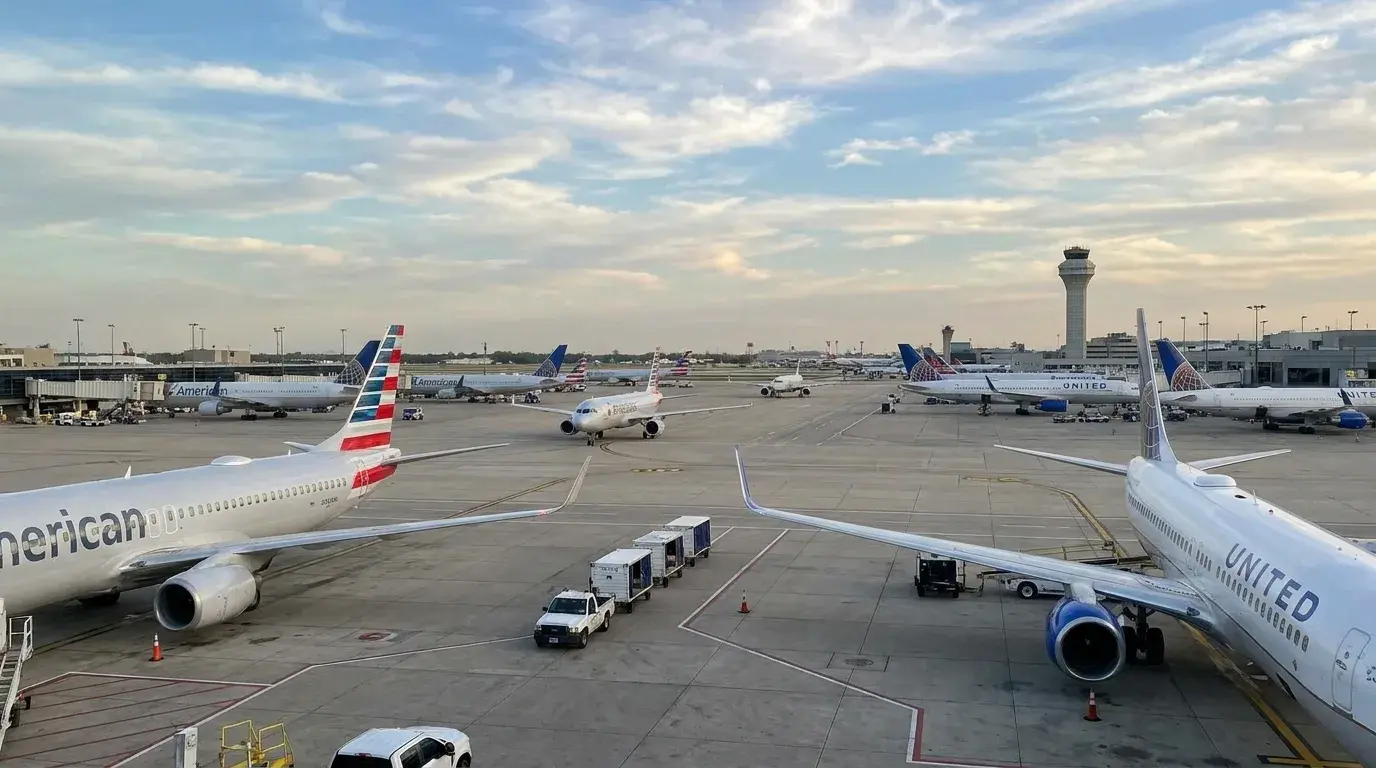
The summer 2026 season at Chicago O’Hare is set to face strict constraints. The FAA will limit the airport’s daily traffic to 2,708 movements—arrivals and departures combined—a significant cut compared to the schedules airlines had proposed. The measure aims to curb the chain delays that plagued one of the U.S.’s busiest hubs last year.
In its final order published in mid-April, the U.S. Federal Aviation Administration set a daily cap of 2,708 movements at Chicago O’Hare International Airport between May 17 and October 24, 2026. This includes both arrivals and departures. Airlines had requested schedules exceeding 3,080 daily flights during peak days, an increase the FAA deemed unsustainable given the airport’s actual capacity.
Why the FAA is tightening capacity at Chicago O’Hare
The decision follows a particularly poor summer in 2025. According to the FAA, fewer than 60% of flights at Chicago O’Hare departed on time. For Washington, such punctuality levels are incompatible with an additional 15% traffic surge compared to last year’s peak. The administration has thus chosen to curb supply before disruptions escalate further.
The core issue remains operational saturation. O’Hare is already one of the most complex airports in the country, with intersecting arrival and departure streams, high volumes of connections, and dense airspace around Chicago. Add to this runway and ground movement constraints. Despite significant redevelopment work, the airport remains vulnerable during peak demand and adverse weather events.
The FAA also highlights the strain on air traffic control. Chicago’s teams manage a high volume of traffic in an area where interactions with other Midwest hubs complicate approach and departure sequences. In this context, the goal is not to penalize airlines but to prevent overly ambitious schedules from further degrading punctuality rates.
A compromise between the FAA, Chicago, and airlines
The final cap of 2,708 daily flights is the result of a compromise. According to a legal document cited by DLA Piper, the FAA initially proposed a stricter limit of 2,608 daily operations. Meanwhile, the Chicago Department of Aviation advocated for a cap of 2,800 flights. The order published by FAA Administrator Bryan Bedford settles on an intermediate position, with sub-limits by 30-minute intervals to reduce traffic peaks.
This hourly organization is critical for passengers. It means delays will depend not just on total volume but also on how traffic is distributed throughout the day. In practice, airlines will need to adjust departures and arrivals to avoid peak saturation hours. For travelers, this could mean schedule changes, grouped flights, or connections rerouted via other airports or time slots.
Movement distribution among carriers will follow the schedules approved for summer 2025, in line with rules for an airport classified as Level 2. This allocation logic aims to maintain fairness among operators while keeping tight control over overall network density.
United and American Airlines directly impacted
At O’Hare, the airlines most affected are naturally United Airlines and American Airlines, each operating a major hub at the airport. Both groups had requested more slots for summer 2026 amid fierce competition to capture connecting and point-to-point traffic.
The issue is that the airport’s real capacity has not kept pace with demand growth. The proposed schedules far exceeded what the infrastructure and air traffic control could absorb without driving delays higher. The FAA has asked airlines to revise their plans, with the stated goal of reducing cancellations and last-minute rescheduling.
Airlines were involved in the process through bilateral meetings with the administration. Washington seeks realistic reductions without dismantling the hub-and-spoke models that underpin U.S. domestic traffic. This requires fine-tuning frequencies, secondary routes, and connections, especially during morning and evening peak hours.
What this means for passengers this summer
For travelers, the decision could have mixed effects. On one hand, reducing the number of flights at Chicago O’Hare should improve overall schedule reliability by easing ground congestion and propagated delays. On the other, the adjustments airlines must make could lead to frequency cuts, schedule changes, and less flexible connections.
Passengers connecting through O’Hare to other U.S. cities will need to monitor their bookings closely. Airlines have not yet detailed all affected routes, but schedule changes as early as spring are likely. Some routes may be replaced by itineraries via other Midwest or East Coast hubs, depending on each carrier’s network strategy.
For customers, the challenge will be twofold: avoiding surprises on booked summer flights while recognizing that the FAA’s cap aims to prevent an already dire situation from worsening. At an airport where fewer than 60% of flights departed on time last summer, Washington’s priority is clear: reduce pressure on a system near saturation.
A broader signal for U.S. air traffic
Beyond Chicago, this decision reflects a broader trend in U.S. air transport: when demand outpaces real capacity, authorities may intervene directly to prevent operational performance from deteriorating further. This approach is rare in a historically liberal market but becomes more credible when delays reach unacceptable levels.
Chicago O’Hare remains a central transit point for domestic and international traffic. Its role in U.S. connections makes it a barometer for the network. If the summer 2026 cap helps restore better punctuality, it could serve as a reference for other airports facing similar saturation, construction, and air traffic control pressures.
The measure does not solve everything. Infrastructure constraints, weather variability, and hubs’ reliance on high volumes of connections will remain core challenges. But it confirms that the FAA now intends to arbitrate more firmly between traffic growth and operational quality—even if it means imposing stricter frameworks on airlines that tend to push schedules beyond sustainable limits.
Be the first to comment on this article