Airbus Under Pressure: Comac’s C929 Challenges A330neo and 787 with Chinese Long-Haul Ambitions
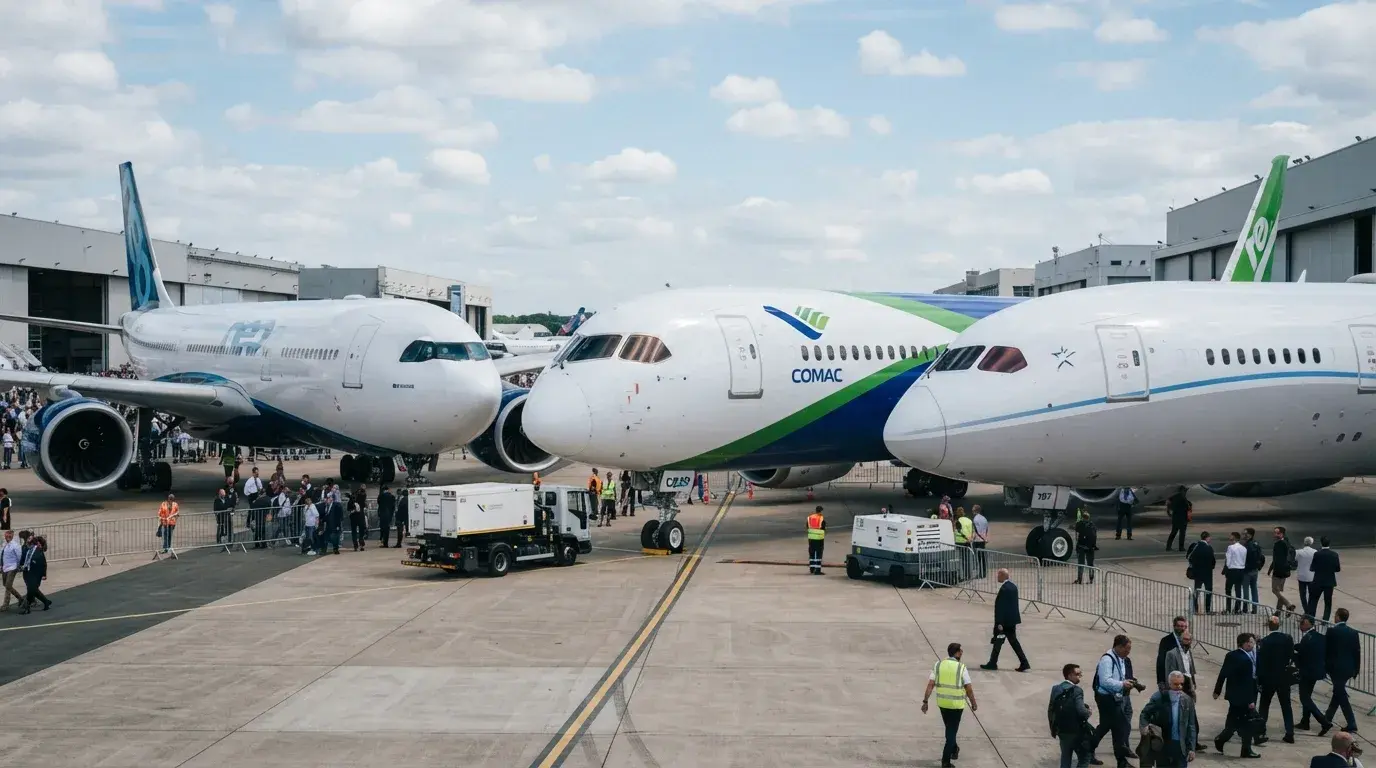
As the global aviation industry closely monitors every move by aerospace giants Airbus and Boeing, an emerging player is quietly disrupting established dynamics. China’s Comac is ramping up its industrial offensive with its upcoming long-haul C929, a twinjet that could become the first serious competitor to the Airbus A330neo and Boeing 787 Dreamliner. Facing this growing challenge, Airbus is recalibrating its strategy—can Europe still rely on its technological edge?
China is no longer content producing single-aisle aircraft like the C919, already in service and positioned as an alternative to the Airbus A320. Now, the Asian giant is targeting the upper echelon of the market: long-haul aircraft, where Airbus and Boeing have maintained a near-monopoly for decades. With the C929, Comac isn’t just aiming to exist—it’s seeking to establish itself as a dominant force, capable of directly competing with Europe’s and America’s flagship models.
According to the latest official announcements, the future aircraft is expected to seat around 280 passengers with a range of 12,000 kilometers, positioning it as a direct rival to the Airbus A330neo and Boeing 787-9. A strategic choice, as airlines across Asia and the Middle East seek solutions to reduce their reliance on Western manufacturers.
Airbus, fully aware of the threat, is already mobilizing its teams to prepare for life after the A330neo. During a press briefing in Toulouse, Lars Wagner, Airbus’ Head of Commercial Aircraft, admitted that “there isn’t a week where we don’t discuss competition from China.” Airbus executives highlight Comac’s massive investments in key technologies such as green hydrogen, robotics, and automation—a strategy reminiscent of Airbus’ own push in the 1990s to challenge Boeing’s dominance.
For Airbus, the stakes extend beyond simply countering the C929. The European manufacturer must also prepare for the next generation of single-aisle aircraft, a program slated for launch around 2030. But this time, the landscape has shifted: Comac is no longer a distant challenger. It has become a direct competitor, capable of offering competitive solutions in cost, performance, and technology.
The C929: A Project Fraught with Challenges
The development of the C929 has not been smooth sailing. Initially conceived as a Sino-Russian collaboration under the name CR929, with Russia’s UAC, Western sanctions and restrictions on Russian aerospace industries forced Comac to rethink its approach. The withdrawal of the Russian partners from the project has particularly complicated the selection of propulsion systems, with the Russian PD-35 engine—originally planned—now off the table.
Comac now faces a significant technical hurdle: defining a high-performance, reliable propulsion system for the C929. Several options are under evaluation, but none have been officially announced yet. Airbus, for its part, is leveraging its own propulsion expertise while closely monitoring China’s progress.
Certification is another critical concern. International aviation safety standards are stringent, and Comac will need to prove that the C929 meets the highest requirements. This task is all the more daunting given that the Chinese manufacturer lacks significant experience in long-haul wide-body aircraft.
Yet, early signs are promising. Air China, China’s flagship carrier, was named as the launch customer for the C929 at the Zhuhai Airshow in November 2024. A symbolic endorsement, but also a vote of confidence from a major airline.
Airbus Fires Back with the A350 and A330neo Successor
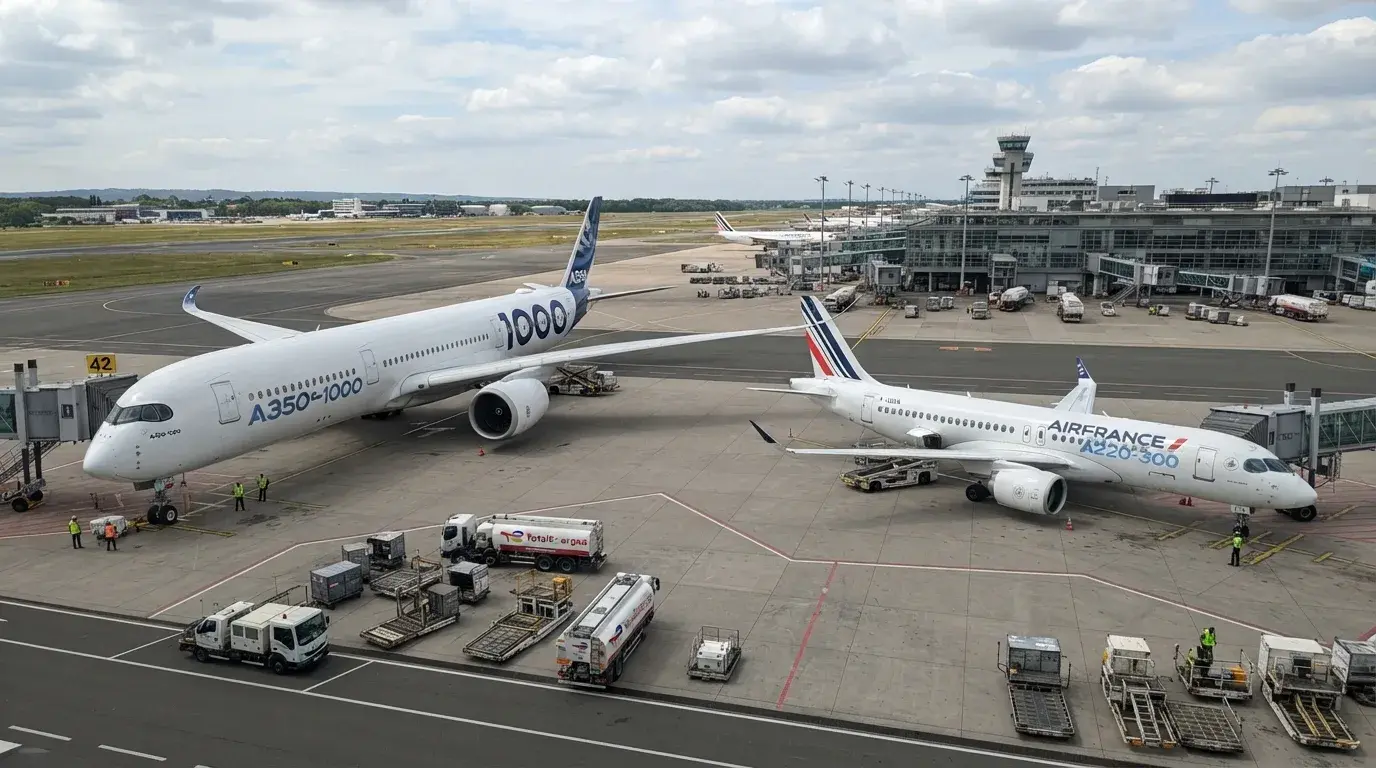
Facing this emerging competition, Airbus is not standing idle. The European manufacturer is banking on its A350, already in service and praised for its performance and comfort, to maintain its lead. But Airbus is also looking ahead with an extended version of the A350, often referred to as the A350-2000. If launched, this aircraft could offer increased capacity and range over the current A350-1000.
According to the latest reports, Airbus is evaluating several configurations for the A350-2000, with a capacity of up to 400 passengers in a three-class layout. A positioning that could directly compete with the C929. However, an official launch has not yet been confirmed. Airbus must still assess the profitability of such a development, especially as the long-haul market remains fiercely competitive.
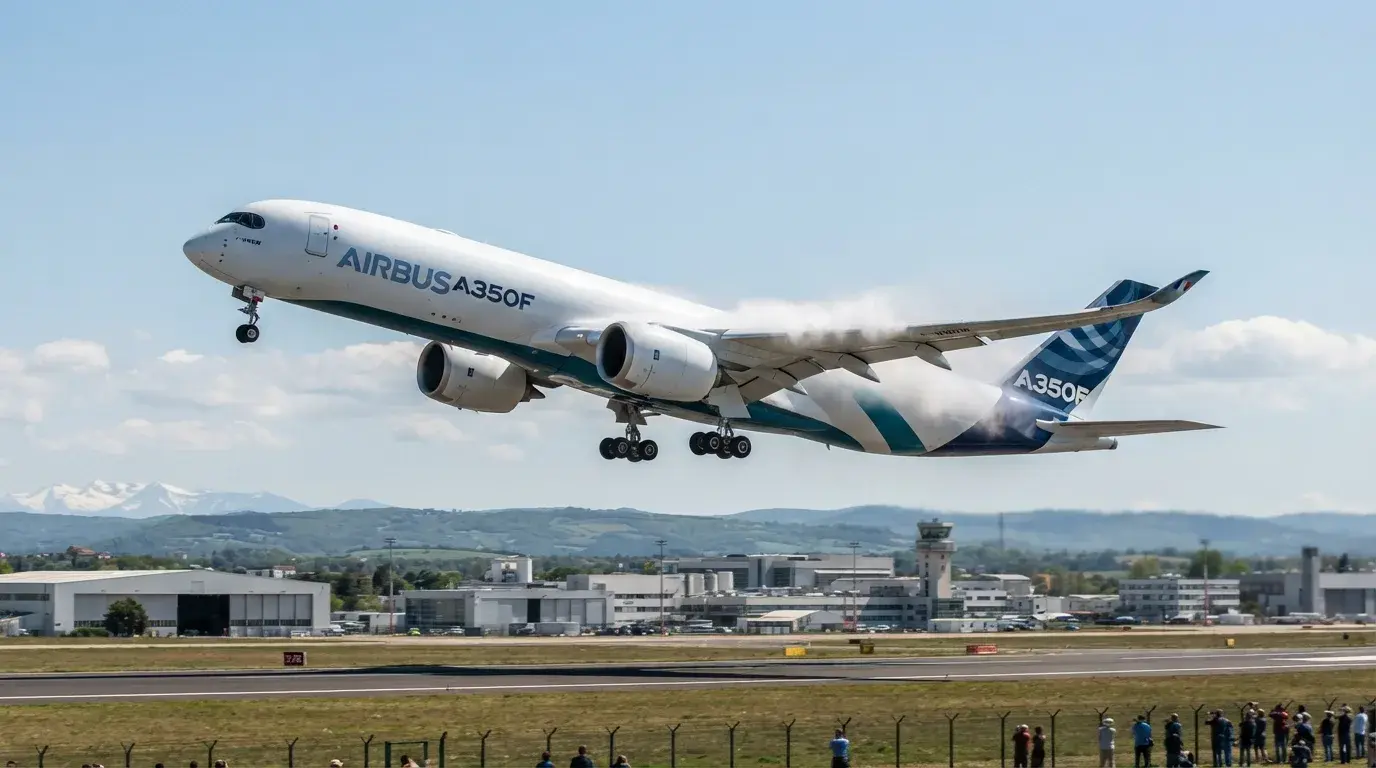
In parallel, Airbus is optimizing A350 production, targeting a rate of twelve aircraft per month by 2028—a bold goal that will require additional investments. This ramp-up is essential to meet growing demand from airlines, particularly in Asia and the Middle East.
Another key element of Airbus’ strategy lies in diversifying its supply chain. The manufacturer must ensure its production lines are not overly dependent on a single supplier, especially amid geopolitical tensions and trade restrictions.
Can Europe Still Compete?
The question today is straightforward: Can Europe—and Airbus in particular—still compete against a China that has set its sights on aerospace dominance? The answer is not straightforward. On one hand, Airbus boasts unparalleled experience in long-haul aircraft, a loyal customer base, and a robust industrial network. On the other, Comac benefits from massive state support, a rapidly expanding domestic market, and a clear political will to become a global aerospace powerhouse.
For Airbus, the challenge is twofold. First, it must convince airlines that the A350 remains the best choice in terms of performance, reliability, and comfort. Second, it must accelerate work on future aircraft generations to avoid being outpaced by Comac or other emerging players.
Another challenge for Airbus lies in managing customer expectations. Airlines, particularly in Asia, are increasingly demanding in terms of cost, flexibility, and innovation. An aircraft like the C929 could appeal to carriers seeking an alternative to Western solutions, especially if Comac can offer competitive pricing.
Finally, Europe must navigate geopolitical constraints. Trade tensions between China and the United States, along with U.S. restrictions on exporting sensitive technologies, could complicate Comac’s access to certain components or expertise. An advantage for Airbus, which could capitalize on these uncertainties to strengthen its position.
A Market in Flux
The long-haul aviation landscape is undergoing a transformation. Asian carriers, in particular, are seeking to diversify their supply sources to reduce dependence on Western manufacturers. Comac’s C929 could meet this demand, offering a 100% Chinese solution tailored to the needs of Asian and Middle Eastern markets.
For Airbus, the arrival of the C929 represents both an opportunity and a threat. An opportunity, as the European manufacturer could become the technology partner of choice for airlines looking to modernize their fleets without relying on Comac. A threat, as the C929 could gain credibility as a viable alternative, potentially eroding Airbus’ market share, especially in Asia.
In this context, Airbus must accelerate its innovations and prove that its aircraft remain the most performant and reliable on the market. The manufacturer is banking on technologies like the open fan, a promising propulsion solution that could reduce fuel consumption by 20% compared to current engines. An innovation that could make all the difference against Chinese competition.
The showdown between Airbus and Comac is underway. The outcome of this rivalry could redefine the balance of power in the global aerospace industry. One thing is certain: the coming years will be decisive—not just for manufacturers, but for airlines and passengers worldwide.
The Road Ahead: Key Milestones
By 2028, Comac plans to finalize C929 development and launch first flight tests. If all goes according to plan, the aircraft could enter service by the early 2030s. For Airbus, the window of opportunity lies between 2030 and 2035, during which it must finalize the A350-2000 and solidify its position against Comac.
Both manufacturers will also need to closely monitor technological advancements, particularly in propulsion and materials. Tomorrow’s aircraft will need to be lighter, more fuel-efficient, and more environmentally friendly. A challenge neither Airbus nor Comac can afford to ignore.
One thing is certain: the long-haul market is on the brink of a revolution. And this revolution has a name: C929.
Be the first to comment on this article