AnimaWings in Crisis: Six A220s Grounded, Judicial Restructuring Underway
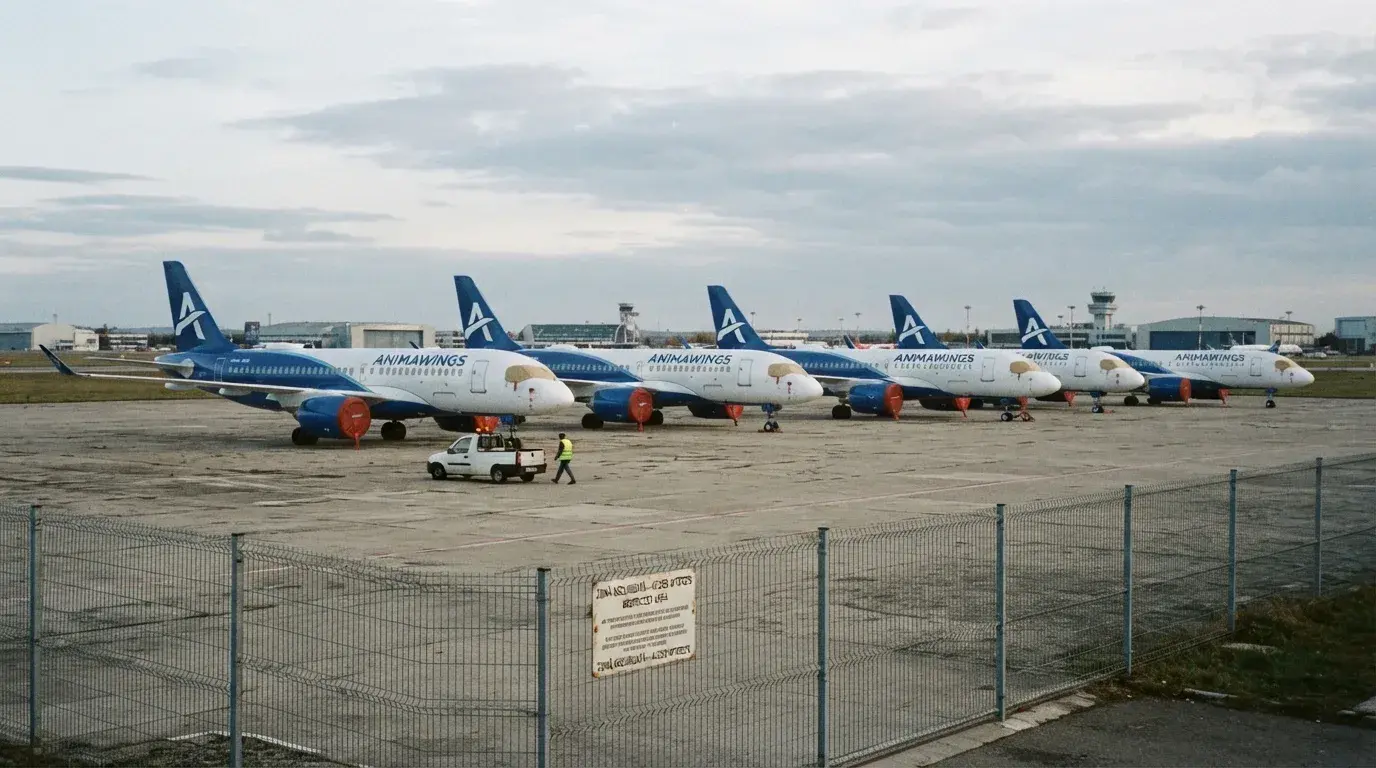
Romanian airline AnimaWings is grappling with a severe crisis after all six of its Airbus A220-300 aircraft—key to its recent expansion—were grounded. The situation prompted the carrier to file for judicial restructuring on September 30, 2026, at a Bucharest court. A difficult but necessary step, management claims, to secure the airline’s survival.
In an official statement, AnimaWings confirmed it had initiated insolvency proceedings to stabilize operations and restructure financial obligations. The airline emphasized this move does not signal the end of its activities but aims to lay the groundwork for sustainable recovery. Yet passengers are already feeling the impact, with widespread flight cancellations and delays likely.
The carrier’s fleet, which stood at eight aircraft in August, has now shrunk to just two operational Airbus A320s. These planes will attempt to maintain a skeleton service, but their limited capacity cannot cover the originally planned rotations. AnimaWings has begun notifying partners of the situation while promising a revised winter schedule starting October 25, 2026.
Financial troubles run deeper than operational setbacks. According to Romanian platform Termene.ro, AnimaWings had accumulated over 11.5 million lei (around €2.2 million) in tax arrears as of June 30, 2026—a figure that has surged since the start of the year. This mounting debt, compounded by repeated technical issues with its A220s and an unfavorable economic climate, pushed the airline to file for restructuring.
The crisis mirrors challenges faced by other European carriers in recent years, particularly in Eastern Europe. It also raises questions about the viability of rapid-growth models in aviation, especially for mid-sized operators.
For passengers with existing bookings, AnimaWings has pledged to contact affected travelers directly to offer alternatives or refunds, depending on the circumstances. The airline warns of potential schedule changes, including last-minute cancellations in the coming days.
This turmoil comes after AnimaWings had aggressively expanded its operations in recent months. In April 2026, the airline announced plans to grow its fleet to 14 aircraft by the end of 2027, with new routes from Bucharest, Timișoara, and Cluj-Napoca. Today, with just two planes operational, those ambitions are in tatters, threatening jobs and investments.
Industry observers are now questioning the outcome of the restructuring process. A successful reorganization could allow AnimaWings to gradually resume operations, but liquidation remains a looming risk. The Bucharest court’s decision, expected in the coming weeks, will be pivotal for the airline’s future—a carrier that, until recently, symbolized the rise of a new European player.
A Business Model Under Strain
The case of AnimaWings highlights the risks of overly rapid growth in air transport. The airline had bet on fast expansion in the scheduled segment, relying on a modern fleet and an aggressive commercial strategy. However, technical issues with its A220-300s, coupled with intense competition and high operational costs, exposed the flaws in this model.
While the specifics of the A220-300 technical problems remain undisclosed, the airline has progressively withdrawn these aircraft from service. The grounding of six out of eight planes has slashed AnimaWings’ operational capacity by 75%, making it impossible to maintain its original schedule. The situation is especially critical as the carrier had announced in August 2026 its intention to continue expanding, with plans for new routes from multiple Romanian airports.
The economic backdrop plays a significant role. The aviation sector remains highly volatile, with fuel and spare parts costs fluctuating sharply. For a cash-strapped airline like AnimaWings—already burdened by substantial tax arrears—these financial pressures proved unsustainable. The judicial restructuring request represents a last-ditch effort to survive, offering a legal framework to renegotiate debts and reorganize operations.
This crisis echoes challenges faced by other European carriers in recent years, such as Bulgaria’s Bulgaria Air or Hungary’s Wizz Air, which have navigated similar difficulties. It underscores the vulnerabilities of mid-sized operators, often more exposed to external shocks than larger groups.
For travelers, the situation underscores the importance of checking an airline’s financial health before booking, especially with lesser-known carriers. Struggling airlines frequently resort to cancellations or schedule changes, leading to significant inconvenience for passengers.
Uncertainty for Passengers and Partners
The temporary suspension of all AnimaWings operations from October 2 to 24, 2026, adds further uncertainty for travelers. The airline has pledged to resume flights on October 25, but no official revised schedule has been released. Passengers with existing bookings should expect disruptions.
AnimaWings has assured it will contact affected travelers directly to propose alternatives, such as refunds or rebooking. However, the speed and effectiveness of these measures remain untested, particularly amid a potential surge in customer demands. With limited resources, the airline could struggle to handle the volume of requests.
For AnimaWings’ partners—travel agencies, hotels, and airports—the crisis poses a major challenge. Flight cancellations can lead to significant financial losses, especially for businesses that had reserved seat blocks or commercial partnerships. Some partners may turn to more stable airlines to secure their bookings.
The crisis also highlights the risks of over-reliance on a single fleet type. By grounding six A220s, AnimaWings was left with just two A320s to operate its entire network—a drastic reduction in capacity that makes recovery difficult without external financial support or a deep restructuring.
Additionally, the situation raises questions about the responsibility of Romanian and European authorities in overseeing airlines. While the EU enforces strict rules on safety and financial transparency, gaps persist, allowing weakened carriers to operate despite alarming indicators.
For now, AnimaWings’ passengers and partners must exercise patience and caution. The Bucharest court’s decision, expected in the coming weeks, will be decisive for the airline’s fate. If the restructuring is approved, AnimaWings could gain a reprieve to rebuild its operations. Otherwise, liquidation would likely follow, with severe consequences for customers and employees.
Future Prospects: A Possible Comeback?
Despite dire short-term prospects, AnimaWings has not yet abandoned hope of resuming operations. The airline insists its insolvency filing aims to protect what has been built in recent years and enable a sustainable recovery—a common narrative in judicial restructuring processes, where leaders often seek to reassure stakeholders about the company’s future viability.
However, the success of such an operation hinges on several factors. First, AnimaWings must secure additional financing to cover its debts and restart operations. Second, regaining passenger and partner trust will be critical: without bookings, the airline will struggle to rebound. Finally, the competitive landscape in Romania and Europe—already fierce—could make a quick recovery difficult.
As of now, no details have emerged about potential investors or partners willing to support AnimaWings. The airline may need to turn to public funds or private backers to survive. If it stabilizes its financial and technical situation, a gradual resumption of flights could be possible by the start of the winter season.
Failing that, liquidation would become inevitable, directly impacting booked passengers and employees. Romanian authorities could then impose an orderly liquidation to protect creditors’ and customers’ interests.
This crisis once again underscores how demanding the aviation sector is—a single flaw can have dramatic consequences. For travelers, it highlights the need to choose stable airlines and consider cancellation insurance. For AnimaWings, the future remains uncertain, but the airline could yet defy the odds and stage a comeback.
Be the first to comment on this article
On the same topic
- Etihad Revives Its Last Airbus A380 After Six Years Grounded: Why the Giant of the Skies is Back
- Azores Airlines soon to change hands: five bidders vie for privatization
- Turkish Airlines makes bold move: 150 Boeing 737 MAX ordered, a daring bet to reshape European skies
- Emirates Weighs Swapping Boeing 787s for 777Xs: A Strategic Shift That Could Transform Long-Haul Travel
- Athens emerges as the new US gateway to Greece: Why this hub is winning over travelers
- Royal Air Maroc's 737 MAX-8 boosts Casablanca hub ahead of 2030 World Cup