Lufthansa and Airbus Celebrate 700th Delivery: A Centennial-Colored A350-1000 Joins the Fleet
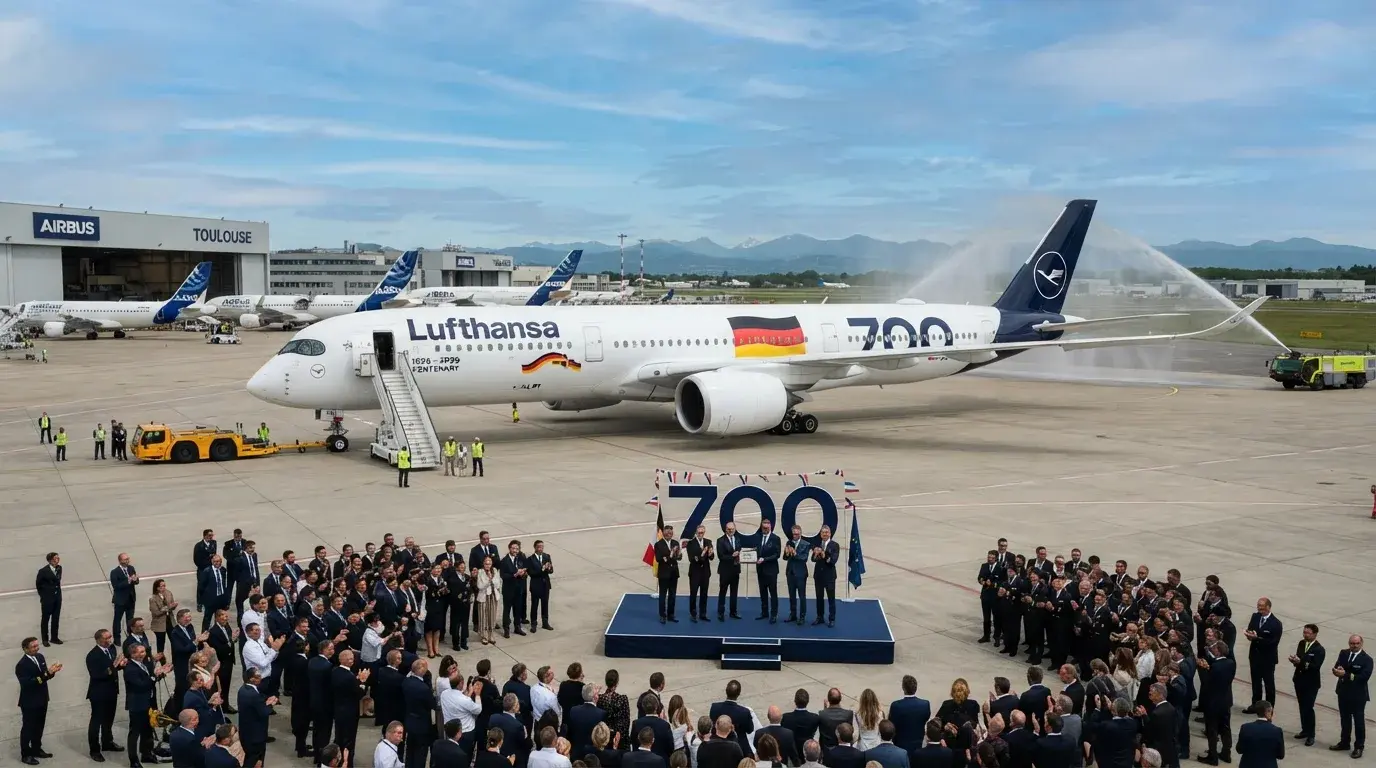
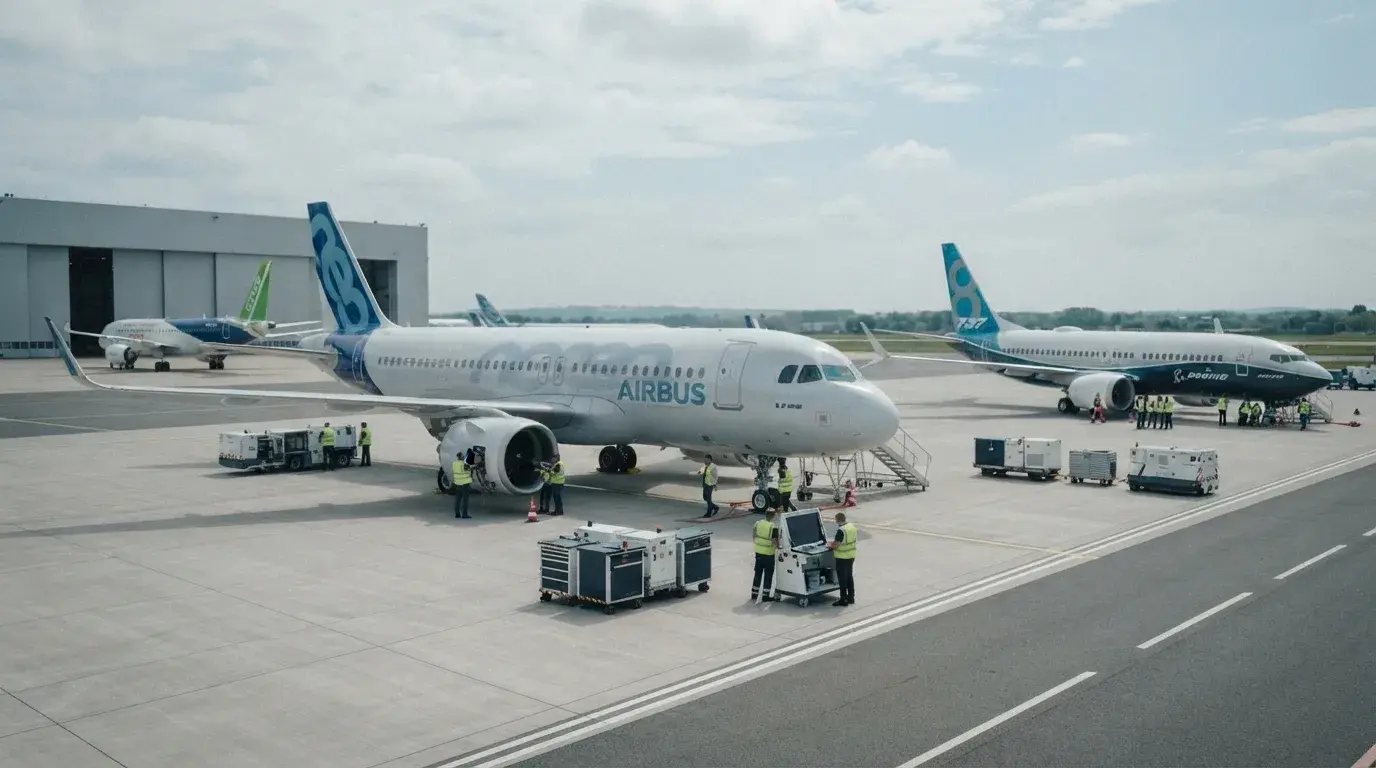
Lufthansa Group marked a major industrial milestone on November 10, 2026, by taking delivery of its first Airbus A350-1000 in Toulouse, bringing the European manufacturer’s total deliveries to Lufthansa to 700 aircraft. Registered D-AIFA and christened « Deutschland » in tribute to the airline’s 100th anniversary, the aircraft represents a symbolic step forward in the modernization of the German carrier’s long-haul fleet.
The delivery of this A350-1000 follows a precise schedule: after ferrying to Munich, the aircraft will enter commercial service on December 3, 2026, operating the Munich-Tokyo Haneda route before expanding to Shanghai and Singapore in the weeks that follow. This service launch coincides with Lufthansa’s centennial celebrations, founded in 1926, and features a special blue livery adorned with a white crane and commemorative inscriptions reading « 1926 | 2026 » and « 100 ».
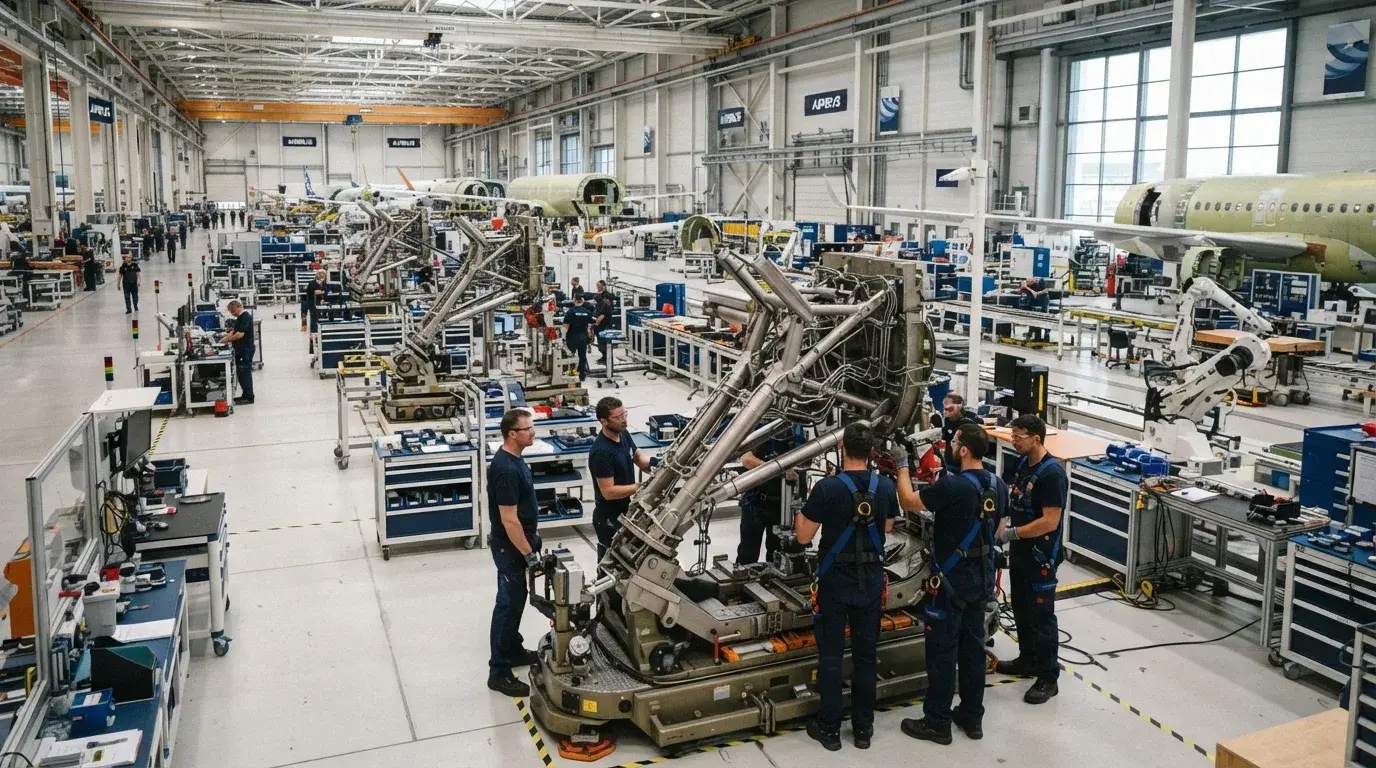
For Airbus, this delivery is more than just a number—it underscores the strength of the long-standing relationship between the two historic partners. From the first A321s in the 1990s to this latest A350 variant, Lufthansa has been a launch customer for several of the European airframer’s iconic models. With this 700th delivery, the German group solidifies its position among Airbus’s top customers, alongside carriers like Singapore Airlines and Qatar Airways.
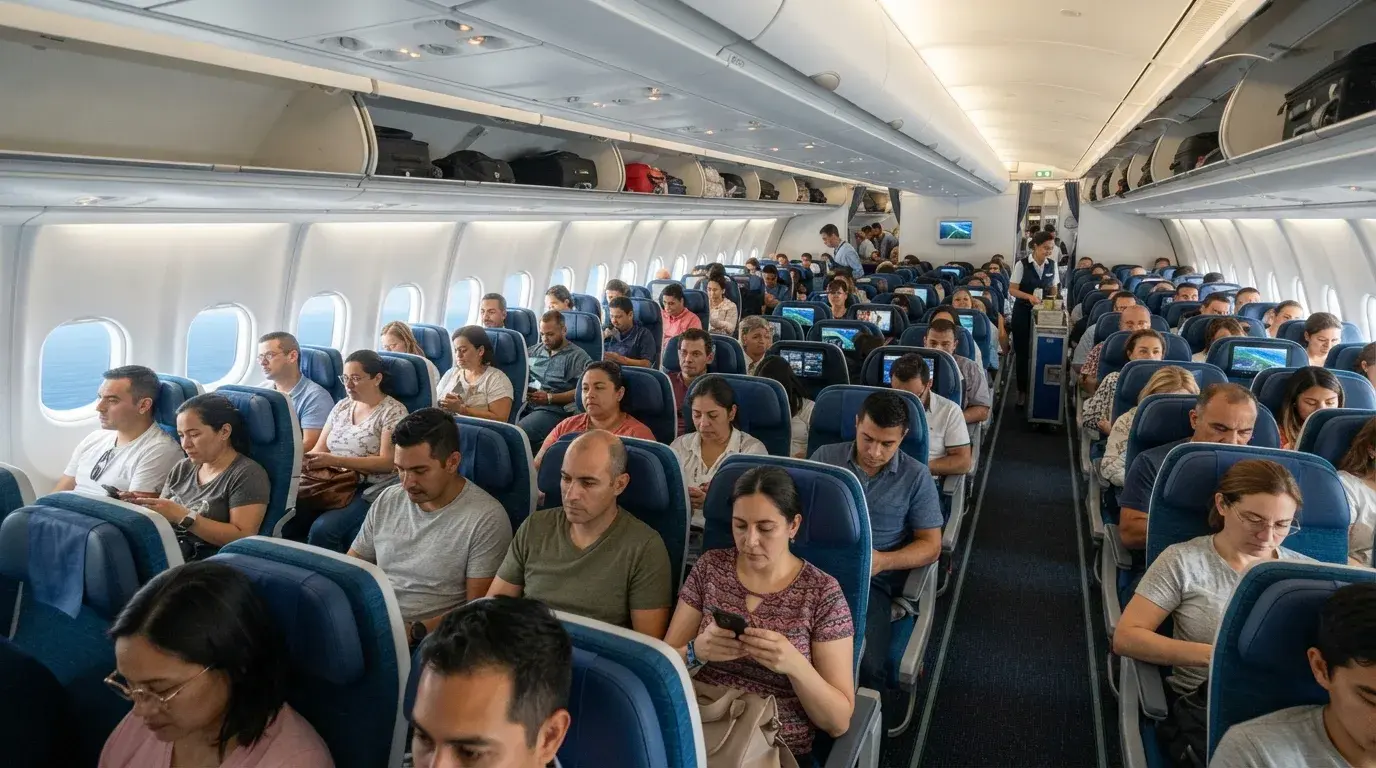
Lufthansa’s A350-1000 features an Allegris four-class cabin capable of accommodating up to 300 passengers, compared to the typical 350–410 seats in this variant. The seating layout balances comfort and capacity: six First Class seats, 49 Business Class, 35 Premium Economy, and 212 Economy Class. This configuration reflects the airline’s ambition to deliver a premium experience on long-haul routes while maintaining a reasonable density to preserve profitability.
This delivery arrives as Lufthansa accelerates its fleet modernization. The airline has ordered 15 A350-1000s, with deliveries scheduled through 2030. These aircraft will bolster Munich’s hub, already transformed into a premium platform for intercontinental connections. According to Heiko Reitz, Member of the Executive Board of Lufthansa Airlines and responsible for the Bavarian hub, « the introduction of the new A350-1000 is part of the most significant fleet modernization in Lufthansa Group history. Simply put: the A350-1000 strengthens our premium hub in Munich. »
Powered by two Rolls-Royce Trent XWB-97 engines, Lufthansa’s A350-1000 benefits from the aircraft’s technological innovations, including a composite structure accounting for over 50% of its materials. Airbus claims a 25% advantage in fuel consumption, operating costs, and CO₂ emissions compared to previous-generation competitors—a performance that enhances both environmental and commercial appeal.
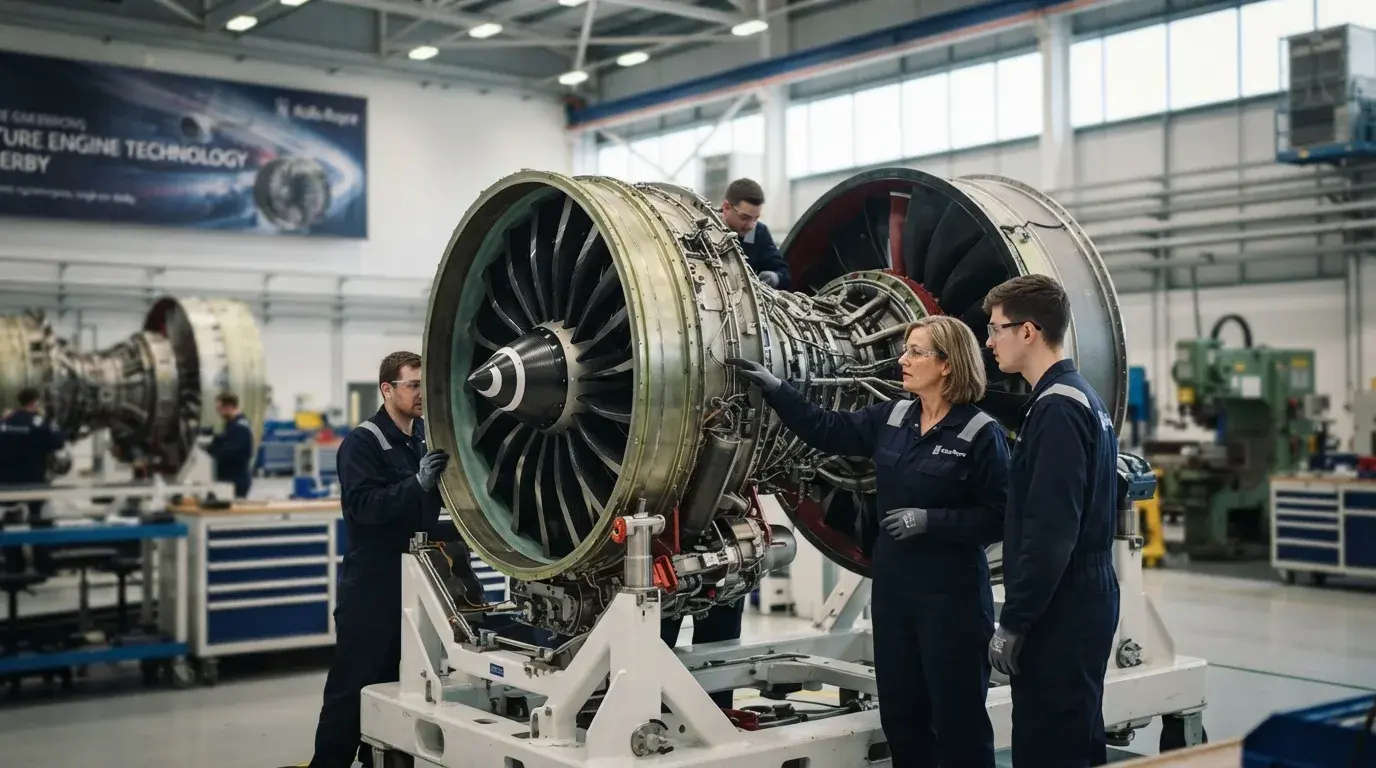
The choice of Trent XWB-97 engines is strategic: these engines, specifically designed for the A350, offer increased thrust over standard versions, enabling the aircraft to carry more passengers or cargo on long-haul routes. For Lufthansa, this means greater flexibility on routes like Munich-Tokyo, where passenger density fluctuates seasonally.
Beyond technical performance, this delivery also symbolizes the aviation industry’s ecological transition. The A350-1000, like the entire A350 family, is engineered to reduce the carbon footprint of long-haul flights. With a target of 25% fewer emissions than previous-generation aircraft, the aircraft aligns with Lufthansa Group’s decarbonization strategy, which aims to cut emissions by 50% by 2030 compared to 2019 levels.
For Airbus, this collaboration with Lufthansa is a vote of confidence. As of October 2026, the A350 family had amassed 1,628 orders from 70 customers worldwide. The A350 family—comprising the A350-900, A350-1000, and ULR (Ultra Long Range)—has become a cornerstone of the European airframer’s portfolio, competing with the Boeing 787 Dreamliner and 777X.
The arrival of the centennial-colored A350-1000 marks a dual symbol: that of a sustainable industrial alliance and a shift toward more efficient, environmentally responsible air transport. As the first passengers board the « Deutschland » on December 3, this delivery opens a new chapter for the German group and European aviation.
The A350-1000: A Jet Built for Modern Long-Haul Challenges
At 73.8 meters in length, the A350-1000 is the longest variant in the A350 family. It features a fuselage stretched by nearly 7 meters compared to the A350-900, allowing it to carry up to 300 passengers in a four-class configuration or up to 410 seats in a high-density layout. Its composite structure, accounting for over 50% of its weight, delivers enhanced lightness and durability while reducing fuel consumption.
Lufthansa’s choice of a four-class configuration reflects a commitment to balancing capacity and comfort. Unlike some airlines that opt for high-density cabins to maximize revenue, Lufthansa prioritizes a premium experience, including eight suites in Business Class and a Suite Plus in First Class. This approach caters to business travelers and high-yield passengers willing to pay for quality onboard service.
The Allegris interior, introduced on the A350-900 in May 2024, is also featured on this new variant. Designed to elevate the passenger experience, the concept includes larger individual screens, customizable ambient lighting, and dedicated wellness zones for stretching or resting. For Lufthansa, these innovations are critical to differentiating itself in an increasingly competitive long-haul market.
Technically, the A350-1000 is equipped with advanced drag-reduction and fuel management systems, enabling a range of 16,100 kilometers—one of the highest in its class. This performance is crucial for routes like Munich-Tokyo, where distances exceed 9,500 kilometers. With fuel consumption reduced by 25% compared to previous-generation aircraft, the aircraft also offers significant economic advantages for airlines.
Finally, the A350-1000 is designed to meet the strictest safety and certification standards. Its entry into service with Lufthansa is accompanied by an intensive training campaign for crews to ensure optimal operation. For Airbus, this delivery also validates the latest improvements to the A350 family, particularly in maintenance and reliability.
A Busy Industrial Calendar for Airbus and Lufthansa
The delivery of the A350-1000 to Lufthansa fits into a busy industrial schedule for Airbus. The European airframer confirmed that the first ULR (Ultra Long Range) variant, destined for Qantas’ Project Sunrise, is scheduled for delivery in April 2027. This ambitious timeline highlights Airbus’s ability to meet the demands of airlines, even for complex projects like nonstop Australia-Europe routes.
For Lufthansa, the arrival of the A350-1000 is part of a broader modernization plan. The airline has announced the gradual retirement of several aircraft types, including the Airbus A340 and Boeing 747-400, in favor of the A350 and future Boeing 777-9s. This transition aims to reduce operating costs and improve the profitability of its long-haul network while aligning the fleet with the group’s decarbonization goals.
Alongside fleet renewal, Lufthansa continues to invest in its European hubs. Munich, with its new dedicated long-haul platform, is becoming a key player in the group’s network. The Bavarian hub, already Europe’s second-largest after Frankfurt, is seeing its role strengthened with the arrival of the A350-1000. Lufthansa is leveraging a hub-and-spoke strategy to attract more passengers, particularly from Asia and North America.
The German group has also announced partnerships to expand its network. The acquisition of a 44.9% stake in TAP Air Portugal, finalized in early November 2026, illustrates this ambition to enhance connectivity between Europe and Latin America. With this stake, Lufthansa can offer optimized connections for passengers traveling between Brazil, Portugal, and the rest of Europe.
For Airbus, this collaboration with Lufthansa is a commercial success. The airframer has delivered over 700 aircraft to the German group since the start of their partnership, with orders continuing to pour in. With 1,628 orders for the A350 family as of October 2026, Airbus confirms its leadership in the long-haul market, ahead of Boeing and Comac.
The A350-1000 and the Aviation Industry’s Ecological Transition
The arrival of the A350-1000 in Lufthansa’s fleet is accompanied by a clear ambition: reducing the carbon footprint of air transport. With fuel consumption reduced by 25% and CO₂ emissions down by the same margin, the A350-1000 is one of the most environmentally friendly aircraft in its class. For Lufthansa, this aircraft is part of a broader decarbonization strategy that includes the use of sustainable aviation fuels (SAF) and investments in innovative technologies.
The German carrier has committed to cutting its CO₂ emissions by 50% by 2030 compared to 2019 levels and achieving carbon neutrality by 2050. To achieve this, Lufthansa is leveraging multiple levers: route optimization, SAF adoption, improved operational efficiency, and fleet renewal with aircraft like the A350-1000. According to the airline’s calculations, each A350-1000 emits about 25% less CO₂ than a Boeing 777-300ER, for example.
The use of composite materials in the A350-1000’s structure plays a key role in reducing emissions. These materials, lighter than aluminum, decrease the aircraft’s mass, translating to lower fuel consumption. Additionally, the A350-1000 is designed for easier maintenance, reducing downtime and improving operational availability.
For Airbus, the A350 family symbolizes aeronautical innovation. The airframer is leveraging technologies like 3D-printed parts, advanced fuel management systems, and recyclable materials to minimize the environmental impact of its aircraft. The A350-1000, with its ability to operate long-haul routes while consuming less fuel, embodies this vision of a more sustainable air transport industry.
Lufthansa, for its part, has already begun integrating SAF into its operations. The airline has signed agreements to purchase hundreds of thousands of tons of sustainable fuel and plans to gradually increase its share in flights. The use of SAF, combined with the arrival of the A350-1000, will enable Lufthansa to significantly reduce its carbon footprint by 2030.
Finally, Lufthansa’s ecological transition is accompanied by a focus on passenger experience. The Allegris interior, with its wellness-focused spaces and optimized onboard services, aims to reduce traveler stress during long flights. This approach aligns with a broader goal of making air transport more pleasant and environmentally responsible.
The delivery of the centennial-colored A350-1000 to Lufthansa represents far more than a simple fleet renewal: it symbolizes the convergence of industrial innovation, ecological transition, and passenger experience. As the « Deutschland » prepares to take off for Tokyo on December 3, this delivery heralds a new era for European air transport.
Be the first to comment on this article
On the same topic
- Air India Bets Big on Wide-Bodies to Revive International Network and Challenge Boeing & Airbus
- LATAM Airlines Launches Geneva-Santiago Direct Route: A Game-Changer for European Travelers
- Toulouse-Blagnac bets on A330neo and A321XLR to revolutionize long-haul flights this winter
- Emirates reinvents its fleet: Why the 777X could replace 35 Dreamliners
- British Airways Revives East Africa Routes: Kilimanjaro and Zanzibar from London
- RwandAir bets on long-haul with four additional Airbus A330-200s: here are the targeted destinations