Emirates reinvents its fleet: Why the 777X could replace 35 Dreamliners
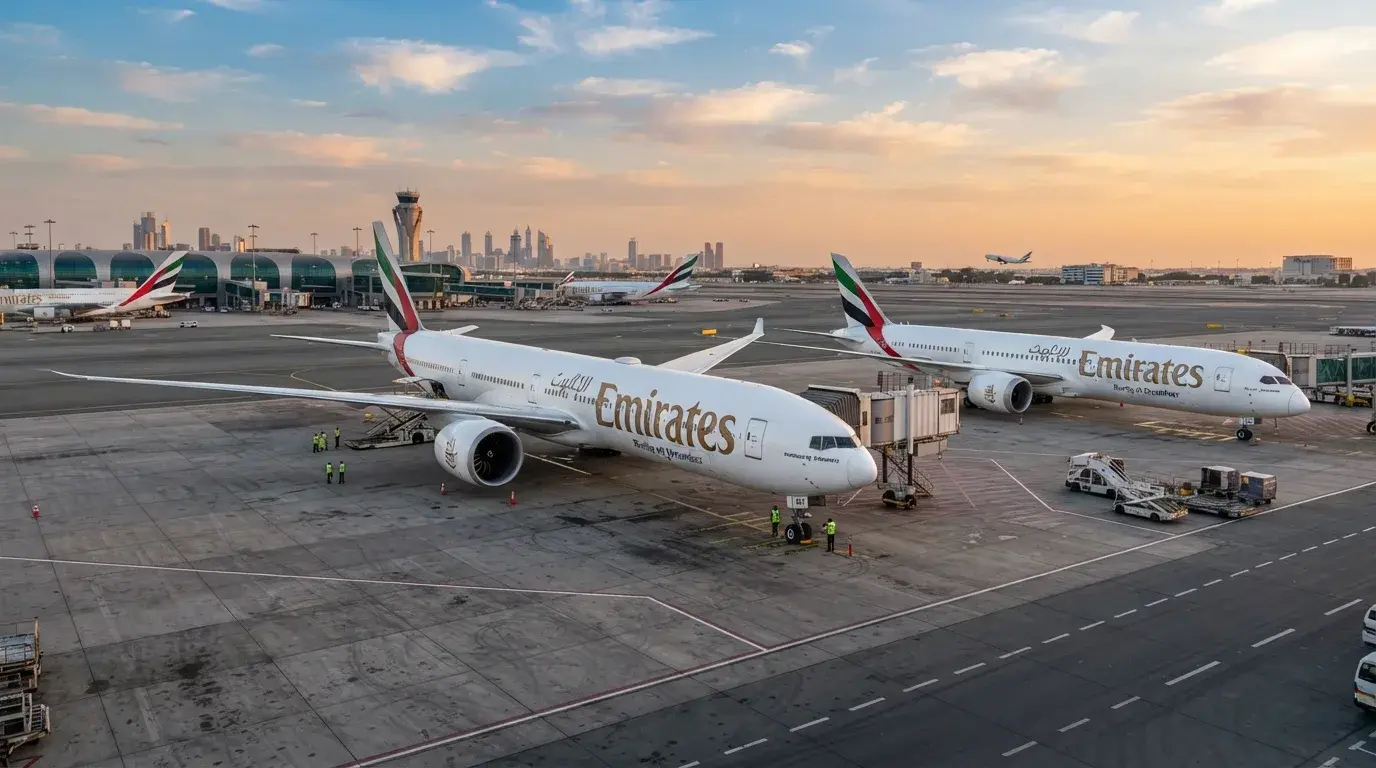
Dubai-based Emirates is set to disrupt the balance of its fleet with a major decision regarding its orders from Boeing. The airline is considering converting its entire order of 35 Boeing 787 Dreamliner aircraft into Boeing 777X jets, a strategic shift that could redefine its long-haul network and operational capabilities for years to come. This option, still under discussion, comes amid persistent delays in Dreamliner deliveries and a reassessment of Emirates’ long-term needs.
The reasons behind this reversal are multifaceted and revolve around several key challenges. First, the accumulated delays in 787 deliveries have forced Emirates to rethink its timeline. According to Adel Al Redha, Emirates’ Deputy Group CEO and Chief Operating Officer, the first Dreamliners are not expected before late 2029—a timeline deemed too long to meet immediate fleet needs. Additionally, supply chain constraints for engines and seats, along with certification delays for certain cabin equipment, continue to weigh on the 787 program. These obstacles have led Emirates to explore faster-to-deploy alternatives.
Among the options under consideration, the Boeing 777X stands out as a suitable solution. This long-haul aircraft, powered by GE9X engines and designed for reduced fuel consumption, offers a capacity similar to the 787 while benefiting from a more immediate delivery schedule. Emirates hopes to receive its first 777Xs starting in mid-2027, a timeline far closer than that of the Dreamliners. However, this model is not without challenges: its certification program is still ongoing, and further delays could persist, meaning the order conversion would not guarantee immediate delivery.
The arrival of the Airbus A350 in Emirates’ fleet adds a new dimension to this equation. With seating capacity and range comparable to the 787, the A350 already provides a partial solution to the airline’s needs. Since its first delivery in 2024, the A350 has been deployed on regional, European, and long-haul routes, allowing Emirates to temporarily fill the gap left by delays in other aircraft. This operational flexibility plays a key role in the fleet development strategy while awaiting new deliveries.
The initial order for 35 787s, signed in November 2023 after several modifications over the years, represents a significant commitment for Emirates. Originally, the airline had planned to acquire 40 787-10s in 2017, before reducing this to 30 787-9s in 2019, and later increasing it to 35 aircraft in 2023. Converting this order to 777Xs would mark another shift in direction, further solidifying the 777X’s role in the future fleet and potentially ending the Dreamliner’s introduction. For now, discussions with Boeing are ongoing, and both options remain open.
This decision could have significant repercussions for Emirates’ network. The 777X, with its increased capacity and extended range, would enable the airline to open new routes or increase frequencies on existing ones. For example, Emirates could strengthen its presence in Africa, Southeast Asia, or North America—regions where demand for premium flights remains strong. Additionally, the cabin configuration, often cited as a major asset of the 777X, would offer comfort and modularity tailored to the expectations of both business and leisure travelers.
Another potential advantage of this conversion lies in its synergy with other aircraft in the fleet. The 777X shares common features with the current 777-300ER, which could simplify crew training and maintenance. This technical continuity is a critical factor for a carrier like Emirates, which prioritizes operational efficiency to optimize costs and customer satisfaction.
However, this strategic choice is not without risks. Converting the order could lead to additional costs, particularly in renegotiating contracts with Boeing. Moreover, if 777X delivery delays persist, Emirates could find itself in a position where it lacks an immediate solution to replace aging aircraft. Finally, aligning this decision with market needs remains to be confirmed: Is the 777X truly the best choice for the next decade, or should Emirates consider other alternatives, such as used aircraft or short-term leases?
Regardless, this reassessment highlights the complexity of managing an airline fleet in an era of industrial uncertainty. Between manufacturing delays, fluctuating fuel costs, and evolving passenger expectations, airlines today must demonstrate unprecedented agility. For Emirates, this decision could prove to be a masterstroke or a risky gamble—but one thing is certain: it is redefining the competitive landscape in the long-haul aviation sector.
All eyes are now on the next steps in these discussions. If the conversion is confirmed, it could mark the beginning of a new era for Emirates, with the 777X dominating its long-haul fleet and a repositioned strategy for the years ahead.
The 777X: A long-haul jet tailored to Emirates’ needs
The Boeing 777X is often presented as the natural successor to the airline’s legendary 777s. With a capacity of up to 426 passengers in high-density configuration, it positions itself as an ideal aircraft for high-traffic routes while offering 12% lower fuel consumption than its predecessor. This efficiency gain is crucial in a context where fuel costs represent a major portion of airlines’ expenses.
A key innovation in the 777X lies in its composite wings and folding wingtips, which allow it to operate from airports with shorter runways while maintaining a range of 13,100 kilometers. This flexibility is a major asset for Emirates, which serves a diverse range of destinations, from major metropolises to less accessible airports. Additionally, the 777X’s cabin is designed to deliver unparalleled comfort, with larger windows, optimized humidity levels, and improved pressurization—features frequently highlighted by premium travelers.
For Emirates, which prioritizes a high-end customer experience, these characteristics are essential. The 777X would enhance the appeal of long-haul routes, particularly on services like Dubai-New York, Dubai-Los Angeles, or Dubai-Sydney, where demand for business and first-class seats remains strong. The airline could also use it to develop new routes in Africa or South America, markets where competition is intensifying.
Economically, the 777X strikes a balance between capacity and operational cost. With a list price estimated at around $350 million per aircraft, it represents a significant investment but is justified by its versatility and expected longevity. For Emirates, which has long favored high-capacity aircraft to optimize cost per seat, this model aligns perfectly with its philosophy.
If the order conversion to 777X is confirmed, Emirates will become the launch operator of this new 777 generation, a status that will give it a distinct competitive advantage. The airline will be able to shape the in-flight experience on this aircraft type and influence passenger expectations for years to come.
The A350: A temporary solution that takes root in the fleet
While awaiting deliveries of the 777X or 787, Emirates is relying on the Airbus A350 to meet its immediate fleet needs. Since its first delivery in 2024, the A350 has been deployed on a variety of routes, from regional flights to long-haul services. This model, renowned for its energy efficiency and comfort, offers a credible alternative to the Dreamliner, with 25% lower fuel consumption compared to previous-generation aircraft.
The A350 is available in two variants: the A350-900 and the A350-1000. The former, with a capacity of 325 passengers, is ideal for medium and long-haul routes, while the latter, accommodating up to 410 passengers, is designed for very high-traffic routes. Emirates has already received several A350-900s and plans to expand its fleet with A350-1000s in the coming years.
This strategic choice allows Emirates to diversify its supply sources and reduce its dependence on a single manufacturer. In a context where geopolitical tensions and industrial uncertainties weigh on supply chains, this diversification is a major asset. Additionally, the A350 offers cabin modularity that allows for quick configuration adjustments based on demand—a significant advantage for an airline like Emirates.
For passengers, the A350 represents a significant improvement in comfort. With higher pressurization, optimized humidity levels, and larger windows, this model is often praised for its onboard ambiance. Business and premium economy classes particularly benefit from these innovations, making it a popular choice among discerning travelers.
In the medium term, the A350 could play a key role in Emirates’ growth strategy. If the 777X order conversion is confirmed, the A350 could be redeployed on routes with lower demand or used to test new services before assigning them to larger aircraft. This flexibility is a major asset for an airline seeking to optimize every segment of its network.
The challenges Emirates must overcome
Despite the clear advantages of the 777X and A350, Emirates faces several challenges in executing this transition. The first concerns potential delays in the 777X program. While certification is expected in 2027, unforeseen issues could still arise, pushing back deliveries. In that case, Emirates would need to continue relying on its existing fleet, such as the 777-300ER and A380, to maintain its network.
Another challenge is the renegotiation of contracts with Boeing. Converting an order for 35 aircraft represents a major change in commercial agreements, and discussions could take time. Emirates will need to ensure that the financial and logistical terms of this conversion are advantageous, particularly in terms of pricing and delivery schedules.
Finally, integrating the 777X into the fleet will require additional investments in crew training and maintenance. While the 777X shares similarities with the current 777s, its introduction will require adaptations to fully leverage its capabilities. Emirates, which has always emphasized service quality, will need to ensure these adjustments do not compromise passenger satisfaction.
These challenges underscore the importance of rigorous planning. Emirates will need to closely monitor the progress of the 777X and A350 programs while remaining flexible to adapt to unforeseen circumstances. In a sector as competitive as aviation, every strategic decision must be carefully weighed to avoid costly mistakes.
Impact on the long-haul market
Emirates’ decision could have repercussions far beyond its own operations. By opting for the 777X, the airline sends a strong signal to Boeing and Airbus, two manufacturers competing to dominate the long-haul market. For Boeing, confirmation of the conversion would be a major victory, affirming the relevance of the 777X against Airbus’ A350. For Airbus, it could prompt accelerated development of the A350 and strengthen its commercial arguments with other airlines.
Competitively, this decision could shift the balance of power on certain routes. Emirates is a major player in the Gulf market, and the introduction of the 777X could allow it to strengthen its position against rivals like Qatar Airways or Etihad. For example, on routes like Dubai-London or Dubai-Paris, increased capacity could lead to lower fares or improved service, ultimately benefiting passengers.
Furthermore, this transition reflects a broader trend in the industry: the search for a more flexible and passenger-centric fleet. Airlines are increasingly focused on aircraft modularity, fuel efficiency, and environmental impact. The 777X and A350 meet these criteria, making them wise choices for the years ahead.
Finally, this evolution could influence the strategies of other carriers. If Emirates confirms its preference for the 777X, other airlines may follow suit, particularly those looking to modernize their fleets without waiting for aircraft like the A350 or 787. This dynamic could accelerate global fleet renewal, with positive ripple effects on energy efficiency and passenger comfort.
For travelers, this transition could translate into improved offerings, with more modern and comfortable aircraft on long-haul routes. Airlines, in pursuit of differentiation, may highlight these innovations to attract passengers and build customer loyalty.
In conclusion, Emirates’ decision to convert its order of 35 787s to 777Xs marks a turning point in the airline’s strategy and in the long-haul aviation sector. Amid industrial delays, economic challenges, and evolving passenger expectations, this evolution illustrates the challenges and opportunities facing airlines today. If executed well, this transition could propel Emirates to the forefront of long-haul operators and redefine the standards of comfort and efficiency in the skies.
All eyes are now on the next steps in these discussions, which could shape the future of aviation for years to come.
Further reading
To learn more about the technological innovations of the aircraft mentioned or the strategies of airlines, explore the following resources:
Boeing’s official website, where you’ll find detailed information on the 777X and other programs.
Airbus’ official website, to discover the features of the A350 and its operational advantages.
Emirates’ official website, to stay updated on the airline’s latest news and fleet announcements.
Be the first to comment on this article
On the same topic
- Emirates Weighs Swapping Boeing 787s for 777Xs: A Strategic Shift That Could Transform Long-Haul Travel
- China Finally Validates Its Order for 200 Boeing Aircraft: What This Means for Your Next International Flights
- Air France-KLM struggles amid fuel shock: How the airline withstands a 71% profit plunge
- Flybondi: March Salaries Unpaid as Argentine Low-Cost Airline Faces Pressure
- Rising Fuel Costs: Delta Air Lines Posts Loss, Cuts Capacity, and Raises Fares
- Copa Airlines unveils its 2026 ambitions: 420 daily flights and 88 destinations