Flybondi: March Salaries Unpaid as Argentine Low-Cost Airline Faces Pressure
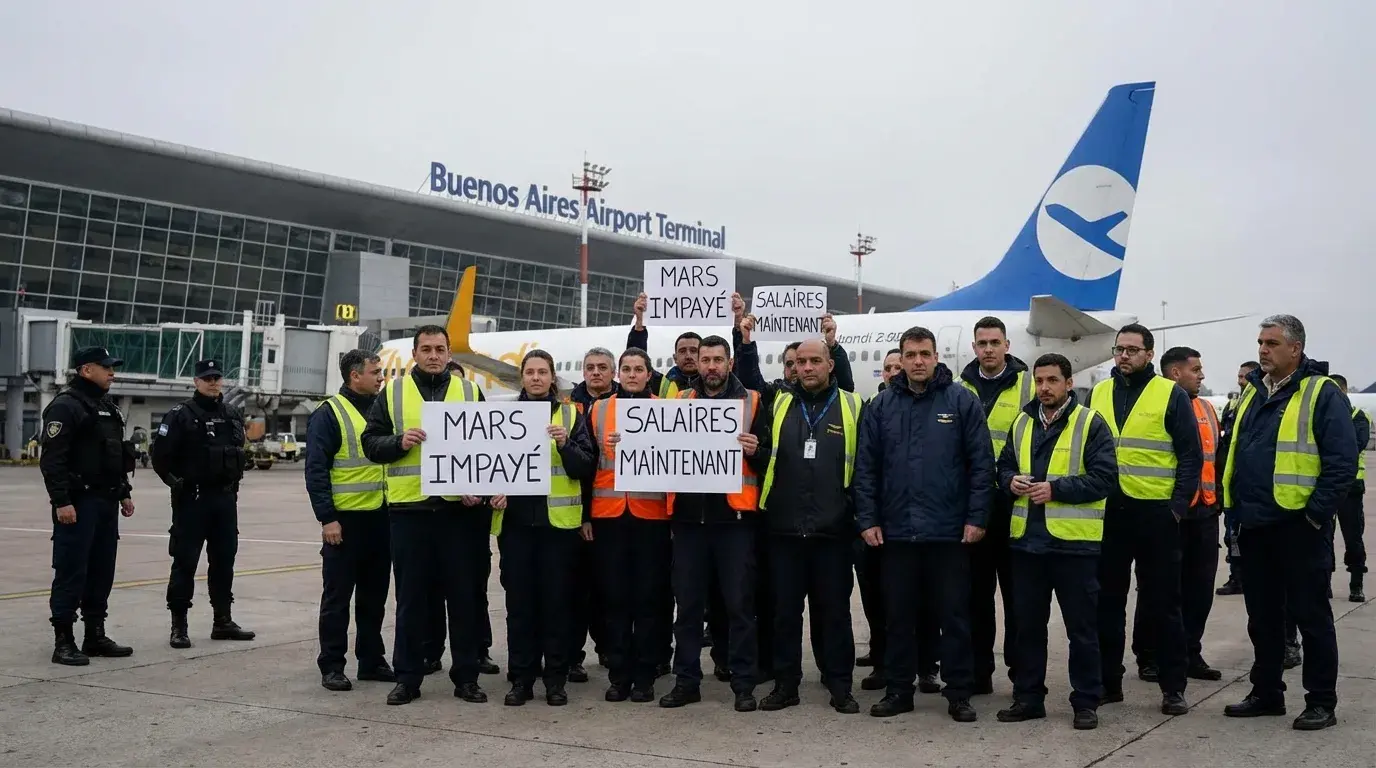
Argentine low-cost carrier Flybondi is navigating turbulent skies after failing to pay March salaries on time while also dealing with flight cancellations linked to the grounding of part of its fleet leased under ACMI (Aircraft, Crew, Maintenance and Insurance) agreements. The episode, described by management as “exceptional,” has reignited concerns about the financial sustainability of its ultra low-cost model in Argentina’s increasingly strained economic climate.
A low-cost airline admitting to an “exceptional” pay delay
In an internal memo sent to all staff, Flybondi acknowledged the delay in March salary payments and stated that no specific date for resolution had yet been confirmed. “We are going through a difficult situation and we understand the impact this has on you and your families. We deeply regret having to share this news,” the airline wrote in the communication, framing the delay as a “completely exceptional” case in its eight years of operations in Argentina. Management explained that it had been “impossible, for administrative reasons, to transfer the March salaries on the scheduled date,” while assuring employees that payment would be made “in the coming days.”
According to several Argentine media outlets, the message—distributed under the internal greeting “Hola flybondiers”—stressed that the team was “100% mobilized to resolve the situation as quickly as possible and confirm the payment date.”
Partially paid crews, but growing unrest among staff
Flybondi clarified that it had simultaneously disbursed certain allowances and travel per diems to crews. The airline noted that on April 9, it paid the day allowances for cockpit and cabin crews in an effort to ease tensions with personnel most directly affected by operational irregularities.
Nevertheless, discontent has been rising. Local press reports indicate that the Flybondi Aeronautical Workers’ Association (ATAF) has declared a state of alert and warned it may launch a 24-hour work stoppage if salaries are not paid promptly. “The company cannot demand constant effort from workers while delaying salary payments,” a union representative told the Argentine press, describing a climate of “growing uncertainty” within the airline.
Eight aircraft grounded and a crisis over ACMI contracts
This labor dispute comes as Flybondi emerges from a critical operational episode involving the temporary grounding of eight aircraft operated under ACMI leasing agreements—a model that includes the aircraft, crew, maintenance, and insurance. Between early and mid-March, two ACMI providers decided to ground their planes amid commercial renegotiations with Flybondi, triggering a wave of cancellations and delays that affected thousands of passengers on Argentina’s domestic network.
According to sector data cited by local media, this partial paralysis, which began on March 5, involved eight ACMI-operated aircraft and accounted for nearly 70% of the airline’s cancellations during that period.
Flybondi stated in mid-March that it had reached agreements with its lessors to gradually normalize operations throughout the month, while maintaining a heavy reliance on this flexible leasing model—a cornerstone of its expansion strategy for several years.
An ultra low-cost model heavily dependent on wet-lease
Since 2024, Flybondi has increasingly relied on ACMI wet-lease to support its growth, temporarily adding extra capacity during peak seasons, including Boeing 737-800 aircraft operated by European specialists. This strategy enabled the airline to rapidly boost its domestic capacity in Argentina, capitalizing on high-demand windows following sector liberalization and regulatory easing.
However, the March episode underscores the flip side of this approach: heightened dependence on external providers, whose aircraft can be grounded in the event of contractual disputes or commercial disagreements, with an immediate impact on flight schedule reliability.
“The reliance on external suppliers for the core of operations—aircraft, crew, and maintenance—through the ACMI leasing model has proven to be a double-edged sword during periods of financial or contractual strain,” noted a recent report by an Argentine aviation industry outlet.
Argentina’s airline sector under strain
Flybondi’s situation reflects the broader challenges facing Argentina’s airline industry, which is grappling with regulatory uncertainty, currency volatility, and costs largely dollarized (fuel, leasing, maintenance).
Airlines, particularly those operating ultra low-cost models, must constantly balance rapid growth, fleet flexibility, and financial discipline in an environment where margins are thin and passengers are highly price-sensitive. Flybondi, which recently touted one of the strongest growth rates in Argentina’s domestic market, had positioned ACMI leasing as a key pillar of its strategy, allowing it to “quickly put aircraft into service while limiting investment risks.”
@Flybondi
Be the first to comment on this article
On the same topic
- Emirates Weighs Swapping Boeing 787s for 777Xs: A Strategic Shift That Could Transform Long-Haul Travel
- China Finally Validates Its Order for 200 Boeing Aircraft: What This Means for Your Next International Flights
- Air France-KLM struggles amid fuel shock: How the airline withstands a 71% profit plunge
- Rising Fuel Costs: Delta Air Lines Posts Loss, Cuts Capacity, and Raises Fares
- Copa Airlines unveils its 2026 ambitions: 420 daily flights and 88 destinations
- The double life of the King of the Netherlands: co-pilot with KLM for almost 30 years