Severe clear-air turbulence strikes Cathay Pacific A350, injuring 10 passengers
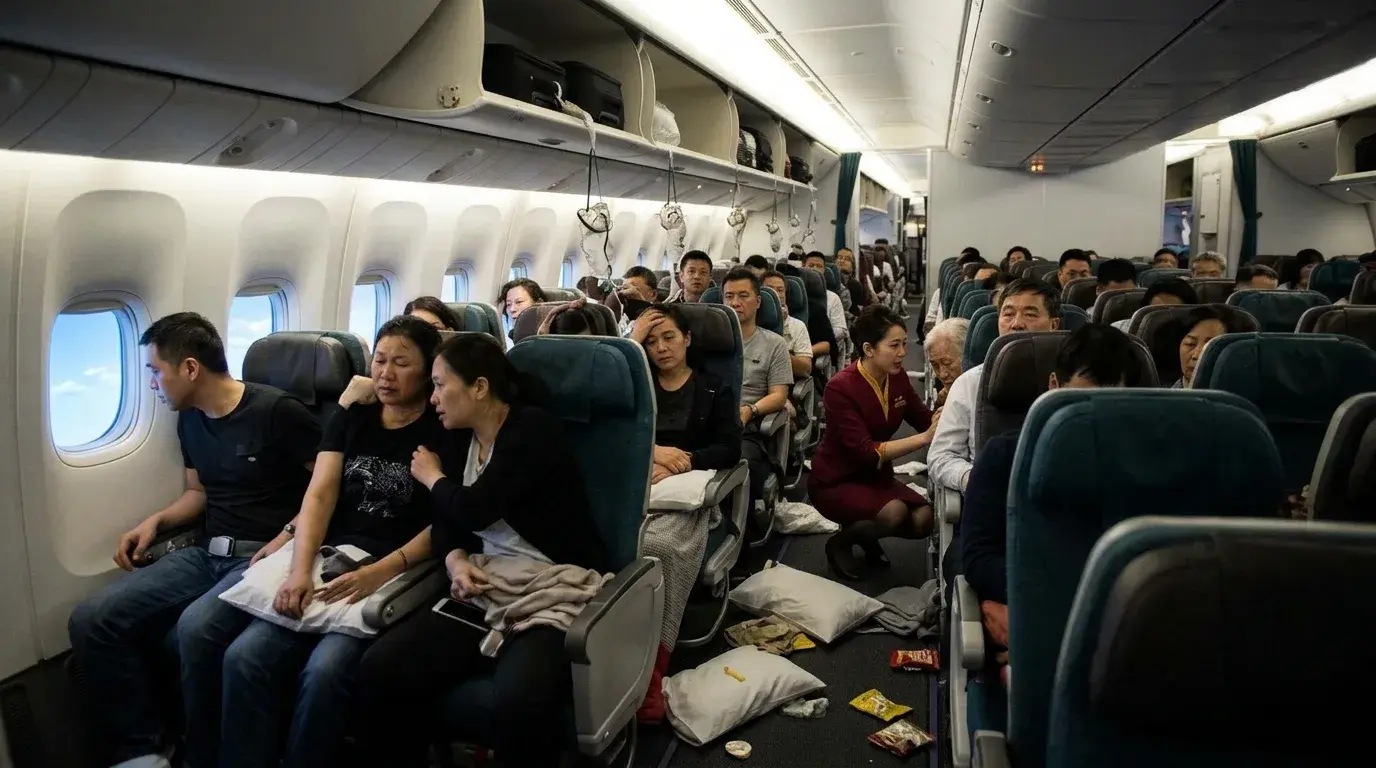
A Cathay Pacific Airbus A350‑900 flight from Brisbane to Hong Kong was violently shaken on Saturday, 23 May 2026, injuring ten people—six crew members and four passengers—just two hours before landing. Passengers described a sudden, free-fall sensation, with meal carts overturning and oxygen masks deploying. Upon landing, medical teams boarded the aircraft to treat the injured, eight of whom were hospitalized for further evaluation.
Cathay Pacific immediately launched an investigation, gathering data to clarify the exact circumstances. “We are collecting further information to better understand what happened, and it would be premature to draw conclusions at this stage. The safety of our customers and crew guides every decision we make,” a company spokesperson stated. The incident has reignited industry-wide concerns about the ability of weather radar systems to detect clear-air turbulence (CAT).
Invisible turbulence: A detection challenge for aviation
Clear-air turbulence (CAT) is among the most feared phenomena in aviation because it strikes without warning. Unlike conventional turbulence associated with clouds or storms, these violent jolts at high altitude evade onboard weather radars, which rely on detecting moisture. “Even the most advanced radars cannot fully detect high-altitude clear-air turbulence,” warns Warren Chim Wing‑nin, vice-president of the Aeronautical Division at the Hong Kong Institution of Engineers. He adds, “High-altitude CAT is practically invisible to these systems.” While meteorological forecasts and pilot reports remain essential, they are insufficient for precise prediction.
Steven Cheung King‑lung, president of the Hong Kong Air Line Pilots Association, emphasizes that “crew members must manage a risk that can never be entirely eliminated.” The Cathay Pacific incident occurs amid growing evidence of an increase in the frequency and severity of turbulence, linked to climate change. Convective storm systems now reach altitudes above 40,000 feet, encroaching on cruising levels and making these phenomena even more unpredictable.
The shadow of Singapore Airlines SQ321 looms over the investigation
This incident closely mirrors the Singapore Airlines flight SQ321, which experienced extreme turbulence over Myanmar in May 2024. The event caused a 54-meter plunge in just 4.6 seconds, resulting in one fatality and 79 injuries. Investigators later suggested possible underdetection by onboard weather radar of convective conditions along the flight path. The final report, still pending, may clarify responsibilities regarding the use of available weather data by crews.
Peter Carter, director of Australian law firm Carter Capner Law, which represents SQ321 passengers, argues that airlines sometimes too quickly invoke the “unpredictable clear-air turbulence” defense to avoid liability. Under the Montreal Convention of 1999, passengers injured in turbulence-related incidents are automatically entitled to compensation of up to AUD 260,000, regardless of fault. Beyond this threshold, carriers may face unlimited liability if operational negligence is proven.
A growing risk amid climate instability
For many experts, the Cathay Pacific incident reflects a broader trend: the rising threat of climate-driven turbulence. Scientific evidence increasingly links more frequent and severe turbulence to global warming. Convective storm systems now form at altitudes once reserved for commercial flights, drastically reducing crew reaction time.
Safety authorities are urging airlines to improve real-time turbulence reporting through modern aircraft connectivity. The goal is to better map high-risk routes and adapt operational procedures. Yet despite these advancements, zero risk remains unattainable. Airlines, including Cathay Pacific, continue to stress the importance of keeping seatbelts fastened at all times. “For passengers, the old advice remains the best: keep your seatbelt fastened whenever seated,” Warren Chim advises.
As the technical investigation continues in Hong Kong, the Cathay Pacific incident serves as a stark reminder that aviation’s challenges extend beyond visible turbulence or mechanical failures. They now include an urgent response to the climate’s impact on flight safety.
Why clear-air turbulence is so dangerous
Clear-air turbulence (CAT) consists of invisible air movements occurring without clouds or radar-detectable signals. They result from wind speed or direction differences at various altitudes, often linked to jet streams or contrasting air masses. While CAT can occur at any altitude, it is particularly hazardous at cruising levels, where aircraft fly at high speeds.
According to the U.S. Federal Aviation Administration (FAA), CAT accounts for over 70% of turbulence-related injuries. Unlike conventional turbulence, CAT cannot be detected by onboard weather radars, which depend on moisture. Crews must rely on weather forecasts, pilot reports, and air traffic control alerts to avoid danger zones. However, these tools often fail to provide sufficient warning, especially when conditions change rapidly.
Climate change exacerbates this issue by intensifying jet streams and destabilizing atmospheric conditions. As a result, clear-air turbulence is becoming more frequent and severe, posing an escalating challenge for global aviation.
Be the first to comment on this article
On the same topic
- Delays and tensions: why French air traffic control is at the heart of a European crisis
- Etihad Airways: an impressive network of 20 million passengers and a fleet of over 100 aircraft
- Vietnam Airlines reaches impressive milestone with over 350 million passengers
- Luggage and intermediate measures: new initiatives from Brussels to facilitate passenger travel
- Tax on airline tickets: Transavia passengers face inconvenience on the tarmac!
- ADP Group in 2024: Record net profit of 342 million euros and 363 million passengers handled