AirAsia X Becomes AirAsia Group: The Global Low-Cost Revolution Reshaping Travel in Asia
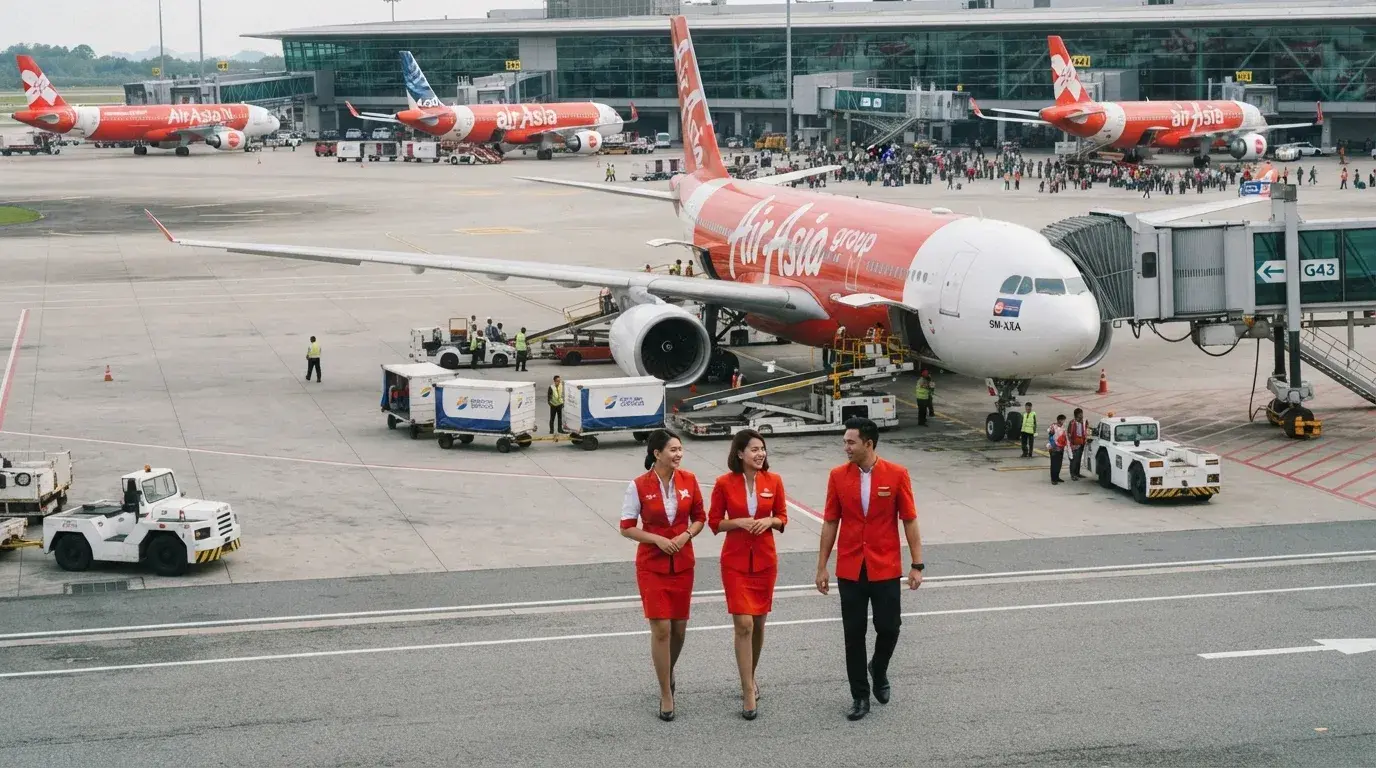
What appears to be a simple name change is, in fact, a major transformation for global aviation. Since July 2, 2026, the Malaysian group—previously structured as multiple distinct entities—has unified under a single banner: AirAsia Group Berhad. Approved by over 99.99% of shareholders and registered with Malaysian authorities, this is far more than a rebranding exercise.
Behind the new identity lies an ambitious strategy: to become "the world’s first low-cost network carrier," as stated by management. Historically split between short-to-medium-haul operations under AirAsia and long-haul services via AirAsia X, the group has now merged its operations into a single entity. The goal? To combine the scale of a major airline with the cost efficiency and flexibility that defined the brand—directly addressing years of competitive pressure and financial challenges, particularly in the post-pandemic era.
This restructuring aligns with a broader industry trend of consolidating airline operations under unified structures, while non-airline services are now grouped under the holding company Capital A. This clear separation aims to streamline accounting, eliminate administrative redundancies, and send a strong signal to markets: the group is future-focused and ready to move forward.
A Redesigned Network to Dominate Asia and Conquer Europe
AirAsia Group’s ambitions extend beyond internal consolidation. The carrier is overhauling its network with a hybrid approach blending point-to-point and hub-and-spoke models—a significant departure for a low-cost airline traditionally limited to direct routes. The FlyThru connectivity system now enables passengers to combine multiple flights within the group for optimized long-haul connections.
In Southeast Asia, where AirAsia Group holds a leadership position, the new structure strengthens domestic and regional links. In hubs like Kuala Lumpur, Bangkok, and Jakarta, passengers benefit from more cohesive schedules, smoother connections, and better-coordinated services. But the most dramatic changes are unfolding in Northeast Asia: after years of absence, the group is re-entering markets like South Korea, with the resumption of the Kuala Lumpur–Busan route since June 2026—a clear sign of its intent to play a key role in economic and tourism exchanges between Southeast Asia and its neighbors.
Europe is also a priority. With the launch of its first hub outside ASEAN in Bahrain—connecting Kuala Lumpur to London via a strategic stopover—AirAsia Group is laying the groundwork for a low-cost long-haul network. A first for the continent, where competition from Gulf giants like Emirates and Qatar Airways is fierce. This strategy relies on a modernized fleet, primarily featuring Airbus A330 aircraft for long-haul routes, alongside A321neo LR and A321XLR models for smaller-capacity medium-haul services.
A Fleet in Full Transition for Cost Efficiency
Fleet modernization is central to AirAsia Group’s strategy. The carrier has reactivated aircraft grounded during the pandemic and is accelerating the replacement of older models with newer, fuel-efficient aircraft—a critical priority amid volatile jet fuel prices and tightening CO₂ emissions regulations.
The group’s order book is impressive: over 430 Airbus A321neo LR/XLR aircraft are on the way, including a record 150 A320-300 orders signed in May 2026. The shift to next-generation single-aisle aircraft, which are lighter and more fuel-efficient, extends range while reducing cost per seat-kilometer. A decisive competitive advantage over rivals like Scoot and Cebu Pacific, which also operate low-cost models but with less optimized long-haul capabilities.
This transition includes a focus on unit cost rationalization, with daily aircraft utilization and traffic flow optimization. The group is improving coordination between its hubs to minimize costly downtime and maximize fleet productivity.
India and the Middle East: New Frontiers
Among the markets targeted by AirAsia Group, India holds a central position. Already served by routes from Kuala Lumpur, India’s role is expanding with new frequencies and better integration into the hub-and-spoke network. The goal? To capitalize on India’s demographic and economic growth, a massive potential for low-cost carriers, particularly for migrant worker and Asian tourist travel.
The Middle East, and particularly Bahrain, serves as a pivotal hub in this strategy. Bahrain’s strategic location and favorable regulatory environment enable connections between Asia, Europe, and Africa with optimized flight times. This approach allows AirAsia Group to bypass constraints of traditional hubs like Dubai or Doha while offering competitive fares.
This expansion is supported by local partnerships and deep market insights—two strengths the group has cultivated over the years. In both India and the Middle East, AirAsia Group relies on local commercial teams to tailor its offerings to each country’s specific needs, whether in pricing, services, or frequency.
A Bold but Calculated Gamble
With this restructuring, AirAsia Group is taking a bold bet: succeeding where others have failed by merging the scale of a major airline with the agility and cost efficiency of a low-cost carrier. The challenge is substantial, especially in an industry marked by fierce competition and razor-thin margins.
The hurdles are numerous. First, integrating the group’s diverse entities requires harmonizing processes, IT systems, and corporate cultures. Second, managing the fleet—with a mix of older and modern aircraft—demands rigorous maintenance and planning. Finally, conquering new markets means building a reputation against established players like IndiGo in India or Flynas in Saudi Arabia.
Yet the signs are encouraging. The group reports record fleet growth and sustained demand on existing routes. Investors appear convinced, as evidenced by the near-unanimous shareholder vote in June 2026. Most importantly, with this new structure, AirAsia Group is equipping itself to achieve its ambitions: becoming a global benchmark for low-cost air travel.
For travelers, this metamorphosis translates into a broader range of destinations, consistently competitive fares, and a smoother travel experience. A welcome development at a time when budget travel remains a top concern.
What This Means for You
Planning a trip to Asia or Europe this summer or fall? Here’s how this restructuring benefits you:
More destinations accessible directly or via connections, with better-coordinated schedules across the group’s hubs.
Competitive fares maintained through cost optimization and resource sharing.
A smoother travel experience with FlyThru connectivity easing connections and reducing wait times.
Modern, more comfortable aircraft, especially on long-haul routes where A330 and A350 aircraft gradually replace older models.
In short, AirAsia Group is no longer just another low-cost carrier. It has become a key player in Asian aviation, ready to challenge industry norms and impose its vision: "to combine the scale of a major airline with the flexibility and affordability of a low-cost model."
Keep a close eye on this space in the coming months and years.
Be the first to comment on this article