Riyadh Air accelerates global expansion with three new destinations by summer 2026
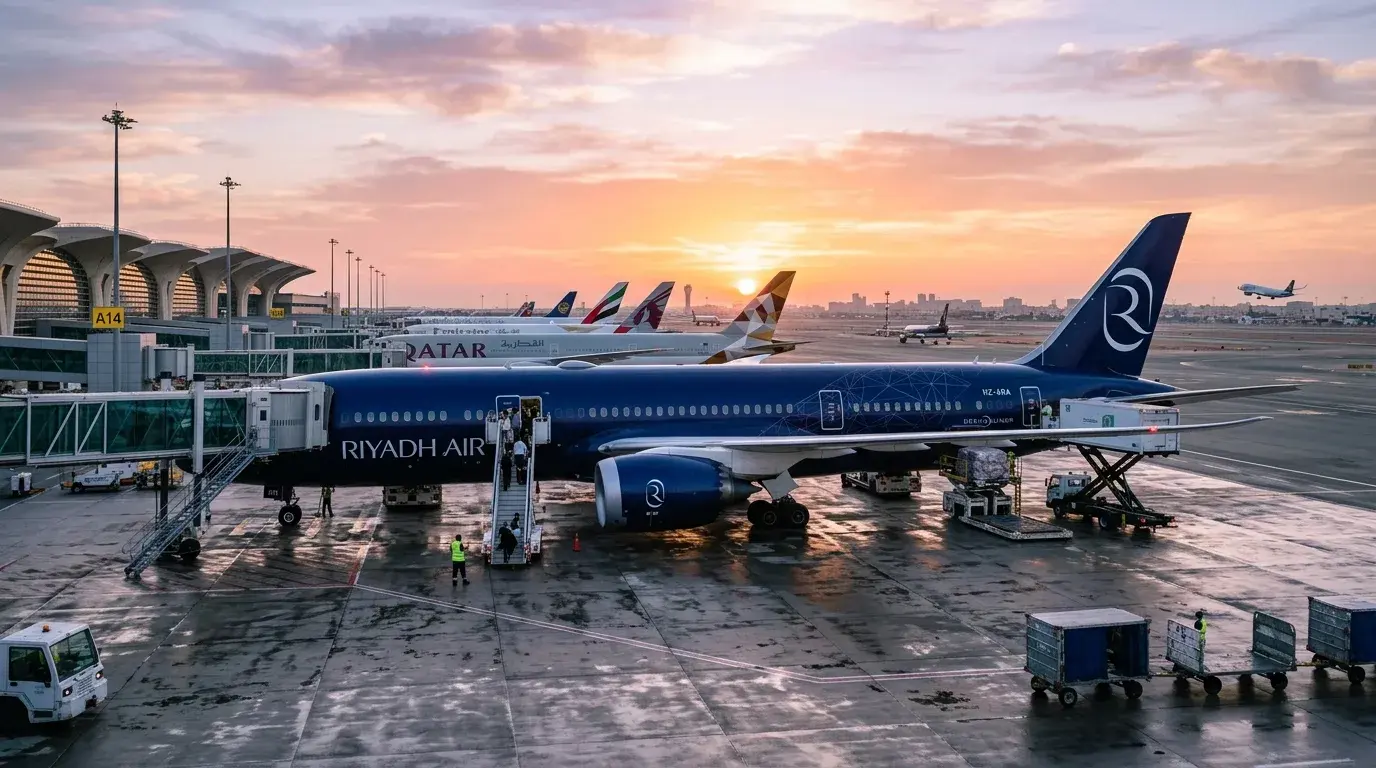
Saudi carrier Riyadh Air is solidifying its ambition to become a major global aviation player with the launch of three new international destinations by summer 2026. Kuala Lumpur, Málaga, and Dhaka will join its rapidly expanding network, which already includes London-Heathrow, Madrid, Manchester, and Dubai. This growth is underpinned by a modern fleet and an ambitious intercontinental hub strategy.
From July 14, 2026, Riyadh Air will operate flights to Málaga, a key European leisure destination. The route will run three times weekly until September 8, targeting the summer tourism market. On July 30, Kuala Lumpur will open with a thrice-weekly service year-round, reinforcing the airline’s focus on Southeast Asia. Finally, Dhaka will be served starting August 7, with daily flights planned to meet growing demand for connectivity between the Middle East and South Asia.
This expansion aligns with a broader plan to connect Riyadh to over 100 destinations by 2030. Tony Douglas, CEO of Riyadh Air, outlined the strategy: “With the addition of Málaga and Kuala Lumpur, we continue to strengthen our network in key markets for business, tourism, and trade, bringing us closer to our goal of becoming an indispensable intercontinental hub between Europe, the Middle East, and Asia.” The objective is clear: to offer seamless connections across these three continents, leveraging the strategic location of Saudi Arabia’s capital.
To support this rapid growth, Riyadh Air has already taken delivery of five Boeing 787-9 Dreamliners, with a sixth aircraft expected shortly. Configured in four classes—Business Elite, Business, Premium Economy, and Economy—the aircraft offer a total capacity of 290 seats. The Business Elite and Business classes feature a 1-2-1 layout with Safran Unity flat-bed seats, while Premium Economy offers enhanced privacy and four USB-C ports per seat. The Economy cabin is arranged in a 3-3-3 configuration with 13.3-inch 4K screens, catering to the demands of an international clientele.
A Saudi hub in transformation
Riyadh Air is at the heart of Saudi Arabia’s Vision 2030 economic diversification plan. Backed by the country’s sovereign wealth fund (PIF), the airline aims to transport tens of millions of passengers annually and position Riyadh as a major aviation hub, competing directly with Gulf hubs like Doha and Dubai. To achieve this, Riyadh Air is leveraging a modern fleet, competitive pricing, and strategic partnerships with local authorities and tourism stakeholders.
The newly announced destinations reflect this diversification strategy. Málaga, in Spain, serves as a gateway to Southern Europe, while Kuala Lumpur and Dhaka enhance connectivity between the Middle East and South Asia. According to Tony Douglas, “These additions better address the needs of both business and leisure travelers while supporting commercial and cultural exchanges between regions.” The airline has already confirmed further expansions, including routes to Madrid and Manchester, underscoring its rapid growth trajectory.
This strategy is accompanied by a gradual fleet expansion. The Boeing 787-9 Dreamliners, chosen for their fuel efficiency and range, enable nonstop service to distant destinations. With a configuration optimized for comfort and productivity, these aircraft are ideal for long-haul flights, where demand for premium cabins continues to rise.
Tailored offerings for discerning travelers
Riyadh Air is not just adding destinations—it is redefining the in-flight experience for an international clientele. In Business Elite and Business classes, passengers enjoy aisle access, private space, and 32-inch 4K screens, while Premium Economy features Recaro PL3530 seats with adjustable headrests and four USB-C ports per seat. The Economy cabin, arranged in a 3-3-3 layout, includes Recaro R3 seats with six-way adjustable headrests and 13.3-inch screens.
For business travelers, the airline emphasizes optimized frequencies and seamless connections. Flights to Kuala Lumpur, for example, provide easy access to Southeast Asia, while Dhaka routes strengthen links with India and Bangladesh. Málaga, meanwhile, is perfectly positioned for European vacations, with schedules designed to maximize time on the ground.
This approach reflects a finely segmented market strategy. Riyadh Air targets both premium travelers, who prioritize comfort and service, and economy passengers, for whom price remains a key factor. The airline employs dynamic pricing, with tickets starting from €300 for flights to Málaga, including taxes and fees. For business travelers, flexible options are available, including negotiable fares for early bookings or extended stays.
A bet on the future of air travel
With this expansion, Riyadh Air is cementing its place among the most dynamic airlines today. Its model, built on a modern fleet, a strategic hub, and an offering tailored to traveler needs, makes it a force to watch in the coming years. If the airline meets its goals, it could emerge as a serious competitor to Gulf giants while contributing to the transformation of Saudi aviation.
For travelers, this evolution is welcome news: more destinations, greater flexibility, and a reimagined in-flight experience. With Riyadh Air, the Middle East is positioning itself as an indispensable crossroads in global air travel, connecting Europe, Asia, and Africa with ever-greater efficiency.
Bookings for the new routes are now open on the airline’s official website. An opportunity not to be missed to explore these burgeoning destinations in a modern and comfortable setting.
Be the first to comment on this article
On the same topic
- Azores Airlines soon to change hands: five bidders vie for privatization
- Turkish Airlines makes bold move: 150 Boeing 737 MAX ordered, a daring bet to reshape European skies
- Emirates Weighs Swapping Boeing 787s for 777Xs: A Strategic Shift That Could Transform Long-Haul Travel
- Athens emerges as the new US gateway to Greece: Why this hub is winning over travelers
- Royal Air Maroc's 737 MAX-8 boosts Casablanca hub ahead of 2030 World Cup
- Wizz Air invests $100 million in Brașov: The A321neo set to revolutionize travel in Eastern Europe