US Mandates Mandatory Health Declaration for Air Travelers from DRC: What You Need to Know Before Departing
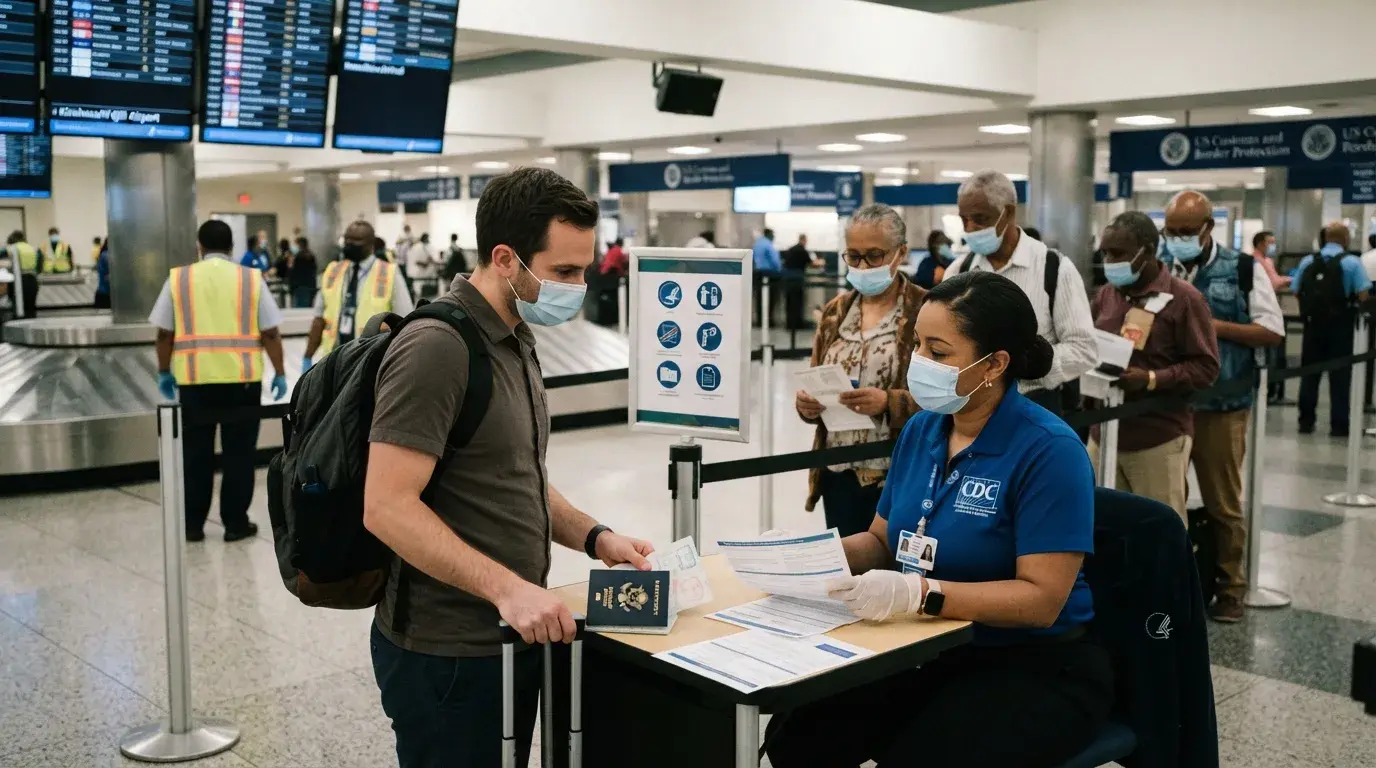
Starting November 4, 2026, the United States will require a mandatory health declaration for all air passengers arriving from the Democratic Republic of Congo (DRC). This measure, imposed by the Centers for Disease Control and Prevention (CDC), aims to limit the introduction of the Ebola virus into American territory. Here are the essential details to plan your trip without any surprises.
Travelers heading to the United States—regardless of their country of departure—must provide written proof that they have not stayed in the DRC during the 21 days prior to their flight. This requirement also applies to passengers in transit, even for a brief layover of a few hours at a Congolese airport. The form, available online on the CDC website, must be completed and signed individually before boarding. For minors or individuals with disabilities, a parent or guardian may sign on their behalf.
This health declaration does not replace other entry formalities to the United States, such as ESTA or a visa. Airlines are responsible for verifying the presence of the document before boarding, with refusal to board as a consequence for non-compliance. Travelers must therefore plan to complete this form during check-in or before heading to the airport. Both digital and paper copies will be accepted, and carriers must retain the declarations for 42 days after the flight’s arrival.
Travelers who have stayed in the DRC within the 21 days prior to their flight will not be allowed to board, except for exemptions granted by US authorities. These exemptions apply to urgent medical transports or humanitarian missions. A 22-day waiting period after leaving the Congo is required to travel to the United States without restrictions.
This measure adds to an already heightened health surveillance context. It reflects the CDC’s prevention policy, which maintains this requirement until December 18, 2026, subject to reassessment based on the evolving epidemiological situation. Travelers are advised to consult CDC updates before departure, as rules may change rapidly.
Why Has This Measure Been Implemented?
The Ebola outbreak in the DRC has seen a resurgence in recent months, with active hotspots in several provinces. US authorities consider the risk of virus importation via air travel to justify this exceptional measure. While the current outbreak is contained in certain areas, it remains a major public health concern internationally. The CDC emphasizes that the maximum 21-day incubation period justifies this control duration.
This health declaration is not a medical certificate but an attestation of non-exposure. It does not exempt travelers from other potential health measures in force at airports or upon arrival. Airlines are required to transmit passenger data to US health authorities if necessary, particularly for contact tracing.
Travelers should also prepare for possible additional checks upon arrival in the United States. US health authorities may require testing or quarantines for passengers displaying symptoms, though this remains an exceptional scenario. The health declaration primarily aims to prevent the entry of potentially exposed individuals without instituting a systematic screening system.
Which Destinations Are Affected by This Measure?
All flights heading to the United States are subject to this requirement, regardless of passengers’ nationality or country of departure. A French traveler flying from Paris to New York, having transited through Kinshasa, must complete this declaration. Similarly, an American resident in Europe must comply with this formal requirement before returning to the United States.
Airlines are responsible for verifying documents, but travelers must ensure they complete the form correctly. Errors or omissions could result in boarding refusal, even for long-haul flights. Travelers are therefore advised to verify their itinerary and adjust their booking accordingly.
This measure is part of a broader strategy to prevent health risks associated with international travel. The United States has previously applied similar restrictions for other outbreaks, such as COVID-19 or monkeypox. The mandatory health declaration for the DRC reflects a proactive approach to safeguarding public health while maintaining travel fluidity.
How to Complete the Health Declaration
The official form is available online on the CDC website. It must be completed in English and signed by the traveler. Airlines may offer translations, but the traveler remains responsible for the accuracy of the document. The form covers the 21 days prior to the flight and must be submitted to the carrier before boarding.
For families, each member must complete their own form. Minors may be covered by a parent or legal guardian, who signs on their behalf. Individuals with disabilities may also receive assistance in completing the document, but signing remains mandatory.
Once completed, the form can be submitted in paper or digital format. Airlines are equipped to accept electronic versions, provided the document’s authenticity can be verified. Travelers should retain a copy of the form for the duration of their stay in the United States, in case health authorities request it.
What Are the Consequences for Travelers?
The primary risk for travelers is boarding refusal if they do not present a valid health declaration. Even for long-haul flights, airlines strictly enforce this rule. Travelers must therefore allow extra time to complete the form before departure, especially for flights departing from exotic destinations.
Travelers who have stayed in the DRC must postpone their trip or find an alternative route to avoid Congolese airports. This situation may incur additional costs, particularly if changing tickets. Airlines are not obligated to refund tickets in cases of boarding refusal due to non-compliance with the health declaration.
For travelers transiting through the United States, the health declaration remains mandatory even if they do not leave the airport. This measure applies to all passengers heading to the United States, including those with extended layovers before continuing their journey. Travelers must therefore include this formal requirement in their preparations, regardless of the duration of their stay.
Finally, this measure could influence travel choices for individuals planning to visit the DRC or transit through the country. Travelers must assess the risks and constraints before booking their flight, taking into account the duration of the health requirement and any additional restrictions.
The United States enforces a zero-tolerance policy for passengers failing to comply with this requirement. Airlines are obligated to enforce the rule, under penalty of sanctions. Travelers must therefore adhere to this new requirement to avoid any inconvenience during their trip. Thorough preparation and itinerary verification are essential to ensure a smooth departure.
Be the first to comment on this article
On the same topic
- Qatar Airways revolutionizes mid-haul travel with A321LR: 16 convertible business suites by 2027
- Etihad revolutionizes Europe-Asia travel with First Class suites on narrowbody from Luxembourg
- Air China bypasses Cuba's jet fuel shortage with Bahamas detour
- Boeing 737 MAX 10 Certification Nears: A Milestone for Global Aviation
- Airbus A350-2000 and A220-500: End of Twin-Aisle Monopoly?
- Emirates reinvents its fleet: Why the 777X could replace 35 Dreamliners