Syrian Airlines Launches Berlin Route: Syria’s Return to European Skies After 15 Years
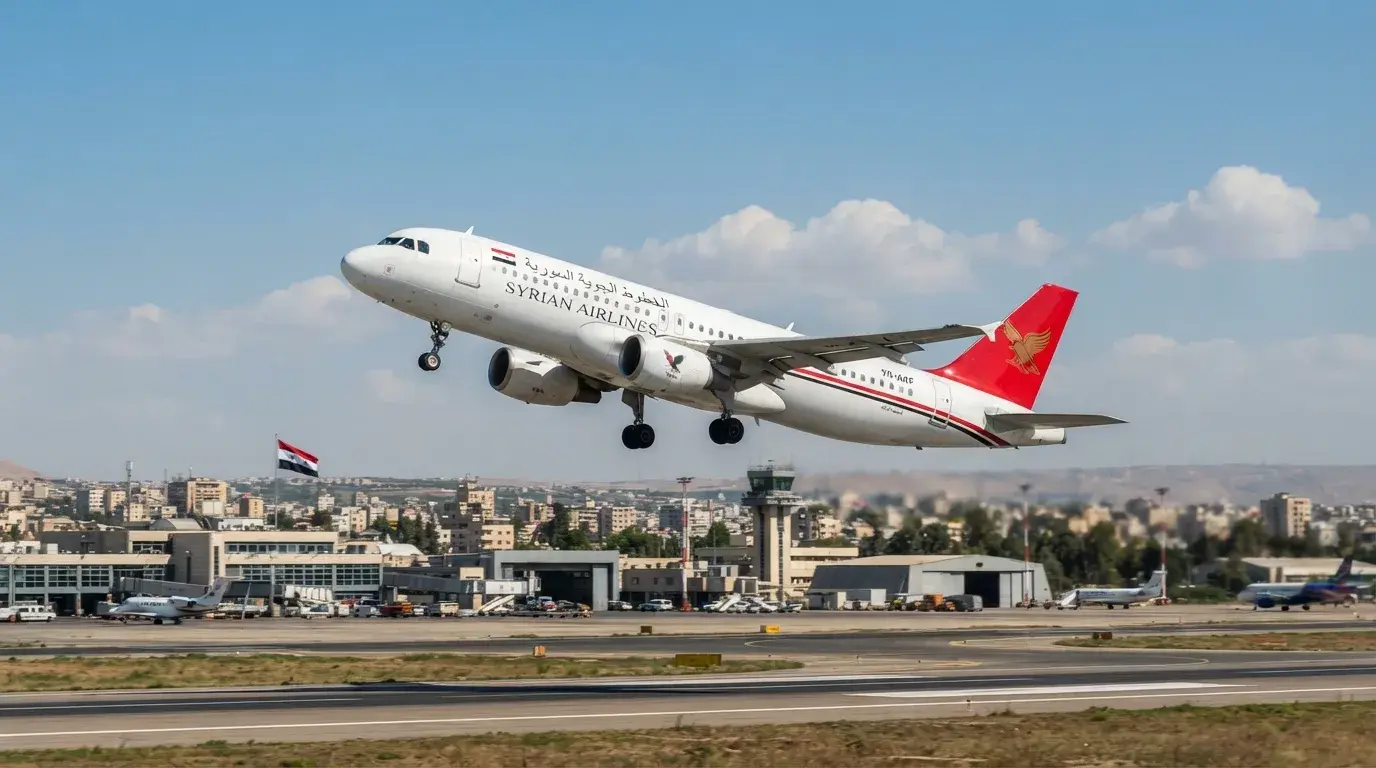
It’s been 15 years since Syrian Airlines operated a direct route to Europe. On November 10, 2026, the airline launched a twice-weekly service between Damas and Berlin-Brandebourg, using an Airbus A320 configured for 156 passengers. This resumption follows a bilateral agreement signed in July between Germany and Syria, symbolizing a step toward restoring air travel between Europe and the Levant. Targeting both family and business travelers, the route complements the Damascus-Berlin service already reopened by Sundair in August. Could this be the start of Syrian airspace reopening to European carriers?
The inaugural flight touched down at Berlin-Brandebourg under the watchful eye of airport authorities, who hailed it as “a new travel opportunity for Berliners with ties to Syria.” With a flight time of four hours and fifteen minutes, the route fills a 15-year void during which direct flights between the two countries had been suspended. This reopening is part of a broader trend of gradually normalizing air travel between Europe and the Middle East.
Berlin–Damascus: A Strategic Route for Travelers with Syrian Roots
Syrian Airlines’ Damascus–Berlin flights operate on Tuesdays and Fridays, aboard an Airbus A320 seating 156 passengers. This capacity addresses a specific demand: the estimated 300,000 Syrians living in Germany, according to the Federal Office for Migration and Refugees. For these passengers—often seeking family, cultural, or professional connections—the direct route eliminates the hassle of layovers and complex connections. “This new route offers additional travel options, particularly for the many people in Berlin and Brandenburg who maintain family, cultural, or professional ties with Syria,” said Aletta von Massenbach, CEO of Flughafen Berlin Brandenburg GmbH.
For Syria, this opening is more than just a flight—it’s a gateway to Europe, a means of reconnecting with economic and human exchanges disrupted by years of crisis. For Germany, it responds to a diaspora community eager for easier access to their country of origin. A convergence of interests that explains why this route was among the first to be restored under the new German-Syrian agreement.
Sundair Led the Way in August 2026
While Syrian Airlines is the national carrier now operating this route, it wasn’t the first to do so. On August 15, 2026, Sundair, a German low-cost carrier, restored direct flights between Berlin and Damascus—also twice weekly—using an Airbus A320 with 180 seats. The Berlin-Brandebourg Airport welcomed the move as “a direct route between the German capital region and Syria for the first time since 2011.”
The two operators differ notably: Sundair offers greater capacity (180 seats vs. 156), but Syrian Airlines focuses on a more tailored approach aligned with the needs of Syrian travelers in Germany. Two complementary models, each addressing distinct aspects of demand. For passengers, the choice between the two will depend on priorities: price, flexibility, or frequency.
German-Syrian Bilateral Agreement Signed July 16, 2026
This resumption of air services wouldn’t have been possible without a solid legal framework. On July 16, 2026, Germany and Syria signed a bilateral agreement in Damascus during the first meeting of a joint committee tasked with implementing a common action plan. The agreement provides the legal basis for direct flights between the two countries, covering both passenger and cargo transport. “This agreement reduces travel difficulties for Syrians living in Germany while opening new opportunities for business travel and trade,” explained Germany’s Federal Foreign Office.
The accord comes amid a gradual easing of diplomatic tensions between the two countries after years of strained relations. For airlines, this legal stabilization is a guarantee of security, enabling long-term route planning without fear of last-minute administrative bans—a critical factor in the highly regulated aviation sector.
Syrian Airlines Embraces Innovation with New Airbus A320s
For Syrian Airlines, the Berlin route is part of a broader fleet modernization strategy. In 2026, the airline took delivery of its first Airbus A320s, replacing aging aircraft. This transition is accompanied by an expansion of its international network, now serving 18 destinations across Syria, Europe, Africa, and the Middle East, including Amsterdam, Doha, Abu Dhabi, Istanbul, and Dubai.
This upgrade reflects a bid to reclaim market share in a globalized aviation industry. With Berlin, the airline marks its return to the European stage after years of forced retreat. This could be followed by further openings as relations between Syria and Europe normalize—a bold strategy for a carrier seeking to reposition itself on the global aviation map.
The resumption of air services between Syria and Germany is more than a transport milestone. It symbolizes a willingness to reconnect with a shared past, facilitate human and economic exchanges, and turn the page on a period of decline. For passengers, it finally offers a direct and accessible alternative to reach Damascus from Europe—a development worth celebrating as Syrian airspace gradually regains its luster.
Be the first to comment on this article
On the same topic
- Emirates Reinvents Aircraft Financing: How Islamic Finance and French Leasing Revolutionize A350 Acquisitions
- Heathrow’s Third Runway: UK Regional Airports Demand Guaranteed Slots Before 2027
- Air India Bets Big on Wide-Bodies to Revive International Network and Challenge Boeing & Airbus
- US Mandates Mandatory Health Declaration for Air Travelers from DRC: What You Need to Know Before Departing
- Qatar Airways revolutionizes mid-haul travel with A321LR: 16 convertible business suites by 2027
- Etihad revolutionizes Europe-Asia travel with First Class suites on narrowbody from Luxembourg