EU 2027 Passenger Rights Reform: Cabin Baggage, No-Show Clauses and Compensation, What’s Really Changing
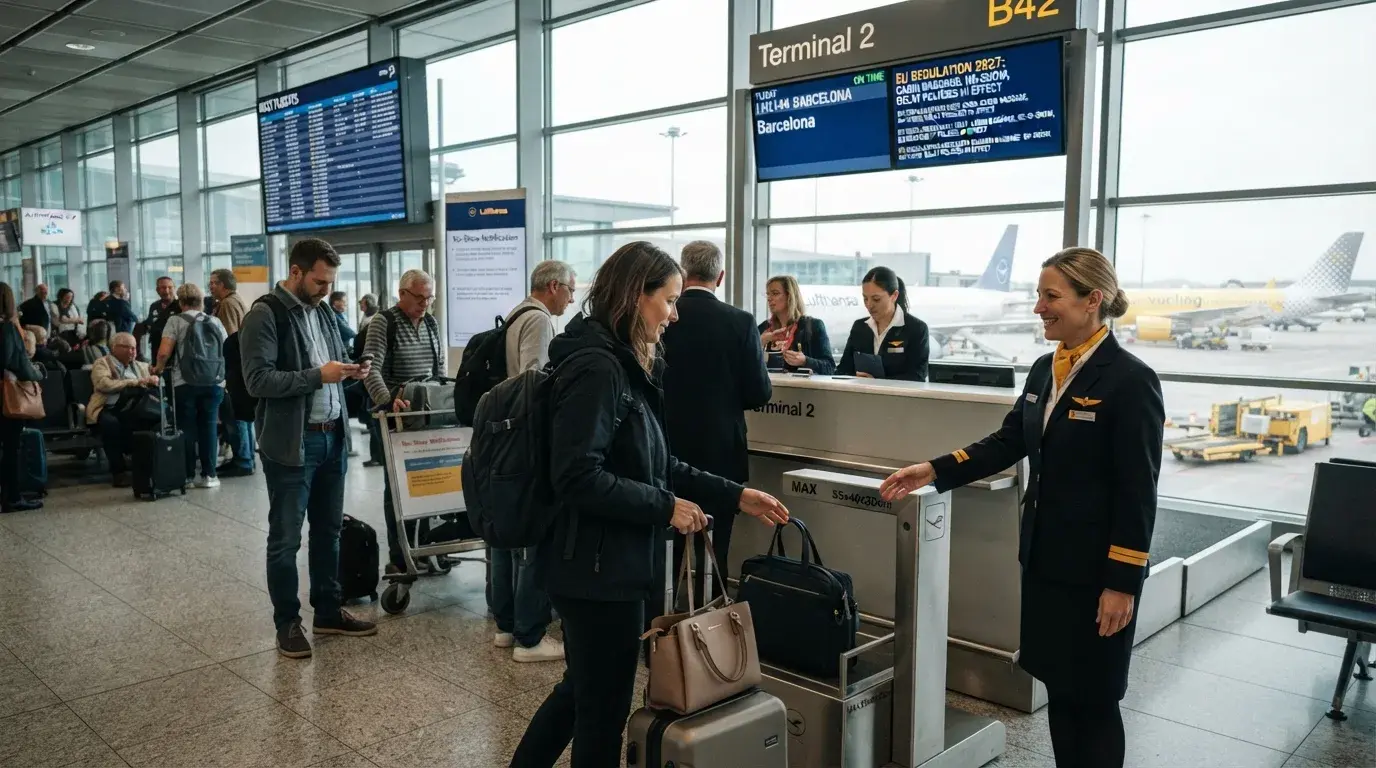
The European Union’s overhaul of air passenger rights, adopted in July 2026, will take effect in 2027, promising to disrupt traveler habits. From banning the no-show clause to scrapping child seat fees and boosting compensation, the new rules aim to curb airline abuses while balancing carrier interests. But what will passengers actually experience?
The EU has finalized a major reform of air passenger rights, set to enter force in 2027. After thirteen years of negotiations, this text adjusts Regulation (EC) 261/2004 without altering its core principles but fills numerous « gray areas » exploited by carriers. The stated goal: clarify airline obligations and secure traveler rights amid Europe’s surge in delays and cancellations.
Key measures retain the three-hour delay threshold for compensation, with unchanged payouts: €250 for flights under 1,500 km, €400 for intra-European or 1,500–3,500 km routes, and €600 for long-haul flights. An exception applies to long-haul: if re-routing limits final delays to four hours, compensation may be halved. A significant concession for airlines, which had pushed for higher thresholds or lower payouts.
No-Show Clause Ban: A Win for Passengers
The reform ends a long-criticized practice: the no-show clause. Airlines can no longer automatically cancel return flights if a passenger skips the outbound leg. Previously common among low-cost carriers and already challenged in courts, this ban simplifies travel. For example, booking a round-trip Paris-Madrid but flying only the outbound leg won’t risk canceling your return.
Another major advance: airlines can no longer charge extra for seats next to children under 14, disabled passengers, or pregnant women. This tackles a frequent low-cost practice where family seats were routinely billed. Similarly, correcting a passenger’s name typo won’t incur fees, and boarding pass printing won’t be charged at airports if check-in was already completed.
Cabin Baggage: More Transparency, Not Freebies
Contrary to misconceptions, the reform doesn’t make cabin baggage free for all intra-European passengers. Instead, it mandates airlines to display a price inclusive of a carry-on bag from the start of booking, even if it remains paid. The aim is to combat « drip pricing »—displaying a low base fare then adding extras until checkout.
Operators must now show the total trip cost, including baggage policies, from the earliest reservation stages. This should ease fare comparisons. However, free cabin baggage will only cover a personal item (handbag, small tote, or backpack) fitting under the seat. Cabin trolleys will generally remain paid, unless airlines include them in base fares.
Claim Procedures: Tighter Deadlines and Obligations
The reform streamlines claims by allowing passengers to file directly with carriers, even if tickets were bought via online aggregators or agencies. Airlines must pay within thirty days or cite « extraordinary circumstances ». Travelers now have nine months to file claims, up from six.
« Extraordinary circumstances » are strictly defined: extreme weather, airspace closures, or air traffic control strikes. Technical failures, deemed inherent to aircraft operations, won’t qualify. This clarification addresses past abuses where airlines misused this category to deny compensation.
Another critical point: assistance during delays. Airlines must provide refreshments every two hours after three hours of waiting, meals after five hours, and accommodation if needed. While these obligations should improve passenger comfort, their practical enforcement will depend on each carrier’s resources.
Delays and Cancellations: A Mixed Bag
The most criticized aspect remains the unchanged three-hour delay threshold for compensation. While some states and airlines sought higher thresholds or reduced payouts, the EU preserved the existing system. The sole concession: for long-haul flights, compensation may be halved if re-routing limits final delays to four hours.
Consumer groups like Flightright lament the lack of stricter tools to ease claims, such as mandatory pre-filled forms or single digital links. In France, recent judicial tightening—requiring prior mediation—risks further complicating access to justice for passengers.
Despite these gaps, the reform marks a significant step in protecting traveler rights. It addresses long-tolerated abuses like the no-show clause and excessive child seat fees. Travelers can now fly with greater peace of mind, though airlines retain leeway in interpreting « extraordinary circumstances ».
What Travelers Need to Know for 2027
The 2027 European air passenger rights reform applies to all flights departing or arriving in the EU, as well as those operated by EU airlines. Key takeaways:
- Compensation: Three-hour delay threshold maintained, with unchanged payouts (€250, €400, or €600 based on distance).
- No-Show Clause: Airlines banned from canceling return flights if outbound legs are unused.
- Cabin Baggage: Airlines must include carry-on costs in upfront pricing, but no universal free baggage.
- Child and Family Seats: No extra fees for seats next to children under 14, disabled passengers, or pregnant women.
- Claims: Nine-month filing window, with airlines required to respond within thirty days.
- Assistance: Airlines must provide refreshments, meals, and accommodation during prolonged delays.
Will this reform truly change the game for passengers? The text advances the fight against abusive practices, but its impact hinges on airline enforcement and traveler awareness. One thing is certain: flying in Europe in 2027 should feel a little less stressful.
What Still Needs Work: Challenges Ahead
Despite progress, gaps remain. The reform doesn’t cover flights operated by non-EU airlines between two non-EU countries, even if booked from Europe. Consumer groups also criticize the lack of stricter airline mandates, such as immediate refunds for cancellations or long delays.
Finally, rule effectiveness depends on airline responsiveness. Some may attempt to bypass obligations, for example by misusing « extraordinary circumstances » to deny claims. Travelers must stay vigilant, keeping tickets, boarding passes, and delay proofs to support claims.
The 2027 EU passenger rights reform marks a pivotal step in safeguarding air traveler rights. Balancing concrete advances with inherent political compromises, it provides a clearer, more secure framework for passengers. The onus is now on travelers to leverage these rights effectively.
Be the first to comment on this article