AirAsia Group Transforms into a Global Low-Cost Giant: How the Malaysian Airline Challenges Aviation Titans
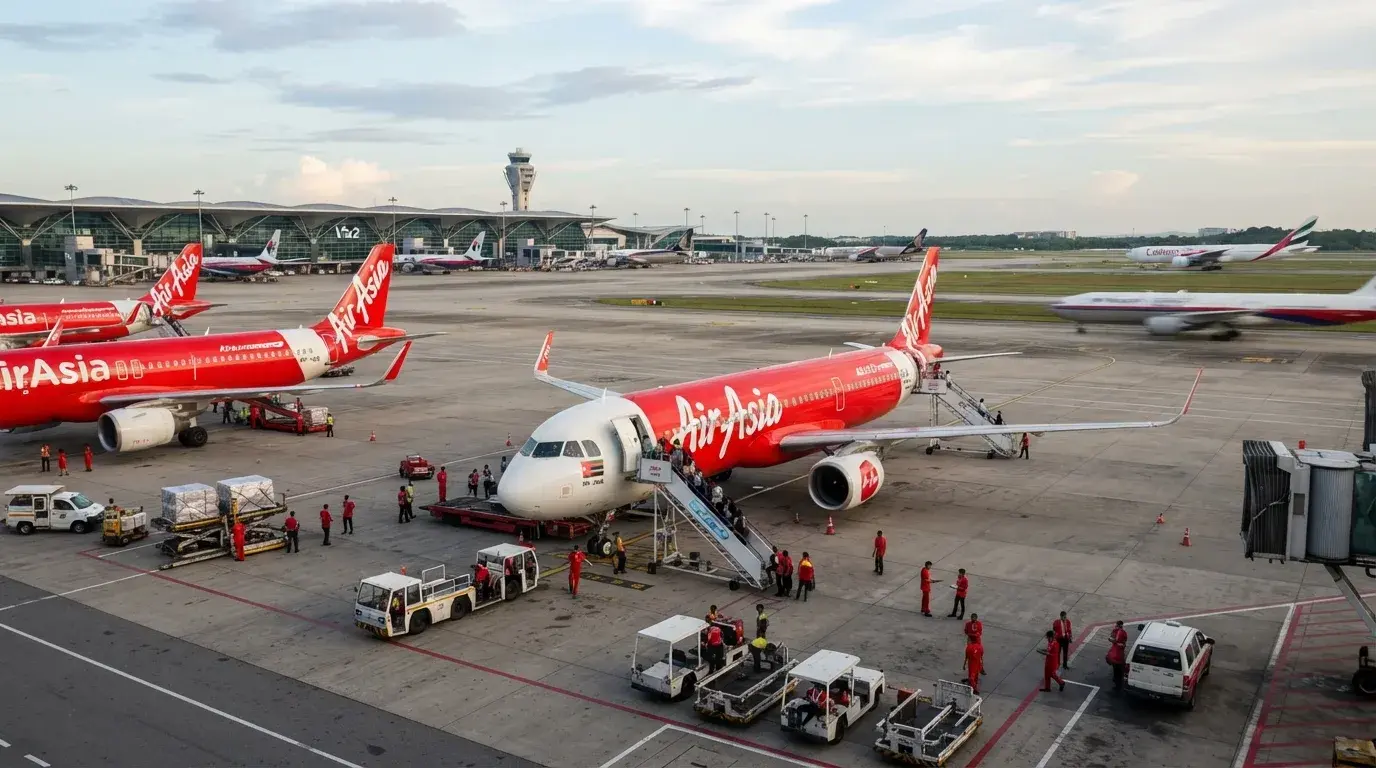
With its official rebranding to AirAsia Group and an ambitious restructuring, the Malaysian airline is writing a new chapter in its history. On July 2, 2026, following a near-unanimous vote by its shareholders, AirAsia X officially became AirAsia Group Berhad, marking the consolidation of all aviation activities under a single banner. This strategic move is far more than a simple rebranding—it positions the group as the world’s first low-cost network carrier.
Founder Tony Fernandes describes this transformation as a return to a "single group and a single brand." After years of post-pandemic financial restructuring, the group is now focused on capitalizing on a modernized fleet and enhanced connectivity between Asia, the Middle East, and Europe. An ambition that could reshape an already rapidly evolving aviation sector.
A merger to grow stronger
The new AirAsia Group Berhad now consolidates all aviation operations under one entity, including short- and medium-haul services previously split between AirAsia and AirAsia X. This unification simplifies the capital structure and clarifies the purely aviation-focused perimeter, while non-aviation activities are grouped under the holding company Capital A.
This reorganization aligns with a broader strategy to transform AirAsia from a point-to-point carrier into a low-cost network airline. The group is leveraging virtual hubs like Bahrain to connect Asia with the Middle East and Europe, while developing direct routes between secondary cities using aircraft such as the A321neo LR/XLR and A220-300.
According to Tan Sri Jamaludin Ibrahim, non-executive independent chairman, this new structure "enables us to operate our short- and medium-haul networks more efficiently, seize new growth opportunities, and offer a smoother travel experience." A statement that reflects a commitment to scaling up by leveraging a modernizing fleet and more integrated operations.
A fleet in full transformation to conquer new markets
The AirAsia Group is not just merging its entities—it is also accelerating its fleet renewal to meet the economic and environmental challenges of the sector. In May 2026, the group placed the largest firm order in its history with the acquisition of 150 Airbus A220-300 aircraft, a twinjet seating 100 to 160 passengers designed for medium-haul routes. This order surpasses the 430 aircraft from the A321neo family already on its books.
These new aircraft, deliverable from 2027, will allow AirAsia to serve less densely populated routes while maintaining competitive cost per seat-kilometer. A key advantage for the group, which aims for continued growth in Southeast Asia, India, and Africa—regions where air travel demand is surging.
The group is also banking on aircraft like the A321XLR, capable of connecting distant cities with a single stop while remaining within a low-cost framework. A strategy that relies on fuel-efficient single-aisle aircraft, ideal for tapping into emerging markets or developing direct routes between secondary cities.
An expanding network from Asia to Europe
AirAsia Group is no longer confined to Southeast Asia. The airline is strengthening its presence in India, having recently relaunched the Kuala Lumpur–Busan route and preparing to open new routes to the Middle East and Europe. In June 2026, it announced the launch of the Kuala Lumpur–Bahrain–London route, marking its return to the European market with its first hub outside ASEAN.
This expansion is underpinned by a modernizing fleet, primarily composed of A330neo aircraft for long-haul routes and single-aisle jets like the A321neo and A220 for medium-haul services. The group has also announced plans to expand its Premium Economy offering to nearly 100 destinations by the end of 2026, aligning its product with that of traditional major airlines.
To achieve this, AirAsia is focusing on enhanced connectivity, with services like FlyThru that allow passengers to make smooth connections between its multi-hub flights. An approach designed to compete with major industry players while retaining its low-cost DNA.
A resilient business model amid sector challenges
AirAsia Group’s transformation comes at a challenging economic time for aviation. The airline weathered a difficult post-pandemic financial period, requiring a restructuring process under regulatory oversight. Today, however, the group appears to have turned the page, with an order book that reflects confidence in the future.
With a total of 226 aircraft on order, including 150 A220-300s and 430 A321neo LR/XLRs, AirAsia Group has a powerful lever to expand its network and modernize its fleet. A strategy built on cost control, optimized resource management, and meeting traveler expectations for sustainability and comfort.
The group is also diversifying its revenue streams through ancillary offerings such as package holidays and loyalty programs—an approach reminiscent of traditional airlines while remaining rooted in a low-cost model.
Redefining the low-cost air travel standard?
With this transformation, AirAsia Group aims to redefine the rules of the game in the aviation sector. By combining the scale of a major airline with the flexibility and affordability that have defined its reputation, the group is positioning itself as a key player for the years ahead.
If its low-cost network model succeeds, AirAsia Group could become a benchmark for travelers seeking a balance between affordable prices and quality service. An evolution to watch closely as the group continues to expand its global influence.
A bet on the future of air travel
AirAsia Group is banking on several key trends shaping the future of aviation: rapid urbanization in secondary cities, the rise of the middle class in Asia and Africa, and growing demand for direct routes between less densely populated areas.
By capitalizing on these dynamics, the group could succeed where others have failed: balancing growth, profitability, and sustainability in a rapidly changing aviation sector. An ambition that, if realized, could inspire other players to rethink their business models.
A shifting network: toward global low-cost connectivity
The new AirAsia Group stands out with an ambitious network strategy that leverages virtual hubs and direct routes between secondary cities. An approach designed to tap into underserved markets while offering travelers a low-cost alternative.
With aircraft like the A321XLR, capable of connecting distant cities with a single stop, AirAsia Group can envision unprecedented transcontinental routes. For example, routes like Lisbon–Recife or Algiers–Kuala Lumpur could soon become a reality, thanks to the efficiency of next-generation single-aisle jets.
This strategy relies on a modernized fleet, cost control, and optimized resource management. A combination that could position AirAsia as a major player in global air travel.
A fleet in full modernization to meet sector challenges
The AirAsia Group has launched a major fleet renewal program, with massive orders for aircraft like the A220-300 and A321neo LR/XLR. These planes, more fuel-efficient and flexible, will enable the group to serve less densely populated routes while maintaining competitive costs.
With a total order book of 226 aircraft, AirAsia Group has a powerful tool to expand its network and modernize its fleet. A strategy built on cost control, optimized resource management, and meeting traveler expectations for sustainability and comfort.
The group is also diversifying its revenue streams through ancillary offerings such as package holidays and loyalty programs—an approach reminiscent of traditional airlines while remaining rooted in a low-cost model.
A bet on the future of air travel
AirAsia Group is banking on several key trends shaping the future of aviation: rapid urbanization in secondary cities, the rise of the middle class in Asia and Africa, and growing demand for direct routes between less densely populated areas.
By capitalizing on these dynamics, the group could succeed where others have failed: balancing growth, profitability, and sustainability in a rapidly changing aviation sector. An ambition that, if realized, could inspire other players to rethink their business models.
AirAsia Group: a key player for travelers seeking accessibility
With this transformation, AirAsia Group aims to redefine the rules of the game in the aviation sector. By combining the scale of a major airline with the flexibility and affordability that have defined its reputation, the group is positioning itself as a key player for the years ahead.
If its low-cost network model succeeds, AirAsia Group could become a benchmark for travelers seeking a balance between affordable prices and quality service. An evolution to watch closely as the group continues to expand its global influence.
As the aviation sector prepares to double its traffic by 2045, according to Airbus projections, AirAsia Group could play a central role in this growth. With a modernized fleet, an expanding network, and an ambitious strategy, the Malaysian group is on track to become a global low-cost giant.
Be the first to comment on this article
On the same topic
- JetBlue Acquires Spirit Airlines' Slots at New York LaGuardia: What It Means for Your 2027 Flights
- Biman Bangladesh Airlines bets on Airbus to conquer Europe and North America with A350 and A321neo
- Air Freight: Why This 4.4% Surge in August 2026 Will Drive Up Delivery Prices
- AnimaWings in Crisis: Six A220s Grounded, Judicial Restructuring Underway
- Etihad Revives Its Last Airbus A380 After Six Years Grounded: Why the Giant of the Skies is Back
- Azores Airlines soon to change hands: five bidders vie for privatization