Emirates slashes June flights by 16%: what this means for long-haul travelers
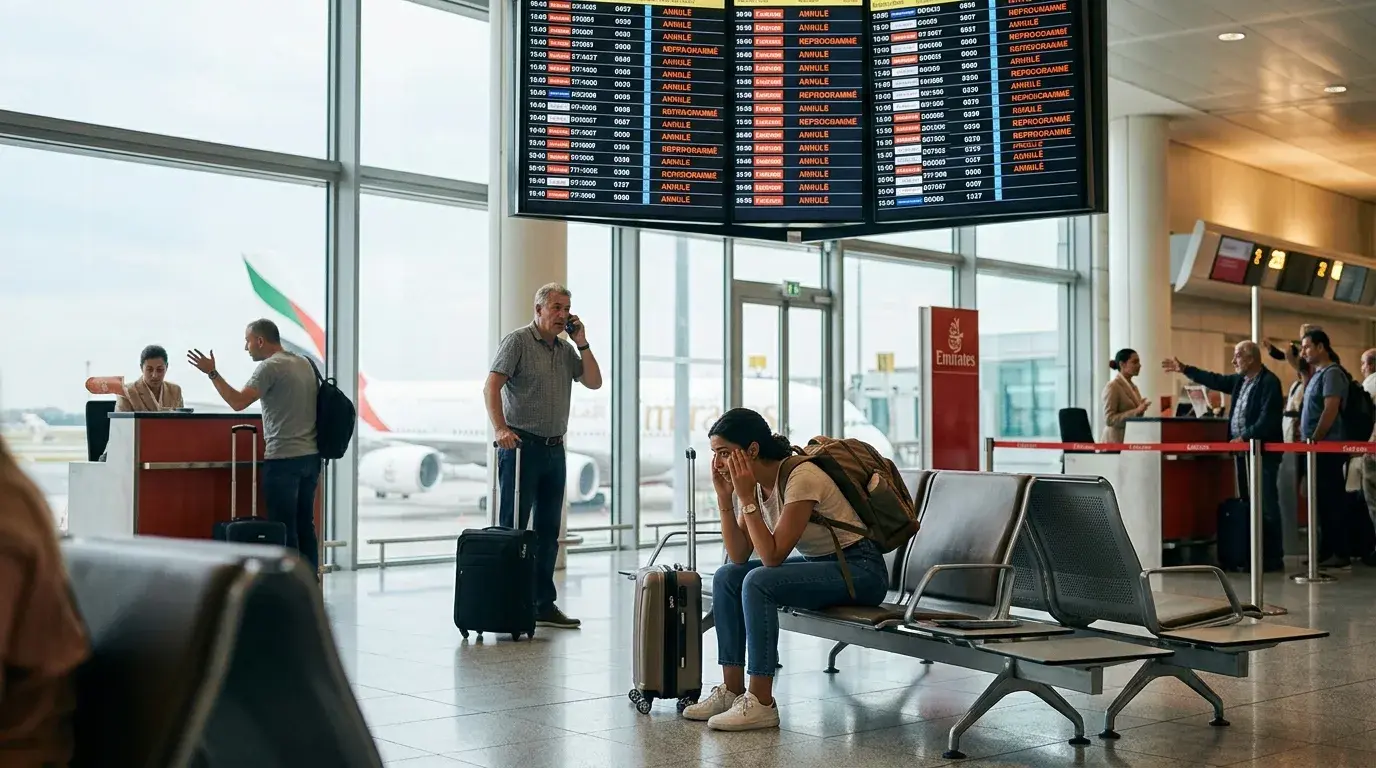
A decision that is shaking up long-haul air transport. Emirates has just announced a dramatic 16% reduction in flights departing from Dubai in June 2026, an unprecedented cut that will impact hundreds of thousands of passengers. Why this sudden reversal? Which destinations are hardest hit, and how will this measure affect your travel plans?
The airline, renowned for its global network and iconic A380 aircraft, reversed course in just one week. Initially scheduled for 7,116 flights, its capacity has now dropped to 6,007 rotations, meaning over 1,100 departures canceled. The immediate consequence: nearly 480,000 seats disappear from the market in just days. With a 100% long-haul fleet, every canceled flight represents hundreds of lost seats—a major shock for travelers accustomed to the carrier’s reliability.
Every continent is affected by this purge. In Europe, major hubs like London Heathrow will lose one daily flight out of six, while expansion plans to Gatwick or Stansted are postponed until at least July. Amsterdam, Vienna, and Birmingham also face reduced frequencies, sometimes by half. Asia is not spared: Beijing and Malé see their connections cut, as does Brisbane in Oceania. Even more surprising, Middle Eastern destinations like Kuwait, once served up to five times daily, will now only have one daily flight.
Emirates’ decision comes amid growing tensions in the Gulf aviation market. While Qatar Airways is also reducing flights by 19% and Etihad is accelerating growth by 8%, strategies between carriers are diverging sharply. These drastic adjustments reflect a long-haul demand that is less predictable than anticipated, particularly on Asian and European routes, which are struggling to regain pre-pandemic momentum.
The real reasons behind this slowdown
Several factors explain this about-face. First, weaker-than-expected demand in premium and tourist segments, especially in Asia, where business travel is slow to recover. Second, increased competition on European routes, where carriers like Lufthansa or British Airways have strengthened their offerings, capturing market share. Finally, rising operational costs—fuel, maintenance, wages—are pushing Emirates to reassess the profitability of certain marginal routes.
The impact on prices could also be significant. With fewer seats available, fares on remaining routes may rise, especially in business class, where Emirates traditionally dominates. Travelers seeking flexibility will also face less favorable schedules, while connections become more complex to arrange.
What to do if your flight is affected?
Emirates has confirmed it will notify all affected passengers individually. If your booking is impacted by a canceled or modified flight, you have several options:
A full refund is available for canceled flights. For date or schedule changes, the airline offers fee-free rebooking on other flights within its network, subject to availability. Alternative solutions with another carrier are also possible, though Emirates will not cover any additional costs.
Frequent flyers or members of the Skywards loyalty program will receive additional compensation, such as bonus miles or priority upgrades on future flights. However, given the scale of cancellations, these measures may prove insufficient for some passengers.
Alternatives for your travel plans
If your destination is affected by Emirates’ cuts, several options are available. In Europe, hubs like Frankfurt, Paris, or Amsterdam remain well-served by other carriers, though prices may be higher. For Asia, Singapore Airlines or Qatar Airways still offer strong frequencies, while Gulf carriers maintain links to China and India.
For North American travel, Emirates retains a solid offering from Dubai, but reduced frequencies could make connections less seamless. In Africa and the Middle East, alternatives are more limited, with regional carriers like Ethiopian Airlines or Kenya Airways potentially filling some gaps.
Finally, for travelers seeking flexibility, low-cost carriers like flydubai or Air Arabia offer competitive solutions on certain short- and medium-haul routes, often at lower fares than traditional airlines.
A warning sign for the long-haul industry?
Emirates’ decision is not an isolated case. Since the start of the year, several long-haul carriers have scaled back their flight programs, particularly in Europe, where Lufthansa and Air France have reduced frequencies to North America. These adjustments reflect a tighter economic environment, with persistent inflation, slowing tourism demand, and high operating costs.
Analysts are now questioning the ability of Gulf carriers to maintain their growth ambitions. After years of long-haul dominance, these airlines may need to rationalize their networks, prioritizing the most profitable routes over less strategic ones. Is a new era dawning for global air travel?
One thing is certain: passengers will need to be more flexible and vigilant when planning long-haul trips. Between cancellations, delays, and fare hikes, the sector is entering a period of operational turbulence that could last for months.
Be the first to comment on this article