Akasa Air: How India’s Newcomer Challenges Aviation Giants with Boeing 737 MAX 8 and MAX 8-200
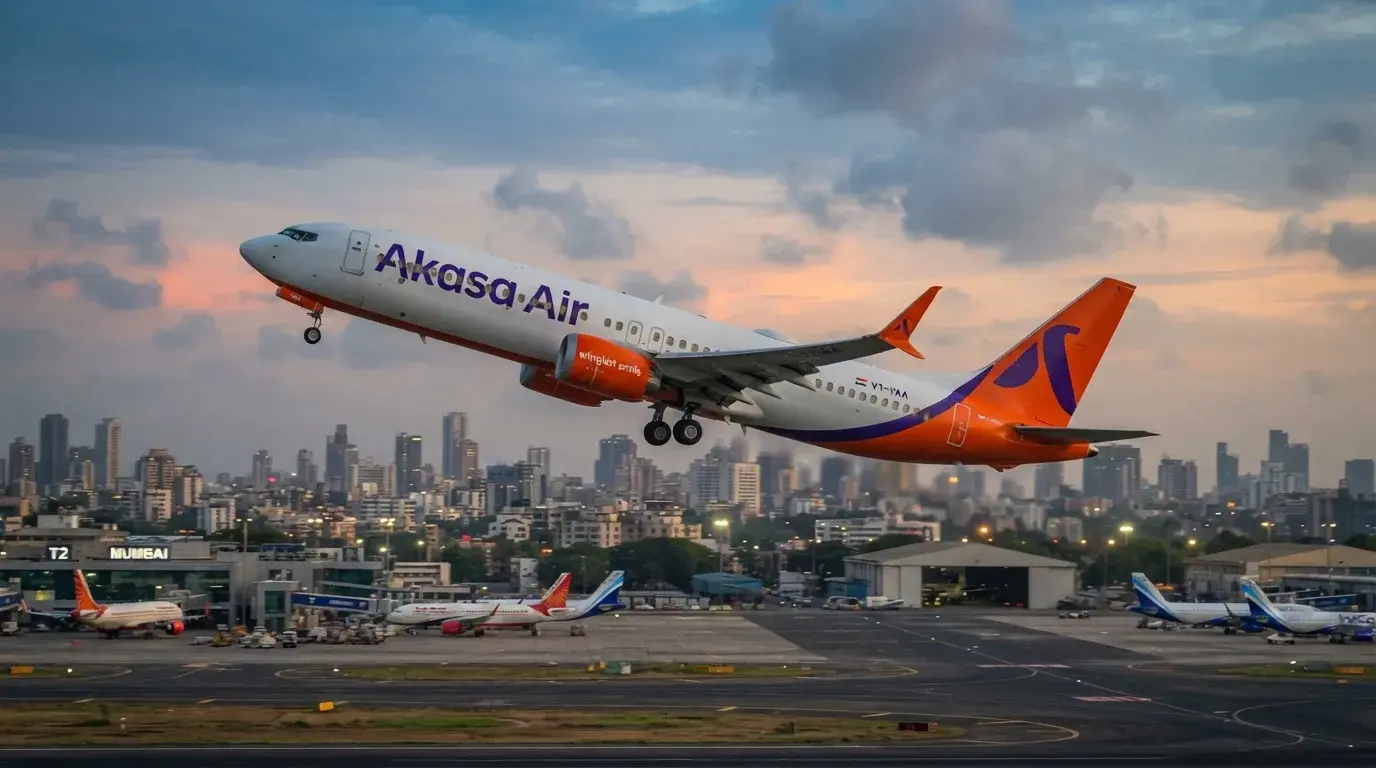
In less than four years since its launch, Akasa Air has defied expectations to become a major force in India’s aviation sector—a market renowned for its dynamism and cutthroat competition. With a fleet of 40 aircraft already in operation and a historic order for 226 Boeing 737 MAX jets, including 150 scheduled for delivery by July 2026, the low-cost carrier is now pursuing aggressive expansion to carve out market share from industry heavyweights like IndiGo, Air India, and SpiceJet. But how does such a young airline manage to disrupt a sector dominated by decades-old incumbents?
The answer lies in a bold strategy that blends cutting-edge technology, deep adaptation to India’s unique market dynamics, and ruthless cost optimization. Unlike many low-cost carriers, Akasa Air doesn’t just compete on price—it leverages an all-Boeing 737 MAX fleet, including the MAX 8 and MAX 8-200 models, which deliver a 16% reduction in fuel consumption compared to older aircraft. This efficiency is critical in an era of volatile energy prices. Configured to carry between 189 and 210 passengers depending on the variant, the fleet enables Akasa Air to offer competitive fares while maintaining strong profitability.
Since its August 2022 debut, Akasa Air has rapidly expanded its network, now serving over 50 destinations across India—from north to south—and connecting international hubs such as Doha, Dubai, Jeddah, Bangkok, and Hanoi. With major hubs in Mumbai and Bengaluru, the airline is growing organically, adding routes in response to demand. Its goal? To become India’s third-largest airline by passenger traffic by 2032, behind only IndiGo and Air India—a target that already appears within reach.
A Next-Gen Fleet for a Rapidly Evolving Market
When Akasa Air took delivery of its first Boeing 737 MAX 8 in June 2022, it became the first Asian operator of the type. Since then, the airline has not only expanded its fleet but also pioneered the introduction of the Boeing 737 MAX 8-200 in Asia—a variant optimized for low-cost operations. Designed to accommodate up to 210 passengers (compared to 189 in the standard MAX 8), the MAX 8-200 features two additional emergency exits per side, meeting international safety standards while boosting capacity.
The MAX 8-200’s key advantage is its even lower fuel burn, further reducing operational costs and allowing Akasa Air to offer even more attractive fares. With 17 of these aircraft already in service and nine more slated for delivery in the first half of 2026, the airline is accelerating its international expansion. The latest milestone? The launch of India’s first direct route to Vietnam, with four weekly flights between Mumbai and Hanoi starting September 4, 2026—a move underscoring Akasa Air’s ambition to establish itself not just across Asia, but on the global stage.
The fleet’s performance is already impressive. Data shows that the 23 Boeing 737 MAX 8s and 17 MAX 8-200s in service average just four years in age—significantly younger than competitors’ fleets. This youth translates to optimal reliability and lower maintenance costs, critical factors in an industry where punctuality and safety are top priorities for travelers.
A Growth Story Fueled by Explosive Demand
India is now the world’s fastest-growing aviation market, with air traffic expanding by nearly 10% annually. This surge is driven by a booming middle class and a growing affluent population eager to travel. Akasa Air has capitalized on this trend by targeting both business and leisure travelers with frequent flights and an extensive route network.
Among its key destinations are major cities like Delhi, Mumbai, Bengaluru, Chennai, and Kolkata, as well as secondary airports such as Ayodhya, Gorakhpur, and Siliguri—often overlooked by larger carriers. By focusing on regional connectivity, Akasa Air helps unlock economic potential in underserved areas. For example, it operates daily flights between Mumbai and Pune, two cities just 150 km apart but vital for business and commerce.
Internationally, Akasa Air has strategically targeted high-demand regions in Asia and the Middle East, where travel demand is surging. The airline now serves Qatar, Saudi Arabia, Thailand, and the United Arab Emirates with direct flights from its Indian hubs. This approach allows it to tap into tourism and migration flows between India and these countries while avoiding direct competition with European or American carriers.
An Innovative Business Model to Challenge the Giants
Akasa Air isn’t just another low-cost carrier copying industry playbooks—it’s redefining the model with a hybrid approach that blends the discipline of legacy airlines with the agility of budget operators. Unlike competitors such as IndiGo, which charges variable fees for checked baggage, Akasa Air includes one free checked bag per passenger, a policy that appeals to travelers seeking simplicity and transparent pricing. This move underscores its commitment to differentiation in a crowded market.
Another innovation is its centralized fleet management, with aircraft primarily based in Mumbai and Bengaluru. This structure optimizes rotations, minimizes downtime, and ensures maximum aircraft availability. The airline also employs dynamic pricing, adjusting fares in real-time based on demand and local events—a strategy that has helped it achieve load factors often exceeding 90% on key routes.
In-flight, Akasa Air positions itself as a no-frills but high-comfort option. Seats are spacious, overhead bin space is generous, and the crew is trained to deliver professional, attentive service. These details, though subtle, set it apart for travelers accustomed to the standards of international carriers.
The airline’s digital-first approach is equally impressive. Its in-house mobile app allows passengers to manage bookings, access e-tickets, and track flight status in real time—a feature that resonates with India’s young, tech-savvy travelers who prioritize ease of use.
The Challenges Ahead for a Rapid Ascent
Despite its remarkable progress, Akasa Air faces significant hurdles. Chief among them is managing its exponential growth. With 226 aircraft on order, the airline must recruit and train thousands of new employees while ensuring airport infrastructure can handle the influx—no small feat in a country where airports are frequently congested. Some analysts question whether Akasa Air can scale so rapidly without compromising service quality.
Competition is another major challenge. IndiGo, the undisputed market leader with over 60% share, has announced a massive expansion plan with hundreds of additional aircraft on order. SpiceJet and Vistara are also ramping up efforts to regain market share through revised pricing and operational strategies. To stay ahead, Akasa Air must continue innovating.
Geopolitical and economic volatility also pose risks. Fluctuating fuel prices, trade tensions, and currency fluctuations could impact the airline’s plans. Yet, Akasa Air remains undeterred. In a recent interview, CEO Vinay Dube stated the airline aims to become one of Asia’s top three airlines by 2030—a bold target that seems increasingly plausible given its trajectory: a modern fleet, agile business strategy, and relentless focus on customer service.
What’s Next for Akasa Air?
The coming months will be pivotal. The airline plans to add 186 new aircraft to its fleet by 2032, including the Boeing 737 MAX 10, a larger variant capable of carrying up to 230 passengers. Deliveries for the MAX 10 are set to begin in 2027, enabling Akasa Air to extend its international reach into East Africa and Southeast Asia.
Akasa Air is also enhancing its service offerings. Partnerships with hotels and car rental companies are in the works to provide bundled travel packages, appealing to travelers seeking convenience. On the technology front, the airline is testing biometric solutions to streamline boarding and baggage handling—technologies that could become industry standards. It’s also exploring AI-driven predictive maintenance and flight operations optimization.
With a clear strategy and unwavering determination, Akasa Air is steadily establishing itself as a key player in India’s and Asia’s aviation landscape. Its success stems from a blend of audacity, innovation, and pragmatism—qualities that could propel it to challenge global aviation giants in the years ahead. For travelers, this means more choices, competitive fares, and an ever-improving flying experience.
As India’s aviation market continues its breakneck growth, one thing is certain: Akasa Air is a company to watch. Whether through technological breakthroughs, commercial strategies, or international expansion, this young airline has all the ingredients to become a major force in global air travel.
Be the first to comment on this article
On the same topic
- JetBlue Acquires Spirit Airlines' Slots at New York LaGuardia: What It Means for Your 2027 Flights
- Biman Bangladesh Airlines bets on Airbus to conquer Europe and North America with A350 and A321neo
- Air Freight: Why This 4.4% Surge in August 2026 Will Drive Up Delivery Prices
- AnimaWings in Crisis: Six A220s Grounded, Judicial Restructuring Underway
- Etihad Revives Its Last Airbus A380 After Six Years Grounded: Why the Giant of the Skies is Back
- Azores Airlines soon to change hands: five bidders vie for privatization