Airbus A330-900: Record 480-Passenger Capacity Set to Disrupt Long-Haul Flights
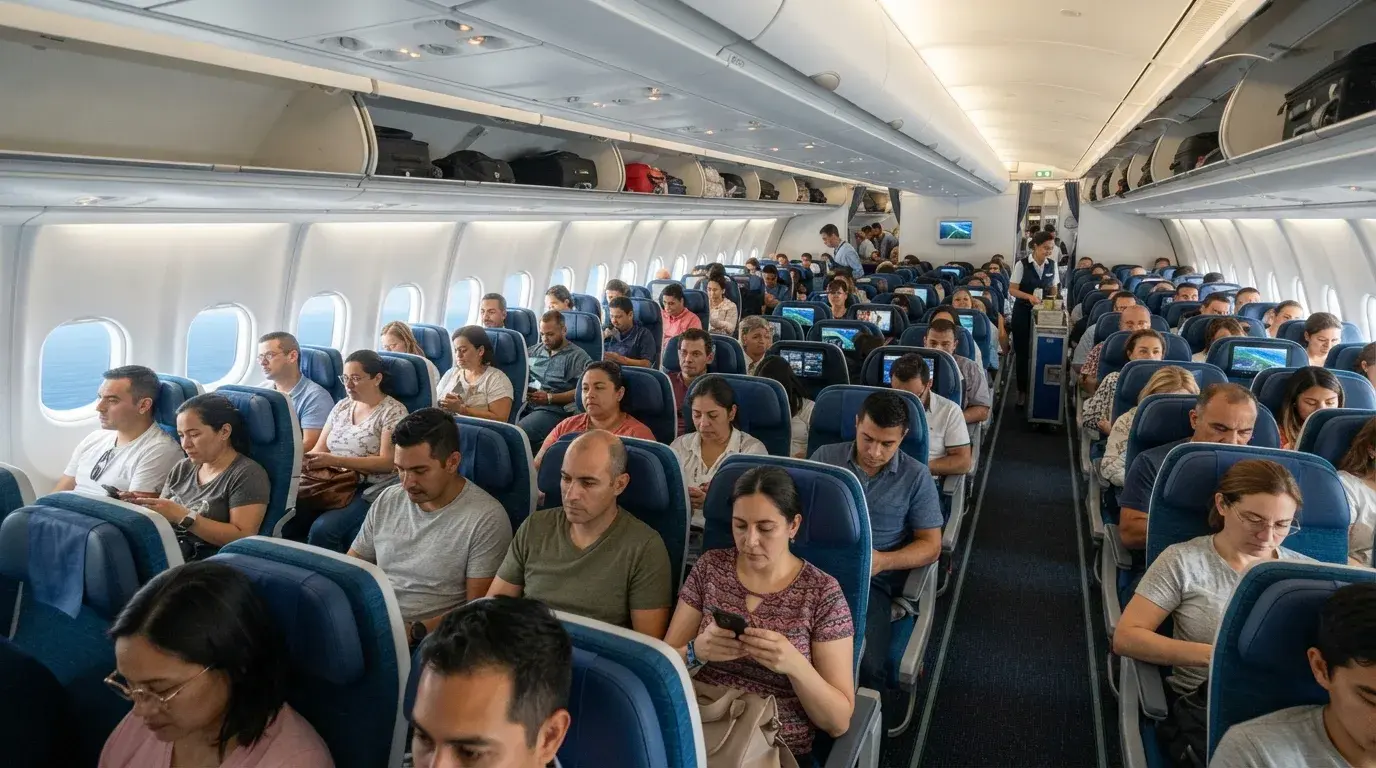
Imagine a long-haul aircraft carrying 15 more passengers without squeezing you any tighter in your seat. That’s now possible with the Airbus A330-900, whose maximum capacity has just been officially increased to 480 passengers, up from 465. A regulatory evolution that could reshape airline strategies on high-traffic routes while raising questions about the balance between cabin density and passenger comfort.
This capacity boost, outlined in the latest revision of the aircraft’s European certification sheet, isn’t a spur-of-the-moment change. It’s the result of modified evacuation equipment and a specific interior layout, validated by the European Union Aviation Safety Agency (EASA). A technical milestone that opens new opportunities for carriers looking to optimize operational costs, especially on congested routes.
The A330-900, the largest variant in the A330neo family, retains the same external dimensions, but its cabin interior is now certified to accommodate up to 480 passengers in certain configurations. This maximum capacity comes with strict conditions: the aircraft must be equipped with four pairs of Type A+ emergency exits and modified slide-rafts, compliant with Airbus MOD 210978. Without these upgrades, the 465-seat ceiling remains in effect.
For airlines, this regulatory change represents an opportunity to strengthen their offerings on high-demand markets. Routes connecting Europe to North America or Asia could benefit, provided carriers have the right interior configurations. Airbus notes that the maximum capacity also depends on seat distribution within the fuselage, with zone-specific limits set by EASA.
This announcement arrives as the European manufacturer continues to position the A330neo as an economical alternative to newer aircraft, particularly on medium- and long-haul routes where cabin density is a key profitability factor. Low-cost carriers and traditional airlines alike could adapt their commercial strategies to offer even more competitive fares.
A Capacity Boost with Challenges Ahead
While the increased maximum capacity is welcome news for airlines, it also raises questions about the onboard experience. Those 15 extra seats aren’t a simple addition—they require a complete cabin redesign, with implications for baggage space, onboard services, and, most critically, passenger comfort.
Airbus confirms that the A330-900 can now be certified for a maximum of 480 passengers, but this configuration must still be approved by aviation authorities and validated by airlines before any commercial deployment. Operators will also need to ensure their cabin crews and evacuation procedures are adapted to this higher density.
The evacuation equipment sits at the heart of this evolution. Type A+ exits and modified slide-rafts are essential to meet strict safety standards while accommodating the new capacity. Airlines seeking to operate an A330-900 at 480 seats will need to invest in specific interior modifications and crew training.
This increased capacity could also influence passenger choices on long-haul flights. Carriers will need to strike a balance between maximizing load factors and maintaining an acceptable onboard experience, especially on routes exceeding 12 hours. Services like meals and entertainment will need optimization to adapt to higher density without compromising quality.
What Does This Mean for Passengers?
For travelers, this regulatory change could translate into more flight frequencies or lower fares on certain routes—especially if airlines pass on capacity gains to their pricing strategies. However, passengers may not see immediate effects, as carriers first need to adapt their fleets and interiors.
Ultra-high-density configurations like the one approved for the A330-900 are typically reserved for the busiest routes, where demand is strong and fares competitive. Travelers could benefit indirectly through more flexible flight offerings or potentially reduced fares on these routes.
It’s worth noting that this maximum capacity won’t apply to all A330-900 configurations. Airlines can choose to maintain more spacious cabins, particularly on routes where comfort is a priority. Passengers in business or premium economy classes should see little to no impact on their onboard experience.
A Game-Changer for Low-Cost Carriers
This capacity increase is particularly significant for low-cost airlines, which rely on attractive fares to draw passengers. Carriers like French Bee, Level, and Norwegian could be among the first to adopt this new configuration, tailoring it to their specific needs.
By optimizing aircraft load factors, these airlines could reduce per-passenger costs and offer even more competitive fares, especially on high-demand long-haul routes. A strategy that aligns with current industry trends, where profitability often hinges on rigorous capacity management.
Traditional airlines could also leverage this change to bolster their offerings on specific routes, adapting their commercial strategies to attract a broader customer base. With its increased capacity, the A330-900 becomes an additional tool to meet growing demand on long-haul routes.
In summary, this regulatory evolution for the A330-900 marks a significant milestone for the aviation sector. It provides airlines with a new opportunity to optimize operations while presenting challenges in terms of comfort and safety. For passengers, the benefits could materialize as more flexible flight options and potentially lower fares—provided carriers choose to deploy this increased capacity wisely.
Be the first to comment on this article
On the same topic
- Emirates restores 91% of pre-conflict capacity despite Middle East tensions: the secret recipe for resilience
- A380: FAA Mandates Urgent Engine Part Replacements After Uncontained Engine Failure
- 737 MAX Sets Delivery Record with 363 Aircraft in Nine Months as FAA Validates Safety Despite New Software Bug
- Kenya Airways in the spotlight after controversial death aboard Nairobi-Lagos flight
- Flydubai: The in-flight attack investigation exposes critical aviation security flaws
- Air Sénégal suspends cabin crew on Dakar-Paris route amid parcel trafficking scandal and Interpol investigation