Kenya Airways in the spotlight after controversial death aboard Nairobi-Lagos flight
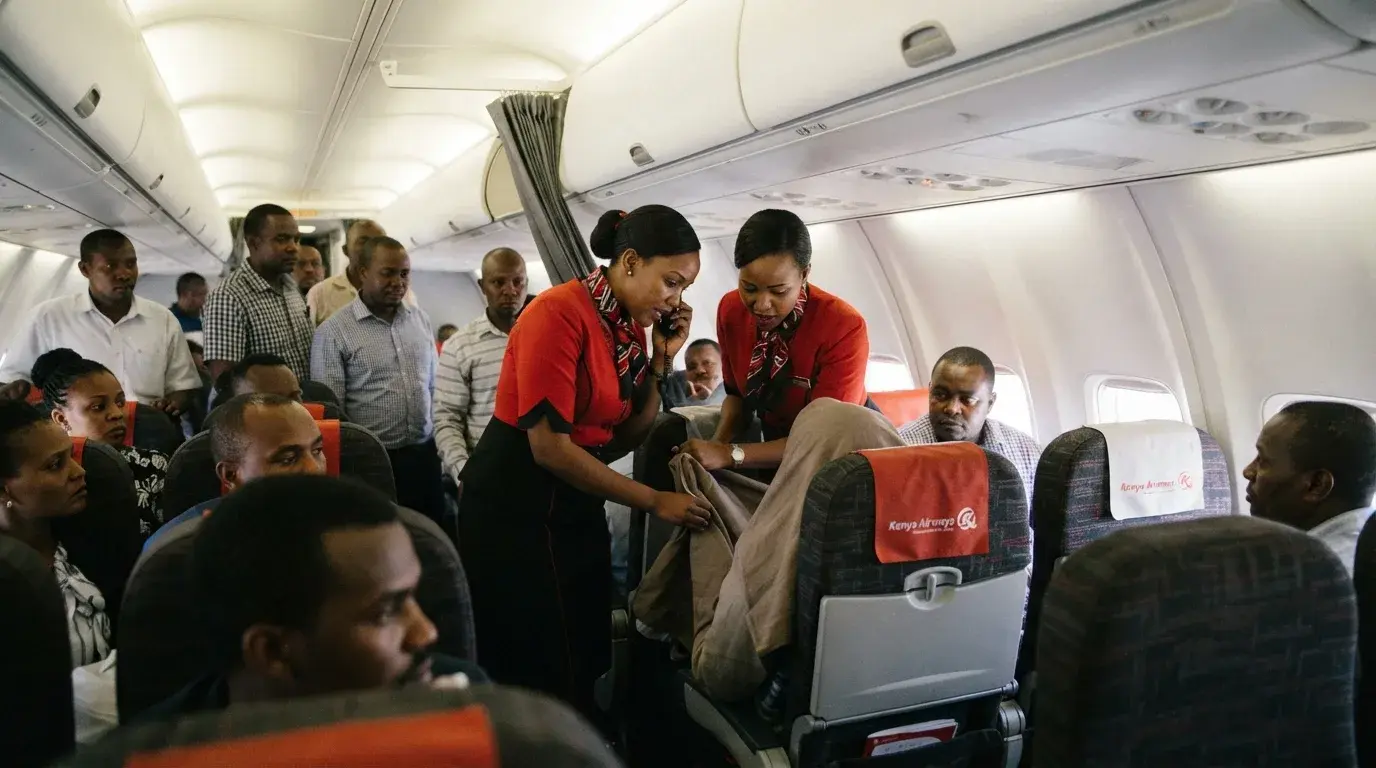
A passenger died on Tuesday, October 6, 2026, aboard a Kenya Airways flight from Nairobi, Kenya, to Lagos, Nigeria. The man’s identity has not been disclosed. He became extremely agitated during the flight, reportedly attempting to access the cockpit multiple times before physically assaulting the crew. After being restrained and tied down, he lost consciousness about twenty minutes before landing and could not be revived upon arrival. The incident, occurring amid growing concerns over the management of disruptive passengers, raises questions about safety protocols and the limits of crew intervention during flights.
According to Michael Achimugu, Director of Public Affairs and Consumer Protection at Nigeria’s Civil Aviation Authority (NCAA), the passenger was a "non-admissible" traveler who had been deported from Madagascar. Kenya Airways was repatriating him to Nigeria when his behavior became concerning. "When he boarded the aircraft, he became agitated and aggressive. He tried to enter the cockpit and then attempted to open the rear door. His hands were tied behind his back to stop him from disrupting the flight," the Nigerian official explained. The crew administered first aid, but the man died upon arrival in Lagos, officially due to a medical episode.
Nigerian authorities immediately launched an investigation to determine the exact circumstances of the death. Nigerian investigators, supported by Lagos Airport police, are examining whether stress from restraint, the passenger’s pre-existing health conditions, or his behavior during the flight contributed to his death. The deceased’s family has been advised to request an autopsy to clarify the cause. Kenya Airways, for its part, expressed condolences to the family while asserting that it followed emergency procedures and administered first aid in accordance with crew training.
This incident starkly highlights the ongoing challenge of managing disruptive passengers, particularly on long-haul flights where crews have limited options to isolate dangerous individuals. Restraint protocols, though outlined in operational manuals, are rarely used and raise ethical and legal concerns. The NCAA has not yet released a final report, but the investigation could lead to a review of current procedures in Nigeria and, by extension, in other countries.
In a statement, Kenya Airways said, "One of our passengers was found unconscious approximately twenty minutes before landing in Lagos. Our crew administered first aid in accordance with training and followed all emergency procedures." The airline added that it had "expressed condolences to the family and is cooperating with authorities and regulators." However, details about the deceased’s identity, medical history, or the exact circumstances of his death remain unclear, fueling speculation.
Controversial but regulated restraint procedures
Tying a passenger’s hands behind their back, described as a last-resort measure, is permitted under international aviation regulations to subdue a dangerous individual. However, this practice is heavily criticized by passenger rights groups, who warn of an increased risk of medical complications, particularly for those with heart or respiratory conditions. In this case, first aid was administered promptly but without success. The investigation must determine whether restraint exacerbated the passenger’s health condition or if his death was linked to a pre-existing illness.
Airlines are required to follow strict protocols when restraining a passenger. These typically include using soft restraints, constant monitoring, and immediate medical intervention if the individual’s condition deteriorates. Kenya Airways claims to have followed these rules, but the lack of transparency regarding the technical details of the intervention leaves room for doubt. Nigerian regulators must now decide: should pre-boarding checks be strengthened to prevent such situations, or should restraint protocols be adjusted to minimize risks?
A deported passenger from Madagascar raises further questions
The fact that this passenger had been deported from Madagascar before boarding in Nairobi adds another layer of complexity to the case. According to the NCAA, he was a "non-admissible" traveler, meaning he lacked the necessary documents to enter Madagascar. Kenya Airways, which had transported him from Madagascar to Nairobi, was required to repatriate him to his country of origin, Nigeria. This journey turned a routine repatriation flight into a major crisis.
This situation underscores the difficulties airlines face when managing passengers in irregular situations. Repatriation protocols often involve escorts and enhanced security measures, but nothing can predict when a deported individual will suddenly become violent onboard. Malagasy authorities have not commented on the reasons for the entry refusal, but it is likely the passenger attempted to cross the border without a valid visa or with fraudulent documents.
The case also raises questions about airlines’ responsibility in managing disruptive passengers. Should carriers systematically deny boarding to travelers flagged as high-risk, or should they enhance onboard surveillance measures? Should airlines provide additional training for crews to handle psychological crises that could escalate into dangerous situations? These are critical questions that could inspire revisions to existing standards.
A potential legal precedent
This incident is not isolated. Several cases of disruptive passengers who died after being restrained onboard have led to legal proceedings, particularly in the United States and Europe. Airlines are frequently sued for using methods deemed too harsh or, conversely, for not intervening quickly enough. The Kenya Airways case could set a precedent, especially if the autopsy reveals that restraint directly caused the death.
Pending the outcome of the Nigerian investigation, airlines worldwide will be closely watching the decisions made. If regulators determine that restraint contributed to the death, they may impose stricter measures, such as requiring onboard medical personnel or mandating pre-boarding announcements to deter high-risk passengers. Conversely, if the investigation clears Kenya Airways, it could reinforce the legitimacy of current protocols despite criticisms over their intrusive nature.
For travelers, this case serves as a reminder of the importance of traveling in good psychological condition and reporting any health issues or unusual behavior before takeoff. Airlines, meanwhile, must strike a balance between onboard safety and respect for passenger rights—two imperatives that may soon collide.
The investigation in Nigeria is ongoing, with no definitive conclusions expected for several weeks. In the meantime, passengers and airlines remain in suspense over the findings, which could redefine the limits of crew intervention during flights.
Be the first to comment on this article
On the same topic
- Flydubai: The in-flight attack investigation exposes critical aviation security flaws
- Air Sénégal suspends cabin crew on Dakar-Paris route amid parcel trafficking scandal and Interpol investigation
- Flydubai in Crisis After Cockpit Attack: How Dubai-Tel Aviv Flight Narrowly Avoided Disaster
- Air France Charters an Entire Airbus A321 to Transport the Pope: The Secret Journey of This Historic Flight
- Tel Aviv: Direct North American Flights Return in 2026 – What It Means for Travel
- Boeing 737 MAX 7 finally certified: How this green light reshapes travel