Air France Charters an Entire Airbus A321 to Transport the Pope: The Secret Journey of This Historic Flight
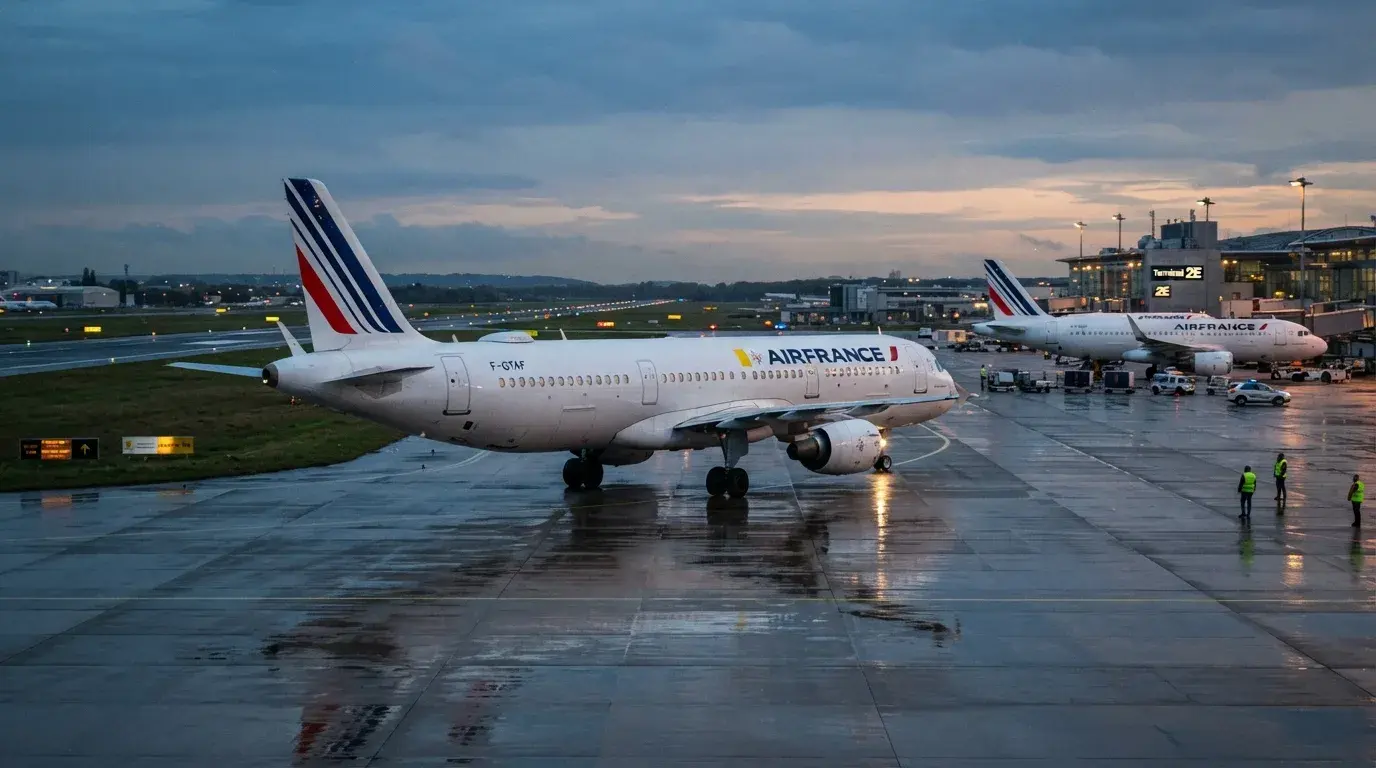
The Vatican has entrusted Air France with one of the rarest missions in French aviation history: transporting Pope Leo XIV aboard a fully chartered Airbus A321. Between September 26 and 28, 2026, the airline will orchestrate a meticulously planned aerial ballet connecting Paris-Orly, Tarbes-Lourdes-Pyrénées, Metz-Nancy-Lorraine, and Rome-Fiumicino. This operation blends protocol, enhanced security, and exceptional logistics as the pontiff makes his first visit to France during his papacy.
This extraordinary mission is no improvisation. Air France is mobilizing over 100 employees to ensure every detail runs smoothly, from ground preparations to landing. The aircraft, a specially dedicated Airbus A321, will temporarily display the words « Vatican City » on its fuselage, while the papal coat of arms will be affixed near the boarding gate reserved for the Holy Father. A first in Europe, where state visits are typically integrated into standard commercial traffic.
The Pope will be accompanied by a delegation of over 70 people, including cardinals, bishops, members of the Swiss Guard, and around 100 international journalists. A logistical challenge for Air France, which must reconcile the Vatican’s security requirements with the technical and regulatory constraints of modern air transport. Every minute counts, from strategic layovers to tight schedules.
An Airbus A321 Transformed into an Air Force One, with a Fully Dedicated Crew
To transport the Pope, Air France selected an Airbus A321, a single-aisle aircraft renowned for its reliability and efficiency on medium-haul flights. Unlike a standard commercial flight, this aircraft has been fully customized to meet the specific needs of the papal delegation. The cabin is divided into two distinct spaces, ensuring a clear separation between passengers and the dedicated crew, consisting of pilots and flight attendants trained in the strictest security protocols.
Captain Clémence Coussonneau, an experienced Air France pilot, has been chosen to lead this historic mission. She told the press that this assignment represented “a unique moment in a career, where professional passion blends with the honor of serving a mission of such symbolic significance.” Her crew underwent specialized training, including simulations for threat response and emergency situations, as well as coordination exercises with French and Italian law enforcement.
Aboard the aircraft, the Pope will have a space tailored to his needs, while the delegation will be distributed across the remaining cabins. The flight will be treated as a state visit, receiving priority treatment at departure, layover, and arrival airports. This priority extends to every level, from boarding to catering services, baggage handling, and coordination with airport authorities.
A Three-Stop Journey Filled with Symbolism
Pope Leo XIV’s visit to France will unfold across three strategic layovers, each carrying deep significance. The first flight will connect Paris-Orly to Tarbes-Lourdes-Pyrénées, where the Holy Father will undertake a spiritual pilgrimage to the Marian city. This leg begins with a ceremonial arrival at Orly’s honor pavilion, where an official ceremony will precede boarding.
The second flight will take the delegation from Tarbes to Metz-Nancy-Lorraine, a city rich in historical and religious heritage, where meetings with local authorities and dioceses are scheduled. The journey will conclude with a return flight to Rome-Fiumicino, completing a voyage that is both diplomatic, spiritual, and logistically complex.
Each layover was chosen for its symbolic or practical importance. Lourdes, for instance, is a globally renowned pilgrimage site, while Metz, a city in Lorraine, offers a strong historical anchor in French history. Rome, meanwhile, serves as the heart of the Vatican and the starting point of this papal visit.
Enhanced Security and Anti-Espionage Measures
Security is at the core of this operation. Air France is working closely with French and Italian authorities to ensure the protection of the papal delegation at every stage. Specific measures include meticulous baggage inspections, reinforced passenger screening, and constant coordination with intelligence services. Passengers aboard will not be informed in advance of the Pope’s presence to prevent any intrusion or disruption.
French and Italian law enforcement will maintain a discreet but constant presence around the aircraft and at the airports. At Paris-Orly, for example, specialized units will secure the boarding area, while similar setups will be implemented in Metz and Tarbes to oversee the delegation’s movements. This organization mirrors that of major international summits, where security is an absolute priority.
Air France’s Symbolic Gift to the Pope
To mark the occasion, Air France has prepared a special gift for Pope Leo XIV: an original collectible poster by artist Plaquet, paying tribute to the airline’s history with papal travel. This poster aligns with a tradition dating back to 1950, when Max Hymans, then president of Air France, encouraged religious travel and created dedicated promotional visuals for destinations like Lourdes and Rome.
The choice of this gift is far from arbitrary. It symbolizes the historical link between Air France and papal journeys, particularly during the visits of John Paul II in 1989 and Benedict XVI in 2008. The latter even received a similar poster during his visit to Lourdes, a gift now on display at the Vatican. By offering this present, Air France reaffirms its commitment to interfaith dialogue and its pride in participating in such large-scale missions.
A Mission That Shapes Aviation and Air Transport History
This exceptional mission by Air France adds to a long list of historic flights for the airline. In 1989, an Air France Concorde transported Pope John Paul II between Réunion and Lusaka, a flight considered one of the most iconic moments in French aviation history. More recently, in 2008, Air France chartered an Airbus A321 to transport Benedict XVI from Paris-Orly to Lourdes and then to Rome, an operation that left a lasting impression due to its rigorous organization.
This time, the stakes are even higher: it marks the first visit of Leo XIV to France, a unique opportunity to strengthen ties between the Catholic Church and the host country. By rising to this challenge, Air France once again demonstrates its central role in global air transport, capable of adapting to exceptional missions while maintaining unparalleled service and security standards.
A Rare Opportunity for Travelers to Follow in the Pope’s Footsteps
While the flight is entirely reserved for the papal delegation, this extraordinary operation offers a glimpse into the behind-the-scenes world of state air transport. Regular passengers may wonder about the differences between a commercial flight and a dedicated charter for a figure of this magnitude. The answer lies in the details: strict protocols, enhanced security, precision logistics, and coordination among multiple stakeholders, from airlines to airport authorities and law enforcement.
This mission also highlights the critical role of airport infrastructure in organizing such events. Airports like Paris-Orly, Tarbes-Lourdes-Pyrénées, and Metz-Nancy-Lorraine must adapt quickly to accommodate a state visit, with specific arrangements for the delegation and optimized management of passenger and baggage flows. A logistics operation that, while discreet, is essential to ensuring the mission’s success.
What This Operation Reveals About the Evolution of Air Transport
The chartering of an entire Airbus A321 to transport the Pope illustrates the evolution of air transport toward increasingly specialized missions. While commercial flights dominate the sector, operations like this show that aviation remains an indispensable tool for large-scale international travel, whether diplomatic, religious, or humanitarian. By rising to this challenge, Air France reaffirms its place among the world’s most versatile airlines, capable of adapting to all types of missions.
This operation also underscores the role of airlines in diplomacy and international relations. By transporting heads of state or religious figures, airlines become indirect players on the global stage, helping to strengthen ties between nations and facilitate cultural and spiritual exchanges.
Finally, this mission exemplifies Air France’s commitment to its core values: excellence, innovation, and respect for tradition. By transporting the Pope, the airline is not merely fulfilling a logistical mission—it is participating in a historic event that will forever mark the history of French aviation.
One thing is certain: when Air France’s Airbus A321 departs from Paris-Orly on September 26, 2026, it will not simply be an aircraft carrying passengers. It will be a symbol of aviation’s ability to transcend borders, unite people, and write major chapters in world history.
Be the first to comment on this article
On the same topic
- Tel Aviv: Direct North American Flights Return in 2026 – What It Means for Travel
- Boeing 737 MAX 7 finally certified: How this green light reshapes travel
- Air Express Algeria Blacklisted by EU: Impact on Flights to Africa
- easyJet soon in Apollo’s hands? What the fund battle means for your European flights
- Emirates revolutionizes solo travel for children with ultra-secure, personalized service for summer 2026
- Boeing Finally Produces 47 Aircraft per Month: FAA Gives Green Light After Years of Crisis