Flynas and Saudi Arabia Bet $10 Billion on 25 Airbus Jets to Dominate Skies: How This Gamble Reshapes Travel
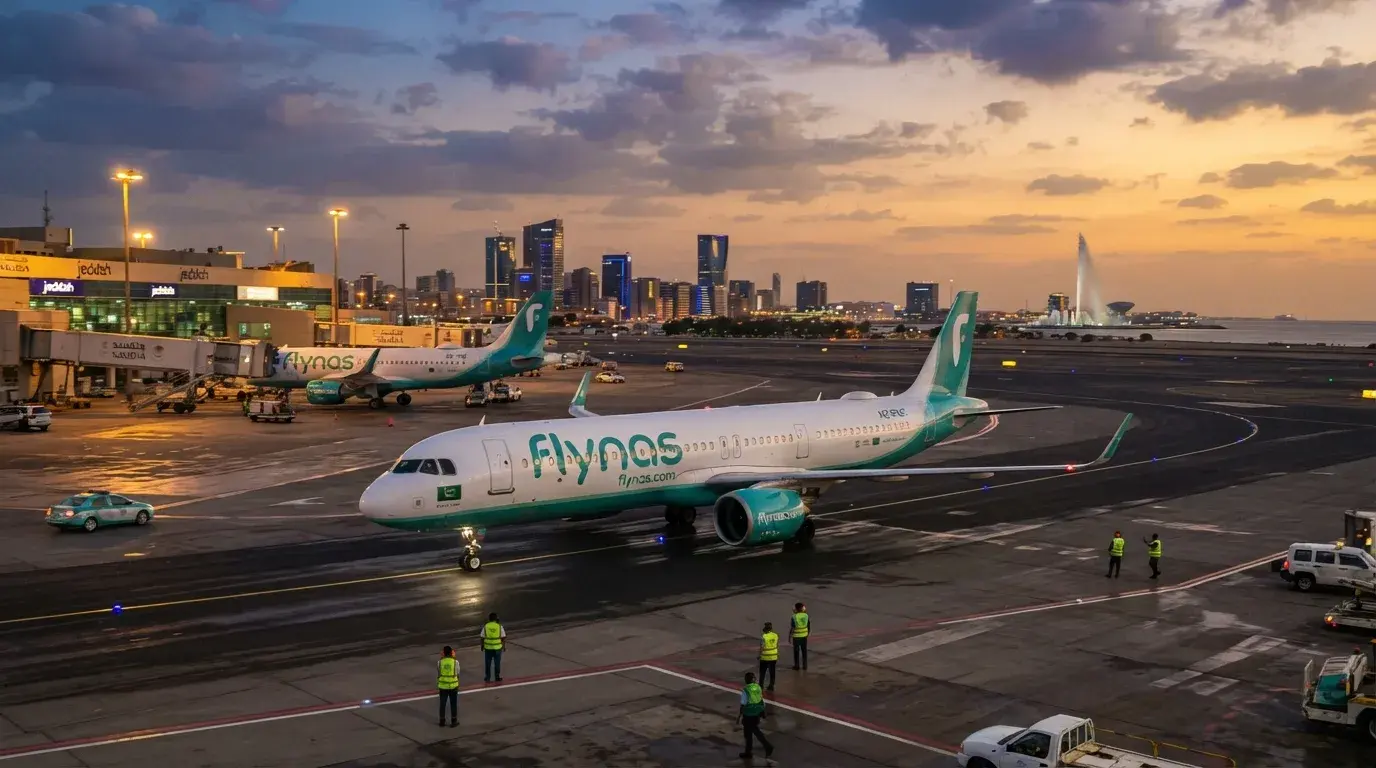
Saudi Arabia is accelerating its transformation into a global aviation powerhouse. At the Farnborough Airshow, Flynas officially announced the purchase of 25 additional aircraft from Airbus, bringing its total order to 235 jets. This deal includes five A330-900s and twenty A321neo aircraft, part of an ambitious strategy to position the kingdom as a worldwide hub by 2030. Beyond the numbers, this industrial wager is reshaping air routes between Europe, Asia, and Africa while offering travelers new options for long-haul getaways.
Flynas is no longer just serving Saudi Arabia’s domestic market. The airline, recognized as one of the most dynamic low-cost carriers in the Gulf, now aims to capture a significant share of the long-haul traffic. The addition of five A330-900s to its fleet enables direct flights to Europe, Southeast Asia, and Sub-Saharan Africa. For passengers, this means nonstop flights at competitive prices—an attractive alternative to traditional airlines that often charge premium fares. With a range of 15,000 kilometers for the A330-900, routes like Riyadh-Paris or Jeddah-Bangkok become feasible, not to mention religious destinations such as Medina or Mecca, already well-served by the airline.
This expansion aligns with Vision 2030, Saudi Arabia’s national plan to triple its air traffic within six years. The country is banking on aviation to diversify its economy and attract 330 million annual passengers by the end of the decade. As a low-cost carrier, Flynas plays a pivotal role in this strategy. CEO Bander Almohanna confirmed that this order will support the kingdom’s six operational bases, while strengthening connections to holy sites—a rapidly growing market.
The choice of A321neo and A330-900 aircraft is far from coincidental. The A321neo, with its increased capacity and 20% lower fuel consumption compared to previous models, is ideal for high-density medium-haul routes. For Flynas, it will help absorb the booming demand in domestic and regional traffic. Meanwhile, the A330-900 allows the airline to venture into long-haul markets while maintaining competitive operating costs. Powered by Rolls-Royce Trent 7000 engines, the aircraft delivers a 25% reduction in fuel consumption, a major advantage in an era of rising energy prices.
This order also highlights the evolution of the low-cost model. Once confined to short-haul flights, carriers like Flynas and Air Arabia are now expanding their networks far beyond the Gulf. Their goal? To offer an accessible alternative to traditional airlines without compromising comfort or reliability. For European travelers, this could mean round-trip tickets to Saudi Arabia for under €300—unthinkable just five years ago.
But this expansion isn’t limited to air routes. It’s accompanied by an upgrade in onboard services. Flynas, which already introduced premium classes on its A330s, now plans to diversify its offerings to appeal to an international clientele. Passengers can look forward to more spacious seats, improved catering, and enhanced in-flight entertainment—all at still-affordable prices.
The economic ripple effects for Saudi Arabia are substantial. The local aeronautics industry, bolstered by massive investments, is seeing its maintenance and training capacities strengthen. With over 280 aircraft on order, Airbus and Flynas are creating thousands of jobs in maintenance, logistics, and crew training—a boon for a country in the midst of transformation.
For travelers, the opportunities are vast. Whether for a religious pilgrimage, an Asian getaway, or a cultural exploration of the kingdom’s riches, Flynas now offers unprecedented options. With Expo 2030 in Riyadh and the 2034 FIFA World Cup on the horizon, fares could drop further as competition among carriers intensifies.
From Local Ambition to Regional Dominance: Flynas’ Rise
Flynas is no longer just a Saudi low-cost airline—it’s a key player in Middle Eastern air traffic. With an all-Airbus fleet and a clear strategy, the carrier aims to capture the most lucrative routes. The order for 25 additional aircraft marks a turning point, but it’s part of a continuous growth strategy since the airline’s launch in 2007.
With 65 aircraft in service today—including 57 A320neos—Flynas is already the country’s second-largest carrier by traffic. Yet its ambitions extend beyond Saudi borders. The airline has recently launched flights to destinations like Cairo, Istanbul, and Karachi, with plans to expand into Europe in the coming months. The A330-900 will spearhead this growth, with direct routes to Paris, London, and Frankfurt starting in 2027.
This strategy is built on a proven economic model: attractive fares paired with rigorous cost management. Flynas has capitalized on Saudi Arabia’s soaring air traffic, where passenger numbers have grown by 20% annually since 2020. With a target of 330 million annual passengers by 2030, the airline is well-positioned to play a major role in this growth.
The A321neo and A330-900: The Backbone of Flynas’ New Fleet
Flynas’ selection of the A321neo and A330-900 is no coincidence. These aircraft perfectly match the airline’s needs in terms of capacity, efficiency, and versatility. The A321neo, with its 240 seats, is ideal for high-density medium-haul routes, where traffic density is high. Its 7,400-kilometer range allows it to connect Riyadh to cities like Dubai, Cairo, or Istanbul without stops.
The A330-900, meanwhile, opens new horizons. With a capacity of 287 seats and a 15,000-kilometer range, it positions Flynas in long-haul markets such as Europe or Southeast Asia. The aircraft is also quieter and more fuel-efficient, a major advantage for a low-cost carrier focused on cost reduction.
For Airbus, this order validates the relevance of its aircraft. The European manufacturer is banking on the A320neo family and A330neo to capture market share in developing countries, where air transport demand is exploding. With over 200 aircraft ordered by Flynas, Airbus confirms its leadership in the Middle Eastern market.Vision 2030: Saudi Arabia Bets Big on Aviation to Diversify Its Economy
The Flynas order is part of Vision 2030, Saudi Arabia’s ambitious plan to transform its economy. The country is leveraging aviation to reduce its dependence on oil and attract foreign investment. With a goal of 330 million annual passengers by 2030, the kingdom aims to become the Middle East’s top aviation hub, surpassing Dubai and Doha.
To achieve this, Saudi Arabia is heavily investing in airport infrastructure. King Khalid International Airport in Riyadh, already one of the world’s most modern, will see its capacity expand from 30 to 70 million passengers annually by 2030. Airports in Jeddah and Dammam are following suit, with expansion projects to accommodate a growing fleet.
This strategy includes incentive pricing policies. Saudi Arabia has launched subsidy programs for airlines that develop international routes, with Flynas as a direct beneficiary. With some of the lowest fares in the Gulf, the airline attracts an international clientele and strengthens its market position.
For travelers, this means unprecedented opportunities. Whether for a pilgrimage to Mecca, a trip to Riyadh, or a discovery of the kingdom’s desert landscapes, Flynas offers competitively priced flights. With Expo 2030 and the 2034 FIFA World Cup on the horizon, fares could drop further as competition among carriers intensifies.
Saudi Arabia is banking on aviation to attract global tourists. With sites like AlUla—a UNESCO World Heritage region—or the Red Sea beaches, the kingdom offers unique cultural and natural attractions. Thanks to Flynas, these destinations are now directly accessible from Europe or Asia.
What’s in Store for European Travelers?
For European passengers, Flynas’ expansion represents a major opportunity. Flights to Saudi Arabia, once expensive and often indirect, are becoming more accessible. With direct routes from Paris, London, or Frankfurt, travelers can now plan trips to Riyadh or Jeddah in just a few clicks, without transiting through Dubai or Doha.
Fares are expected to remain competitive thanks to Flynas’ low-cost model. Round-trip tickets to Riyadh could drop below €300, comparable to flights to Morocco or Tunisia. With the addition of the A330-900 to its fleet, routes to destinations like Istanbul or Cairo could also benefit from competitive pricing.
For adventure seekers, Saudi Arabia offers unique experiences. Whether exploring the Edge of the World desert landscapes, discovering the archaeological sites of Diriyah, or enjoying the Red Sea beaches, the kingdom is an emerging destination. Thanks to Flynas, these getaways are now easier to organize.
Business travelers aren’t left out. With its premium classes and enhanced onboard services, Flynas provides a credible alternative to traditional airlines. Passengers can travel in comfort without paying a premium—a boon for companies looking to optimize travel budgets.
Finally, for religious travelers, Saudi Arabia remains a major destination. With millions of pilgrims visiting Mecca and Medina each year, Flynas offers flights tailored to this audience. With the A330-900 added to its fleet, direct routes from Europe are expected to multiply, making trip planning easier.
In summary, Flynas’ order of 25 Airbus aircraft marks a turning point for Saudi aviation. For travelers, this means lower fares, more destinations, and improved travel experiences. And with Saudi Arabia’s ambition to become the Middle East’s top aviation hub, the opportunities are just beginning.
Be the first to comment on this article
On the same topictourism
- French bee targets 14 weekly flights to La Réunion: Why the island captivates travelers
- Icelandair bets on Madrid and St. Louis for summer 2027: a revolution for your travels to America and Europe
- Finnair nearly triples flights to Tokyo: how to seize this opportunity for your next Japan trips
- Frontier Airlines launches in Colombia in December 2026: three low-cost routes from Orlando under €100 one-way
- Etihad deploys Airbus A321LR between Abu Dhabi and Brussels: how this upgrade transforms your flights to the Emirates
- Why Northern Italy Will Blow Your Travel Budget This Summer 2026