Royal Air Maroc's 737 MAX-8 boosts Casablanca hub ahead of 2030 World Cup
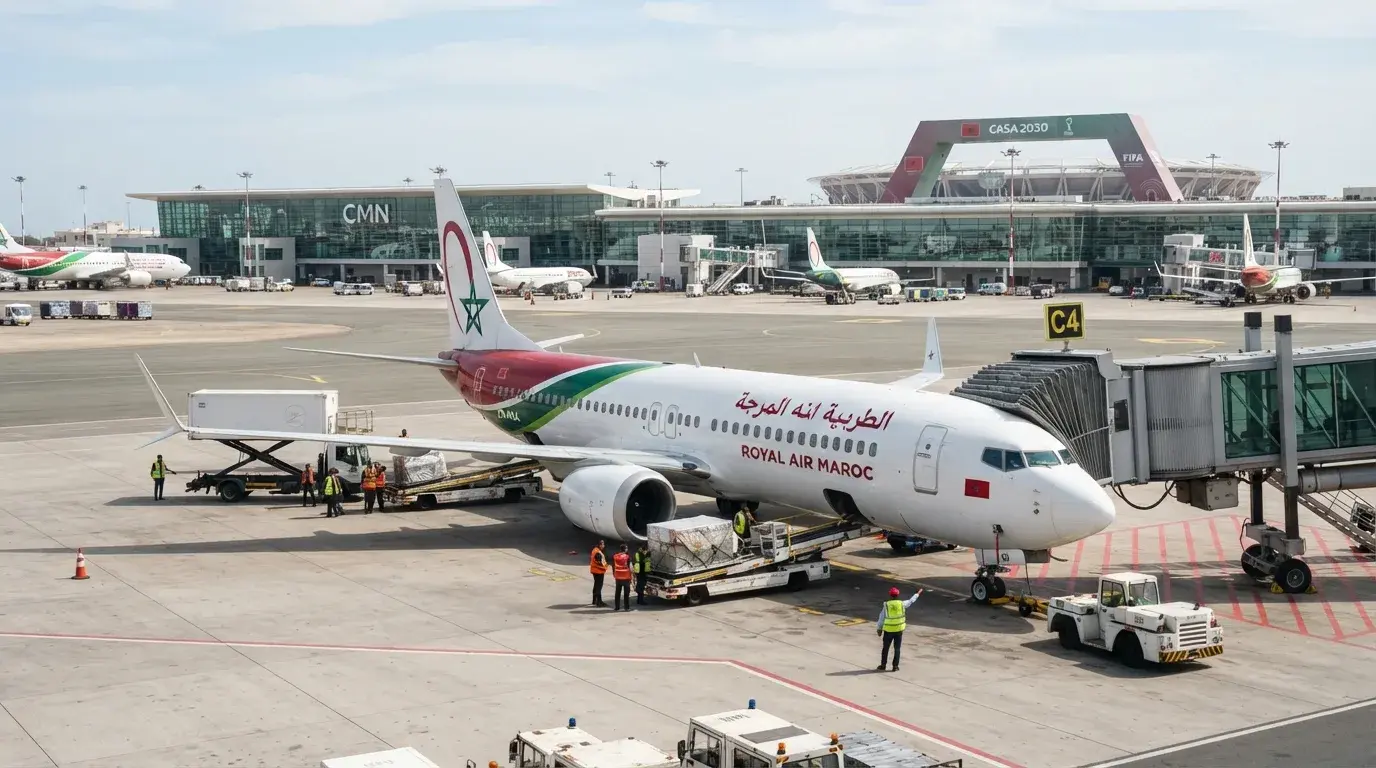
Royal Air Maroc (RAM) has taken delivery of a new Boeing 737 MAX-8, expanding its fleet to 69 aircraft and marking a key milestone in its development strategy. With this modern single-aisle jet, the Moroccan national carrier is strengthening its position at Casablanca, the country’s main hub, while actively preparing to launch new routes ahead of the 2030 FIFA World Cup, co-hosted by Morocco, Spain, and Portugal.
This delivery is part of an ambitious plan to grow RAM’s fleet to 200 aircraft by 2037, up from 69 today. The new 737 MAX-8, configured for 186 seats, joins a fleet already comprising 45 single-aisle Boeing aircraft, including 18 737 MAX-8s and 737-800s. Oussama El Farisi, RAM’s engineering manager, noted that the airline plans to integrate an average of 10 to 15 additional aircraft each year to support its growth.
RAM’s ambitions extend beyond fleet modernization. The carrier has launched a tender potentially worth 200 aircraft, involving Boeing, Airbus, Embraer, and ATR. According to reports by Bloomberg, Boeing could secure up to 50 aircraft from the 737 MAX family for short- and medium-haul routes, as well as around twenty 787 Dreamliners for long-haul services. This order, still under finalization, reflects RAM’s goal to strengthen its presence in African, European, North American, and Asian markets while positioning Casablanca as a major international hub.
Moroccan air traffic has seen remarkable growth of 8.77% year-to-date July 2026, with over 22 million passengers passing through the country’s airports. Casablanca-Mohammed V, Morocco’s primary hub, handled 6.95 million travelers during this period, ahead of Marrakech-Ménara (6.41 million) and Agadir-Al Massira (2.18 million). These figures highlight the dynamism of Morocco’s tourism sector, driven by the appeal of local destinations and connections with the diaspora.
The arrival of the new 737 MAX-8 coincides with the gradual opening of new routes. RAM has recently expanded its network to include destinations such as Beijing, São Paulo, Los Angeles, Saint Petersburg, Manchester, and N’Djamena. This expansion aligns with the contract signed in July 2023 between the Moroccan government and the airline, aimed at enhancing the country’s connectivity and positioning Casablanca as a key transit hub for travelers between Africa and beyond.
For travelers, this modernization brings unprecedented opportunities. The new 737 MAX-8 aircraft, more fuel-efficient and quieter, will help reduce operational costs and improve onboard comfort. With a fleet in constant evolution and a strategy focused on international expansion, RAM is positioning itself as a key player in African air transport, ready to meet the challenges of the 2030 FIFA World Cup and beyond.
The 737 MAX-8: A cornerstone of an expanding fleet
The Boeing 737 MAX-8 has become central to Royal Air Maroc’s growth strategy. With 18 aircraft already in service and more deliveries planned, this modern single-aisle jet enables the airline to serve medium- and long-haul routes with greater efficiency. The 737 MAX-8 offers a capacity of 186 seats, a range of 6,500 kilometers, and a 15% reduction in fuel consumption compared to previous models.
Their introduction into the fleet allows RAM to consider routes to destinations such as Cape Verde, Senegal, and other emerging markets in Sub-Saharan Africa. These new routes respond to growing demand for mobility between Europe, Africa, and North America, further reinforcing Casablanca’s role as a regional hub.
The 737 MAX-8s are also equipped with advanced technologies, including satellite navigation systems and touchscreen cabin displays, enhancing the passenger experience. For the airline, these aircraft represent a strategic investment to meet increased competition in Africa, where many new low-cost carriers are emerging.
Casablanca: The African hub of tomorrow
Casablanca-Mohammed V is already Morocco’s leading airport, with nearly 7 million passengers in 2026. With the arrival of new aircraft like the 737 MAX-8 and the expansion of its fleet, RAM aims to make this hub an essential transit point for travelers between Europe, Africa, and the Americas. The airline has announced significant capacity increases on its busiest routes, particularly to Europe and North America.
RAM’s strategy revolves around several key pillars: improving connectivity with major European cities, strengthening links to Moroccan tourist destinations like Marrakech and Agadir, and developing routes to emerging markets in Sub-Saharan Africa. With an ever-expanding offering, Casablanca could soon rival hubs like Dubai or Istanbul in terms of traffic and connections.
For travelers, this means more choices, more competitive fares, and reduced connection times. Royal Air Maroc is banking on this strategy to attract international customers and position Morocco as a key destination for tourism, business, and major events like the 2030 FIFA World Cup.
2030 FIFA World Cup: RAM at the forefront
The 2030 FIFA World Cup, co-hosted by Morocco, Spain, and Portugal, represents a major opportunity for the country and for RAM. The airline plans to launch new direct routes to European and African cities to accommodate fans and delegations from around the world. With a modernized fleet and increased capacity, RAM will be well-equipped to meet the surge in air travel demand during the event.
The contract signed between the Moroccan government and RAM is designed to prepare the country for this influx of visitors. In addition to acquiring new aircraft, the airline plans to enhance its infrastructure in Casablanca and other Moroccan airports to improve passenger experience. The goal is clear: to make the 2030 FIFA World Cup a logistical and tourism success while solidifying RAM’s position as Africa’s leading national carrier.
For travelers, this means competitive fares, direct flights to strategic destinations, and an optimized travel experience with smooth connections in Casablanca. RAM is leveraging this momentum to attract international customers and reinforce its image as a reliable and innovative airline.
Growth for economic development
RAM’s growth aligns with Morocco’s broader vision for economic development. By expanding its fleet and capabilities, the airline is contributing to the country’s appeal as a tourist destination and a logistics platform. The aviation sector is a key driver of Morocco’s economy, generating jobs, investments, and opportunities for local businesses.
With passenger traffic up nearly 9% in 2026, Morocco is confirming its leadership in Africa’s air transport sector. Casablanca, thanks to RAM, is becoming a major gateway for travelers transiting between Europe, Africa, and the Americas. This growth is accompanied by investments in airport infrastructure and staff training to ensure high-quality service and optimal safety.
For travelers and professionals alike, Royal Air Maroc represents a reliable and innovative solution for exploring Morocco and Africa. With an expanding fleet and clear ambitions, the airline is well-positioned to meet the challenges of tomorrow and continue writing its success story.
Be the first to comment on this article
On the same topic
- Emirates reinvents its fleet: Why the 777X could replace 35 Dreamliners
- JetBlue Acquires Spirit Airlines' Slots at New York LaGuardia: What It Means for Your 2027 Flights
- Biman Bangladesh Airlines bets on Airbus to conquer Europe and North America with A350 and A321neo
- Air Freight: Why This 4.4% Surge in August 2026 Will Drive Up Delivery Prices
- AnimaWings in Crisis: Six A220s Grounded, Judicial Restructuring Underway
- Etihad Revives Its Last Airbus A380 After Six Years Grounded: Why the Giant of the Skies is Back