Air Freight: Why This 4.4% Surge in August 2026 Will Drive Up Delivery Prices
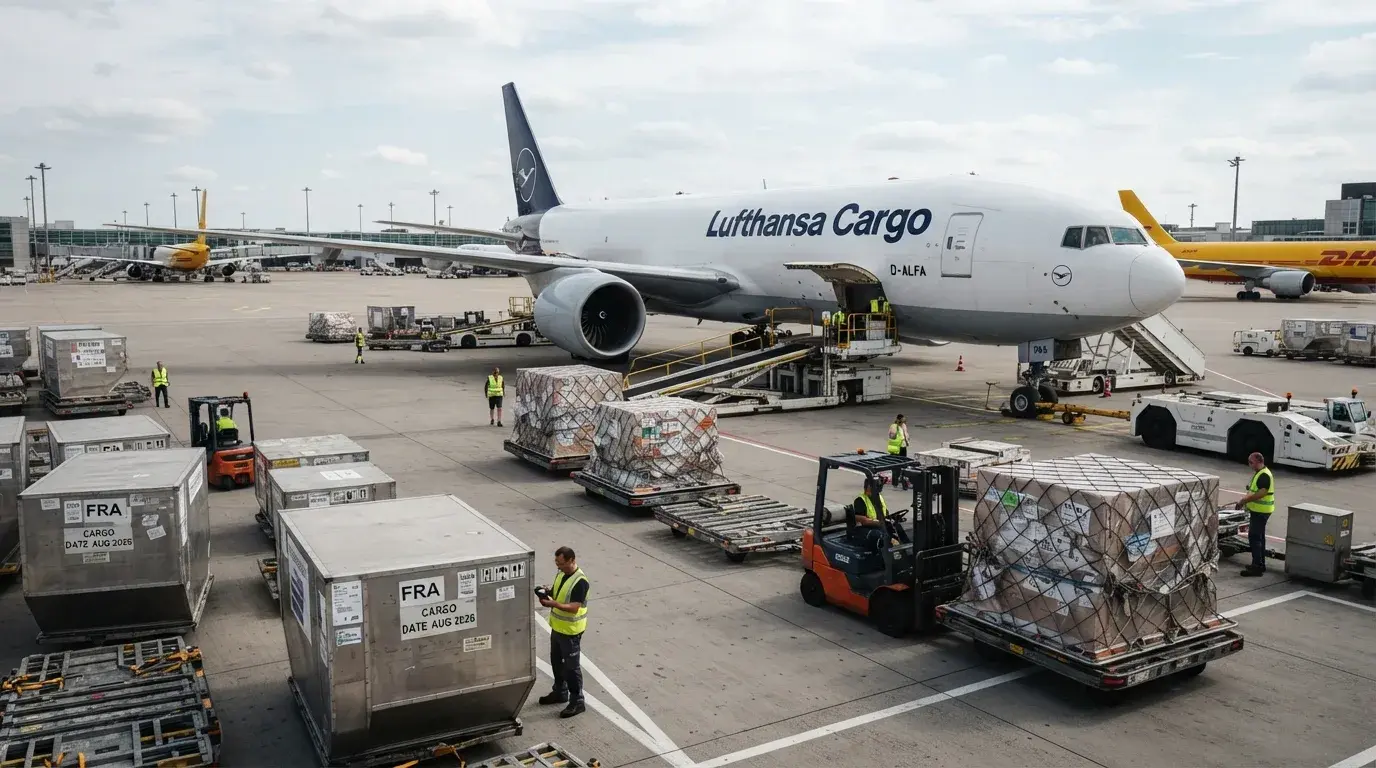
Global air cargo demand surged 4.4% in August 2026 year-over-year, according to the latest data from the International Air Transport Association (IATA). The figure comes as a surprise amid soaring fuel costs and persistent geopolitical tensions. Behind this growth lies a stark reality for consumers: this surge will inevitably trickle down to higher prices for imported goods, online orders, and even express delivery rates.
Behind IATA’s raw figures lies a sectoral dynamic that directly impacts daily life. Demand, measured in cargo tonne-kilometers (CTK), rose 4.4% year-over-year, with a peak of 5.3% for international operations alone. At the same time, available capacity slightly declined by 0.1%, mechanically increasing cargo aircraft load factors. Marie Owens Thomsen, IATA’s Senior Vice President for Sustainability and Chief Economist, notes that “air cargo demand grew 4.4% in August year-over-year, with all regions showing growth despite a 0.1% capacity reduction.” A performance reflecting a still-dynamic global economy, despite ongoing challenges.
This demand surge is largely driven by the vitality of global trade, which grew 6% year-over-year in July 2026. A growth trend that has persisted for 33 consecutive months of annual increases, per IATA. Global manufacturing activity also accelerated in August, with the production PMI rising 0.3 points to 53, while the new export orders index jumped 1.4 points to 51.4. Levels traditionally signaling economic expansion. But this trade health comes at a price: it weighs on consumer wallets.
North America Leads, Europe Also Grows
All global regions recorded air cargo demand growth. North American carriers posted the strongest performance, with a 6.6% rise in CTK. Their capacity fell 2.5%, pushing the load factor to 42%, a 3.6-point gain. European carriers saw demand increase 4.1% while capacity dropped 3.5%. Their load factor rose 3.9 points to 53%, the highest among major regions. In Asia-Pacific, which accounts for 35.8% of the global air cargo market, demand grew 4.3% and capacity by 1.2%.
This regional disparity highlights the complexity of the air cargo market. The U.S., a key growth driver, benefits from sustained demand for manufactured goods and electronic components. Europe, with a record 53% load factor, shows an ability to absorb this surge without sacrificing profitability. In Asia, where the market is already the largest, growth remains moderate but steady. The Gulf corridors, however, remain disrupted by geopolitical tensions. Middle Eastern carriers posted the weakest growth, with demand up just 1%. Capacity rose 3.3%, pushing their load factor down 1 point to 43.1%. IATA notes that Gulf-linked routes remain affected by the Middle East conflict, with traffic down 12.1% between Europe and the Middle East, and 11% between the Middle East and Asia.
Asia-North America Axis Strongly Up, Europe-Asia Also Rising
Among major air cargo corridors, the Asia-North America axis recorded the strongest growth at 13.2%. This marks the seventh consecutive month of growth on this transpacific route. Europe-Asia flows rose 3.1%, extending a 42-month streak of annual growth, while intra-Asia flows climbed 6.1%. These figures show that trade between Asia and North America remains the main driver of air cargo growth, despite trade tensions and customs barriers.
This momentum stems from Asia’s concentration of manufacturing industries and rising demand from U.S. and European consumers for low-cost manufactured goods. Asian manufacturers, particularly in China, Vietnam, and Thailand, continue to dominate global supply chains, fueling air cargo demand. In Europe, growth in flows with Asia reflects post-pandemic trade recovery and companies’ efforts to diversify supply chains to reduce reliance on single suppliers.
For consumers, this demand surge translates to higher transport costs, which are passed on to product prices. Whether for an e-commerce order, urgent medical equipment, or an industrial spare part, prices will inevitably climb. Airlines, facing higher fuel costs and limited capacity, have little choice but to pass these surcharges to customers. A trend that will persist in the coming months as peak year-end season approaches.
Why This Surge Will Impact Your Online Orders
If you’ve noticed rising shipping fees on your online orders, this trend will intensify. E-commerce platforms like Amazon or Cdiscount, which rely heavily on air cargo for express deliveries, will be forced to pass on higher transport costs to their rates. Imported goods from China, Vietnam, or other Asian countries—key components of online offerings—will see significant price hikes.
This situation will also affect express delivery services like FedEx, DHL, or UPS, which will raise rates to absorb higher costs. Consumers will pay more to receive parcels, whether for everyday products or specialized purchases. Delivery times may also lengthen as carriers optimize rotations to handle increased demand.
Businesses, meanwhile, must factor higher logistics costs into their budgets. Manufacturers and distributors relying on air cargo for supply chains will see shrinking margins, potentially leading to price hikes on finished goods. The hardest-hit sectors will be those heavily dependent on imports, such as electronics, fashion, or pharmaceuticals.
A Still-Tense Geopolitical Context
The air cargo market remains under strain due to ongoing conflicts, particularly in the Middle East. Air links between Europe and the Middle East fell 12.1% in August, while flows between the Middle East and Asia dropped 11%. These disruptions compound high fuel costs, which rose 8.3% month-over-month and 79.2% year-over-year in August. Airlines must manage rising operational costs amid sustained demand.
IATA emphasizes that “airlines must contend with strong demand and higher load factors to offset exceptionally high fuel costs.” This situation will further pressure prices as the sector struggles to maintain profitability in an uncertain economic environment.
For travelers, this air cargo surge could also impact checked baggage fees. Airlines facing higher logistics costs may raise rates for checked bags to offset expenses—a setback for those traveling with bulky items or holiday gifts.
As peak year-end season approaches, IATA’s signals are mixed. On one hand, demand growth and continued global trade expansion are positive signs. On the other, fuel costs and geopolitical tensions threaten sector stability. One thing is certain: consumers should expect to pay more for deliveries and online purchases in the coming months.
How to Limit the Impact on Your Budget
Faced with higher logistics costs, consumers can adopt strategies to mitigate the impact on their wallets. First, plan purchases ahead and order earlier to avoid price hikes. E-commerce platforms often run early-month promotions that can help save money.
Another solution is to prioritize local or European products, which typically have lower transport costs. Brands manufacturing in France or Europe often offer more affordable delivery rates, helping offset higher shipping fees. Consumers can also turn to short supply chains or local markets to reduce reliance on imports.
Finally, compare offers from different carriers. Express delivery services like DHL or FedEx may offer competitive rates for small parcels, while specialized air cargo carriers could be more cost-effective for heavy shipments. Thorough research can uncover more economical solutions.
In conclusion, the 4.4% surge in air cargo demand in August 2026 is good news for the global economy but will inevitably drive up prices for products and services for consumers. Between geopolitical tensions, soaring fuel costs, and strong demand, the air transport sector has little choice but to pass these surcharges on. A trend that will persist as peak year-end season approaches and consumers brace for higher online shopping costs.
Be the first to comment on this article
On the same topic
- AnimaWings in Crisis: Six A220s Grounded, Judicial Restructuring Underway
- Etihad Revives Its Last Airbus A380 After Six Years Grounded: Why the Giant of the Skies is Back
- Azores Airlines soon to change hands: five bidders vie for privatization
- Turkish Airlines makes bold move: 150 Boeing 737 MAX ordered, a daring bet to reshape European skies
- Emirates Weighs Swapping Boeing 787s for 777Xs: A Strategic Shift That Could Transform Long-Haul Travel
- Athens emerges as the new US gateway to Greece: Why this hub is winning over travelers