Volotea in Crisis: How the Spanish Low-Cost Airline Will Survive Debt and Delays Threatening Your Flights
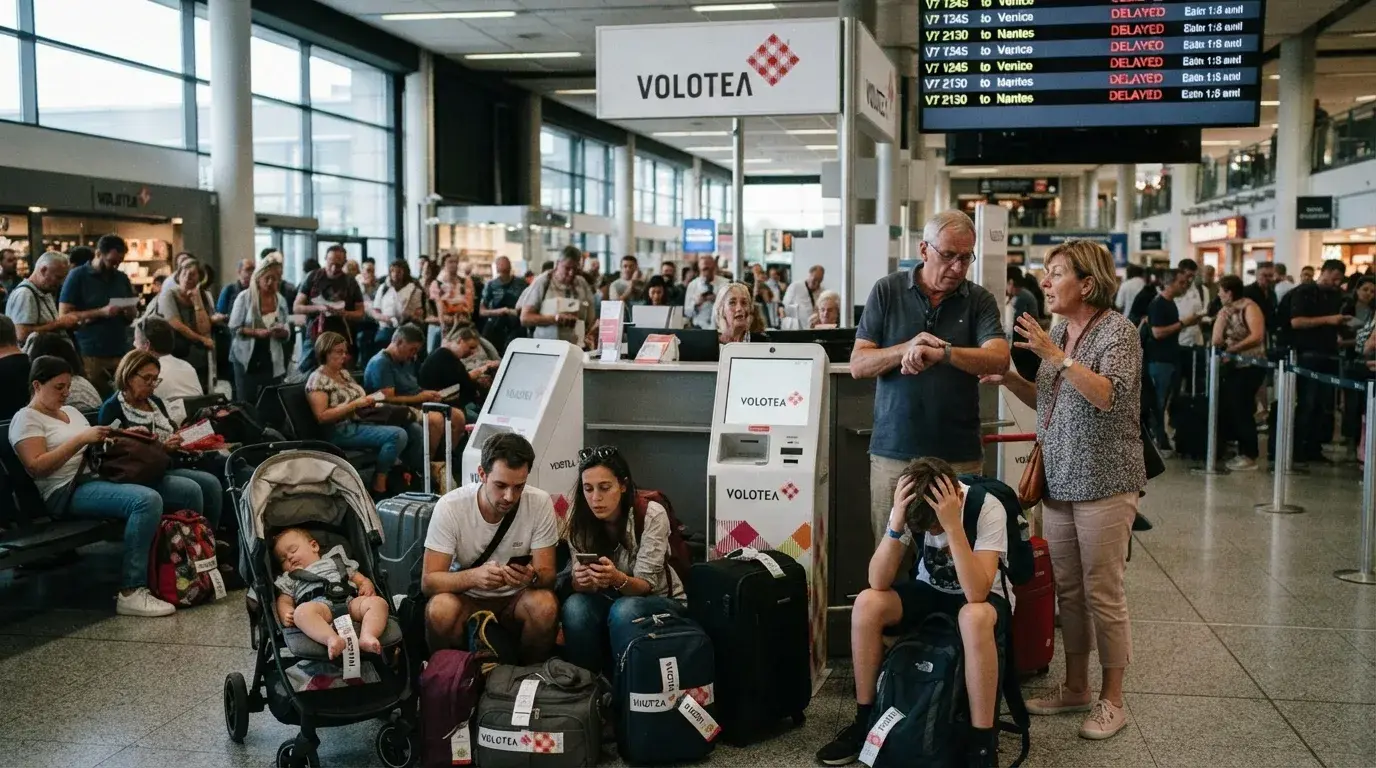
Spanish low-cost carrier Volotea is navigating a critical period marked by financial restructuring, soaring fuel costs, and the threat of drastic network reductions. European travelers may soon feel the consequences of this storm. With an ambitious debt restructuring plan and a fleet on the brink, the airline has no choice but to reinvent itself to avoid collapse.
Volotea’s CEO and founder, Carlos Muñoz, sounded the alarm in a letter addressed to all employees. The situation is dire: the war in the Middle East cost the airline €150 million in 2026, primarily due to skyrocketing fuel prices. But that’s not all. Debt accumulated during previous crises—including the Covid-19 pandemic and the conflict in Ukraine—now hangs like the Sword of Damocles over the company’s future. « When you add our existing debt from previous crises—Covid and Ukraine—we have no alternative but to restructure our debt », he explained.
A high-stakes debt restructuring
To address this, Volotea has filed for a preventive negotiation procedure with creditors before Barcelona’s Commercial Court No. 9. Known in Spain as « preconcurso de acreedores », this process is not bankruptcy but allows the airline to negotiate a restructuring agreement before potentially entering collective proceedings. The goal? To reduce debt by €250–300 million through four key levers: renegotiating financial debt, extending maturities with SEPI (Sociedad Estatal de Participaciones Industriales), discussions with suppliers and airports, and finally, reducing fleet costs negotiated with lessors.
The SEPI, Spain’s state-owned industrial holding company, is Volotea’s largest creditor. In 2022, it granted the airline a €200 million participatory loan via a solvency support fund for strategic companies. Today, this debt represents a significant portion of Volotea’s financial burden, with total debt reaching €356 million.
A fleet in limbo: between cuts and reorganization
As part of this restructuring, Volotea plans to shrink its fleet from 44 aircraft to 30–35 planes. Between nine and fourteen Airbus A319 and A320 aircraft could be removed from operations. The choice of which aircraft to retain is strategic: the airline aims to prioritize the more capacious Airbus A320s over the A319s. This approach aims to lower the cost per seat and concentrate available aircraft on the most profitable routes.
Among the routes affected by this reorganization are subsidized links, routes covered by bilateral agreements, high-demand flights to Algeria, and markets with less intense competition. Nantes and the future base in Montpellier are highlighted as strategic hubs, while some bases may be placed in « hibernation » during the winter season.
For 2026, Volotea had initially planned to offer around 13 million seats—7% more than in 2025—across nearly 430 European routes. This program will need to be adjusted in light of the planned fleet reduction. « Frequencies may be adjusted or expanded depending on the evolution of each route », noted David Forné, Andorra’s Secretary of State for Energy Transition, Transport, and Mobility.
Record revenue, but mounting losses
Despite posting a record €818 million in revenue in 2025, Volotea reported a net loss of €64 million under IFRS standards. This loss stems from the revaluation of certain deferred tax assets and adjustments to conversion reserves. The surge in fuel costs in 2026 adds further pressure on its finances, making restructuring even more urgent.
Carlos Muñoz has stated that Volotea will continue operating flights and selling tickets during this turbulent period. The goal is to reach an agreement with creditors by December 2026, stabilize operations, and gradually resume growth in 2027. To achieve this, the airline must minimize the impact of downsizing on its network while maintaining part of its operations.
A potential new partner? Aegean Airlines may take control
In March 2026, Volotea completed a €71 million capital increase, supported by Aegean Airlines, Alaeo—the investment vehicle representing the management team led by Carlos Muñoz—and U.S. fund PAR Capital. This transaction increased Aegean’s stake in Volotea to over 20% of its capital.
Recent reports in the Spanish press suggest a scenario in which Aegean Airlines could become Volotea’s controlling shareholder through a debt-to-equity conversion and a new capital injection. If realized, this move would mark a major turning point for the Spanish low-cost carrier, which would then benefit from the support of an already well-established European airline group.
The coming months will be decisive for Volotea. The airline must secure an agreement with its creditors by the end of the year while minimizing the impact of downsizing on its network. If successful, it could stabilize operations in 2027 and consider a gradual recovery. If negotiations fail, travelers may face flight cancellations, fare hikes, and a reduction in service across several European hubs.
What this means for travelers
If you’re planning to fly with Volotea in the coming months, here’s what you need to know:
First, the airline continues to operate flights and sell tickets. It has stated that « no further cancellations will occur in 2026 ». If your flight is canceled, you can either request a full refund or change your booking without additional fees. These measures remain valid until the restructuring is finalized.
Second, some destinations may see reduced frequencies or temporary suspensions. This is particularly true for Lille, Bordeaux, Brest, and even Nantes, where Volotea plans to cut its winter offering by 30–35%. If you’ve booked a flight to one of these hubs, it’s advisable to check your booking status regularly on the airline’s website.
Finally, in a context of rising costs and restructuring, fares may fluctuate. Some tickets could become more expensive, while promotions may help fill planes despite the reduced offering. Everything will depend on Volotea’s ability to negotiate with creditors and stabilize its operating costs.
One thing is certain: Volotea will not disappear overnight. But its future hinges on the success of this restructuring and the airline’s ability to convince creditors and partners to follow this uncertain path.
Be the first to comment on this article