Ryanair and Wizz Air Smash September Figures: Who Really Benefits from This Growth?
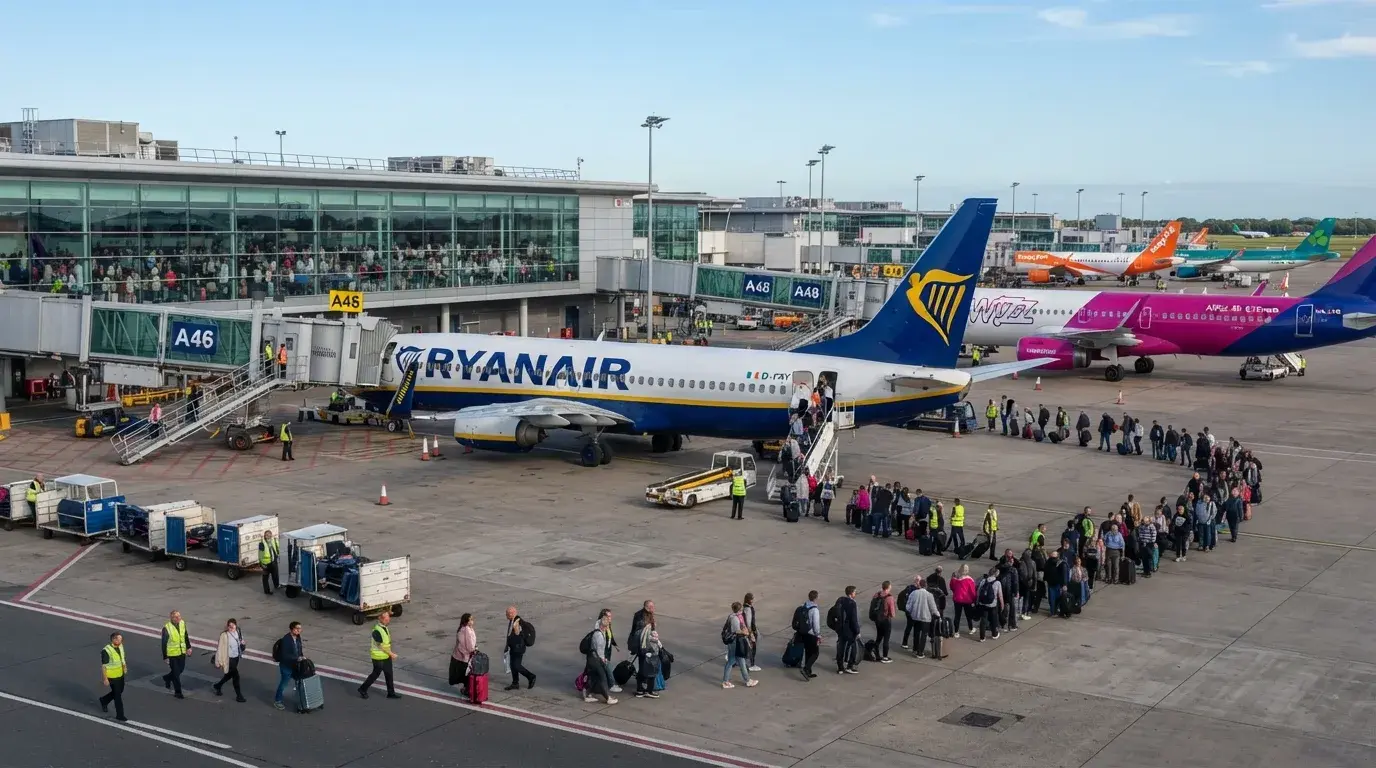
Europe’s low-cost giants Ryanair and Wizz Air have posted record traffic figures for September 2026, revealing sharply contrasting strategies and raising questions about the sustainability of their rapid expansion. Ryanair carried 20.1 million passengers, up 3.6% year-on-year, while Wizz Air smashed expectations with a 24.2% surge to 7.78 million travelers. But behind these impressive numbers lie operational challenges, radical differences in approach, and doubts over whether this breakneck race for market share can last.
The Irish low-cost leader remains the sector’s behemoth, with annual traffic of 215.1 million passengers over the past 12 months. Its load factor held steady at an exceptional 94%, reflecting rigorous cost management and robust demand. Yet CEO Eddie Wilson has warned that the airline will cut 2 million seats from its winter schedule in response to soaring fuel prices—a move that could signal the end of €19.99 fares on some routes. “In a high-energy-cost environment, market fares will rise—it’s inevitable,” he said. Ryanair insists it will maintain a structural cost advantage over rivals.
On the other side of the spectrum, Hungary’s Wizz Air is playing a different tune. The carrier posted explosive 24.2% growth in September, driven by a 25.3% capacity increase. But this expansion hasn’t come without trade-offs: its load factor dipped slightly to 92%, down from an average of 91% over the past year. Still, the airline is betting big on a fully modernized fleet of Airbus A320neo aircraft, targeting 335 planes and 127 million passengers by 2030—a bold gamble that could reshape Europe’s low-cost aviation map.
The two carriers are on opposite trajectories. Ryanair, with its ultra-efficient model, maintains a clear lead in profitability. Wizz Air, meanwhile, is prioritizing rapid growth to capture new markets, particularly in Eastern Europe and the Mediterranean. But this strategy comes at a cost: the airline has already trimmed 5% of its capacity for the second half of 2026, citing volatile fuel prices and geopolitical tensions. A move that raises questions about its ability to sustain this pace without sacrificing margins.
With fuel accounting for up to 40% of operating costs for airlines, both giants must navigate a tightrope between fare hikes and the risk of losing competitiveness. Ryanair, thanks to its hedging contracts, is partially shielded from sudden price swings. Wizz Air, however, is exposed to market volatility. “The aviation sector remains under pressure, and we must be cautious,” admitted József Váradi, Wizz Air’s CEO. A caution that could translate into sharper-than-expected fare increases for passengers.
Wizz Air: The Growth Machine That Could Overheat
With 19% growth over the past 12 months and a target of 127 million passengers by 2030, Wizz Air is clearly aiming for pole position among Europe’s low-cost carriers. But this ambition comes with operational and financial risks. The airline has already scaled back capacity in 2026, proving that even its model isn’t immune to turbulence. “We’re targeting €10 billion in revenue and a 10% operating margin by 2030,” Váradi announced. An ambitious goal that will require razor-sharp cost management and the ability to absorb external shocks.
Key challenges include integrating new aircraft into an already expanding fleet. Wizz Air is all-in on the A320neo, praised for its fuel efficiency. But aircraft unavailability or delivery delays could slow this growth. The airline also faces intensifying competition, particularly from Ryanair and new entrants in markets like France and Italy. A looming price war could erode already-pressured margins.
Another concern is customer satisfaction. With a declining load factor and adjusted capacity, Wizz Air must ensure it doesn’t sacrifice service quality—lest its reputation suffer. Delays and cancellations, already on the rise due to air traffic control disruptions and strikes, could become a recurring issue if the airline fails to bolster its operational capabilities.
Ryanair: The Art of Profitability Amid Headwinds
Facing off against Wizz Air, Ryanair embodies the purest low-cost model. With a stable 94% load factor and ultra-efficient cost management, the Irish carrier boasts enviable profitability. Yet it’s not immune to challenges. The planned 2-million-seat reduction for winter 2026-27 is a tacit admission that the sector can no longer absorb fuel cost hikes without passing them on to passengers. “Our fares will always remain structurally lower than those of our competitors,” Wilson insists. But for how long can this promise hold?
Another challenge for Ryanair is disruption management. In September, the airline canceled over 1,000 flights, primarily due to air traffic control strikes in Belgium and disruptions linked to the Etna eruptions. Such disruptions, which are multiplying across Europe, could become a drag on operations if airlines fail to secure their schedules. Ryanair, thanks to its size, has more leeway to absorb these shocks. Smaller carriers like Wizz Air, however, may bear the brunt.
Ryanair also faces regulatory and consumer pressure. In 2026, the airline was criticized for commercial practices, particularly regarding ancillary fees and cancellation policies. A reputation that could hinder growth if left unaddressed. “We remain focused on customer satisfaction and transparency,” the airline asserts. But only time will tell if these commitments are enough to maintain traveler trust.
What’s Ahead for Passengers and Airlines?
The rise of Ryanair and Wizz Air highlights a fundamental trend in aviation: the dominance of low-cost carriers and the race for critical mass. But this dynamic carries risks for both sides. For airlines, the question is simple: how to balance growth and profitability in an increasingly costly environment? For passengers, the dilemma is equally complex: should they prioritize ever-lower fares, despite the risk of disruptions and declining service quality?
One thing is certain: the low-cost model as we’ve known it for 20 years is evolving. The carriers that succeed will be those that innovate without sacrificing financial stability. Ryanair bets on efficiency and scale, while Wizz Air gambles on rapid growth and fleet modernization. Yet in both cases, fuel remains the sword of Damocles hanging over their heads. A further price surge could force both giants to rethink their strategies.
For travelers, caution is warranted. Fares may rise, travel conditions could deteriorate, and disruptions may multiply. Aviation has entered a consolidation phase where only the most agile carriers will survive. And for now, Ryanair and Wizz Air seem poised to write this new chapter. But at what cost?
Key Takeaways
Ryanair and Wizz Air are reporting record growth, but their models couldn’t be more different. Ryanair prioritizes profitability and rigorous cost control, while Wizz Air bets on rapid expansion and a modernized fleet. Both must contend with rising fuel costs, operational disruptions, and intensifying competition. For passengers, this could mean higher fares and less favorable travel conditions. Aviation is entering a new era where size and efficiency will dictate survival.
Be the first to comment on this article