Boeing Finally Produces 47 Aircraft per Month: FAA Gives Green Light After Years of Crisis
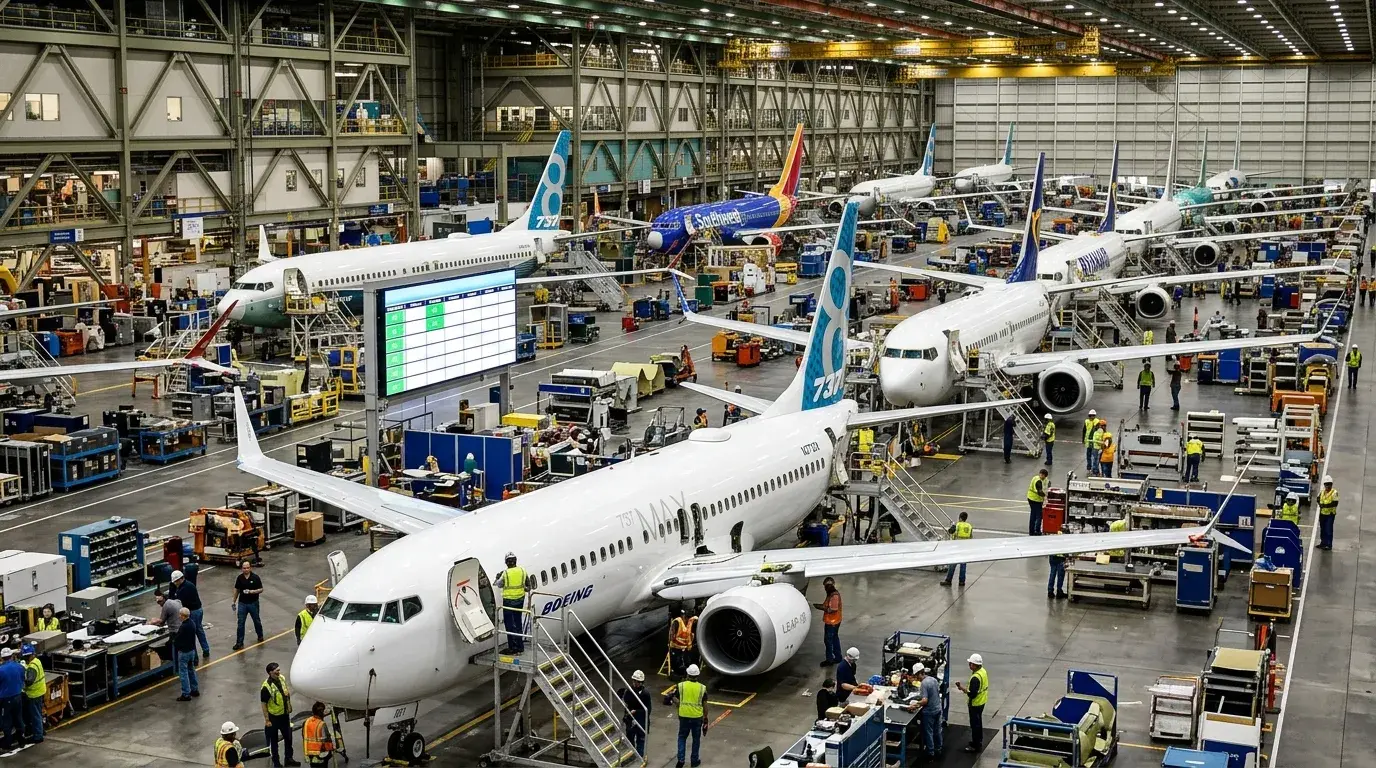
Boeing can finally breathe a sigh of relief. After years of industrial crisis and regulatory turbulence, the U.S. aerospace giant has received the FAA’s coveted approval to increase its 737 MAX production rate to 47 aircraft per month. A symbolic milestone that signals the beginning of a gradual normalization—though one that remains under close scrutiny.
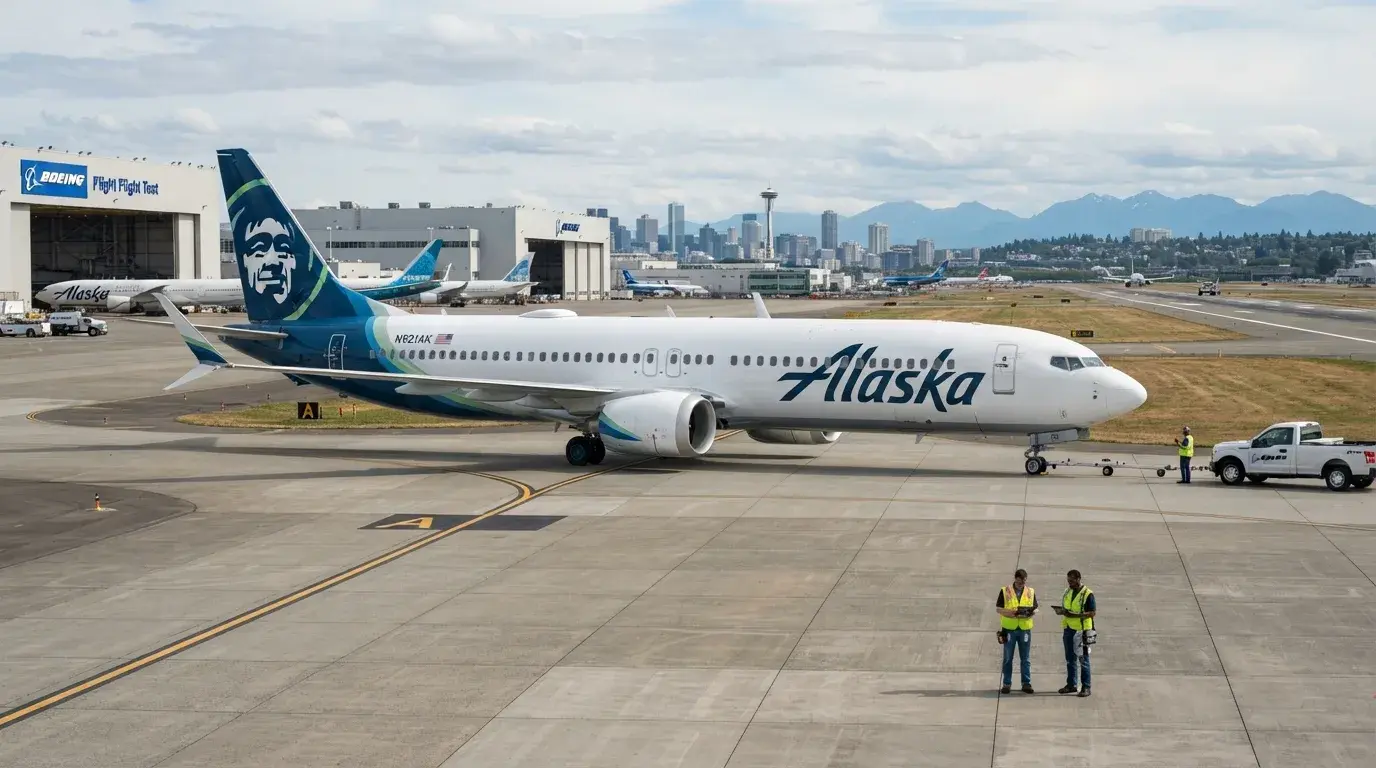
For the first time since the global grounding of the 737 MAX fleet in 2019, followed by the production cap imposed after the dramatic mid-air door plug incident involving an Alaska Airlines aircraft in January 2024, Boeing is entering a phase of stabilization. Kelly Ortberg, the company’s CEO, confirmed during a Bernstein conference that the manufacturer had successfully passed the FAA’s so-called “capstone review,” a prerequisite for increasing production rates. “We passed the capstone review for the 47 rate, and we are now running the line at 47 aircraft per month,” he stated. A major breakthrough, but one that does not overshadow the challenges that still lie ahead.
Currently, Boeing is producing 42 aircraft per month—a level already above the 38-aircraft ceiling imposed by the FAA following the January 2024 incident. The ramp-up to 47 aircraft will be accompanied by a multi-month stabilization period, during which the company must consolidate processes and ensure that quality and safety are not compromised in the pursuit of volume. “It will likely take us a few months of stabilization… My gut tells me we will continue to increase the rate,” Ortberg added. A cautious approach is warranted, as the regulator continues to exert constant pressure on the manufacturer.
This gradual easing of restrictions reflects the FAA’s assessment that Boeing’s corrective measures—particularly on its assembly lines in the Seattle area—are sufficiently effective to justify a production increase. A strong signal, but one that should not be misinterpreted as a complete absence of risk. The FAA remains highly vigilant, and any deviation could trigger another slowdown.
A Prudent Timeline for a Gradual Recovery
Boeing had already indicated in its Q1 2024 earnings report that it aimed to reach a production rate of 47 737 MAX aircraft per month by summer 2026. An ambition now confirmed, but one that follows a cautious trajectory. Beyond this threshold, the manufacturer is eyeing a further increase to 52 aircraft per month, a goal that could require “at least six months, if not more,” once the 47-aircraft rate is solidified. Ortberg emphasized that “the whole world is watching” Boeing’s ability to sustain these targets, underscoring how central industrial reliability has become for customers, regulators, and financial markets alike.
Before the successive crises of the 737 MAX, Boeing had already achieved a monthly production rate of 57 single-aisle aircraft. However, this pace is no longer tenable under the new safety and quality requirements imposed by regulators. Ortberg acknowledged that this rate is incompatible with current processes, even if market demand might eventually support higher volumes. The long-term goal remains to reach 63 aircraft per month, a target the CEO believes aligns with global demand for fuel-efficient single-aisle jets. “We would like to one day reach a rate of 63 per month, and we believe the market will support these higher rates,” he said, while acknowledging that Boeing still has “work to do” before such an increase can be considered.
This caution stems from the industrial and regulatory context in which Boeing operates. Following the two fatal crashes of the 737 MAX 8 in 2018 and 2019, followed by the 2024 Alaska Airlines incident, the manufacturer underwent a fundamental overhaul of its certification and quality control procedures. The FAA has taken direct control of numerous processes, mandating deep modifications to design, crew procedures, and maintenance, while intensifying audits on assembly lines.
In 2024, the mid-flight door plug incident on an Alaska Airlines 737 MAX 9 led the regulator to cap MAX production at 38 aircraft per month until quality control measures could be verified. This ceiling was later gradually raised, with the FAA authorizing Boeing to increase production to 42 aircraft per month starting in fall 2025, and now permitting a push toward 47 after a new series of inspections and compliance reviews.
A Normalization Awaited by Customer Airlines
For Boeing, the ramp-up in 737 MAX production is one of the pillars of its financial recovery. The program represents the primary source of volume and cash flow within its commercial aircraft portfolio. In its latest quarterly report, the U.S. manufacturer indicated it was counting on increased deliveries of 737 MAX and 787 aircraft to improve cash flow in 2026, while reducing reliance on stored aircraft. A normalization that is essential to regain the trust of airlines—some of which had diversified their orders toward Airbus amid the uncertainties surrounding Boeing.
Customer airlines are closely monitoring this evolution. For them, higher production means better aircraft availability and greater flexibility in fleet management. The 737 MAX remains one of the world’s most in-demand aircraft, with an order backlog exceeding 6,800 units as of April 2026. Boeing’s ability to fulfill these orders within reasonable timelines is therefore a strategic issue for carriers, which must plan their expansions and fleet replacements.
Several airlines, including Southwest Airlines, United Airlines, and Alaska Airlines, have already expressed satisfaction with the resumption of production. These carriers, which had to adjust their growth plans due to Boeing’s delays, can now hope for more predictable deliveries. The 47-aircraft monthly rate should allow Boeing to recover some of the ground lost, even if initial delays will not be entirely erased.
For European carriers, this normalization is also welcome news. Several airlines, such as Ryanair and easyJet, had based part of their growth strategies on 737 MAX orders. Smoother production will enable them to finalize expansion plans and benefit from the productivity gains associated with the aircraft. The increased availability of the 737 MAX 10—whose certification is now expected by late 2026—will be particularly strategic for carriers seeking to maximize seat capacity on short- and medium-haul routes.
Persistent Challenges Despite FAA Approval
Despite this major milestone, Boeing remains under heightened scrutiny from the FAA and international authorities. The question of safety and production quality remains at the forefront of concerns. Kelly Ortberg reiterated that “the whole world is watching” Boeing’s ability to meet its commitments—a statement that underscores the manufacturer’s awareness of the responsibility it bears.
Challenges extend beyond production. Boeing must also rebuild trust with foreign regulators, particularly in China, where the market is reopening after years of trade tensions. During a recent visit to Beijing as part of a delegation led by former U.S. President Donald Trump, Ortberg highlighted promising discussions with Chinese carriers. “An order for 200 aircraft is a good start,” he said, calling the trip “very successful.” The CEO also emphasized that Boeing views China’s market reopening as “a tremendous market opportunity,” driven by growing demand for fuel-efficient single-aisle jets on domestic and regional routes.
This opportunity is all the more significant given China’s status as one of the most dynamic markets for commercial aviation. Post-pandemic economic recovery has reignited demand, and Chinese carriers are seeking modern, fuel-efficient aircraft. The 737 MAX, with its significant fuel efficiency gains over previous generations of single-aisle jets, is particularly well-positioned to meet this demand.
Boeing is also banking on the ramp-up of new programs, such as the 737 MAX 7 and 777-9, whose certifications are slated for late 2026. These aircraft, which have accumulated years of delays compared to their original timelines, should enable Boeing to diversify its offerings and cater to specific market segments. The 737 MAX 10, in particular, is expected to compete directly with the Airbus A321neo and A321XLR on high-density markets, where capacity is a key selling point.
However, Boeing will need to prove its industrial reliability. Past delays and recent incidents have left a mark on the minds of airlines and passengers alike. The ability to deliver aircraft that meet safety and performance requirements will be critical to restoring the manufacturer’s reputation.
A Global Aviation Sector Awaiting Stability
This gradual normalization of Boeing’s production is welcome news for a global aviation sector still grappling with the lingering effects of the COVID-19 pandemic and economic uncertainties. Airlines, which had to adapt their growth strategies due to delivery delays, can now hope for greater stability in fleet planning.
For passengers, this development could translate into better aircraft availability and, ultimately, reduced pressure on ticket prices. The 737 MAX remains one of the world’s most popular aircraft, and smoother production should help airlines avoid the shortages that marked the post-pandemic years.
Yet caution remains essential. Boeing must still prove that it has learned from past crises and is capable of producing reliable aircraft at scale. The FAA, for its part, continues to closely monitor every step of this production ramp-up. Any failure could trigger another slowdown—or even sanctions—with severe consequences for the manufacturer and its customers.
In this context, Boeing’s ability to reach a production rate of 52 aircraft per month by the end of 2026, and eventually 63 aircraft in the longer term, will depend not only on its own efforts but also on the trust reposed in it by customer airlines and regulators. One thing is certain: after years of crisis, Boeing is finally entering a phase of normalization—but the path to full recovery remains fraught with challenges.
Be the first to comment on this article
On the same topic
- US: $481 Million to Modernize Airports – The Projects That Will Transform Your Travel
- Israir Launches Flights to New York: How to Book Tickets for the Big Apple from October 2026
- Supersonic 2030: How the U.S. Will Launch Your Travel at Mach 1.3
- Chicago O’Hare: FAA Caps Daily Flights at 2,708 to Curb Delays in 2026