Etihad Revives Its Last Airbus A380 After Six Years Grounded: Why the Giant of the Skies is Back
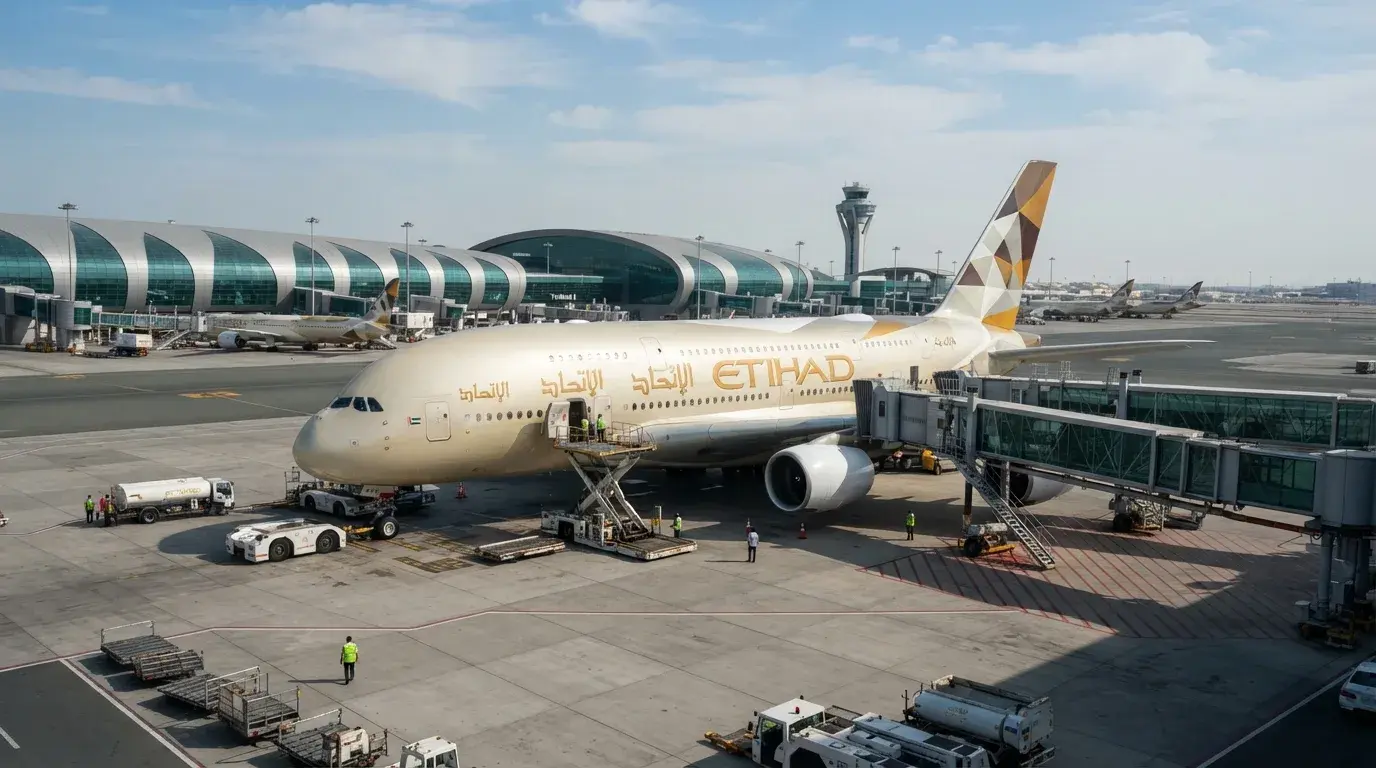
Six years after being relegated to the backwaters of French aircraft storage, Etihad Airways’ Airbus A380 has finally emerged from its exile in Lourdes-Tarbes to resume commercial service. On September 17, 2026, the aircraft registered A6-APB, the second Super Jumbo in the Emirati fleet, touched down in Abu Dhabi after a nearly seven-hour flight from southern France. This return marks the end of a period of uncertainty for the aviation giant, whose fate seemed sealed after years of immobilization and pessimistic forecasts about its future.
While most airlines grounded their A380s in the wake of the Covid-19 crisis, Etihad chose to give the aircraft a second chance. This decision comes amid global air capacity strains, where delays in new aircraft deliveries and a surge in business and luxury travel have prompted carriers to reassess the role of very large aircraft. Behind this technical choice lies a bold commercial strategy, driven by a booming premium travel market.
For travelers, the A380’s return promises an unparalleled flying experience. With its 486 seats across four classes, including the legendary “The Residence” suite for one or two passengers, the aircraft embodies the pinnacle of in-flight luxury. After years in storage, Etihad had to undertake a complete refurbishment of the aircraft, including software updates, structural inspections, and full recertification of its systems by Etihad Engineering. A monumental effort that underscores the airline’s commitment to delivering a premium experience to its most discerning customers.
As airlines compete to attract high-spending travelers, Etihad’s A380 positions itself as a key tool to woo passengers seeking exclusivity. Routes from Abu Dhabi to London, Paris, Tokyo, and Toronto now benefit from increased capacity, potentially reshaping connection patterns for transit passengers. Yet this return is also a high-stakes gamble, as the luxury travel market remains sensitive to economic and geopolitical volatility.
For Etihad, this Super Jumbo is more than a prestige symbol: it represents a concrete response to the industry’s current challenges. With Airbus and Boeing deliveries facing mounting delays, the A380 offers an immediate solution to absorb surging demand. But its future hinges on its ability to attract passengers willing to pay a premium for an experience aboard this aviation titan.
Etihad’s A380: A Return Under the Banner of Recovery
Etihad’s A380 journey is one of resurrection after years of uncertainty. Ordered in 2008 at the Farnborough Airshow, the aircraft joined the airline’s fleet in 2015, becoming a symbol of its international ambitions. With its 12 years of age and luxurious configuration, few imagined it would end up parked in a French storage facility alongside other pandemic-stricken aircraft.
In December 2020, as the world entered lockdown, Etihad—like most carriers—grounded its A380 fleet. Some aircraft, like A6-APA, the first of the series, were dismantled, while others were sent to long-term storage. But in December 2022, the airline stunned the industry by announcing the return of its Super Jumbos, driven by unexpectedly strong demand for luxury and business travel.
The turning point came from a meticulous market analysis: delivery delays for new aircraft, coupled with record airport congestion, created an urgent need for large-capacity jets. The A380, with its 486-passenger capacity, offered an ideal solution to meet surging demand without sacrificing premium comfort. But for this return to be possible, the airline first had to breathe new life into an aircraft immobilized for nearly six years.
Etihad launched a comprehensive refurbishment program, including heavy maintenance, software updates, and full recertification of all systems. The A6-APB, the last to leave its French parking spot, underwent a deep renovation, proving that even the most complex aircraft can rise from the ashes. Today, it is ready to resume service on routes where premium seat demand is particularly strong.
While other carriers opted to retire their A380s, Etihad is doubling down: a bet on profitability through a clientele willing to pay for a unique experience. A bold move, but one that could redefine the role of the A380 in modern aviation.
Premium Routes for a Demanding Market
Etihad’s A380 won’t fly just anywhere. The airline has chosen to deploy it on routes where business and luxury travel demand is particularly high: London Heathrow, Paris Charles de Gaulle, Tokyo Narita, and Toronto Pearson. These airports, known for their dense traffic and premium clientele, provide the perfect playground for an aircraft like the A380.
In London, for example, Etihad currently operates seven weekly A380 flights, with additional frequencies on peak-demand slots. Each aircraft can carry up to 3,402 passengers per week on this iconic route—a figure that highlights the scale of capacity offered. In Paris, the airline also offers daily frequencies, while Tokyo and Toronto benefit from regular services, strengthening Abu Dhabi’s connectivity with Asia and North America.
For travelers, these routes represent a unique opportunity to experience the A380 under optimal conditions. The “The Residence” suite, with its private lounge, bedroom, and bathroom, offers an experience akin to the finest hotels. First-class passengers enjoy private apartments, while Business Class features flat-bed seats and Gulf-standard service.
Beyond luxury, Etihad’s A380 also embodies a pragmatic response to today’s industry challenges. With new aircraft deliveries facing mounting delays, airlines must find solutions to absorb growing demand. The A380 provides immediate capacity without waiting years for new deliveries—a boon for Etihad as it seeks to maintain its position on key markets.
For passengers, the A380’s return offers a rare chance to experience a legendary aircraft under ideal conditions. Whether in a private suite, First Class, or Business Class, the A380 delivers unmatched service, with spacious interiors, gourmet dining, and a level of comfort hard to match in modern aviation. But the real test lies ahead: can this strategy pay off long-term in a luxury travel market still vulnerable to economic and geopolitical shocks?
A High-Stakes Gamble in a Changing Market
Etihad’s A380 return is more than a PR stunt—it’s a high-stakes gamble in a rapidly evolving market. While airlines increasingly turn to smaller, more fuel-efficient aircraft, the A380 remains a relic of a bygone era. Yet for Etihad, it represents a unique opportunity to stand out in an ultra-competitive sector.
The decision to revive the A380 aligns with a broader strategy to attract affluent travelers willing to pay for a premium experience. With its private suites, high-end services, and capacity to transport large numbers of Business Class passengers, the A380 offers an ideal solution to meet this demand. But success hinges on Etihad’s ability to sustain strong demand for its premium offerings amid a luxury travel market still sensitive to economic and geopolitical volatility.
For Etihad, the stakes are high: proving that the A380 can be profitable in an environment where most carriers have opted to retire these giants. The airline must also contend with competition from modern long-haul aircraft like the Boeing 787 or Airbus A350, which offer superior efficiency and performance. Yet for travelers seeking exclusivity, the A380 remains unmatched.
As the travel market slowly recovers from the Covid-19 crisis, Etihad is betting on the A380 to lure passengers willing to pay for a unique experience. A bold wager, but one that could redefine the A380’s role in 21st-century aviation. If successful, Etihad could set an example for other carriers seeking to balance capacity, luxury, and profitability.
What Etihad’s A380 Return Means for Travelers
For travelers, Etihad’s A380 return offers a rare chance to experience an iconic aircraft under optimal conditions. Whether in a private suite, First Class, or Business Class, the A380 delivers an unparalleled level of service, with generous space, gourmet menus, and a level of comfort difficult to match in modern aviation.
Beyond luxury, the A380 also promises more comfortable journeys, with fewer passengers on board and a more intimate atmosphere. For transit passengers in Abu Dhabi, it provides an ideal solution to reach London, Paris, or Tokyo in style. And for those seeking a once-in-a-lifetime experience, it offers a chance to board an aircraft that has left an indelible mark on aviation history.
For airlines, Etihad’s A380 return sends a strong signal: one of an industry seeking pragmatic solutions to meet surging demand. With new aircraft deliveries facing delays, the A380 provides immediate capacity without waiting years for new planes—a boon for Etihad as it seeks to maintain its foothold in key markets.
For travelers, this return represents a chance to experience a flying experience like no other, aboard an aircraft that combines power, elegance, and capacity. But the real question remains: will this strategy pay off in the long run, given the luxury travel market’s vulnerability to economic and geopolitical uncertainties?
One thing is certain: the A380 is back, and it’s determined to prove it still has a place in the skies of the 21st century.
Be the first to comment on this article
On the same topic
- Azores Airlines soon to change hands: five bidders vie for privatization
- Turkish Airlines makes bold move: 150 Boeing 737 MAX ordered, a daring bet to reshape European skies
- Emirates Weighs Swapping Boeing 787s for 777Xs: A Strategic Shift That Could Transform Long-Haul Travel
- Athens emerges as the new US gateway to Greece: Why this hub is winning over travelers
- Royal Air Maroc's 737 MAX-8 boosts Casablanca hub ahead of 2030 World Cup
- Wizz Air invests $100 million in Brașov: The A321neo set to revolutionize travel in Eastern Europe