Turkish Airlines makes bold move: 150 Boeing 737 MAX ordered, a daring bet to reshape European skies
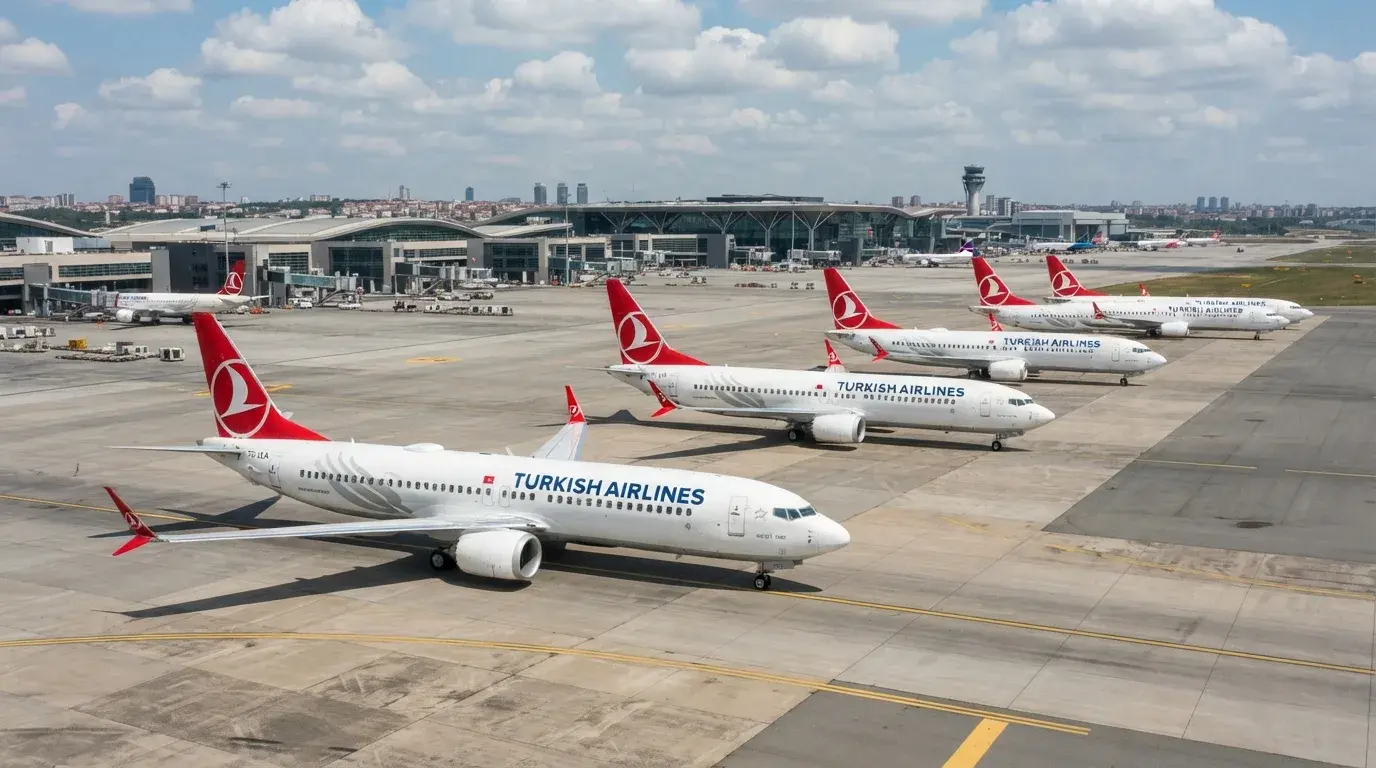
Turkish Airlines has just made one of the most significant commercial aviation investments in its history with a firm order for 100 Boeing 737 MAX 8 aircraft, plus options for 50 additional units. The deal, signed in New York in the presence of Turkish President Recep Tayyip Erdoğan, represents a major milestone in the carrier’s growth strategy and fleet modernization. This order—the largest ever for single-aisle aircraft by the airline—aligns with its accelerated renewal and expansion of the Istanbul hub, already one of the world’s most dynamic aviation centers.
The new aircraft, some of which may be converted to the higher-capacity 737 MAX 10 variant, will bolster Turkish Airlines’ short- and medium-haul operations from Istanbul. This strategic choice comes as the airline’s network spans 133 countries and serves 358 destinations. For Turkish Airlines, this order is more than a technical investment—it’s a direct response to surging mobility demand across Europe, the Middle East, and Central Asia, regions where the carrier plays a pivotal role as an air connectivity hub.
The industrial framework of this agreement with Boeing carries significant diplomatic and economic weight. The U.S. investment in Turkish aerospace, estimated at over $2 billion since 2015, has already generated nearly 5,000 local jobs and fostered an integrated supply chain. A win-win strategy that further cements Turkey’s position as a critical aviation crossroads between Europe, Asia, and Africa.
A fleet already dominated by Boeing, with modernization underway
Turkish Airlines operates a fleet of 567 passenger and cargo aircraft, over 200 of which are from the U.S. manufacturer. The airline is progressively modernizing its fleet to meet its goal of achieving carbon neutrality by 2050—a commitment reflected in the selection of the 737 MAX, renowned for its 20% lower fuel consumption compared to the aircraft they replace. With a capacity of 160 to 180 seats in a two-class configuration and a range of up to 6,480 km, the 737-8 is ideally suited to the carrier’s needs on European and Mediterranean routes.
The flexibility offered by conversion rights to the 737 MAX 10—a longer variant capable of seating up to 210 passengers—enables Turkish Airlines to adapt capacity to fluctuating demand. This operational agility will be particularly valuable for high-frequency routes such as Istanbul-Paris or Istanbul-London, as well as for managing seasonal peaks in tourism, especially to Mediterranean and Aegean coastal destinations.
Istanbul: the global aviation crossroads reshaping worldwide connectivity
The Istanbul hub continues to gain prominence on the global aviation chessboard. By 2026, Turkish Airlines will serve 305 international routes and 53 domestic ones, making it a key gateway between Europe and Asia. The airline has confirmed that the new aircraft will also reinforce its low-cost subsidiary AJet, which is rapidly expanding to tap into high-growth markets such as the Middle East and North Africa.
This 737 MAX order complements an existing agreement with Boeing for up to 75 Boeing 787 Dreamliner aircraft, earmarked for long-haul routes to the U.S., Sub-Saharan Africa, and Southeast Asia. A dual strategy that allows Turkish Airlines to cover every segment of the air travel market, from regional flights to intercontinental routes and key tourist destinations.
Stephanie Pope, President of Boeing Commercial Airplanes, hailed the order as a sign of confidence in the long-standing partnership between the two companies. For Turkish Airlines, this deal is part of a long-term vision: doubling the size of its Boeing fleet by 2030 while reducing its carbon footprint and enhancing the passenger experience with more modern, spacious cabins.
What does this mean for travelers?
For passengers, this fleet expansion translates into a broader range of options and potentially more competitive fares, particularly on European routes where competition is fierce. Local and European low-cost carriers may face increased pressure from a now better-equipped Turkish Airlines. Conversely, travelers seeking optimized connections between Europe and Asia could benefit from increased frequencies and improved schedules via Istanbul.
Turkish Airlines, which aims for annual growth of 8 to 10% in the coming years, also intends to leverage its strategic geographic position to attract transit passengers. The airline has announced strengthened partnerships with Gulf and African carriers to offer increasingly attractive combined travel products. An ambitious wager that could reshape the map of airline alliances across Europe and beyond.
A major industrial and environmental challenge
This massive order comes with a strong environmental commitment. The 737 MAX, powered by LEAP-1B engines and featuring improved aerodynamics, delivers significant reductions in CO₂ emissions. Turkish Airlines has also announced a carbon offset plan for flights operated with these new aircraft, aligning with its broader sustainability strategy.
Industrially, deliveries of the first aircraft are scheduled to begin in 2028, with a potential rate of up to 20 aircraft per year. This sustained pace will require close coordination between Boeing, Turkish Airlines, and Turkish authorities to secure production slots and necessary certifications. A logistical challenge, but also an opportunity for Europe to bolster its competitiveness against rising Asian manufacturers.
For travelers and industry professionals alike, one thing is clear: European aviation is at a turning point. With Turkish Airlines leading the charge, the race for connectivity, innovation, and sustainability has never been more intense.
Be the first to comment on this article
On the same topic
- Emirates Weighs Swapping Boeing 787s for 777Xs: A Strategic Shift That Could Transform Long-Haul Travel
- Athens emerges as the new US gateway to Greece: Why this hub is winning over travelers
- Royal Air Maroc's 737 MAX-8 boosts Casablanca hub ahead of 2030 World Cup
- Wizz Air invests $100 million in Brașov: The A321neo set to revolutionize travel in Eastern Europe
- TAP Miles&Go and Airbnb Partner: Earn Miles on Your Travel Bookings
- Emirates Relaunches Strategic Offensive in Africa and the Middle East: Baghdad, Algiers and Basra in Sights