Transavia Optimizes Fleet with IRIS: Less Fuel, Fewer CO₂ Emissions, Real Savings for Your Flights
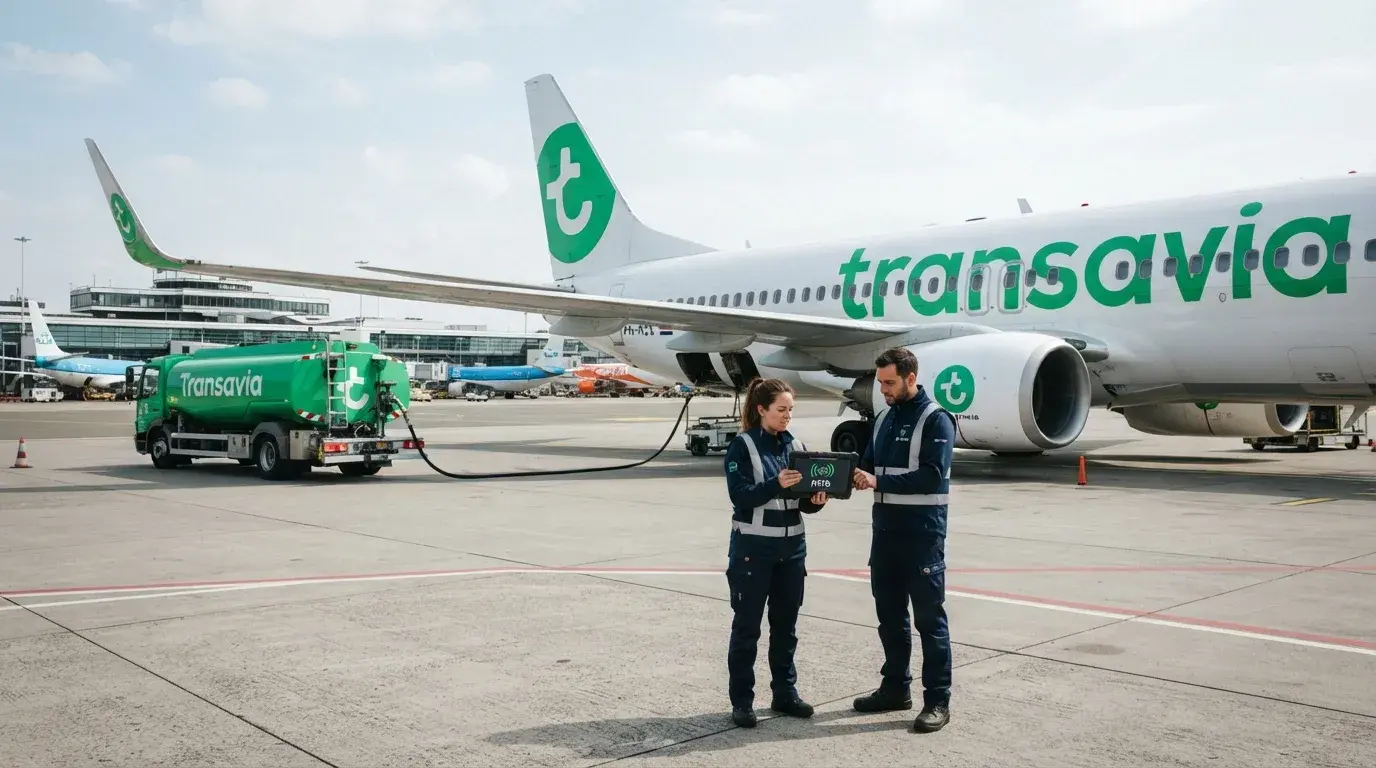
Low-cost carrier Transavia is taking a significant step in its decarbonization strategy by equipping its entire Airbus fleet with the IRIS satellite technology. This major advancement promises to reduce fuel consumption and CO₂ emissions on its European flights while improving air traffic management. But beyond the technological promises, what are the concrete benefits for passengers and the environment?
Since late 2025, Transavia has been progressively integrating the IRIS system aboard its Airbus aircraft, an innovation developed in partnership with the European Space Agency (ESA) and Inmarsat (now part of Viasat). This satellite-based data communications service enables the exchange of operational information between crews and air traffic control centers, complementing traditional ground networks. The goal? To allow for more direct flight paths and better-suited cruising levels based on real-time conditions, reducing unnecessary detours and fuel waste.
Six of the airline’s aircraft, all A321s, are already equipped and operating regular commercial flights. The remaining thirteen Airbus aircraft in the fleet are set to receive the system by the end of October 2026, marking a symbolic milestone in the modernization of the Dutch carrier’s operations. Marloes van Laake, Transavia’s Operations Director, summarizes the challenge: “At Transavia, we are constantly seeking smarter, more efficient operations. Technologies like IRIS help us reduce fuel consumption and CO₂ emissions while contributing to a more efficient use of European airspace.”
How IRIS is Revolutionizing European Flight Management
The IRIS system does not replace voice communications via VHF radio but provides an additional digital pathway for transmitting critical data: route availability, sector congestion, airspace restrictions, or optimal cruising levels. In a European sky often saturated and fragmented, this additional capacity allows controllers and pilots to adjust flight paths in real time, avoiding costly fuel and time detours.
The project is part of the European ESMA program (European Sky Multilink ATN), dedicated to demonstrating new data links for air traffic management. Transavia is participating alongside other major players such as Air France, Eurocontrol, ENAIRE, and SITA. The objective is to test a multilink architecture capable of combining traditional VHF links and the IRIS satellite service to improve flight predictability and efficiency.
According to ESA estimates, optimized routing enabled by IRIS could, under certain operational conditions, reduce CO₂ emissions by up to 10%. This theoretical potential will, of course, depend on numerous factors: weather conditions, sector congestion, military restrictions, or route availability. Transavia, which is progressively renewing its fleet around the A321neo, is banking on this technology to enhance its operational efficiency and reduce its environmental footprint.
Tangible Savings for Passengers and the Planet
The benefits of IRIS extend beyond reducing emissions. By optimizing flight paths, the technology also saves time on certain routes, reducing delays caused by congestion or air traffic control-imposed detours. For passengers, this translates into more punctual arrivals and, potentially, lower operational costs for the airline—some of these savings could be passed on to ticket prices.
Transavia emphasizes that the integration of IRIS is part of a broader effort to modernize its fleet and operations. The airline, which primarily operates intra-European and Maghreb flights, is leveraging innovative technologies to remain competitive among other low-cost carriers while meeting growing traveler expectations for sustainability.
This initiative complements other recent efforts, such as the introduction of the A321neo, which offers a 15% reduction in fuel consumption compared to previous aircraft, as well as the widespread use of sustainable aviation fuels (SAF) on some routes. For Transavia, IRIS represents a new lever to balance economic performance with environmental responsibility.
Is This Model Reproducible for the Entire Aviation Sector?
While Transavia is the first airline to fully deploy IRIS across its Airbus fleet, other players may follow its example. The ESMA project and the results achieved by the Dutch carrier could serve as a benchmark for other carriers looking to improve operational efficiency and reduce their carbon footprint.
However, widespread adoption of this technology will depend on several factors: equipment availability, integration costs, compatibility with existing systems, and, above all, airlines’ willingness to invest in sustainable solutions. For now, Transavia is leading the way by proving that tangible gains are possible, even on a dense and competitive network like Europe’s.
With IRIS, the Dutch carrier is not just modernizing its operations—it is laying the groundwork for a more efficient and environmentally friendly air transport system, a critical issue for the future of the sector.
Key Takeaways for Your Next Trips
If you fly with Transavia starting in October 2026, your flights may benefit from optimized flight paths thanks to IRIS technology. Here’s what this means for you:
Fewer Delays: smoother air traffic management helps avoid congestion and unnecessary detours, reducing the risk of delays.
Reduced Environmental Impact: by optimizing flight paths, Transavia minimizes fuel consumption and CO₂ emissions, contributing to more sustainable air travel.
Potentially Stable Fares: savings from operational efficiencies could be passed on to ticket prices, though Transavia has not yet announced price reductions following this innovation.
Transavia encourages travelers to follow its updates to see how this technology integrates into its commitment to more responsible air travel.
Be the first to comment on this article