TAP Air Portugal: Lufthansa may acquire 45% stake in a historic shake-up for European skies
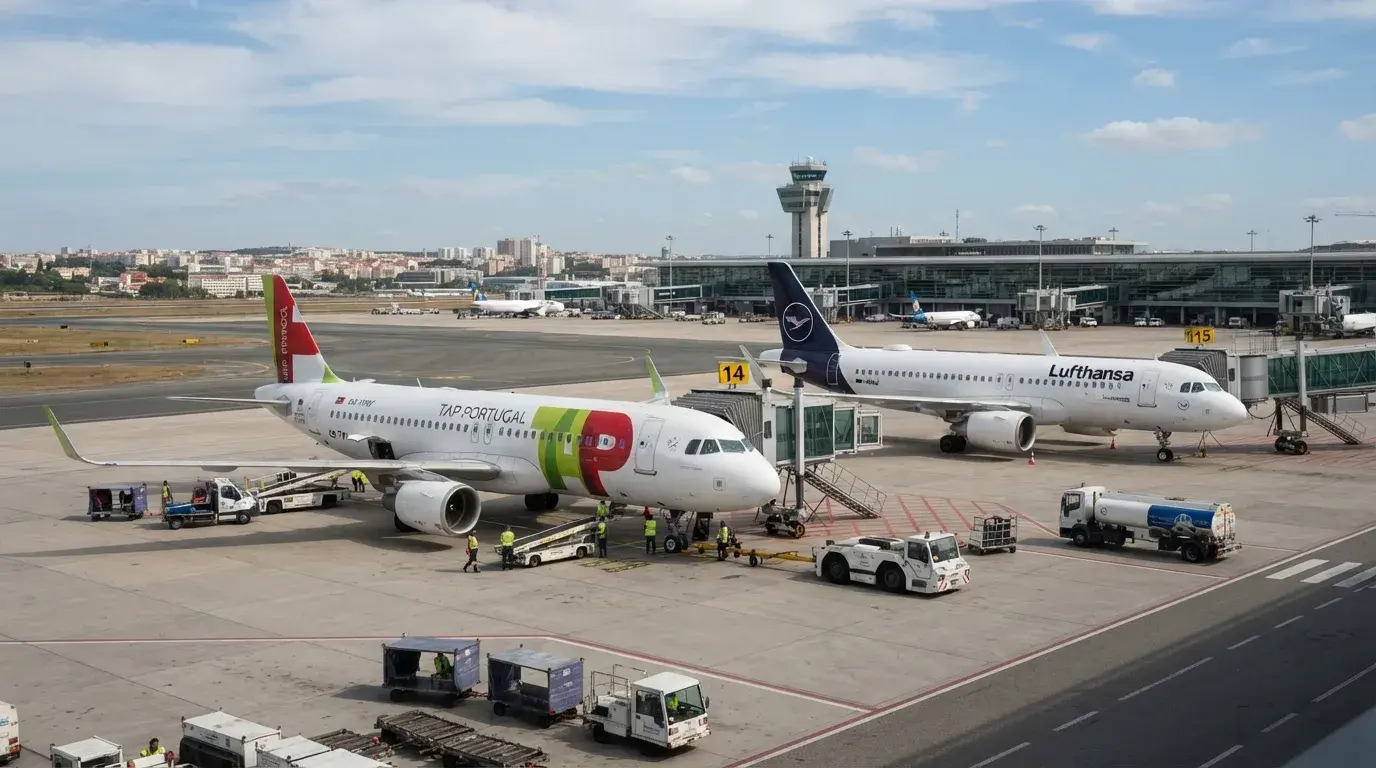
Europe’s commercial aviation landscape is on the brink of a historic upheaval. According to the latest reports relayed by Portuguese broadcaster SIC and confirmed by Reuters, Lufthansa appears to have edged out Air France-KLM in the race to acquire a stake in TAP Air Portugal. The German group is reportedly set to propose an all-cash offer to acquire up to 44.9% of the Portuguese carrier, a strategic stake that could be officially announced as early as Wednesday, October 14, during an extraordinary Council of Ministers meeting in Lisbon. If confirmed, this move would mark a major turning point in the consolidation of European air transport, with direct implications for travelers, airports, and transatlantic routes.
This battle for TAP extends far beyond financial considerations. It is part of a broader strategy of industrial restructuring and strengthening of European hubs. For Lufthansa, the goal is clear: to position Lisbon as the reference gateway to the South Atlantic, leveraging TAP’s already dense network between Europe, Brazil, and Portuguese-speaking Africa. A strategy that could redefine the balance of power among Europe’s major airline groups, especially as carriers seek to optimize costs amid rising fuel prices and intensifying competition.
The Portuguese state would retain a 50.1% majority stake in TAP under the proposed deal. The 44.9% stake to be sold to a strategic investor would come with significant industrial commitments: investments in the fleet, expansion of maintenance and engineering activities in Portugal, and enhanced connectivity to Porto and the autonomous regions. The Portuguese government is evaluating proposals from candidates based on multiple criteria, including financial capacity, industrial vision, and the ability to preserve essential routes, particularly those serving Portuguese communities abroad.
Why Lufthansa is betting on TAP and Lisbon
Lufthansa’s interest in TAP goes beyond a simple financial stake. Carsten Spohr, Chairman of the Executive Board of the German group, outlined the ambition in a statement on July 29: « We aim to strengthen the Portuguese national carrier within the Lufthansa Group and establish it as the reference airline for the South Atlantic, with Lisbon as the strategic hub. » This declaration confirms the intention to transform TAP’s network into a growth lever for the entire group, building on an already well-established platform.
This strategy fits into a context of intensified competition for control over air routes between Europe and the Americas. TAP Air Portugal already serves several Brazilian, Angolan, and Mozambican destinations, routes that could be integrated into a broader network under Lufthansa’s umbrella. The German carrier is also highlighting its industrial footprint in Portugal, where it already employs over 500 people and plans to reach 1,000 by 2030, notably through a new Lufthansa Technik facility near Porto dedicated to engine and aeronautical component maintenance.
An all-cash offer that makes the difference
Lufthansa’s proposal stands out for its structure: a fully cash-based offer, unlike Air France-KLM’s proposal, which combined cash payments with shares in the Franco-Dutch group. According to sources cited by SIC, this financial solidity was a decisive factor for the Portuguese government, which seeks to ensure TAP’s long-term viability while maximizing economic benefits for the country. Neither proposal has yet been made public in detail, but the timeline demands swift action: final improved offers were submitted on September 30, and Lisbon has requested further efforts after deeming the initial proposals close enough to warrant an additional round of negotiations.
The rivalry between the two European groups intensified after the withdrawal of IAG, the parent company of British Airways and Iberia. Air France-KLM had proposed making Lisbon its sole Southern European hub, a vision similar to that championed by Lufthansa. Both candidates defended the same core idea: preserving TAP’s Portuguese identity while anchoring its growth within a larger European group. The final decision now hinges on whether Lisbon prioritizes Lufthansa’s financial strength or Air France-KLM’s more integrated industrial strategy.
What this acquisition would mean for travelers
If Lufthansa secures the deal, travelers could benefit from improved connections between Europe and Brazil, Angola, or Mozambique, thanks to enhanced routing via Lisbon. Transit passengers might see reduced layover times, while direct services to these destinations could be optimized. As a member of Star Alliance, TAP’s network could become more tightly integrated with Lufthansa’s, offering greater flexibility to frequent flyers.
On the ground, the investments announced by Lufthansa in Portugal could translate into improved punctuality and operational quality—two areas where TAP has faced criticism in the past. The new Lufthansa Technik facility near Porto, dedicated to aircraft maintenance, is expected to reduce repair and servicing times, a significant advantage for passengers in the event of disruptions.
However, this restructuring could also lead to fare adjustments. Integrating TAP into a larger group may alter pricing policies, potentially leading to higher fares on the most in-demand routes. Travelers should monitor the carrier’s announcements in the coming months to anticipate any changes to their preferred routes.
The process is far from finalized
Even if Lufthansa emerges as the frontrunner, the divestment process is far from complete. A designation by the Portuguese government does not equate to finalization of the sale: negotiations could continue, and the deal remains subject to necessary regulatory approvals, including from the European Union. For TAP, the real challenge will be ensuring that the industrial commitments—such as the development of Lisbon as a hub, fleet investments, and preservation of strategically important routes—are met by the chosen partner.
For now, passengers can continue booking with TAP with confidence. No immediate disruptions are expected, and the airline should continue operating normally until the potential deal is finalized. For Lisbon, this development could mark the beginning of an era of accelerated growth, positioning the Portuguese capital as a key player in transatlantic air transport.
Europe’s commercial aviation sector is thus on the cusp of a major turning point, with repercussions that could extend far beyond Portugal’s borders. Between industrial consolidation, network optimization, and financial stakes, the battle for TAP Air Portugal exemplifies the quest for dominance among Europe’s major airline groups in a complex economic and geopolitical landscape.
Be the first to comment on this article
On the same topic
- Ryanair Slashes Winter Frequencies to Counter Soaring Fuel Costs—Here’s How It Affects Your Travels
- Why European Airfares Will Skyrocket Until 2029: Expensive Fuel to Reshape the Industry
- TAP in search of a new partner: Why France and Germany are vying for the Portuguese flagship
- Air France-KLM vs Lufthansa: The Battle to Rescue TAP Air Portugal
- Lufthansa Challenges Boeing with Shark Skin on A330: A Green Revolution Reshaping Air Travel
- easyJet soon in Apollo’s hands? What the fund battle means for your European flights