Flydubai: Pilot's Attempt to Crash Plane on Tel Aviv Foiled at Last Minute
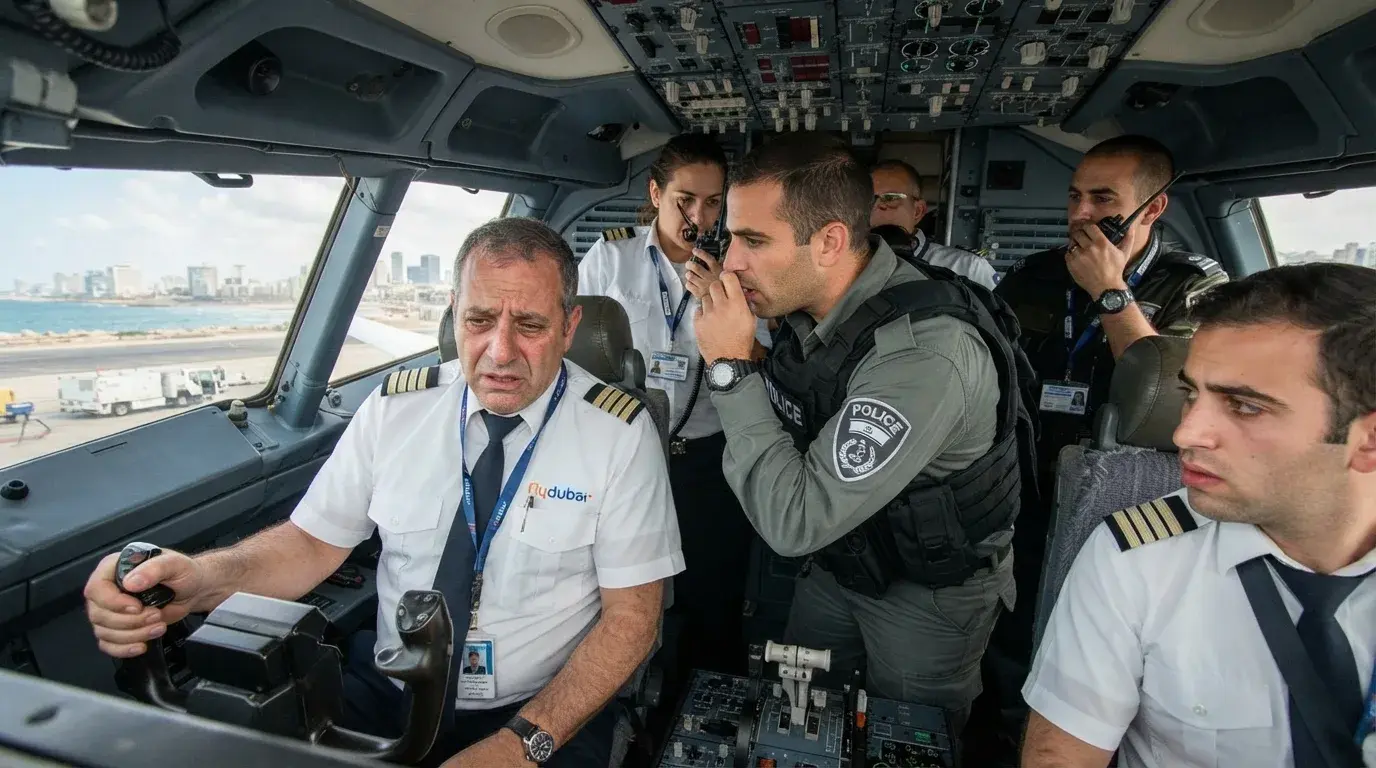
A chilling scenario unfolded aboard a Flydubai flight on September 30, 2026, en route from Dubai to Tel Aviv. Just after takeoff, the 29-year-old Omani co-pilot attempted to seize control of the aircraft, intending to crash it into the passenger terminal at Ben-Gurion Airport. Thanks to the crew’s vigilance and the captain’s resistance, disaster was narrowly avoided. On October 9, the Attorney General of the United Arab Emirates disclosed harrowing details of the thwarted attack, confirming the scale of the plot and the pilots’ swift intervention.
According to UAE authorities, the co-pilot had premeditated his act for years, openly drawing inspiration from the September 11, 2001, attacks. His obsession with a suicide attack using a commercial airliner reportedly began in 2017 while he was studying in Australia. Investigators found that he had used two prior flights to Tel Aviv to study the route and airport procedures before executing his plan during a third rotation. A methodical preparation that nearly turned a routine commercial flight into a tragedy.
The weapon used—a cockpit emergency axe—inflicted severe injuries on the captain, who fought back despite the aircraft losing 4,900 meters of altitude in just 30 seconds. The plane was ultimately diverted to Saudi Arabia, where local authorities launched a parallel investigation. Flydubai, which had hired the suspect in January 2026, claims it detected no warning signs during its vetting process. However, sources suggest he had been barred from flying in Oman due to extremism concerns, a detail the UAE prosecutor’s office has not officially confirmed.
This incident reignites concerns about pilot recruitment protocols in airlines, particularly for sensitive roles like co-pilots. How did an individual with radical views secure a position in a commercial fleet without raising suspicions? The UAE insists its investigation continues to rule out any complicity, but the case casts doubt on the effectiveness of current screening measures. One thing is certain: without the crew’s immediate response, this flight could have become one of the deadliest attacks in recent history.
A decade-long terrorist plot
The UAE prosecutor’s revelations paint the portrait of a man consumed by the idea of a large-scale suicide attack. The co-pilot allegedly became fixated on terrorist methods as early as 2017 while studying in Australia. Investigators noted his regular consumption of extremist online content and public support for terrorist organizations. His plan, directly inspired by the 9/11 attacks, reportedly took nearly a decade to materialize, culminating in the cockpit of a Boeing 737.
UAE Attorney General Hamad Saif Al-Shamsi confirmed the suspect acted alone, with no organized network involved. Yet investigators remain cautious, analyzing flight recordings and technical reports to determine whether the aircraft’s rapid descent was intentional or a consequence of the cockpit violence. A hypothesis reminiscent of SilkAir Flight 185, where recordings revealed the pilot’s deliberate actions before the crash.
The co-pilot’s exact motivations remain unclear. Authorities have not specified whether he belonged to a particular group or acted out of personal conviction. What is certain is that his obsession with the 9/11 attacks guided every step of his preparation, from online research to studying landing procedures at Ben-Gurion.
An emergency axe turned deadly weapon
Contrary to initial reports of a knife, the UAE prosecutor’s office revealed the co-pilot used a cockpit emergency axe, a standard tool in commercial aircraft. Normally intended for emergencies, the weapon caused severe injuries to the captain, whose forensic findings confirm the violence of the assault.
The official report states the pilot’s head injuries were consistent with an axe strike, and he had to fight to maintain control of the aircraft during the emergency descent. Doctors have not yet determined whether the injuries directly incapacitated the captain, but the attack clearly disrupted the plane’s stability. A descent of 16,000 feet (4,900 meters) in under 30 seconds was enough to send passengers into panic before the crew regained control.
This incident tragically underscores that cockpits are not impenetrable zones. Since the 9/11 attacks, security measures have been strengthened, but aircraft remain vulnerable to internal threats. Airlines and regulators will need to reassess access procedures to sensitive areas, particularly for crew members.
Flydubai in the spotlight: Who is responsible?
Flydubai, the Dubai-based low-cost carrier, now faces scrutiny over the reliability of its hiring processes. The co-pilot joined the airline in January 2026 after stints at Oman Air (2020–2024) and Royal Air Maroc (early 2025). However, Reuters reports that the Moroccan carrier claims it rejected his application after three months of training, without specifying the reasons.
The UAE prosecutor’s office stated that Flydubai’s background checks—including pilot licenses, clean conduct certificates, and security screenings—revealed no signs of extremism. A claim that raises questions given the suspect’s history. Omani authorities have not confirmed whether he was barred from flying, as some sources suggest. Flydubai has not publicly responded to these revelations, but the case may force the airline to drastically overhaul its hiring protocols.
Meanwhile, the investigation continues in Saudi Arabia, where the aircraft was diverted. The two other pilots in the cockpit played a crucial role in neutralizing the threat, though their identities remain undisclosed. Their bravery likely prevented a far deadlier outcome, underscoring that aviation safety also hinges on crew responsiveness.
What this case means for commercial aviation
While the incident was contained, it will inevitably impact aviation security protocols. Airlines will need to strengthen psychological screening for pilots, especially co-pilots, where the risk of internal radicalization is harder to detect. Regulators may also mandate more rigorous cockpit attack simulations during crew training.
For passengers, the question is straightforward: Can we still trust pilots? The answer will depend on the measures implemented in the wake of this case. Airlines must prove they can detect weak signals, even in rigorous hiring processes. One thing is certain: travelers will now pay closer attention to pre-flight security procedures.
Flydubai, like all airlines, must learn from this thwarted attack. While the worst was avoided, the gaps exposed by this case could inspire future malicious plots. Vigilance is no longer just a matter of procedure—it is a matter of survival.
Be the first to comment on this article