Ryanair Slashes Winter Frequencies to Counter Soaring Fuel Costs—Here’s How It Affects Your Travels
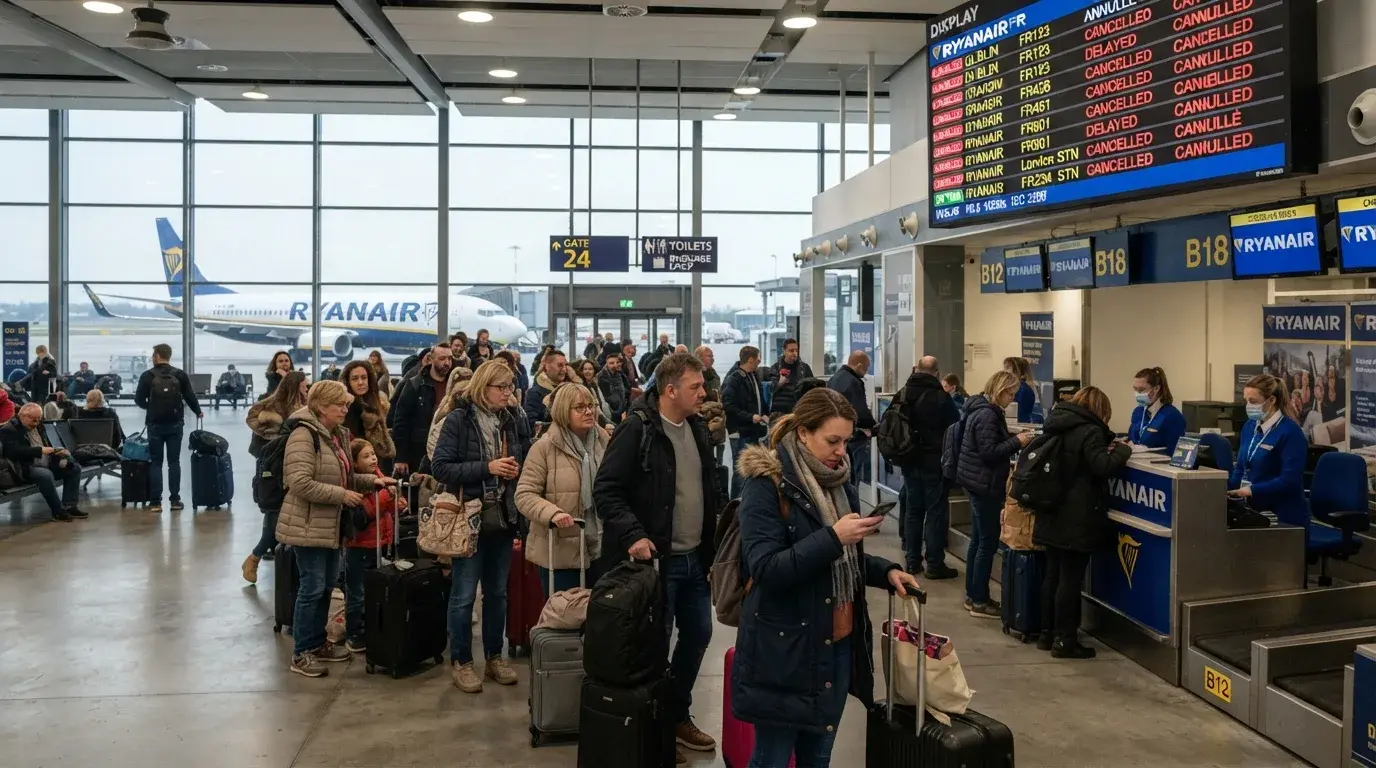
Irish low-cost carrier Ryanair has announced an additional reduction of 600,000 to 700,000 seats for the 2026-2027 winter season. This decision follows an earlier cut of around 700,000 seats announced this summer, bringing the total reduction to 1.3 to 1.4 million seats for the season. A drastic measure, but necessary according to CEO Michael O’Leary, to counter persistent surges in jet fuel prices and avoid a financial crisis.
Ryanair, which typically transports nearly 216 million passengers annually, had already lowered its 2026 annual target by two million passengers, bringing it down to 214 million. This strategy is part of a broader context of geopolitical tensions and supply chain disruptions that keep energy costs at historically high levels. Fuel now accounts for nearly 40% of airline operational costs, compared to the usual 20%, according to sector estimates.
This latest reduction comes after easyJet also announced a similar withdrawal of 600,000 to 700,000 seats for the same period. Both low-cost carriers justify their decision by the inability to maintain current offerings without exacerbating financial losses. “We cannot continue offering low fares and extensive flight programs if fuel remains at this level,” explained a Ryanair spokesperson. The airline notes that these adjustments primarily target less profitable routes and redundant frequencies to minimize impact on customers.
Jet Fuel in Europe: A Persistent Headache
The price of aviation fuel in Europe remains a major concern for carriers. Michael O’Leary, Ryanair’s CEO, estimates the situation won’t improve for 12 to 18 months, until 2028 at the earliest. Sanctions against Russia and repeated attacks on refineries in the Middle East have reduced production capacities, creating a relative shortage despite adequate global stocks. “Historically, aviation fuel cost 10 to 15% more than Brent crude. Today, it’s 50% more expensive,” he emphasized during a press conference in Brussels.
This surge in costs has already directly impacted ticket prices. In France, flight prices have risen by an average of 25% since spring 2026, according to the consumer price index. Airlines like Air France-KLM or Lufthansa have passed some of this increase onto customers, but others, such as Ryanair, are prioritizing capacity adjustments to limit losses. “We must choose between raising prices or reducing supply. We’ve opted for the latter to avoid losing market share,” explained Michael O’Leary.
The situation is even more critical as airlines have fewer contractual hedges for 2027. Many secured their fuel supplies for 2026, but contracts for next year are expiring, exposing carriers further to market fluctuations.
What Does This Mean for Travelers?
The capacity reductions announced by Ryanair and easyJet will inevitably impact travelers, particularly those planning winter vacations or business trips. Here’s what you need to know:
First, prices could rise further, especially on high-demand routes. Ryanair has indicated it will maintain the lowest possible fares, but this strategy has its limits. “We’ll do everything to limit increases, but they will be inevitable,” acknowledged Michael O’Leary. Travelers should book early and monitor promotions, which may become rarer.
Second, some destinations may see reduced frequencies. Ryanair specified that adjustments primarily affect secondary routes and off-peak flights. Major hubs like Paris-Beauvais, Brussels-Charleroi, or Rome-Ciampino should maintain relatively stable offerings. However, travelers heading to less-served cities like Warsaw, Valencia, or Palermo may notice fewer flights or less convenient schedules.
Finally, connections could become more complex. With fewer flights available, finding optimal connection times will be harder. Travelers should allow extra time, especially when transiting through secondary airports where frequencies are already limited.
Alternatives to Ryanair and easyJet
Faced with this situation, travelers may consider other options for their winter trips. Several alternatives are available:
Traditional airlines like Air France, Lufthansa, or British Airways offer higher fares but with superior service levels. These carriers have also reduced capacities, though less drastically than low-cost airlines. They could be a viable alternative for those prioritizing comfort and reliability. For example, Air France has announced stable offerings on its European and North American routes despite rising costs.
Other European low-cost carriers, such as Wizz Air or Volotea, may also benefit from the situation by capturing some demand. Wizz Air, in particular, continues expanding its network in Eastern Europe and Italy with competitive fares. However, these airlines have also been affected by fuel price hikes and may adjust their programs further.
Trains could become an attractive alternative, especially for Western Europe routes. Rail operators like SNCF or Deutsche Bahn offer competitive fares and high frequencies. Train travel also avoids airport queues and baggage restrictions. Routes like Paris-Brussels or Milan-Rome can be completed in under three hours, with fares comparable to low-cost airlines.
What Should Travelers Do?
To mitigate the impact of reduced capacity and rising prices, travelers should adapt their strategies. Here are some practical tips:
First, book early. With fewer seats available, last-minute bookings will be harder. Prices may also rise closer to peak travel periods. Platforms like Skyscanner or Google Flights can help track fare changes and identify the best deals.
Second, be flexible with dates. Capacity reductions primarily affect off-peak flights. Traveling midweek instead of weekends or avoiding high-demand periods like Christmas or New Year’s can improve your chances of finding affordable flights.
Finally, consider alternatives. As mentioned earlier, trains or other airlines may offer more suitable solutions. Also, consider secondary airports, which are often less affected by capacity cuts. For example, if traveling to Barcelona, airports like Reus or Girona—served by Ryanair or Vueling—could be viable options.
For travelers with urgent travel needs, it’s advisable to monitor Ryanair’s announcements and sign up for their newsletter to receive promotions. The airline regularly offers special deals for early bookings. Similarly, easyJet continues to provide attractive fares on select routes, particularly in Northern Europe and Italy.
The Future of European Low-Cost Airlines
The jet fuel crisis could mark a turning point for European low-cost carriers. Ryanair and easyJet, two major players in the sector, are showing signs of strain amid rising costs. Their business model, based on low fares and high aircraft rotation, is being tested by an increasingly difficult financial reality.
Michael O’Leary has warned: “Carriers that cannot pass on rising costs to customers or reduce capacity will be at risk.” This statement suggests a potential consolidation in the sector, with possible bankruptcies or takeovers in the coming months. The most vulnerable carriers, like Wizz Air or Volotea, could be the first affected.
Long-term, this crisis could accelerate the adoption of new technologies to reduce fuel consumption. Airlines are already investing in more efficient aircraft, such as the Airbus A320neo or Boeing 737 MAX, which consume up to 20% less fuel than their predecessors. However, the deployment of these aircraft will take years and won’t fully offset the current cost surge.
For now, travelers must contend with a more limited and expensive air travel offering. A reminder that the travel sector remains deeply tied to geopolitical and economic fluctuations—and yesterday’s bargains may not be tomorrow’s.
To stay updated, regularly check airline websites or specialized platforms like Air Journal, which provides real-time updates on capacity reductions and fare hikes.
Key Takeaways for Your Winter Travels
Here’s what you need to remember when planning your trips this winter:
- Fewer flights available: Ryanair and easyJet are cutting 1.3 to 1.4 million seats. Book early to secure your travel plans.
- Higher prices: Jet fuel surges have already driven a 25% increase in French flight prices. Expect further rises.
- Explore alternatives: Traditional airlines, trains, or other low-cost carriers may offer better options.
- Stay vigilant: Monitor airline announcements and use tools like Skyscanner to find the best deals.
By adapting your strategy, you can still enjoy your winter travels despite the challenging economic climate.
Be the first to comment on this article
On the same topiclow-cost
- easyJet soon in Apollo’s hands? What the fund battle means for your European flights
- Wizz Air to equip all Airbus aircraft with Starlink Wi-Fi from 2027: what it means for European flights
- Flybondi: March Salaries Unpaid as Argentine Low-Cost Airline Faces Pressure
- T'way Air transforms into Trinity Airways: South Korea's hybrid strategy
- Volotea strengthens its presence in Asturias with new European routes
- Wizz Air links Paris-Beauvais to Varna, new gateway to the Black Sea