Wizz Air to equip all Airbus aircraft with Starlink Wi-Fi from 2027: what it means for European flights
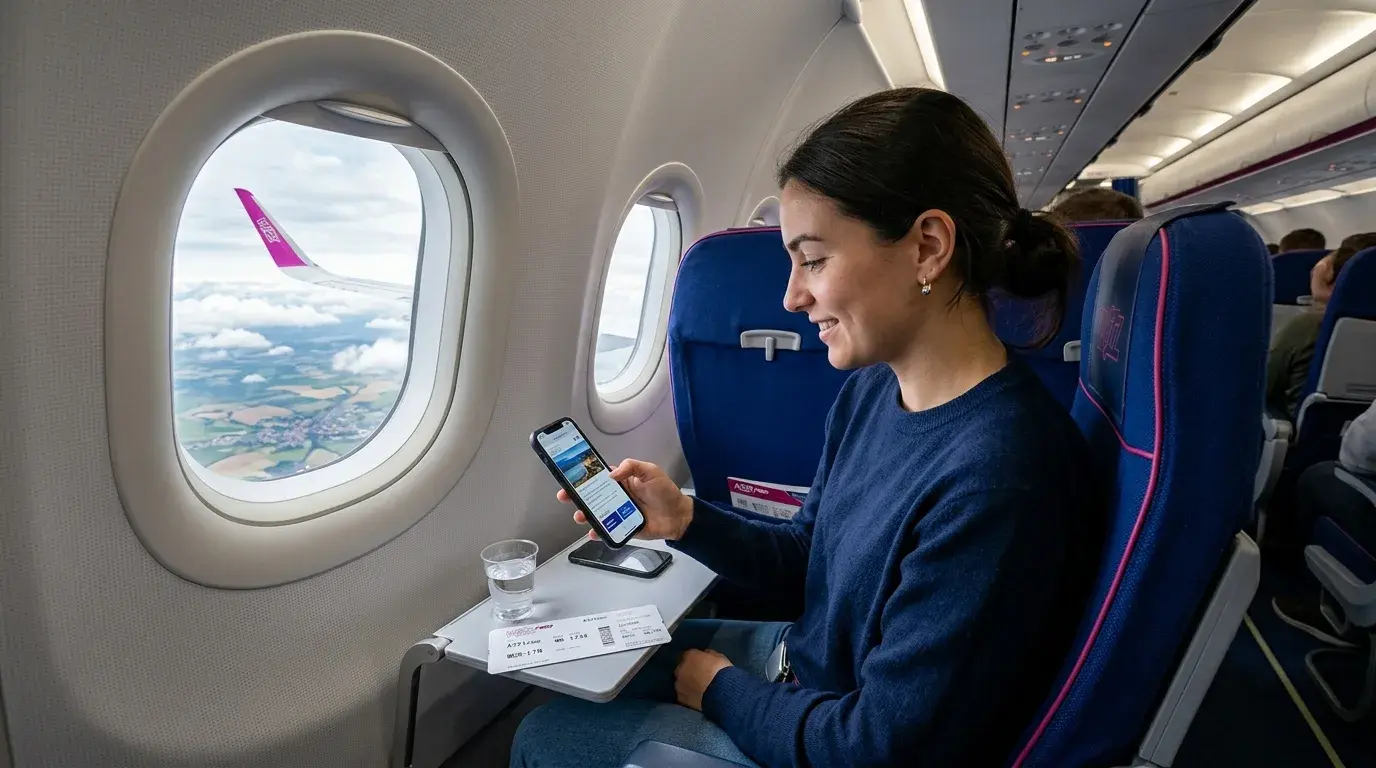
Wizz Air has marked a turning point in the history of European ultra low-cost carriers by announcing an exclusive partnership with Starlink to equip its entire Airbus fleet with high-speed in-flight internet starting in 2027. A global first in the budget airline segment, where connectivity was previously reserved for premium passengers. For travelers, this revolution means the end of flights without network access, even with a €30 ticket.
The Hungarian airline, which operates nearly 240 aircraft in the A320 and A321 family, has signed an agreement with SpaceX to install the Starlink system on board its planes. Starting next year, passengers will be able to enjoy in-flight internet comparable to ground-level connectivity, with speeds sufficient for streaming videos, making calls, or working. A major advancement that could redefine passenger expectations on short and medium-haul flights.
Until now, in-flight connectivity solutions available on budget airlines were often limited to low-speed, expensive, and unreliable connections. Wizz Air has chosen to skip this step by opting directly for a future-proof technology: Starlink’s low-orbit satellite network. This technical choice ensures continuous coverage from takeoff to landing, where traditional Ku or Ka band solutions remain limited by latency and congestion issues.
For passengers, the experience promises to be radically different. No more choosing between saving on your ticket or staying connected during your journey. With Starlink, Wizz Air offers a solution where high-speed Wi-Fi becomes accessible to all, without compromising on price. The airline has not yet specified whether this service will be charged separately or included in the ticket price, but the goal is clear: democratizing in-flight connectivity, even on low-cost flights.
A European first that could set a trend
Wizz Air is positioning itself as the first European ultra low-cost carrier to adopt Starlink for its entire fleet. However, the Hungarian airline is not alone in its interest in this technology. Several other carriers, particularly American ones like United Airlines, Southwest Airlines, or Alaska Airlines, have already begun equipping their aircraft with this system. In Europe, groups like IAG (parent company of British Airways and Iberia) or Lufthansa are also exploring this solution for parts of their fleets.
This widespread adoption by airlines is driven by evolving passenger expectations. According to a recent study, nearly 80% of European travelers consider reliable in-flight internet access an essential requirement for their trips, even on short-haul flights. Budget carriers, which have long focused on minimalist services, must now adapt to this new demand if they want to remain competitive.
For Wizz Air, this decision aligns with a broader strategy of modernizing its offering. The airline, which positions itself as an actor "revolutionizing the rules," is banking on innovation to stand out in an ultra-competitive market. By integrating Starlink, it meets growing demand for connectivity without sacrificing its aggressive pricing. A delicate balance that could provide a decisive advantage over its rivals.
Benefits for crews and operations
Beyond passenger comfort, high-speed connectivity opens new possibilities for crews. With Starlink, pilots and flight attendants will have access to real-time operational tools, such as updated flight plans, live weather data, or aircraft maintenance information. An improvement that could help optimize operations and reduce delays.
For airlines, the stakes are also economic. Traditional in-flight connectivity systems are expensive to install and maintain, with high recurring costs for bandwidth. Starlink, on the other hand, offers a subscription-based model without heavy upfront investment. A formula better suited to budget operators, which must control costs to offer attractive fares.
Wizz Air has not yet revealed the exact cost of its partnership with Starlink, but American experience shows that installing the system represents a significant investment. However, the airline is banking on a quick return on investment thanks to the increased appeal of its flights. In a market where differentiation is key, high-speed connectivity could become a major selling point.
A rapidly evolving connectivity market
Wizz Air’s choice reflects a rapidly changing landscape. The in-flight connectivity market is valued at several billion dollars, with annual growth exceeding 10%. Traditional solutions, such as those offered by Viasat or Inmarsat, remain dominant, but low-orbit (LEO) services like Starlink are quickly gaining market share thanks to superior performance.
In Europe, several airlines have already adopted or are in the process of adopting this technology. Air France, for example, has announced the integration of Starlink on part of its fleet, while Qatar Airways and Air New Zealand are also testing the system. These initiatives show that high-speed connectivity is no longer reserved for premium airlines but is becoming a standard expected by passengers, regardless of flight segment.
For Wizz Air, this decision could mark the beginning of a new era. By equipping all its Airbus aircraft with Starlink, the Hungarian airline is sending a strong signal to other low-cost players: connectivity is no longer a luxury but a necessity. An evolution that could redefine the rules of the game in a sector where the fight for the lowest price has long taken precedence over all other criteria.
What this means for your future flights
Starting in 2027, if you fly with Wizz Air, you’ll be able to enjoy high-speed in-flight internet, either free of charge or with a modest surcharge. No more pre-downloading content before takeoff: you’ll be able to stream movies, make video calls, or respond to emails in real time, even at 33,000 feet. An advancement that will make air travel far more enjoyable, especially on medium-haul flights where time spent on board can feel long.
For competing airlines, Wizz Air’s initiative raises a crucial question: should they follow suit and integrate high-speed connectivity solutions? As passengers become increasingly demanding, the answer seems obvious. Budget carriers that fail to offer this option risk seeing their appeal diminish in the face of more traditional airlines that have already adopted in-flight Wi-Fi for years.
By choosing Starlink, Wizz Air isn’t just modernizing its offering—it’s anticipating future passenger expectations and aligning with the standards of premium airlines. A bold strategy that could inspire other industry players and accelerate the adoption of high-speed connectivity across the board.
Be the first to comment on this article
On the same topiclow-cost
- Ryanair Slashes Winter Frequencies to Counter Soaring Fuel Costs—Here’s How It Affects Your Travels
- easyJet soon in Apollo’s hands? What the fund battle means for your European flights
- Flybondi: March Salaries Unpaid as Argentine Low-Cost Airline Faces Pressure
- T'way Air transforms into Trinity Airways: South Korea's hybrid strategy
- Volotea strengthens its presence in Asturias with new European routes
- Wizz Air links Paris-Beauvais to Varna, new gateway to the Black Sea