Air France-KLM vs Lufthansa: The Battle to Rescue TAP Air Portugal
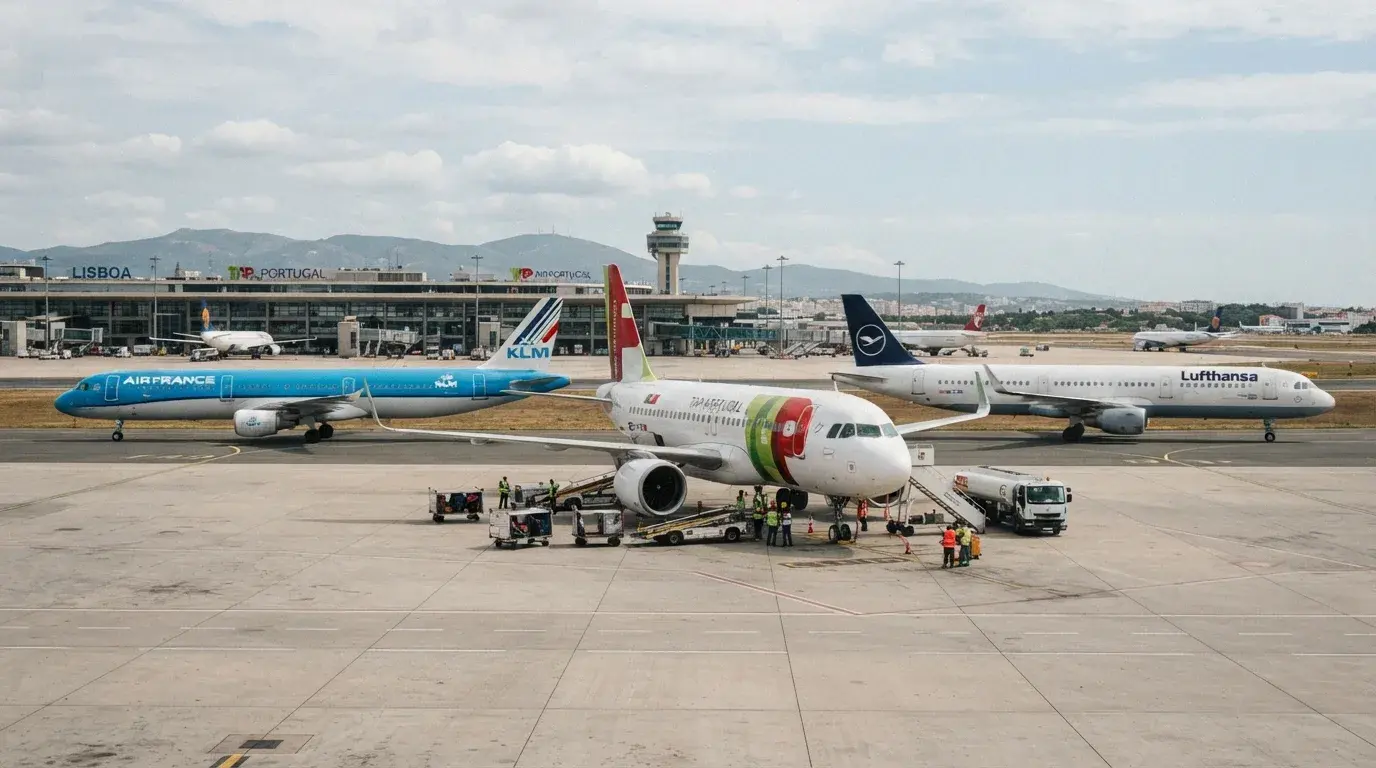
Portugal has chosen to play the waiting game. While the original timeline called for a decision on the partial privatization of TAP Air Portugal in autumn 2026, Lisbon has pushed the deadline to December 31, granting a final window for negotiations to the two remaining contenders: Air France-KLM and Lufthansa Group. Behind this industrial showdown lies far more than a simple share transfer—it’s about shaping the future of the Lisbon hub, redefining strategic routes to Brazil, Portuguese-speaking Africa, and North America, and determining which of the two European giants will play a pivotal role in the continent’s aviation consolidation.
The offers submitted by both groups in late July were deemed too similar by Portuguese authorities to allow for an immediate choice. The state-owned holding Parpública, tasked with the evaluation, noted that while the proposals differed in content, their overall similarity justified an additional phase of discussions. The stated goal is clear: secure stronger commitments—financial and operational alike—to ensure TAP becomes a profitable, stable airline aligned with Portugal’s strategic ambitions.
The sale will involve only a minority stake: up to 49.9% of the capital, with 44.9% potentially transferred to the selected industrial investor. The Portuguese state will retain at least 50.1% of the shares, a political safeguard to preserve the country’s essential air sovereignty levers. This structure aims to balance private capital infusion with public control over strategic decisions—a delicate equilibrium in an industry where economic and geopolitical stakes intertwine.
TAP: A Strategic Jewel for Portugal and Europe
TAP Air Portugal is no ordinary airline. Its Lisbon hub, one of Europe’s most dynamic, serves as a gateway to three continents: Latin America via Brazil, Portuguese-speaking Africa, and North America. With a modern fleet and a network blending long-haul and short-haul routes, TAP is a linchpin for Portugal, where tourism and economic exchanges rely heavily on air connectivity.
The Portuguese government has set precise priorities for TAP’s future partner. Key objectives include strengthening connectivity to autonomous regions like Madeira and the Azores, expanding aeronautical maintenance in Portugal, and sustaining routes to Portuguese-speaking countries, where the diaspora plays a major economic role. The decarbonization of air transport—through the integration of sustainable aviation fuels (SAF)—is also a central evaluation criterion.
Above all, preserving the TAP brand, its headquarters in Portugal, and its Lisbon hub is non-negotiable. The stakes go beyond national identity: it’s about safeguarding a strategic airport infrastructure capable of driving tourism revenue and supporting the country’s trade.
Air France-KLM: A Comprehensive Plan for TAP and Its Synergies
Air France-KLM has reaffirmed its interest in TAP, presenting a plan covering passenger transport, cargo, and maintenance. The Franco-Dutch group highlights that its joint venture partner, Delta Air Lines, backs this initiative, opening the door to stronger connections between Lisbon and major hubs like Air France’s Paris-Charles-de-Gaulle, KLM’s Amsterdam-Schiphol, and Delta’s transatlantic network.
For Air France-KLM, acquiring TAP aligns with its European market consolidation strategy, particularly on routes to Latin America and Africa. A scenario where TAP becomes a key partner in the Air France-KLM network could capture a growing share of traffic between Europe and these regions while offering travelers better access to Brazilian and African destinations.
The group’s offer includes commitments to invest in TAP’s fleet, develop aeronautical maintenance in Portugal, and support the decarbonization of air transport. These elements could tip the scales, especially if Lisbon seeks a partner willing to commit to concrete, sustainable projects.
Lufthansa: A European and Lusophone Strategy
Lufthansa Group, for its part, says it’s ready to proceed constructively in the coming weeks to build a long-term partnership with TAP and Portugal. The German group, already present in Europe with a portfolio including Lufthansa, Swiss, Austrian Airlines, Brussels Airlines, and ITA Airways, sees TAP as an opportunity to further expand its influence on the continent.
The main draw for Lufthansa is gaining direct access to Portuguese-speaking markets, where it already has a presence but could strengthen its position. Integrating TAP into the Lufthansa network would create synergies between Lisbon and hubs like Frankfurt, Munich, or Zurich, offering passengers better connectivity across Europe and beyond.
Lufthansa also emphasizes commitments similar to those of Air France-KLM, including investments in the fleet, development of aeronautical maintenance, and support for the aviation industry’s green transition. The group stresses the need to preserve local jobs and skills, an argument likely to resonate with Portuguese authorities amid economic precarity.
Price Won’t Be the Deciding Factor
Contrary to expectations, the financial offer won’t be the sole criterion in choosing TAP’s future partner. Portuguese authorities have indicated that the two groups’ financial proposals are too close to allow a decision based solely on price. Instead, operational, industrial, and social commitments will be the deciding factors.
Key elements that could sway the decision include:
Ensuring TAP’s long-term financial stability, a critical issue after years of economic struggles and massive public support during the pandemic. Both groups must demonstrate their ability to bring lasting stability to the airline while respecting Portugal’s budgetary constraints.
Developing aeronautical maintenance in Portugal, a strategic sector for the country. Both contenders will need to commit to expanding maintenance, repair, and overhaul (MRO) activities in Portugal, strengthening local expertise and creating skilled jobs.
Integrating TAP into a broader European network, a question tied to both connectivity and market competition. Air France-KLM and Lufthansa must show how TAP will fit into their respective strategies and what benefits this integration will bring to passengers, airlines, and the economies involved.
Finally, ecological transition is a central topic. Both groups must commit to supporting the integration of sustainable aviation fuels (SAF) into TAP’s fleet and developing initiatives to reduce the airline’s carbon footprint. This aspect could become decisive, especially if Portugal aims to position TAP as a sustainability leader in aviation.
A Choice with Repercussions Across Europe
The decision on TAP’s future partner won’t be confined to a simple share transfer. It will ripple across Europe’s aviation landscape, where sector consolidation is in full swing. Choosing Air France-KLM or Lufthansa could redefine the balance between major groups, influence hub development strategies, and ultimately determine who controls a significant share of traffic between Europe, Latin America, and Africa.
For passengers, this industrial battle could translate into better connectivity, more competitive fares, and greater travel options to Brazil, Africa, or North America. For TAP’s employees, it represents an opportunity for stability in an industry marked by successive restructurings and crises. For Portugal’s economy, it offers the prospect of boosting tourism and trade attractiveness through a modern, high-performance hub.
The coming weeks will be decisive. Between investment promises, decarbonization commitments, and industrial synergies, Air France-KLM and Lufthansa must convince Lisbon that their vision is the best for TAP, Portugal, and Europe. One thing is certain: the winner won’t be the one who pays the most, but the one who presents the most ambitious and sustainable long-term plan for TAP Air Portugal’s future.
Will Lisbon manage to make a decision before year-end, or will the suspense drag on, much to the frustration of observers and travelers eager to see the future of one of Europe’s most strategic hubs take shape?
Be the first to comment on this article
On the same topic
- TAP Air Portugal: Lufthansa may acquire 45% stake in a historic shake-up for European skies
- Ryanair Slashes Winter Frequencies to Counter Soaring Fuel Costs—Here’s How It Affects Your Travels
- Why European Airfares Will Skyrocket Until 2029: Expensive Fuel to Reshape the Industry
- TAP in search of a new partner: Why France and Germany are vying for the Portuguese flagship
- Lufthansa Challenges Boeing with Shark Skin on A330: A Green Revolution Reshaping Air Travel
- easyJet soon in Apollo’s hands? What the fund battle means for your European flights