Lufthansa faces lawsuit after severe fall at Frankfurt Airport: escalator accident reignites mobile stairs safety debate
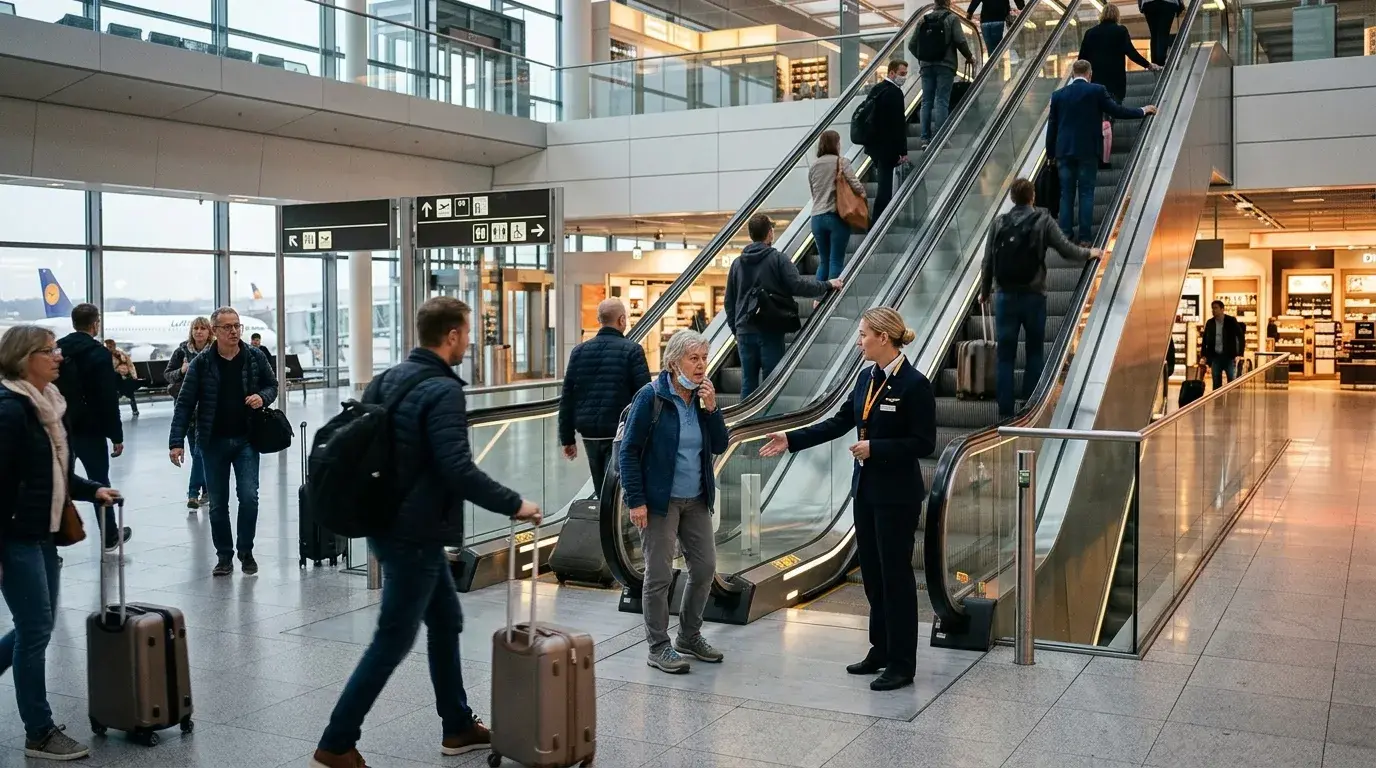
An American passenger, 68, became the center of a medical and legal ordeal after falling down a mobile staircase connecting her aircraft to Frankfurt Airport on December 14, 2025. The accident, which occurred at the end of a transatlantic flight operated by Lufthansa, via its subsidiary Discover Airlines, has led to legal proceedings in the United States. The plaintiff, hospitalized for nearly a month in Germany before being urgently repatriated to the U.S., accuses the airline of failing to ensure safe disembarkation conditions.
The flight from Philadelphia proceeded without incident, but the aircraft was parked at a remote stand, requiring disembarkation via mobile staircases exposed to cold rain and slippery conditions. According to the lawsuit, the crew allegedly rushed the passenger to descend quickly, without offering the assistance required for an elderly traveler in such hazardous conditions. After only a few steps, she slipped and fell heavily onto the tarmac, resulting in multiple fractures and prolonged hospitalization.
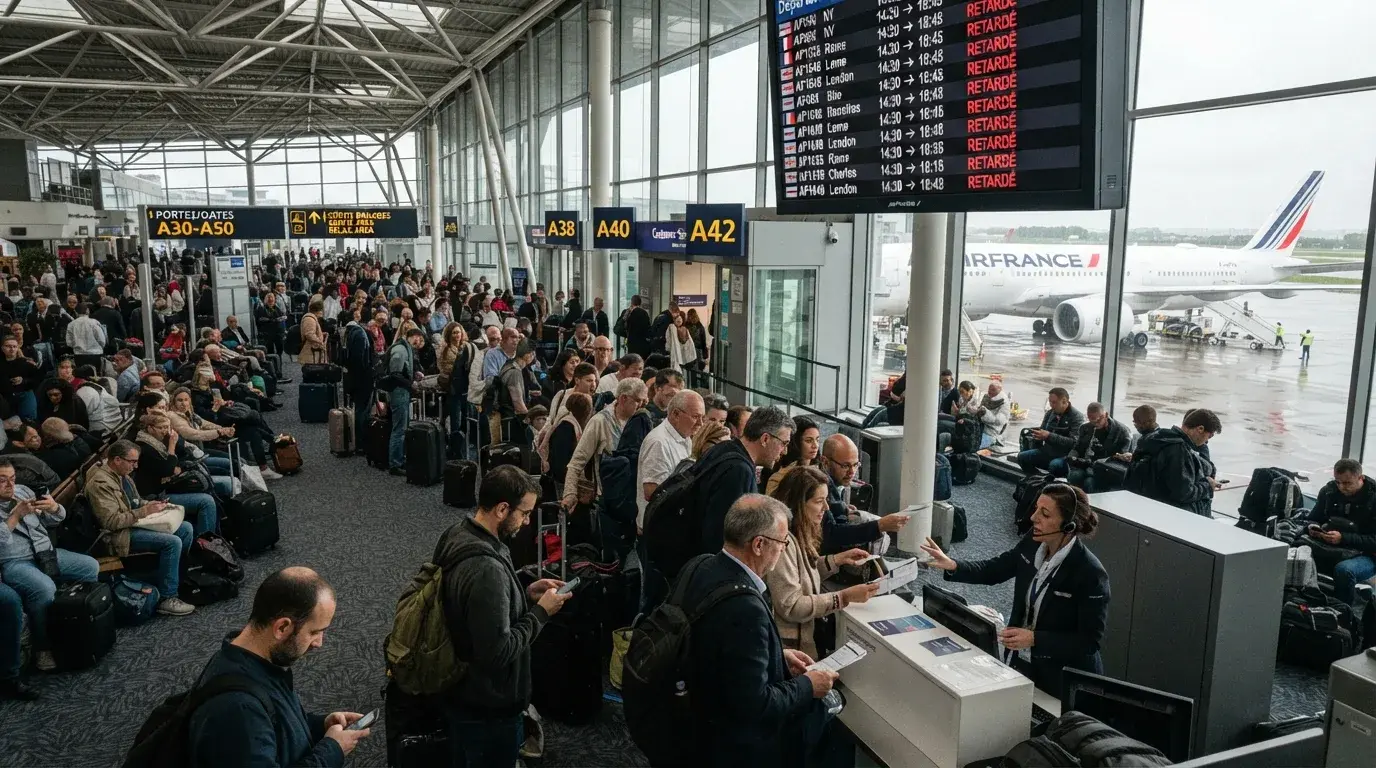
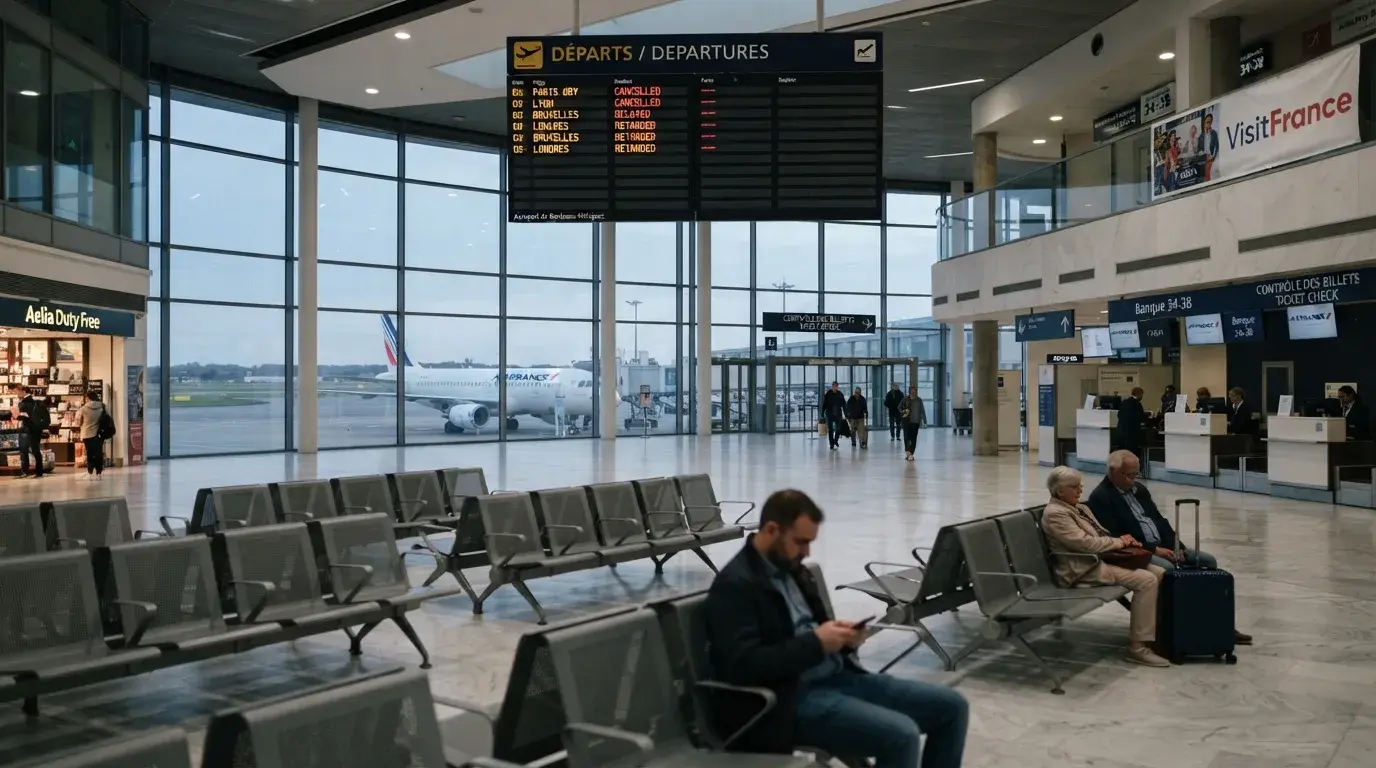
Images from Frankfurt Airport, where mobile staircases are frequently used due to congestion in covered jet bridges, highlight a recurring risk at major European hubs. Such equipment, still common in airports like Frankfurt, Amsterdam, or Madrid, exposes passengers to harsh weather and unstable footing. Airlines are legally required, under international regulations, to provide appropriate assistance, particularly for passengers with reduced mobility or seniors.
The incident raises questions about carrier responsibility during disembarkation phases, governed by the Montreal Convention. This treaty establishes automatic airline liability for injuries sustained during boarding or disembarkation, up to approximately $160,000–$175,000 based on current IMF exchange rates. Beyond this threshold, airlines may contest liability by proving no negligence.
For the passenger, the consequences were severe: fractured clavicle and sternum, cardiac contusion, and multiple lesions. After two weeks of hospitalization in Germany, her condition necessitated medical repatriation to the U.S., but the first attempt failed due to administrative complications. During the second flight, a medical emergency was declared in-flight, forcing a diversion to Shannon Airport in Ireland. She ultimately required an additional four weeks of hospitalization, with a diagnosis of a serious infection attributed to “intense physical and psychological stress following the accident.”
The case underscores airlines’ obligations regarding passenger safety during disembarkation, particularly at remote stands. The use of mobile staircases, still prevalent in many European hubs, exposes travelers to weather-related hazards and increases risks, especially for elderly passengers. Airlines must ensure appropriate assistance in line with international and European regulations, including EU Regulation (EC) No 1107/2006 on the rights of passengers with reduced mobility.
A lawsuit that could set legal precedent
The passenger has filed a lawsuit against Lufthansa and Discover Airlines under Article 17 of the Montreal Convention, which governs airline liability for injuries sustained on board or during boarding and disembarkation. The plaintiff argues the accident resulted directly from the airline’s negligence, potentially entitling her to compensation exceeding the convention’s automatic liability cap.
For airlines, the incident highlights the vulnerabilities of ground operations, particularly during disembarkation at remote stands. Equipment such as mobile staircases, often provided by third-party contractors, presents logistical and safety challenges. Yet airlines remain responsible for passenger safety until they exit the airport. Regulations mandate tailored assistance for vulnerable travelers, but enforcement remains inconsistent.
Mobile staircases, while practical for managing traffic flow, are frequently criticized for their instability and susceptibility to adverse weather. Rain or wind can make steps slippery and compromise passenger balance. Despite these risks, few airports have fully transitioned to covered jet bridges or alternative transport systems for remote stands.
Severe medical and financial repercussions
The passenger’s medical repatriation exposed systemic gaps in healthcare and air transport procedures for passengers requiring urgent medical assistance. Airlines are obligated to provide medical stretchers and appropriate equipment, but availability varies by airport and carrier. In this case, the first repatriation attempt failed due to a lack of medical clearance at the departure airport—a scenario illustrating the logistical and administrative hurdles faced by carriers.
Financially, the passenger faces significant burdens. Beyond medical expenses, she is seeking damages for pain and suffering and other losses. Her health, marked by a severe infection and post-traumatic stress, has required prolonged medical care, impacting her daily life and professional activities.
This case could significantly influence airline practices regarding passenger safety during disembarkation. While international and European regulations impose strict obligations, enforcement remains uneven. Airlines may be compelled to revise procedures for remote stand disembarkations, prioritizing safer equipment or enhanced assistance for vulnerable passengers.
Mobile staircases pose a major safety challenge. Replacing them with covered systems or airport shuttles could mitigate risks, but such a transition would require substantial investment from airports and airlines. Until then, passengers—especially seniors—must exercise caution during these critical phases of travel.
A debate extending beyond Lufthansa
This case transcends Lufthansa and Discover Airlines, reflecting a broader issue for airlines at major European hubs where mobile staircases remain widely used. Regulations mandate tailored assistance, but practical application often falls short. Passengers, particularly those traveling with children or elderly companions, must be aware of the risks and their rights.
Airlines, for their part, must ensure their procedures comply with safety standards and legal obligations. Negligence in ground operations can lead to severe medical, legal, and financial consequences. Passengers, meanwhile, have the right to demand appropriate assistance and report hazardous situations to competent authorities.
Ultimately, this incident underscores that passenger safety extends beyond the flight itself, encompassing all phases of travel, including ground operations. Airlines must uphold their responsibilities to prevent such tragedies from recurring.
Be the first to comment on this article
On the same topic
- TAP in search of a new partner: Why France and Germany are vying for the Portuguese flagship
- Air France-KLM vs Lufthansa: The Battle to Rescue TAP Air Portugal
- Lufthansa Challenges Boeing with Shark Skin on A330: A Green Revolution Reshaping Air Travel
- easyJet soon in Apollo’s hands? What the fund battle means for your European flights
- Lufthansa Bets on Airbus A350-1000 Over Boeing 777X: What This Means for Your Long-Haul Flights
- Lufthansa Revives All Airbus A380s: Why the German Giant Bets on the Superjumbo for Munich Hub