French Air Traffic Control: Why France Remains Europe's Worst Performer in 2026 Despite Reform Promises
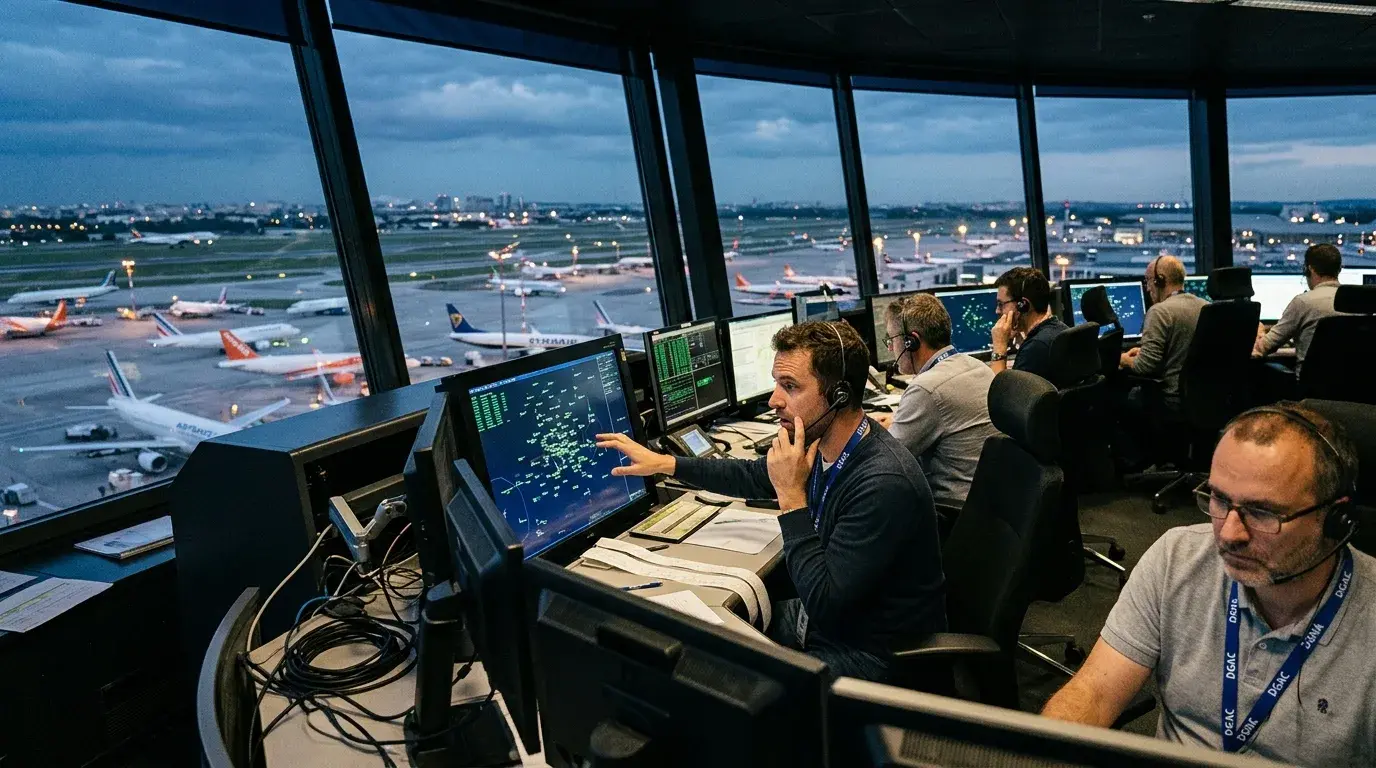
France, which manages one of Europe’s busiest airspaces, has been accumulating a glaring lag in air traffic control for years. Despite repeated announcements and billions of euros invested, the situation is not improving fast enough. In June 2026, French Transport Minister Philippe Tabarot publicly acknowledged that the French system remains “not up to standard,” while pledging a “deep reform.” But what is really blocking progress? And how does it concretely impact travelers and airlines?
The figures speak for themselves: in 2025, France recorded 6.6 million minutes of flight delays attributable to air traffic control—a European record. This represents an estimated loss of €800 million for airlines, not to mention the inconvenience for millions of passengers. Worse still, 33% of delays linked to air traffic in Europe originate in France, a percentage that even rose to 36% in 2025. Despite a slight improvement in 2026, with a 35% reduction in delays over the first five months of the year, the country remains far below European standards.
The French Senate report published in late June 2026 is unequivocal: the current organization of French air traffic control is deemed “too rigid,” unable to adapt to traffic fluctuations, particularly during peak periods. Air traffic controllers lack flexibility, and the technical tools used are often outdated. Yet France spends hundreds of millions each year modernizing its system. So where is the problem?
A system at breaking point
French air traffic control, managed by the DSNA (Direction des services de la navigation aérienne), suffers from an aging technical architecture and a critical shortage of trained staff. Senators highlight a “rigid allocation of staff” that fails to account for traffic peaks. The result: delays accumulate, especially in summer, even as air traffic hits record levels. In June 2026, France recorded its best month of controlled traffic in years, yet this was not enough to avoid congestion in the skies.
Minister Tabarot admitted that “much remains to be done,” citing massive recruitment drives and more flexible scheduling. But these measures will take time. Meanwhile, airlines and passengers bear the consequences. Delays drive up costs for carriers, who must reorganize crews and aircraft, and inconvenience travelers forced to wait for hours at airports.
For passengers, this means missed connections, unplanned hotel nights, and a degraded travel experience. Airlines, meanwhile, face exploding costs. According to the International Air Transport Association (IATA), delays linked to air traffic control have more than doubled in Europe over the past decade, with France and Germany leading the worst performers. This is all the more concerning as air traffic continues to grow.
The roots of structural dysfunction
Several factors explain the relative failure of reforms implemented so far. First, France has accumulated significant technical delays. Air traffic management systems (such as Europe’s SESAR program) struggle to be deployed at scale. Air traffic controllers still use tools that are sometimes outdated, preventing optimal real-time traffic management.
Second, recruiting new air traffic controllers is a long and complex process. Training lasts several years, and current staffing levels are insufficient to handle the workload. Despite recruitment promises, the DSNA struggles to attract enough qualified candidates. Stressful working conditions also deter potential recruits.
Finally, coordination among key aviation sector players is lacking. Airlines, airports, and control authorities do not always communicate smoothly, exacerbating coordination issues. A striking example: in 2025, delays cost airlines €800 million, yet carriers were not always informed in time about upcoming problems.
What is the government proposing to change the situation?
Facing urgency, the French government has announced a series of measures to try to catch up. First, a deep reform of air traffic controllers’ working organization, aiming to make schedules more flexible to better absorb traffic peaks. Massive recruitment drives are also planned, with the goal of hiring several hundred new controllers by 2027.
Minister Tabarot has also promised accelerated modernization of technical tools. The deployment of the SESAR program, which aims to modernize Europe’s air traffic management systems, should be expedited. But these changes will take time. Meanwhile, airlines and passengers will need to be patient.
What are the consequences for travelers in 2026?
For travelers, delays linked to French air traffic control often mean missed connections, unplanned hotel stays, and a degraded travel experience. Airlines, meanwhile, face soaring costs. Some are already adapting their strategies, favoring layovers in countries with more efficient air traffic control, such as Germany or the Netherlands.
To minimize inconvenience, travelers can take several practical steps. First, allow ample buffer time between flights, especially during peak summer travel. Second, prioritize airlines offering compensation for delays, such as Air France or Lufthansa. Finally, stay updated in real time on air traffic status via airline or airport apps.
Europe in the crosshairs
France is not alone in facing air traffic control challenges. Several European countries, such as Germany or Italy, also struggle with similar issues. But France stands out for the scale of delays and the economic cost they generate. IATA has criticized the slow pace of reforms in the country, calling for swift and coordinated action.
In June 2026, the European Commission reiterated that modernizing air traffic control is an absolute priority. It stressed the need for better coordination among member states to prevent delays in one country from disrupting air traffic across Europe—a coordination that is still slow to materialize.
What does the future hold?
In the short term, travelers and airlines will have to contend with persistent delays in France. But in the medium term, promised reforms could bear fruit. If recruitment and technical modernization efforts succeed, the country could finally catch up and offer a more reliable service.
For now, aviation sector players remain mobilized. Airlines are stepping up efforts to inform passengers in real time, while French airports attempt to streamline connections despite sky congestion. But one thing is certain: without radical reform, France will continue to be Europe’s worst performer in air traffic control.
In 2026, one thing is clear: French air traffic control remains a major issue, costing the economy and travelers dearly. Reform promises are in place, but implementation will take time. Until then, caution and anticipation are key for those traveling in France this summer.
The coming months will be decisive. If the announced measures deliver results, France could finally move out of the red zone. Otherwise, delays will continue to shape travel, and the country will remain Europe’s worst performer in air traffic control.
One thing is certain: the time for promises is over. Results are what matter now.
Be the first to comment on this article
On the same topic
- Boeing 737 MAX 10: Why the Software Bug Is Blocking Certification and How It Affects Your Bookings
- Qatar Airways in Crisis: How the Middle East War Threatens Your Long-Haul Flights
- Emirates Weighs Swapping Boeing 787s for 777Xs: A Strategic Shift That Could Transform Long-Haul Travel
- Why French Airports Are Losing Passengers While Europe Takes Off in 2026
- Wizz Air invests $100 million in Brașov: The A321neo set to revolutionize travel in Eastern Europe
- Embraer Smashes Financial Records: How the E2 Family Will Reshape Your Future Flights in 2026