EU Cracks Down: Carbon Tax Extended to Short-Haul Flights from 2029 – Costs for Airlines and Travelers

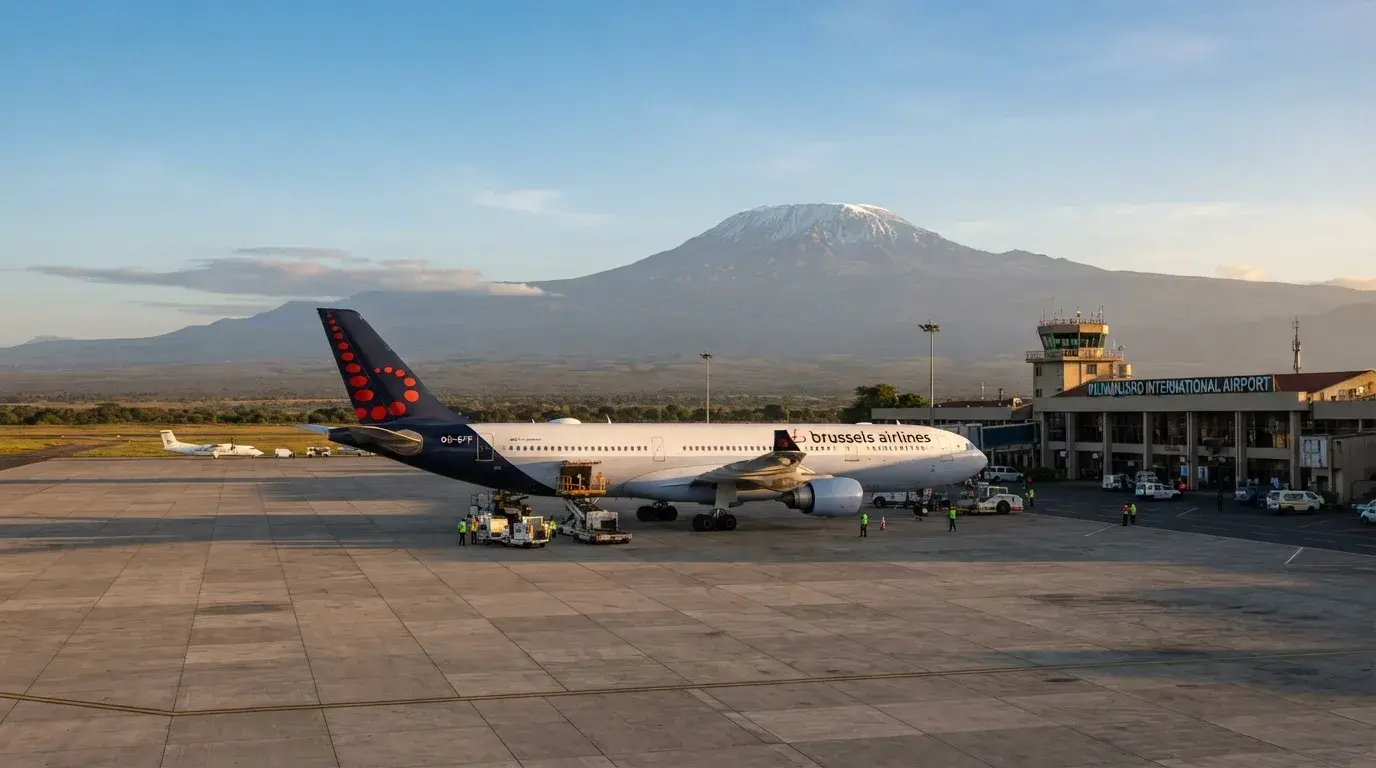
The European Commission has made its decision. Starting in 2029, travelers flying on international routes of less than 5,000 km departing from the European Union will face an additional carbon bill. The Commission has just announced the extension of the EU Emissions Trading System (EU ETS) to these routes, which were previously exempt. This decision aligns with a stated goal of reducing the aviation sector’s environmental footprint but is already raising concerns among carriers and threatens to weigh heavily on passenger budgets.
Concretely, this reform aims to include routes such as Paris-Istanbul, Frankfurt-Dubai, and Rome-Casablanca within the scope of the European carbon tax. Only long-haul flights to destinations like Tokyo, New York, or Sydney will be excluded, as their distance exceeds the 5,000 km threshold. This nuance has done little to calm critics, particularly those from the International Air Transport Association (IATA), which denounces the measure as a unilateral step that could weaken the competitiveness of European airlines against their international rivals.
The tax will also apply to private jets, without any distance exemption, starting in 2029—a first in the history of the EU ETS, where commercial flights were previously the only ones covered. This extension comes alongside a massive €15 billion investment over 15 years to support the production of Sustainable Aviation Fuels (SAF). This amount is ten times higher than the previous allocation, signaling Brussels’ confidence in these alternatives to decarbonize the sector.
For airlines, this reform changes the game. Free carbon quotas, once granted unconditionally, will now only be allocated upon submission of a valid decarbonization plan. Eighty percent of the quotas will be released upon plan submission, with the remaining 20% contingent on verified emission reductions. A financial incentive to push carriers to invest in cleaner technologies, but one that raises questions about their ability to absorb these additional costs without passing them on to ticket prices.
The Airlines for Europe (A4E) association, which represents the continent’s major carriers, is already sounding the alarm: “An extended carbon tax risks weakening our competitiveness against players not subject to the same rules, particularly in the Middle East or Asia,” an A4E spokesperson commented. The IATA goes further, calling the decision an “historic mistake” that could, according to the association, slow global decarbonization rather than accelerate it. “The EU should focus on strengthening CORSIA, the already agreed global mechanism,” argues Willie Walsh, IATA’s Director General.
From an environmental perspective, the reform is welcomed but deemed insufficient. The NGO Transport & Environment (T&E) points out that nearly half of the aviation sector’s emissions will remain outside the European carbon market. “For the first time, all international flights could have been included, but industry pressure led to a half-measure,” laments Jérôme du Boucher, T&E’s aviation manager in France. The NGO estimates the EU would lose €4.2 billion in revenue if all departing flights were taxed, funds that could finance innovative technologies.
For travelers, the bill could rise significantly. Initial estimates suggest a carbon tax of €5 to €10 per short-haul flight could be applied starting in 2029, on top of already rising fuel surcharges. For routes like Paris-Istanbul or Frankfurt-Casablanca, this could mean a 3% to 5% increase in ticket prices. A hike that could deter price-sensitive passengers and weaken already fragile routes.
Airlines will also face strict reporting rules. Starting in 2029, every flight must be meticulously documented, with penalties for non-compliance. An additional administrative burden for carriers already under pressure, especially as some, like Ryanair, have announced capacity cuts in response to tax hikes, such as the one implemented in Belgium.
The text must still be adopted by the European Parliament and the Council of the European Union. With pressure from airlines, climate advocates, and upcoming negotiations, debates promise to be heated. One thing is certain: by 2029, flying will no longer be just a mode of transport but an additional expense for European travelers.
Which flights will be affected by the extended carbon tax in 2029?
The reform of the EU ETS primarily targets international flights under 5,000 km departing from the European Union. This includes routes such as Paris-Istanbul, Frankfurt-Dubai, Rome-Casablanca, and Madrid-Alger. Long-haul flights to destinations like Tokyo, New York, Sydney, or Los Angeles will be excluded, as their distance exceeds the 5,000 km threshold.
Private jets will also be affected, regardless of distance—a first aimed at holding the entire aviation sector accountable for its carbon footprint. For airlines, this extension changes the equation: they will now need to factor these costs into their pricing and investment strategies.
The EU’s outermost regions, such as the Canary Islands or Guadeloupe, will be temporarily exempt until 2035. A measure designed to protect economically vulnerable routes but one that could be revisited in future revisions of the text.
How is flight distance calculated to determine if a route is affected?
Distance is measured from the largest airport located at the geographic center of the European Union. For travelers, this means that even a flight like Paris-Moscow could be affected if the distance exceeds 5,000 km, while a route like Paris-Istanbul might be included despite its relative proximity.
Airlines will need to adapt their booking systems to inform passengers of the tax application at the time of purchase. A transparency measure that could influence travel choices, especially for routes where alternatives like trains exist.
What are the arguments in favor of the measure?
For the European Commission, this extension is a response to the inaction of the international CORSIA mechanism, managed by the International Civil Aviation Organization (ICAO). “Aviation is a unique sector where emissions continue to rise,” declared Wopke Hoekstra, European Commissioner for Climate Action, during the presentation of the text. Brussels is banking on this reform to set an example and encourage other regions to adopt similar measures.
Climate advocates welcome the initiative, though they consider it insufficient. “It’s a first step, but we need to go further,” says Jérôme du Boucher of Transport & Environment. “All flights departing from the EU should be taxed, without exception, so the aviation sector pays its fair share in the ecological transition.”
The EU also justifies the measure by the need to fund the transition to Sustainable Aviation Fuels (SAF). Fifteen billion euros will be invested between 2029 and 2040 to support the production of these alternatives to fossil kerosene. According to Brussels, this sum should help reduce the sector’s emissions by 5% by 2030.
Why are airlines opposing this reform?
The European aviation sector sees this reform as a threat to its competitiveness. The Airlines for Europe (A4E) association and IATA denounce a unilateral measure that could push airlines to relocate operations to hubs not subject to the same rules, such as those in the Gulf or Asia.
“This tax will weaken our ability to invest in clean technologies because it reduces our already fragile margins, compounded by rising fuel costs,” explains an A4E spokesperson. Airlines also fear double taxation: if the EU ETS is extended, flights could be subject to both this European tax and the international CORSIA mechanism.
The IATA goes even further, calling the decision an “historic mistake.” “The EU is repeating a historic error by extending the EU ETS beyond its borders,” states Willie Walsh. “This will fuel tensions related to extraterritoriality and slow down global decarbonization.” The association notes that 80% of aviation emissions come from flights outside Europe, where airlines are not subject to the same constraints.
For carriers, the reform also presents a logistical challenge. Free carbon quotas, previously granted unconditionally, will now only be allocated upon submission of a decarbonization plan. An additional constraint for airlines already facing financial difficulties, such as some low-cost carriers, which may be forced to reduce capacity or raise fares.
What impact will this have on airfare prices?
Airlines will need to incorporate the cost of this tax into their ticket prices. For a route like Paris-Istanbul, this could mean an additional €5 to €10 per passenger, on top of the base fare. A hike that could deter some travelers, particularly those sensitive to price, and weaken already economically fragile routes.
Low-cost carriers, which rely on attractive fares, could be the hardest hit. Ryanair has already threatened to reduce capacity in Belgium in response to a hike in the country’s air tax. A similar logic could apply across Europe if costs become too high.
For travelers, this reform could also lead to higher prices for package holidays, where flights are often included in all-inclusive deals. Travel agencies will need to adjust their offerings to account for the new tax, which could make some destinations less appealing.
Will airlines pass the tax on to passengers?
This is the crux of the debate. Airlines could choose to fully pass on the carbon tax cost to passengers, as has been the case with other environmental levies. A straightforward solution but one with risks: it could lead to a drop in demand, especially for routes where alternatives like trains exist.
Another option would be to absorb part of the tax by reducing profit margins, though this seems difficult in a context of rising fuel costs and competitive pressure. Finally, airlines could adopt a mixed strategy, raising fares on the most in-demand routes while keeping prices attractive on less profitable routes.
Regardless of the approach taken, one thing is certain: passengers will pay. Either directly through higher fares or indirectly through reduced services or increased airport taxes, which airlines may be forced to pass on to offset their losses.
Can we expect a widespread rise in airfare prices across Europe?
The answer is nuanced. While the carbon tax extended to short-haul flights under 5,000 km will likely drive up fares for these routes, its overall impact will depend on several factors: the reaction of airlines, the evolution of fuel costs, and, above all, passengers’ ability to absorb the increase.
For long-haul flights, the reform will have no effect: these routes will remain exempt from the European carbon tax, as their distance exceeds the 5,000 km threshold. However, they could be subject to other environmental taxes, such as those implemented by countries like France or Germany.
For frequent travelers, this reform could encourage a shift to alternatives like trains, especially for routes like Paris-London or Amsterdam-Brussels, where high-speed rail links are already competitive. A trend that, if confirmed, could weaken some airlines and push public authorities to invest more in rail infrastructure.
Finally, the impact on domestic flights will depend on how EU member states implement the reform. Some may choose to maintain exemptions for these routes to preserve citizen mobility. Others, however, could decide to extend the carbon tax to all flights, including those within the EU.
One thing is clear: by 2029, Europe’s aviation landscape will be fundamentally transformed. Airlines will need to adapt to new rules, passengers will face higher prices, and the environment could emerge as the winner—or the loser—depending on how the reform is implemented.
What can travelers do to mitigate the impact of this tax?
Facing this new carbon tax, travelers can adopt several strategies to limit its impact on their budgets. The first is to book tickets as early as possible, before airlines have fully integrated the new charge into their fares. A tactic that could yield savings, especially for the most in-demand routes.
Another option is to favor low-cost carriers, which may be less inclined to fully pass on the tax to passengers. Some, like Ryanair or EasyJet, have already demonstrated their ability to absorb tax hikes by adjusting their networks rather than raising fares.
For environmentally conscious travelers, this reform could also be an opportunity to rethink their habits. Alternatives like trains, especially for routes under 600 km, are becoming increasingly attractive. In Europe, routes like Paris-Brussels or Amsterdam-Frankfurt are now served by high-speed trains that are competitive in both price and travel time.
Travelers could also consider alternative destinations. If a flight to Istanbul or Casablanca becomes too expensive, why not opt for a European city less affected by the reform, such as Lisbon or Prague? A solution that allows travel without fully bearing the brunt of the new tax.
For business travelers, another avenue is to negotiate travel contracts with specialized agencies. These agencies can sometimes secure preferential rates or advantageous conditions, even during periods of rising costs. A solution that helps mitigate the impact of the reform on corporate budgets.
In summary, while the carbon tax extended to short-haul flights under 5,000 km will indeed weigh on travelers’ budgets, solutions exist to mitigate its effects. It’s up to each individual to choose the strategy that best suits their needs—whether through early booking, opting for low-cost carriers, or exploring new destinations.Be the first to comment on this article
On the same topic
- TAP in search of a new partner: Why France and Germany are vying for the Portuguese flagship
- Biometric checks at Schengen borders: European airports under strain
- Schiphol freezes its charges for 2026: what impact on ticket prices and competition between European hubs?
- Dubai sets a new record with 46 million travellers in the first half of the year
- Lyon-Saint Exupéry: an artistic and interactive adventure for travellers before their flight
- Brussels airport expects to welcome over 5.1 million passengers this summer, an increase of 5% over the previous year.