Embraer Smashes Financial Records: How the E2 Family Will Reshape Your Future Flights in 2026
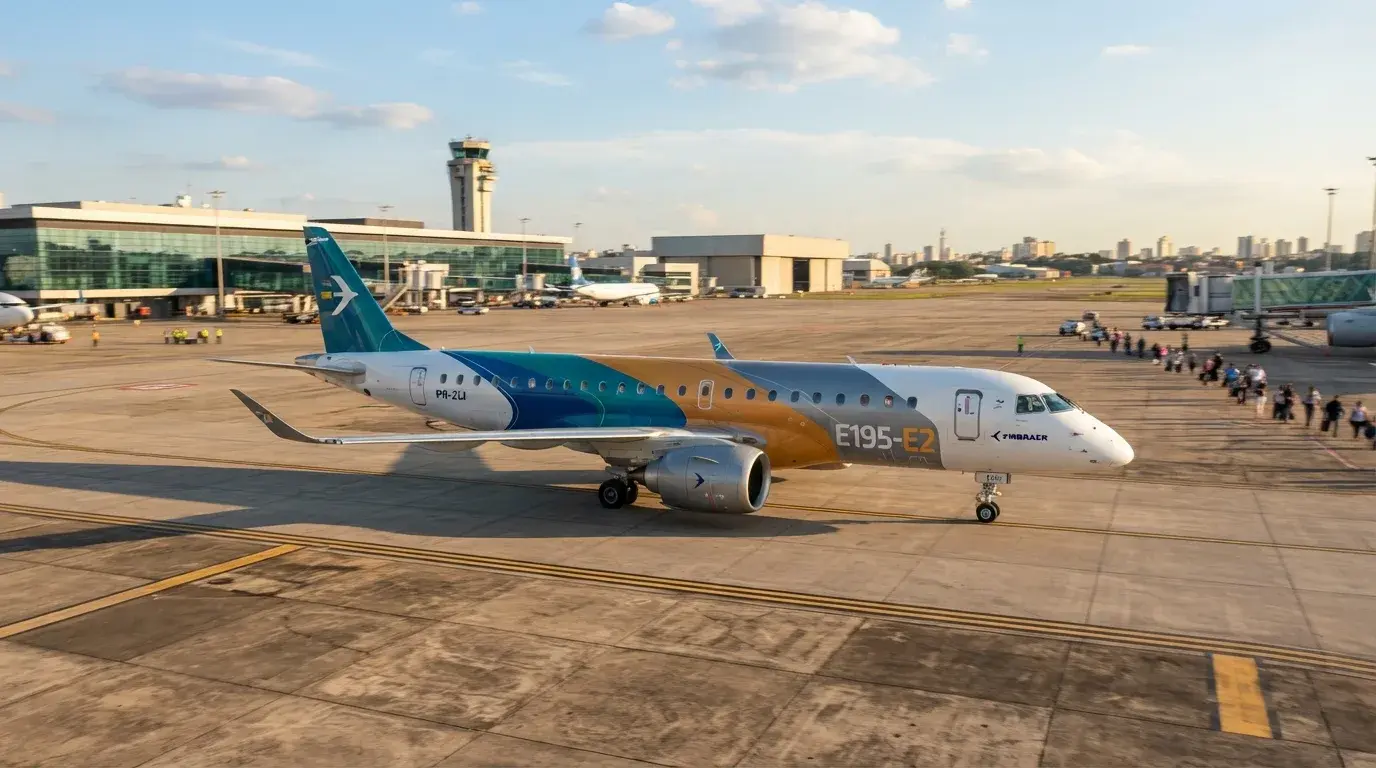
Embraer has just published its Q2 2026 financial results, marking a turning point in the recent history of regional aviation and business jets. The Brazilian manufacturer reported consolidated revenue of $2.235 billion for the quarter, up 23% year-over-year. But it is the adjusted operating margin that stands out: it reached 13.3%, far exceeding initial forecasts. This exceptional financial performance—the best ever recorded for a second quarter—is driven by soaring demand for the E2 family aircraft, whose sales are exploding.
This momentum is no coincidence. Embraer has capitalized on a precise niche: aircraft with 100 to 150 seats, where Airbus and Boeing focus on larger models. With a backlog now exceeding $34.5 billion, the Brazilian airframer enjoys unprecedented industrial visibility. The E2s, in particular, are the driving force behind this growth. In the first six months of the year, Embraer delivered 30 commercial aircraft, half of which belonged to the E2 range. End-of-year forecasts indicate an acceleration in production rates, with a target of 80 to 85 deliveries in 2026.
For frequent travelers, this evolution has tangible repercussions. Airlines are increasingly operating Embraer E190-E2 and E195-E2 aircraft, which offer an optimal balance between capacity and fuel consumption. The result: increased frequencies on regional routes, better coverage of secondary destinations, and potentially more competitive fares on routes where competition between operators intensifies.
But behind these impressive figures lie challenges. The operating margin for the Commercial Aviation division rose by only 2.9%, a level still below that of executive aviation. Historical contracts and maintenance cost pressures partly explain this gap. Embraer is therefore focusing on a gradual improvement in the profitability of these contracts while accelerating production to meet demand. With six E195-E2s delivered in the second quarter, the E2 is solidifying its position as the cornerstone of this strategy.
The E2s: Redefining the Aviation Landscape in 2026
Embraer’s E2 family, comprising the E190-E2 and E195-E2, has become a phenomenon in the sector. These aircraft, designed to offer 15-25% lower fuel consumption than their predecessors, appeal to airlines seeking efficiency. Their range and ability to operate from secondary airports make them ideal tools for developing point-to-point connections, where Airbus and Boeing single-aisles cannot always compete.
Their commercial success is such that the E2 family has surpassed the 500 firm orders milestone—a symbolic threshold for an airframer aiming to challenge industry giants. Among major customers are carriers like Embraer itself, as well as lessors such as Azorra, which recently placed an order for 15 E195-E2s. This momentum is reinforced by slot shortages at major airports, pushing airlines to favor smaller, more flexible aircraft to serve less frequented destinations.
For passengers, this translates into a more diverse flight offering. The E2s enable airlines to launch new routes or strengthen existing ones without needing to fill large-capacity aircraft. For example, destinations like Nagoya in Japan, Cebu in the Philippines, or Ho Chi Minh City in Vietnam are seeing their air connections expand thanks to these aircraft—a boon for travelers looking to avoid congested hubs and save time on their journeys.
Another advantage of the E2s is their ability to operate from shorter runways, opening the door to services to secondary cities. This can be particularly appealing for business travelers or tourists heading to less accessible regions. The technical reliability of these aircraft, combined with their reduced operating costs, makes them a preferred choice for airlines in restructuring or expansion phases.
Higher Margins, But Persistent Challenges for Embraer
While Embraer’s financial results are impressive, they should not overshadow the challenges that remain. The operating margin for Commercial Aviation, though improving, still lags behind that of executive aviation. This is partly due to the mix of customers: Embraer serves both legacy carriers bound by old contracts and new clients benefiting from more favorable rates. The Brazilian company is banking on a gradual improvement in these margins, particularly by optimizing production and reducing maintenance costs.
Another point of concern involves the Pratt & Whitney GTF engines that power the E2s. Embraer faced aircraft grounding issues linked to these engines, with an E2 fleet grounded rate peaking at 22% in March 2025. Today, that rate has dropped to 1%, and the goal is to eliminate it entirely by year-end. Resolving these technical issues is crucial to maintaining customer confidence and avoiding contractual penalties.
Finally, Embraer’s adjusted available cash reached $401 million in Q2, a level that allows the company to fund investments without excessive borrowing. With an unused $1 billion revolving credit line, Embraer has comfortable headroom to continue its growth. The company has also raised its adjusted EBIT margin forecast for 2026 from 8.7%-9.3% to 10%-10.6%, and doubled its free cash flow target to at least $400 million.
These figures show that Embraer has turned a difficult 2025 into a sustainable growth dynamic. The Brazilian manufacturer is now betting on the E2 to capture market share in a segment long dominated by Airbus and Boeing. With orders piling up and production accelerating, Embraer could well become a major player in regional air transport within a few years.
How to Benefit from E2s on Your Next Trip
If you’re planning a trip to Asia, Europe, or Latin America, there’s a strong chance your flight will be operated by an Embraer E2. Here’s how to leverage this trend and optimize your travels.
First, keep an eye on new route announcements. Airlines like Cebu Pacific or airBaltic are increasingly relying on E2s to serve secondary destinations. For example, Cebu Pacific recently launched routes between Cebu and Shanghai or Manila and Xiamen—connections made possible by the flexibility of these aircraft. These flights often offer competitive fares and a more intimate experience than wide-body jets.
Next, prioritize airlines modernizing their fleets with E2s. Carriers like airBaltic—which operates an all-Airbus A220-300 fleet (an aircraft very similar to the E2 in capacity)—or flynas in the Middle East offer high-quality travel experiences with spacious cabins and attentive service. These aircraft are also renowned for their low noise levels, enhancing onboard comfort.
Finally, if you travel frequently for business, check the loyalty programs of airlines operating E2s. Some, like KLM or Air France, offer specific benefits for frequent flyers, including mileage accrual on economy-class flights. These programs can help you accumulate miles or points on routes that were previously ineligible.
In summary, the Embraer E2s are more than just a commercial success for Embraer—they represent a true revolution in regional air transport. Their ability to serve secondary destinations, operational efficiency, and passenger comfort make them a top choice for airlines and travelers alike. If you haven’t yet flown on an E2, chances are you will soon.
Embraer and Its E2s: A Winning Bet for the Future of Air Transport
With an order book that continues to swell and financial results smashing records, Embraer is on track to become a major player in global air transport. The Brazilian manufacturer has identified a lucrative niche: 100- to 150-seat aircraft, where Airbus and Boeing struggle to innovate. Thanks to the E2 family, Embraer is attracting airlines seeking flexibility and efficiency while offering passengers an optimized travel experience.
Technical and financial challenges remain, but Embraer appears to have found the right formula to overcome them. With solid cash reserves, increased industrial visibility, and unflagging demand, the Brazilian company is well-positioned to write a new chapter in aviation history. For travelers, this means more destinations, more competitive fares, and more modern aircraft to fly on.
So, if you’re planning a trip in the coming months, check whether your route is served by an Embraer E2. You might just discover a new way to travel—one that’s more flexible and more enjoyable.
Be the first to comment on this article