Lufthansa to increase stake in ITA Airways to 90% and strengthen Rome hub
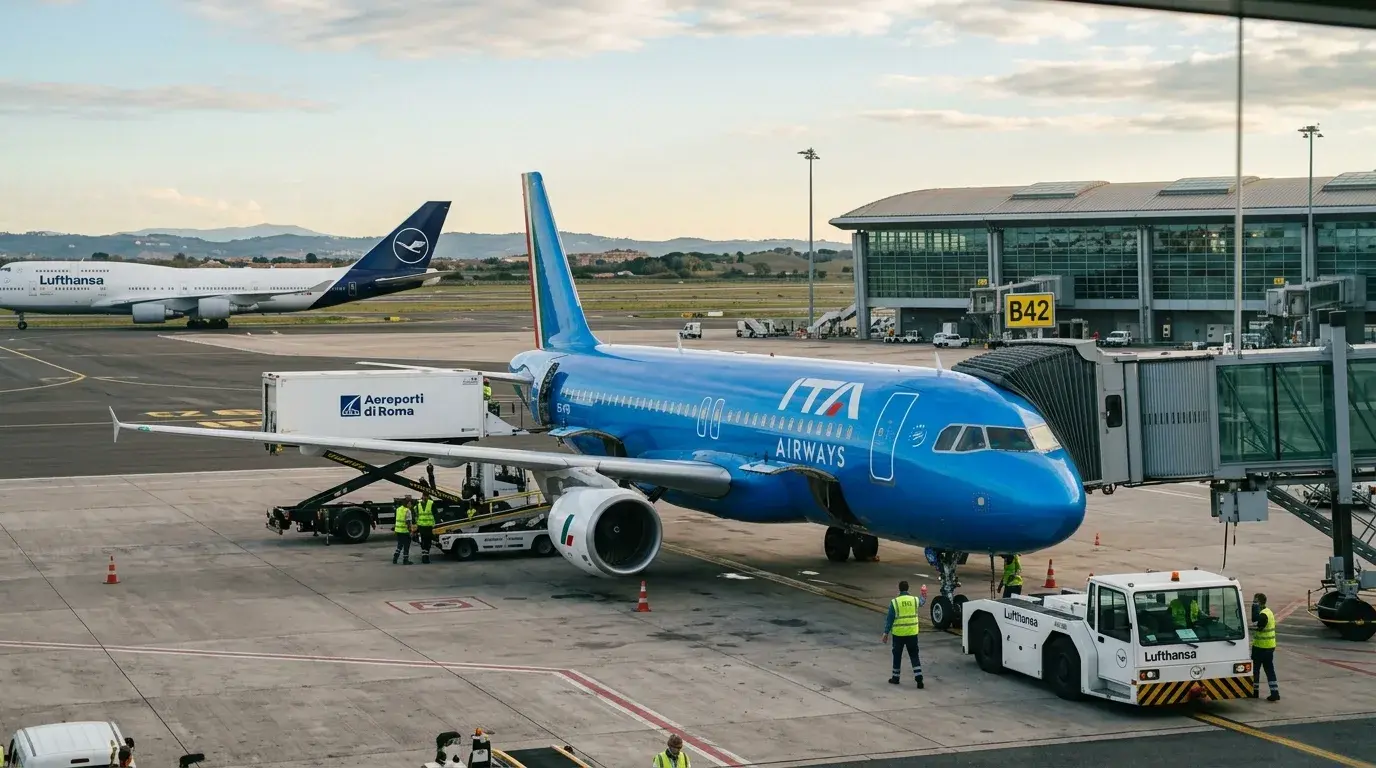
Lufthansa is accelerating its takeover of ITA Airways. The German group has announced it will increase its stake from 41% to 90% by exercising an additional 49% option starting in June, for a total of €325 million. The deal marks a new step in the consolidation of European air transport and confirms the strategic role of Rome-Fiumicino as the group’s key hub in Southern Europe.
Beyond the purely financial transaction, this deal reflects a broader strategy: faster integration of partner airlines, harmonization of systems, and better capture of long-haul traffic through a more cohesive network. For Lufthansa, ITA Airways is no longer an opportunistic investment but a core asset, directly impacting distribution, cargo operations, and the group’s market position in Italy.
The transaction remains subject to regulatory approvals, particularly from the European Commission and the U.S. Department of Justice. Lufthansa’s announced timeline aims for completion by the first quarter of 2027, leaving several more months of legal and operational work before the full integration of the Italian carrier into the group’s operations.
Stronger control over ITA Airways
In its May 12 press release, Lufthansa confirmed its intention to exercise the option agreed upon with Italy’s Ministry of Economy and Finance. The structure is clear: 41% has already been acquired, 49% is to be purchased now, and the remaining 10% could be acquired as early as 2028, paving the way for full control.
The €325 million price for the new stake was agreed upon in advance as part of the initial deal. According to market sources, additional payments tied to ITA’s performance are not ruled out, though the German group has not officially detailed this point.
Since January 17, 2025, ITA Airways has already been integrated as the fifth network carrier in the Lufthansa Group, alongside Lufthansa, SWISS, Austrian Airlines, and Brussels Airlines. This rapid integration has been described by Carsten Spohr as one of the most efficient in the group’s history, with accelerated harmonization of commercial systems and loyalty programs.
Rome-Fiumicino at the heart of the strategy
The ITA deal is not just about capital. It is part of a network logic, with Rome-Fiumicino positioned as the anchor for Southern Europe. Lufthansa aims to establish the Italian platform as a key hub for Africa, the Middle East, and select Latin American destinations, complementing the group’s historic hubs in Frankfurt, Munich, Zurich, and Vienna.
This strategy responds to a concrete need. Italy remains one of Europe’s densest markets for business travel, tourism, and connecting traffic. With ITA Airways, Lufthansa gains a national base, traffic rights, and feed capacity to support its long-haul operations and strengthen its competitiveness against IAG and Air France-KLM.
Cargo also plays an increasing role in the equation. Lufthansa Cargo is progressively commercializing the belly-hold capacity of ITA Airways flights, representing, according to the group, a volume equivalent to that of three additional Boeing 777 freighters. This capacity pooling allows for better utilization of passenger flights while consolidating cargo services from Rome.
European remedies remain a critical step
Lufthansa’s increased stake in ITA Airways is not a mere formality. During the first phase of the deal, the European Commission granted conditional approval, subject to remedies on certain routes and slots at Milan-Linate. The mechanism aims to prevent excessive concentration on routes deemed sensitive, particularly where competition could be quickly reduced.
The coming months will be marked by technical discussions with authorities in Europe and the U.S. The German group expects closure by the first quarter of 2027, but validation will depend on Lufthansa’s ability to demonstrate that the integration of ITA Airways does not unduly restrict market access for competitors.
In the industry, such deals are closely watched, as they confirm a major trend: large network groups are consolidating their positions through stake acquisitions, commercial integration, and shared functions. The ITA Airways case is particularly sensitive as it impacts both passenger and cargo transport, as well as competitive balance in the Italian market.
Commercial integration already well underway
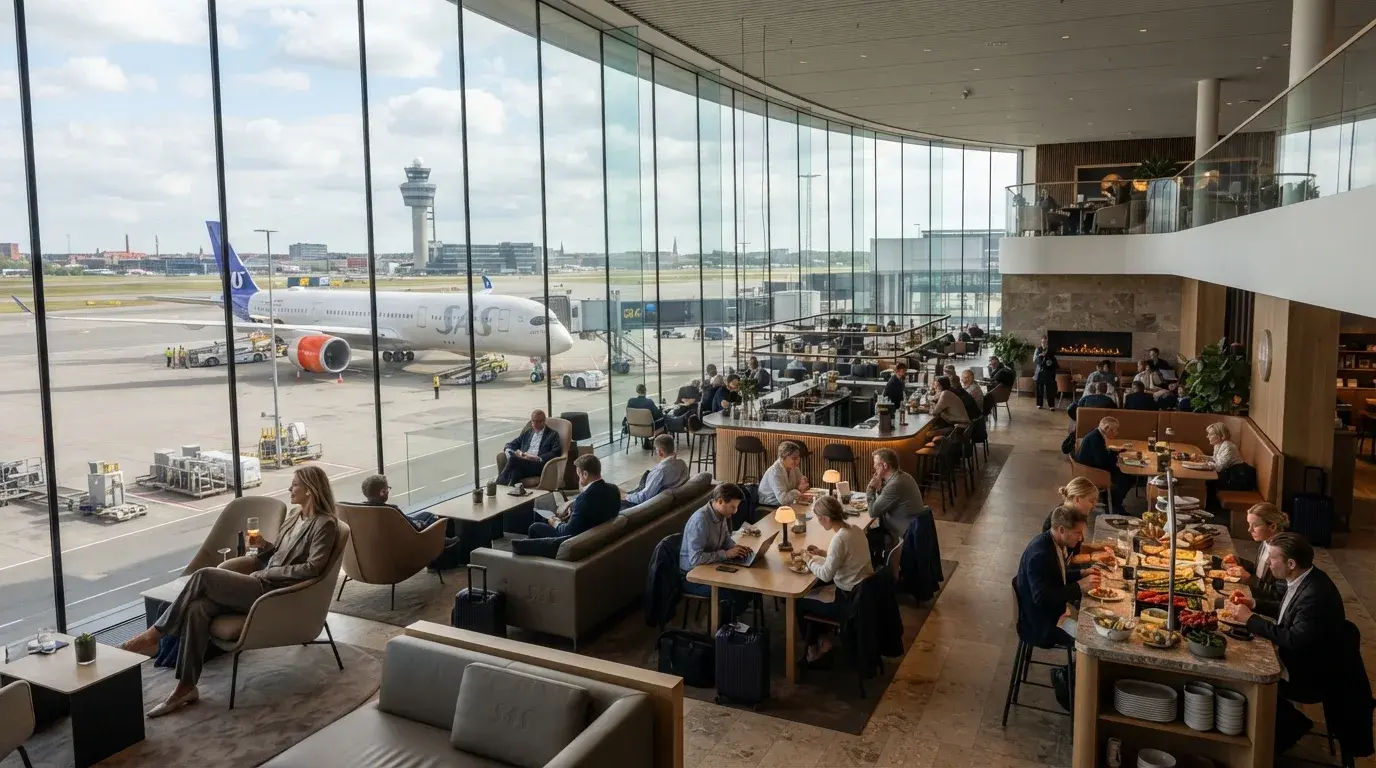
Operationally, the integration between Lufthansa and ITA Airways is already visible to passengers. Booking, sales, and pricing systems have been aligned, and the Italian carrier has joined the Miles & More loyalty program. Customers can also access the group’s premium lounge network, further aligning ITA with the traditional network model developed by Lufthansa.
For the German group, this standardization is essential. It facilitates connections, strengthens commercial visibility, and helps capture more traffic from Mediterranean markets to long-haul destinations. It also gives ITA Airways a more solid critical mass to compete against highly active Italian and European low-cost carriers and point-to-point operators.
Carsten Spohr has emphasized the speed of the process. At the group’s annual general meeting, he noted that Lufthansa had promised the fastest integration in its history following the initial capital entry. According to him, major milestones have been achieved faster than expected, with the exception of transatlantic flights, which still require specific approvals.
Italy remains a strategic market for Lufthansa
For Lufthansa, Italy is not just a development opportunity but a structuring market. The country combines strong domestic traffic, significant tourist flows, and sustained international demand. By adding ITA Airways to its network, the group gains a tool to strengthen its presence on routes to North America, Africa, and South America, while establishing a stronger foothold in Rome.
This strategy aligns with the consolidation of European air transport. Major groups are seeking to avoid the dispersion of brands and networks while leveraging national or regional carriers that retain their commercial identity. Lufthansa does not intend to erase ITA Airways but to use it as a growth lever and network densification tool.
The German group is thus demonstrating its ambition to go beyond a simple stake increase. The goal is to permanently anchor the Italian carrier within a larger structure, with synergies in fleet management, sales, connections, and cargo. Rome becomes a key support point for an already dense but still evolving European network.
All that remains is to clear the regulatory hurdles and secure the final points of the transaction. In an industry where the lines between national carriers and pan-European groups are increasingly blurred, Lufthansa is methodically advancing the ITA Airways deal, maintaining control over the timeline and final capital structure.
Be the first to comment on this article
On the same topic
- Air France-KLM vs Lufthansa: The Battle to Rescue TAP Air Portugal
- Lufthansa Challenges Boeing with Shark Skin on A330: A Green Revolution Reshaping Air Travel
- easyJet soon in Apollo’s hands? What the fund battle means for your European flights
- Lufthansa Bets on Airbus A350-1000 Over Boeing 777X: What This Means for Your Long-Haul Flights
- Lufthansa Revives All Airbus A380s: Why the German Giant Bets on the Superjumbo for Munich Hub
- Lufthansa faces lawsuit after severe fall at Frankfurt Airport: escalator accident reignites mobile stairs safety debate