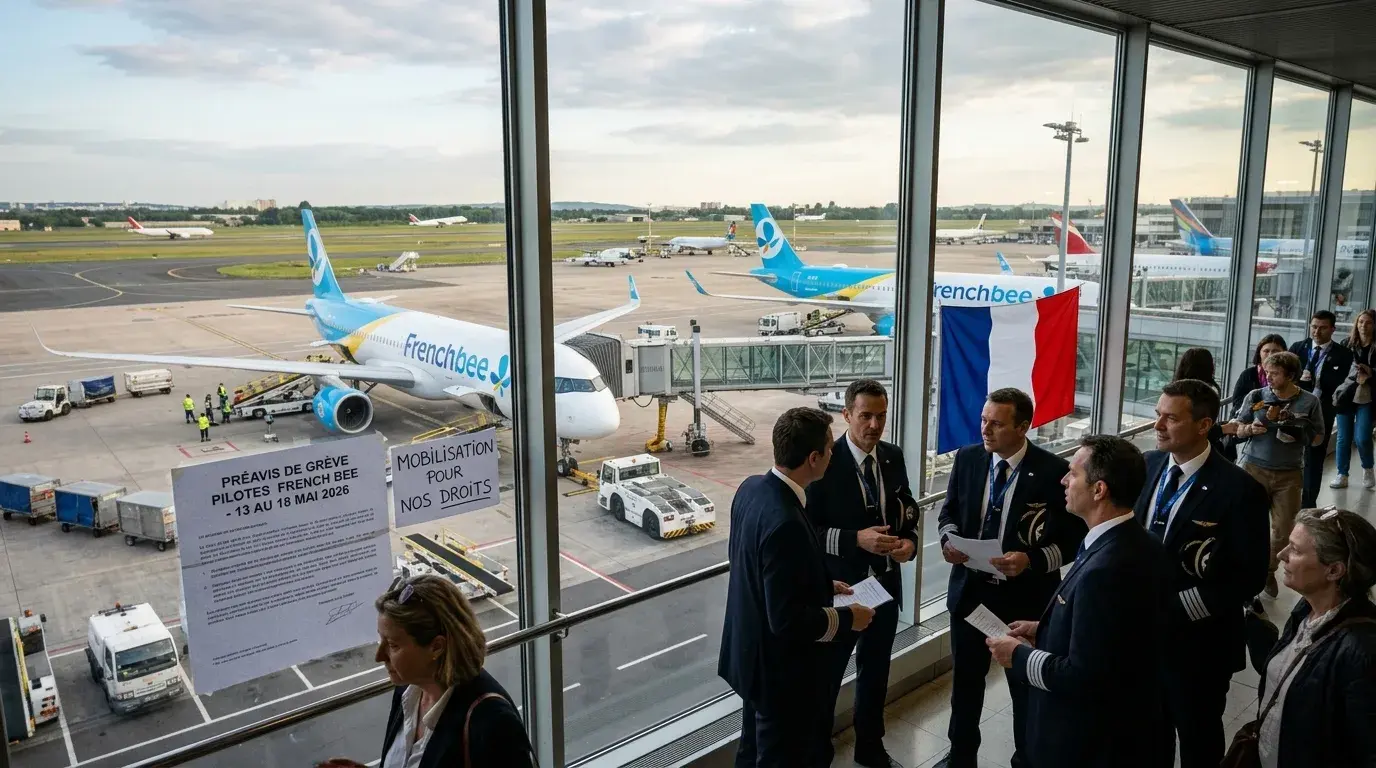
Social unrest is spreading at French Bee. Following the cabin crew, the long-haul airline’s pilots have also filed a renewable strike notice for the period from Wednesday, May 13 to Monday, May 18, 2026. The decision, called by the SNPL, comes amid tense wage negotiations and demands spanning compensation, workload, and seniority recognition.
The French Bee branch of the National Union of Airline Pilots (SNPL) stated it acted after consulting crews, who overwhelmingly rejected the company’s proposal. The union describes a climate of industrial conflict fueled by the lack of salary increases following the 2026 annual wage negotiations (NAO), in an environment where past inflation continues to erode purchasing power.
French Bee, a long-haul low-cost subsidiary of the Dubreuil Group, serves destinations including La Réunion, French Polynesia, and several overseas territories. If the notice is followed through, the impact could be felt on the flight schedule, though the airline has not yet detailed a public contingency plan.
Notice Filed After Rejection of Management’s Proposal
In a May 12, 2026 statement, SNPL France ALPA announced the launch of its first renewable strike period from May 13 to 18 after pilots rejected the company’s offer. The union describes a “deep malaise” and argues that management missed an opportunity to sustainably increase compensation.
The core of the dispute centers on compensation. According to the union, French Bee pilots have not seen a significant structural salary increase since the airline’s inception. The minimum wage has reportedly been frozen for two years, despite years of rising prices. Crews argue that the gap between the cost of living and salary growth has widened.
Internal progression is also a point of contention. At French Bee, advancement is tied to flight hours rather than seniority, as is more common in other French airlines. This system makes income more sensitive to activity fluctuations—when the network changes, available hours drop, but operational workload does not always decrease proportionally.
Revenue Vulnerability Due to Network Changes
The SNPL highlights another issue: reduced flight hours have directly lowered revenue for some pilots without easing workload. In a long-haul network where rotations are demanding, the issue extends beyond paychecks to career visibility, schedule stability, and the balance between flight and rest time.
The current proposal, pilots claim, amounts to a real wage increase of near 0% for much of the technical staff. The union calls this unacceptable given the erosion of purchasing power and the lack of structural raises for several years. In an industry where everyday living costs have surged, appeals to competitiveness no longer ease tensions.
This strike is part of a broader trend. A month earlier, cabin crew had already filed a strike notice, later lifted after progress in the NAO process. Pilots now demand comparable treatment. For them, the resolution of the cabin crew dispute sets a benchmark that cannot be ignored.
After Cabin Crew, a New Social Front at French Bee
The cabin crew dispute looms large in the debate. According to industry press reports, their mobilization led to salary concessions and improved working conditions. Pilots argue their situation warrants equal attention, especially given the operational demands of long-haul flying and the specific constraints of commanding a wide-body aircraft.
The conflict did not emerge overnight. As early as December 2022, flight attendants protested low salary grids, variable pay components, and human resources management at the airline. More recently, staff representatives warned of an unsustainable pace, with grueling rotations and excessive demands leading to labor inspections.
Against this backdrop, the pilots’ strike notice marks another chapter in a labor dispute that cannot be resolved with vague declarations. At this stage, demands focus on specific points: salary increases, recognition of work performed outside flight hours, and a true accounting of the responsibilities required for long-haul operations.
Pilots Demand Immediate Pay Raises
The SNPL emphasizes that French Bee pilots have already made significant concessions to support the airline’s growth, particularly during periods of understaffing and high activity. The union now insists that this commitment be recognized with raises commensurate with the job’s demands.
The demands are straightforward. Pilots are calling for an immediate and significant salary increase to offset years of inflation. They also seek clearer alignment between pay and the high standards of long-haul operations, as well as better recognition of tasks performed outside strict flight time.
In aviation, this issue frequently arises during NAO discussions. Budget increases typically hover around 2% to 3%, according to sector observers. But when base salaries have stagnated for years, even modest hikes can feel inadequate.
French Bee Under Pressure on Strategic Routes
For French Bee, the pressure is particularly acute as the airline operates critical routes to overseas territories. Any industrial action in air transport can quickly disrupt passenger travel and logistics on these markets. Flights to La Réunion and French Polynesia hold strategic importance, with passengers expecting reliability and consistency.
The SNPL says it remains open to constructive dialogue with management. The union urges the company to resume talks promptly and propose concrete measures, while also calling on majority shareholder the Dubreuil family to take responsibility and help break the deadlock.
As of now, the airline has not publicly detailed potential operational impacts of the strike notice. In such conflicts, disruptions depend as much on turnout as on the company’s ability to reorganize schedules and anticipate absences.
A Test for the Long-Haul Low-Cost Model
Beyond the French Bee case, this episode underscores the fragility of the long-haul low-cost model when balancing cost control, an expanded network, and the social expectations of a highly skilled workforce. Airlines in this segment must reconcile the needs of specialized personnel, geographically constrained markets, and passengers for whom punctuality and service continuity are paramount.
The pilots’ wage dispute at French Bee transcends the 2026 NAO process. It questions the carrier’s ability to maintain a balance between growth, competitiveness, and social stability. The coming days will reveal whether the strike notice serves as a pressure tactic or escalates into visible disruptions across the airline’s network.
Be the first to comment on this article
On the same topic
- Emirates Weighs Swapping Boeing 787s for 777Xs: A Strategic Shift That Could Transform Long-Haul Travel
- Air Canada Launches A321XLR on Lyon Route: The Long-Haul Revolution Transforming Travel
- Lufthansa Challenges Boeing with Shark Skin on A330: A Green Revolution Reshaping Air Travel
- Emirates Revolutionizes Premium Economy with Electric Seats and Adjustable Partitions on A350
- Etihad Launches Calgary: First Direct Middle East to Western Canada Route, a Travel Revolution
- Alaska Airlines strikes big: Seattle–Paris and Athens direct from May 2027—here’s what it means for travel