Fuel surcharges on already-purchased tickets: What Brussels really prohibits airlines from doing

The debate over post-booking price hikes in European air transport is taking a clearer turn. In Brussels, the European Commission has reiterated that airlines cannot retroactively add a fuel surcharge to tickets already sold. The message directly targets practices that have drawn criticism in recent days, as soaring kerosene prices continue to pressure carriers’ margins.
At the same time, the European executive clarifies that a local fuel shortage may indeed qualify as an extraordinary circumstance in certain cancellation cases, without negating the passenger’s right to a refund. The distinction is crucial, as it separates two often conflated issues: the final ticket price, which must remain fixed once purchased, and the operational management of a supply crisis.
The timing of this clarification comes as several airlines seek to absorb rising jet fuel costs without degrading their flight schedules. The case of Volotea, which implemented a post-booking surcharge mechanism, has served as a catalyst. Brussels, for its part, emphasizes that European consumer law sets clear boundaries.
What the European Commission says about ticket pricing
The Commission’s stance leaves little room for interpretation. For ‘dry’ tickets, the price advertised at the time of purchase must be the final price. Airlines cannot insert a clause after the fact that would allow them to revise this amount due to unexpectedly higher fuel costs. In its communication, Brussels states that such a retroactive increase cannot be justified.
This clarification is grounded in European Regulation No. 1008/2008, which mandates transparency in pricing at the time of booking. In practice, this means passengers must immediately know the total cost of transport, including taxes and fees, without risking an additional bill once the booking is confirmed. On this point, the European legal framework is strict: the economic risk associated with fuel price fluctuations belongs to the airline, not the already-committed customer.
The Commission also specified that no general terms and conditions can authorize a unilateral price hike after purchase. In other words, even if an airline presents this mechanism as temporary or targeted, it does not make it compatible with European law if the ticket has already been paid for.
Volotea at the center of the debate
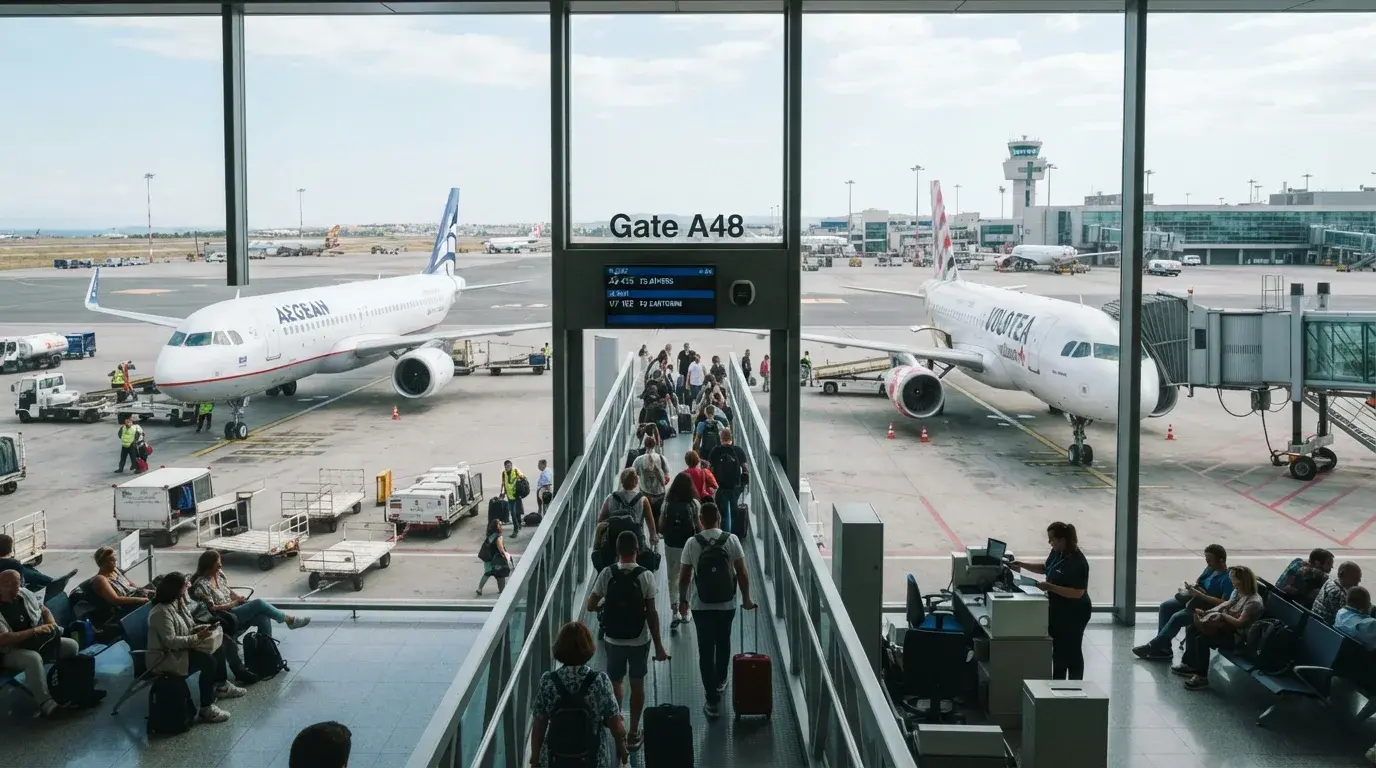
It is Volotea’s practice that has crystallized attention. The Spanish low-cost carrier defended a variable fuel surcharge mechanism applied to certain passengers weeks after booking, depending on oil price movements. The airline argues that this is a temporary adjustment designed to preserve its flight schedule amid a sharp rise in operating costs.
Gilles Gosselin, Volotea’s France director, argued that this increase was time-limited and therefore, in his view, legal. Volotea claims to have consulted several specialized transport and consumer law firms before launching the mechanism. The company says it aims to share the burden with customers rather than reduce its offering or cancel flights.
Brussels does not share this reasoning. For the Commission, the critical moment is not the increase in kerosene prices, but the moment of ticket sale. If the price was confirmed, it is locked in. This interpretation is now echoed by several industry players, including Flightright, which emphasizes that the final price must be definitively set at purchase.
What passengers can challenge
Travelers who receive an email requesting payment of a fuel surcharge after purchasing their ticket therefore have strong grounds to contest the demand. The first step is to ask the carrier for the legal basis of the additional charge. Under European law, this request is unlikely to succeed if the ticket in question is a confirmed dry flight purchased before the price increase.
If the airline refuses, passengers can turn to national consumer protection authorities or the competent services in the relevant country. In France, the DGAC may also be contacted depending on the situation. The stakes are not merely theoretical: they concern the clarity of displayed prices and public trust in the booking system.
The Commission draws a clear distinction between dry transport and package travel. For dry tickets, the price is immutable after purchase. For package tours, some adjustment margin exists but is strictly regulated. Brussels notes that a fuel-related price increase may reach up to 8%, provided it is notified at least 20 days before departure. Beyond that, travelers can typically cancel without penalty.
The question of extraordinary circumstances
The issue is not limited to ticket pricing. Brussels has also provided clarifications on the handling of cancellations due to fuel shortages. Here, the Commission acknowledges that a local kerosene shortage may qualify as an extraordinary circumstance. This classification allows the airline to avoid the flat-rate compensation required under Regulation 261/2004, provided the conditions are met.
However, this exception does not negate all passenger rights. Even in cases of extraordinary circumstances, full ticket refunds remain due if the flight is canceled. The European logic is twofold: protecting carriers from uncontrollable operational shocks while maintaining the passenger’s minimum financial protection.
The Commission also notes that, at this stage, the overall situation remains stable, and no concrete evidence of a widespread shortage has been presented. European authorities are nonetheless monitoring market developments closely, given that jet fuel prices have surged sharply since late February.
A market under pressure, but unchanged rules
The fuel crisis highlights a well-known reality in the sector: airlines operate on thin margins and are immediately exposed to energy price fluctuations. Some may be tempted to pass this pressure on to customers, particularly on already-purchased tickets. However, European law does not grant them this latitude.
For carriers, the response must therefore involve adjusting future fares, managing capacity, or targeted cuts to flight schedules—not retroactively rewriting contracts already concluded. This is also what France’s Minister of Transport implied when stressing the need to closely examine mechanisms implemented by certain airlines.
In this context, the Volotea case serves as a test. If authorities confirm the Commission’s interpretation, it could become a benchmark for the entire European market. Airlines now know that rising kerosene prices do not grant them a general right to demand additional payments from passengers who have already traveled or booked. The focus will now be on the sector’s ability to absorb the shock without shifting the bill to travelers.
Be the first to comment on this article
On the same topic
- How Delta Air Lines’ refinery strategy is reshaping airline fuel costs and ticket prices
- Spirit Airlines halts operations: What the U.S. low-cost carrier’s bankruptcy means for travelers
- Turkish Airlines Suspends 18 Destinations Amid Soaring Jet Fuel Prices
- Jet fuel: Why Europe now depends on the US to keep its planes flying
- Rising Fuel Costs: Delta Air Lines Posts Loss, Cuts Capacity, and Raises Fares