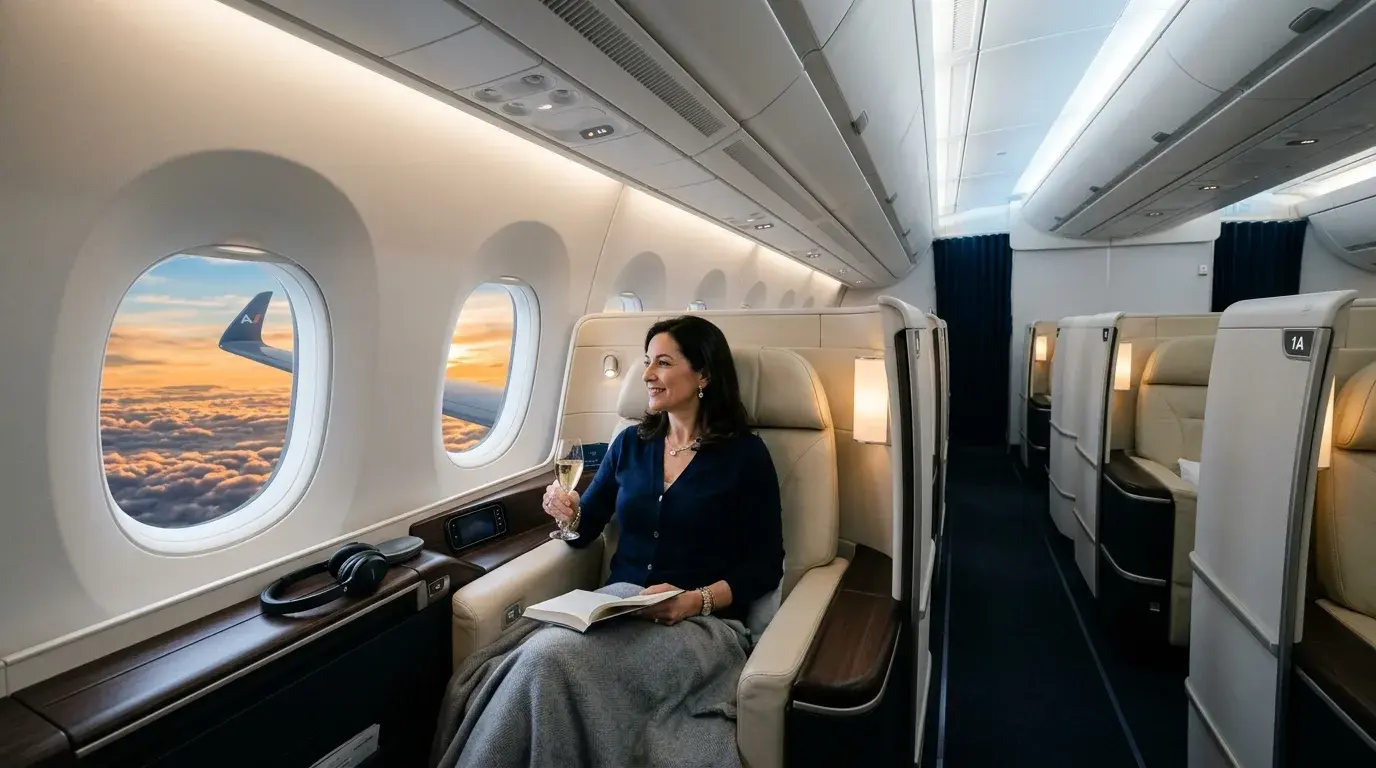
After years of decline, First Class is making a comeback at the heart of the strategies of several airlines. Delta Air Lines, British Airways, Air France, Lufthansa, Emirates, Cathay Pacific, and Qatar Airways are reinvesting in ultra-premium cabins, with a clear goal: to meet real demand on certain routes while also strengthening their image in the most profitable markets.
The movement is not limited to international flights departing from major hubs. It also extends to the U.S. domestic market, Europe-Asia routes, and long-haul services where competition now hinges as much on comfort as on service. In this segment, airlines are seeking to stand out with enclosed suites, enhanced privacy, and products that, in their commercial logic, resemble a private jet experience.
For industry specialists, this upscaling does not signal a massive return of First Class for all travelers. Instead, it reflects a sharper market segmentation, with ultra-high-end cabins reserved for a targeted clientele, while Business Class remains the true revenue driver in the premium segment. In business travel, First Class remains marginal but retains a strong symbolic role.
Delta leads the charge with an atypical configuration on the A321neo
Delta Air Lines is preparing to operate up to seven Airbus A321neo aircraft with a temporary configuration of 44 First Class seats, an unusually high number for a single-aisle aircraft. This solution is set to enter service from May 2026 on several transcontinental routes departing from Atlanta to Los Angeles, San Francisco, San Diego, and Seattle.
The layout temporarily replaces a delayed flat-bed suite project due to certification issues. In the meantime, Delta is banking on a highly densified First Class cabin, complemented by 54 Delta Comfort+ seats and 66 Economy Class seats. The airline is responding to sustained demand in the premium segments of the U.S. domestic market, where flight duration and service levels still justify differentiated products.
This choice illustrates a broader trend: airlines are no longer hesitant to adapt their fleets to capture a clientele willing to pay more, even on medium-haul flights. First Class is no longer just a showcase. On certain routes, it is becoming a yield management tool once again.
British Airways reintroduces First Class on targeted routes
In Europe, British Airways has chosen to reintroduce its First Class on the London Heathrow-Mumbai route starting October 2025, on one of the three daily Boeing 787-9 rotations. The decision marks the end of nearly five years without this cabin on the route.
The British carrier has also unveiled a new generation of First Class seats, designed to modernize the offering without breaking away from the brand’s traditional positioning. The seat boasts a width of 36.5 inches, a 79-inch bed, and enhanced privacy. These features will be gradually integrated as part of the retrofit of Airbus A380s, which are expected to welcome the first equipped flights this year.
British Airways is not merely aiming to sell a more comfortable seat at a higher price. The airline is also reasserting a brand identity that allows it to distinguish itself in a highly competitive long-haul market, particularly against Gulf carriers and major Asian airlines.
Air France and Lufthansa bet on enclosed suites
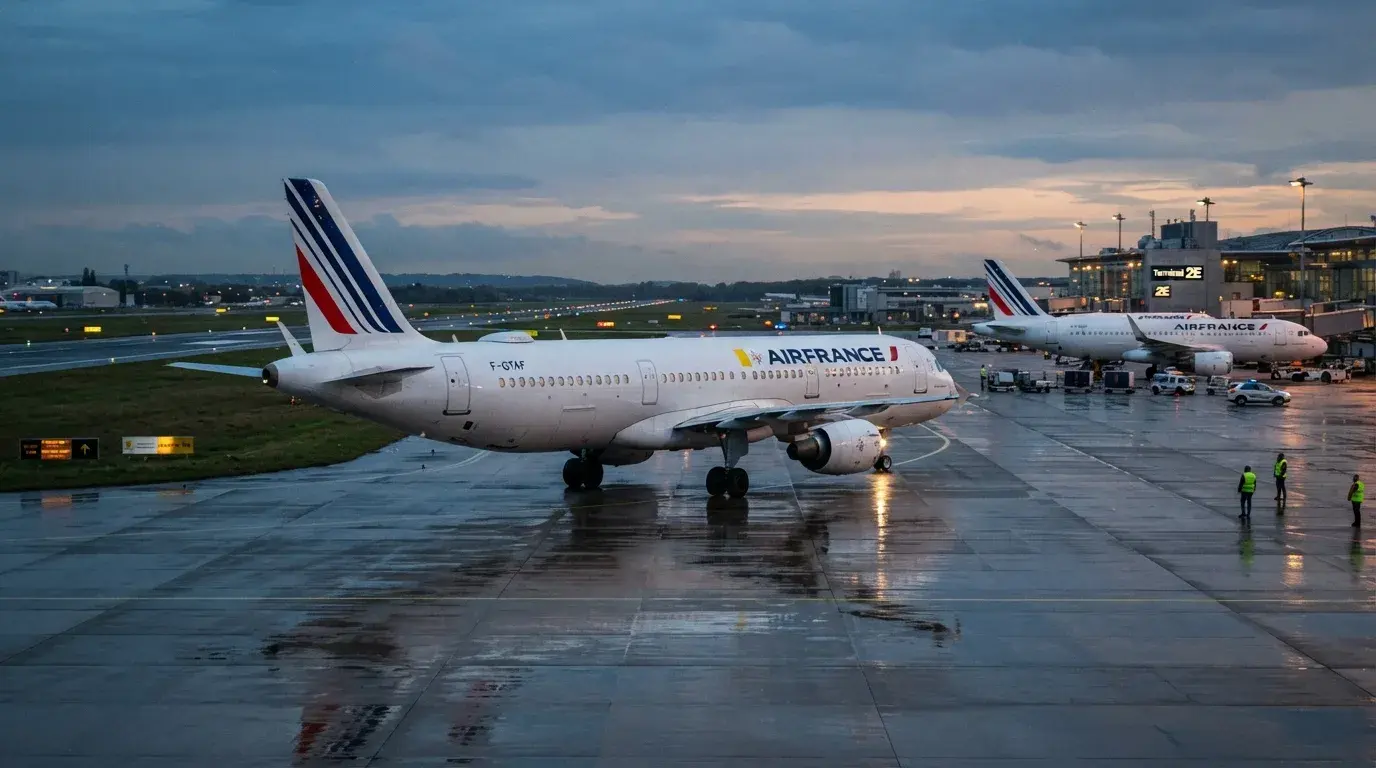
Air France launched its new La Première cabin on the Boeing 777-300ER in April 2025. Limited to four suites per aircraft, each offers nearly 3.5 m² of space per passenger, with five windows per suite, a chair, a lounge chair convertible into a two-meter bed, and floor-to-ceiling curtains to isolate the space.
The French carrier presents this product as its most refined offering in terms of service and privacy. Deployment is progressing route by route, with several North American routes already served and a ramp-up planned through the end of 2026. The positioning is clear: less volume, higher margins, and an experience tailored to a very select but solvent clientele.
Lufthansa is following a similar logic with its Allegris program. The new First Class, deployed on Airbus A350s since 2025, features enclosed suites with sliding doors. The German airline also offers a central Suite Plus convertible into a double bed for two passengers traveling together. The goal is to enhance acoustic and visual isolation while providing a more individualized service on major long-haul routes.
Its subsidiary SWISS is advancing in the same direction with SWISS Senses. The suites feature lockable doors, dedicated storage, a widened table, heated or cooled seats, and a screen spanning the entire width of the suite. The message is consistent: First Class is becoming a low-density, high-perceived-value product.
Emirates pushes the boundaries of onboard privacy
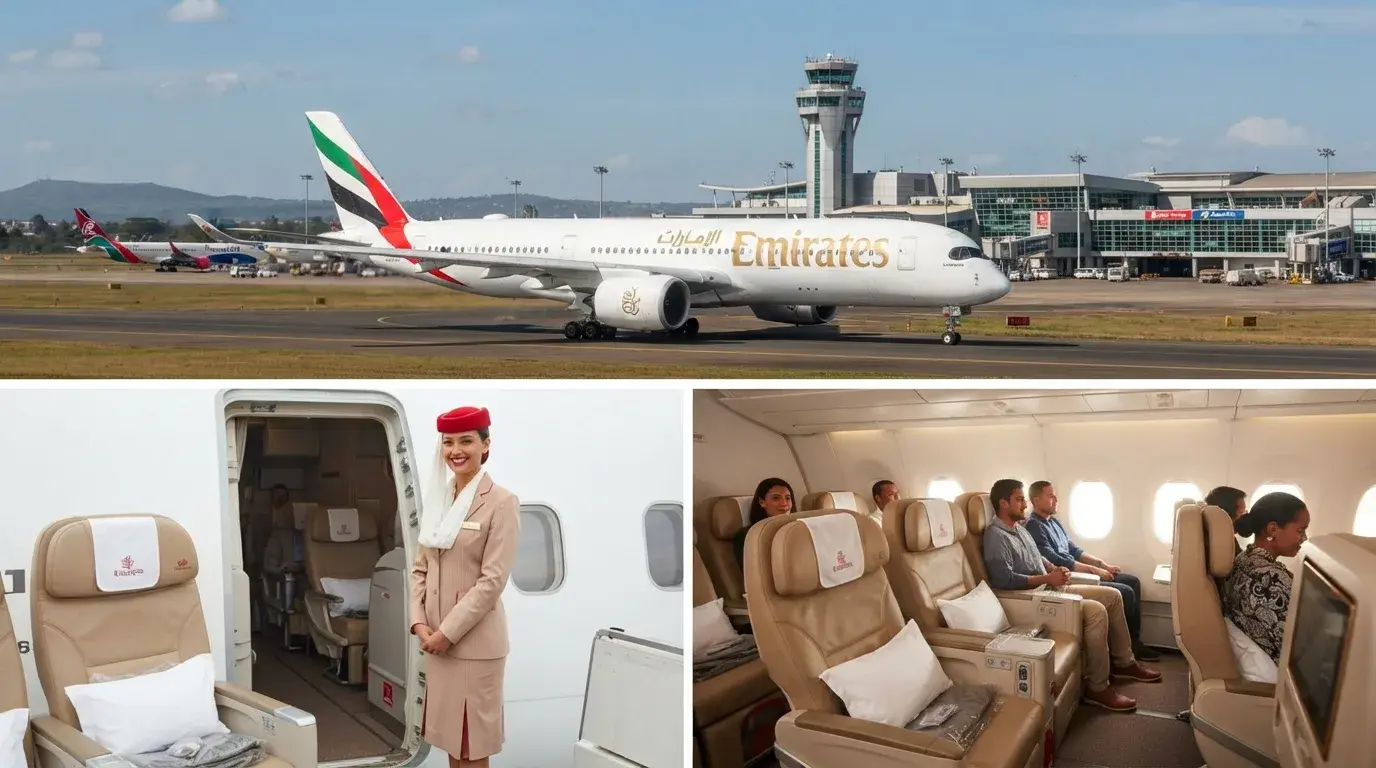
Emirates has never abandoned First Class, but the Dubai-based carrier continues to push its commercial limits. CEO Tim Clark recently mentioned a project for private bathrooms directly integrated into First Class suites. If this innovation materializes, it would be a first in commercial aviation.
The airline is seeking to maintain its lead in the ultra-premium segment while capitalizing on a clientele accustomed to a very high level of service. This strategy relies on a simple logic: in a market where differentiation often comes down to a few comfort features, private space becomes a major commercial argument.
The challenge is not just technological. It is also strategic, as Emirates aims to retain its position as a benchmark against competitors who are also modernizing their cabins. The battle is less about the number of seats and more about the degree of privacy offered onboard.
Qatar Airways and Cathay Pacific revive the segment on new widebodies
Cathay Pacific is preparing to reintroduce a true First Class on its future Boeing 777-9 aircraft, expected from 2027. The Hong Kong-based airline describes the product as discreet luxury, with few details revealed but a clear promise: to re-enter the premium market with an offering that competes with the best in the industry.
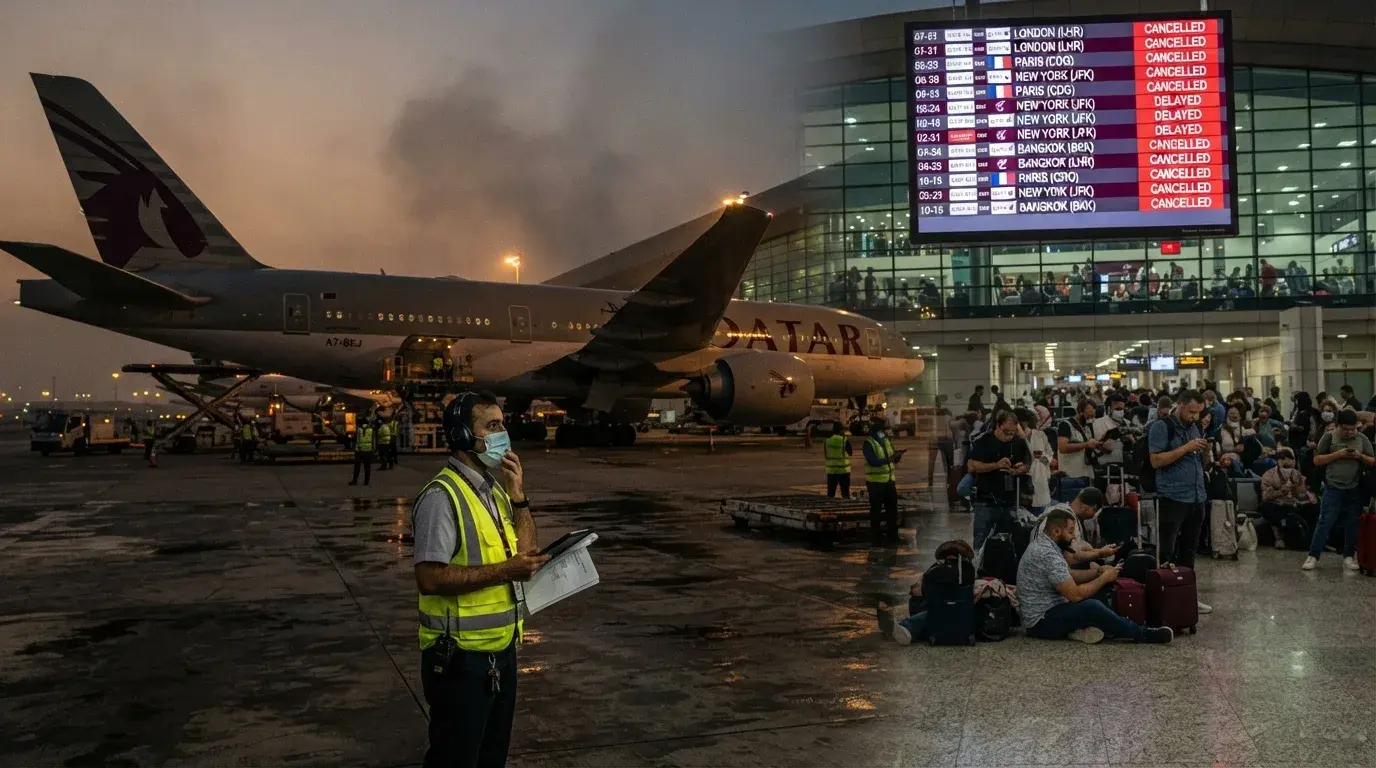
Qatar Airways, for its part, has changed course after considering eliminating First Class on its widebodies. The Doha-based carrier is now developing a new First Class cabin on the Boeing 777-9, inspired by both its private jet experience and high-end market expectations. The product is expected to launch in 2027 on high-demand routes to Europe, the United States, and Asia.
This revival is significant because Qatar Airways had built its reputation primarily on the excellence of its Business Class. The decision to reinvest in First Class shows that the segment remains relevant on certain routes and for specific clientele. The product will complement the new generation of Qsuites, already well advanced, without replacing it.
A niche product, but still valuable for airlines
In business travel, First Class accounts for only a small fraction of tickets. Philippe Taïeb, CEO of the Jancarthier agency, notes that the vast majority of business trips are made in lower classes, primarily Business and Premium Economy. First Class remains reserved for executives of major corporations, a few high-value clients, and certain media or artistic profiles.
For airlines, however, it retains real value. It serves as a showcase, strengthens the perception of quality, and helps support the pricing of other premium cabins. In a highly competitive market, a well-designed First Class product can also bolster loyalty programs and attract clientele that does not always travel in this cabin but values the option to do so.
This dynamic raises a fundamental question about the image of air transport at a time when airlines are increasingly scrutinized for their environmental trajectories. The more onboard luxury develops, the more the contrast with sustainability issues becomes apparent. This also explains the caution of some carriers, who prefer to focus on enclosed, rational cabins rather than ostentatious displays.
The return of First Class is not a uniform wave. It is a targeted adjustment, route by route and aircraft by aircraft, with airlines testing their markets and reserving investment for routes capable of making it profitable. In this game, the combination of privacy, service, and brand positioning remains key.
Be the first to comment on this article
On the same topic
- Athens emerges as the new US gateway to Greece: Why this hub is winning over travelers
- Tel Aviv: Direct North American Flights Return in 2026 – What It Means for Travel
- Delta-Aeromexico Alliance Saved at the Last Minute: How This Legal Victory Changes Your US Flights
- How Delta Air Lines’ refinery strategy is reshaping airline fuel costs and ticket prices
- Rising Fuel Costs: Delta Air Lines Posts Loss, Cuts Capacity, and Raises Fares