Wizz Air Receives its 200th A320neo Aircraft and Accelerates Toward an All-Neo Fleet
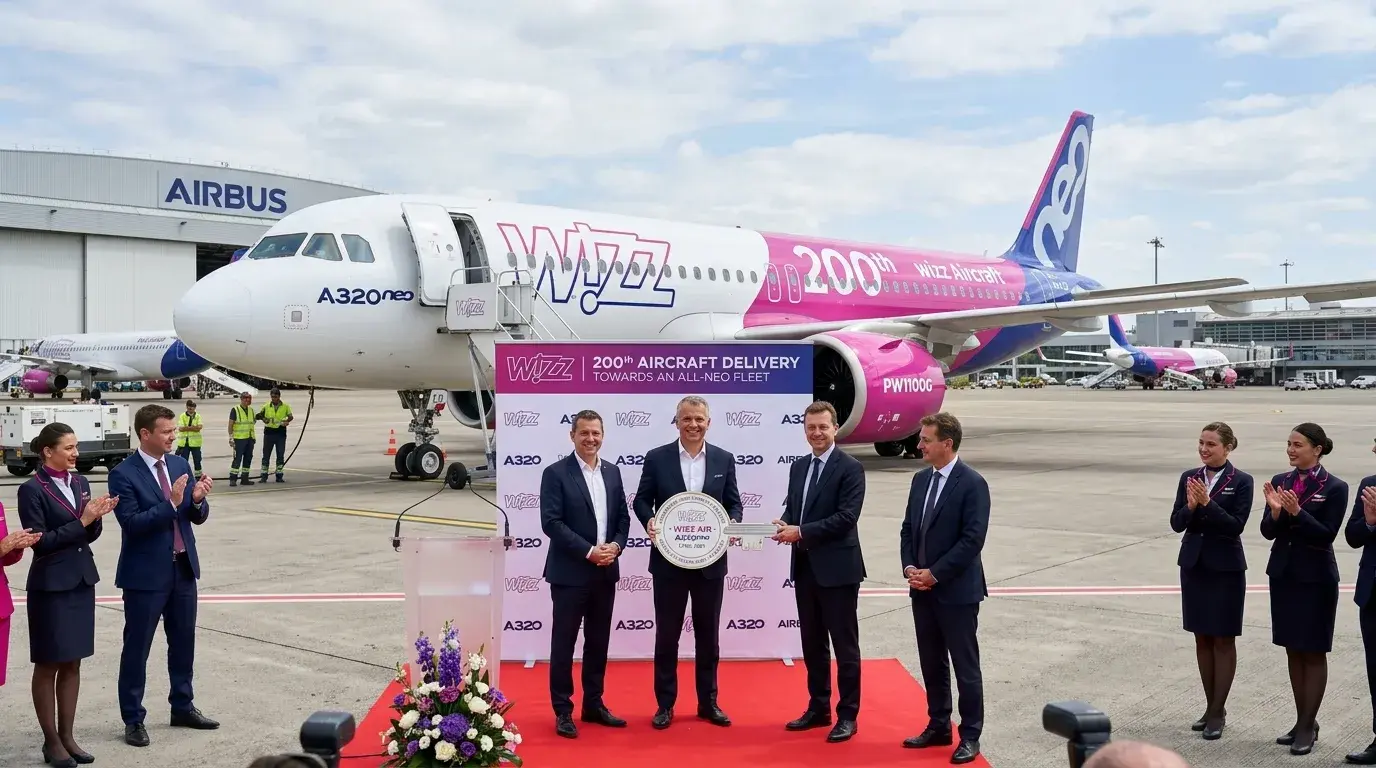
Wizz Air has reached a significant milestone in its fleet transformation, receiving its 200th aircraft from the Airbus A320neo family, including the delivery of its eighth A321XLR. While the figure is symbolic, it reflects a strategy implemented at a sustained pace since 2019, based on standardization, high seat density, and reduced operating costs.
In a sector where margin pressure remains intense, Wizz Air is banking on a massive renewal of its fleet to meet its operational and environmental targets. The airline aims for a 100% A321neo fleet by 2029, with the stated ambition of further reducing its carbon intensity while expanding capacity on routes across Europe and beyond.
This milestone also comes amid a broader trend of long-haul single-aisle aircraft gaining traction. The A321XLR provides Wizz Air with additional flexibility to open longer routes without resorting to wide-body aircraft—a choice consistent with its ultra-low-cost model, which prioritizes cost efficiency.
A Clear Industrial Milestone for Wizz Air
The airline has not merely accumulated deliveries; it has built a fleet almost entirely centered on the A320neo family, comprising six A320neo, 186 A321neo, and eight A321XLR aircraft, with older-generation planes gradually being phased out. This shift is more than just an accounting exercise. It simplifies maintenance, crew training, and spare parts management—three critical areas for a low-cost carrier.
The gradual retirement of A320ceo and A321ceo aircraft, initiated last spring, aligns with this strategy. The more homogeneous the fleet, the more Wizz Air can stabilize operations and minimize performance variations between aircraft. In aviation, economies of scale often matter as much as the image of a modern fleet.
According to information shared by Wizz Air, this momentum began with the delivery of its first A321neo in 2019. Over six years, the airline has made the neo family the cornerstone of its development. For a carrier that has grown rapidly since its founding in 2004, this choice reflects a clear industrial logic: betting almost entirely on one aircraft type to maintain tight cost control.
The A321XLR as a Catalyst for Expansion on Longer Routes
The arrival of the A321XLR redefines the company’s strategic thinking. With a range of up to approximately 8,700 km, the aircraft enables Wizz Air to consider longer routes than those traditionally served by single-aisle planes. This is a crucial advantage for a low-cost carrier, as it opens up intermediate markets without requiring a heavier, more complex, and costlier long-haul aircraft.
This capability is particularly valuable for routes to the Middle East, India, or parts of Central Asia, though each new route depends on slot availability, traffic rights, and local demand levels. The A321XLR does not guarantee commercial success, but it provides Wizz Air with a more flexible tool to test routes that may not justify a wide-body aircraft.
From a market perspective, this evolution blurs the line between medium and long-haul operations. Airlines like Wizz Air, along with other European and North American groups, are increasingly exploiting this intermediate zone with lighter aircraft capable of connecting cities with moderate demand. This is one of the sector’s turning points, and the A321XLR is emerging as a closely watched response by competitors.
Expected Gains in Costs and Passenger Comfort
Wizz Air also highlights another advantage: improved passenger experience. While the term remains relative in an ultra-low-cost context, fleet renewal delivers measurable benefits. Newer cabins, better energy efficiency, lower noise levels, and enhanced technical management positively impact both passenger perception and operational efficiency.
The neo family aircraft consume less fuel than their predecessors, directly reducing the fuel bill—a critical expense for any airline, especially as kerosene prices remain volatile. For Wizz Air, fleet modernization addresses two fronts simultaneously: cost per seat and emissions reduction.
The remarks by Owain Jones, Chief Corporate Officer of Wizz Air, underscore this point. In the company’s press release, he emphasizes that this milestone reflects the carrier’s commitment to growth, innovation, and reducing carbon intensity. For an airline whose model relies on high volumes and rapid turnarounds, the challenge now is to balance this ambition with operational realities.
A Fleet Focused on a Few Aircraft Families
The current fleet structure shows that Wizz Air has opted for specialization over diversification. This approach facilitates operational savings but also makes the airline more dependent on a limited number of industrial programs. This is one of the paradoxes of highly standardized fleets: they are easier to operate but also more exposed to disruptions affecting a specific aircraft type.
In the case of the A320neo family, the trend remains favorable for Wizz Air. Airbus continues to deliver aircraft at a steady pace, and the Hungarian carrier can base its growth on a consistent technical foundation. Transitioning to an all-neo fleet by 2029 will still require retiring older aircraft, but the trajectory is already set.
This strategy is also evident from a commercial standpoint. A newer, more fuel-efficient, and versatile aircraft allows the airline to better absorb seasonal demand fluctuations. On a highly fragmented network with bases across multiple European countries, this flexibility is as valuable as raw capacity.
What This Milestone Means for the European Market
The delivery of Wizz Air’s 200th neo aircraft is more than an internal achievement. It confirms the growing role of next-generation single-aisle aircraft in European aviation. Airlines that have rapidly renewed their fleets now hold a real competitive edge, particularly in terms of unit costs and route flexibility.
For passengers, the impact is less dramatic but still tangible. Newer aircraft generally feature better-maintained cabins, reduced fuel consumption, and—depending on the configuration—a less compromised experience on high-density flights. While this is not a radical shift in service quality, it raises the baseline for the industry.
For Wizz Air, the next challenge will be to translate this modernized fleet into sustainable profitability. The airline has built a highly coherent production tool aligned with its positioning, and the entry into service of new A321XLRs provides additional leeway to adjust its network. The path forward will depend on its ability to fill aircraft, control costs, and avoid disruptions in an aeronautical supply chain that remains under strain.
The course is now set: Wizz Air has crossed the threshold of 200 neo aircraft and is already preparing for the next phase, with a fleet set to become entirely A321neo by the end of the decade.
Be the first to comment on this article