Uganda Airlines Makes Bold Move: Orders 10 Boeing Jets to Become Africa’s Future Hub
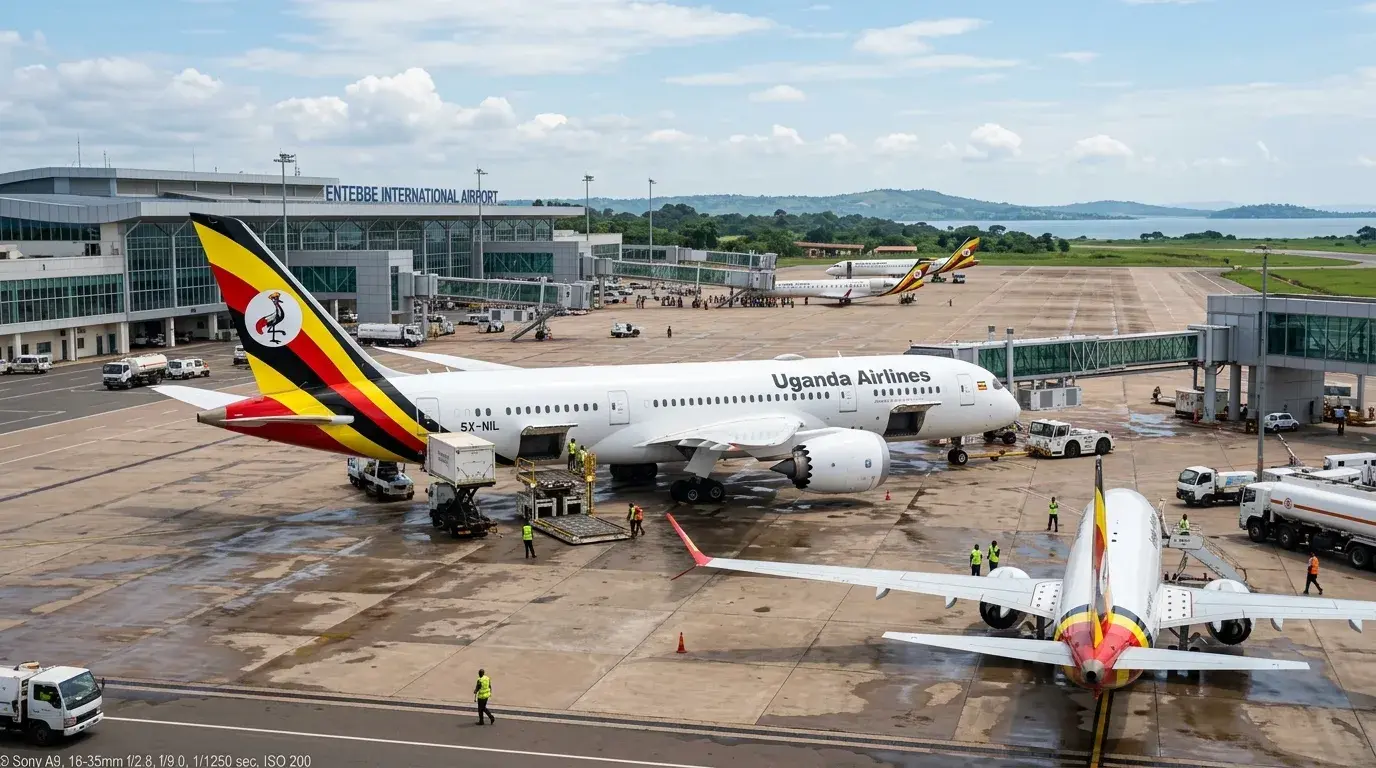
Uganda is positioning itself as a major player in East African air transport with a record-breaking order of ten aircraft from Boeing. This deal could reshape air traffic flows across the continent and offer travelers new options to explore Africa and beyond.
Signed on June 10, 2026, in Kampala in the presence of President Yoweri Museveni, the order marks a decisive step for Uganda Airlines. With an investment of nearly $1 billion, the Ugandan national carrier is set to acquire eight passenger aircraft and two cargo planes, including a Boeing 767 Converted Freighter and a Boeing 737 Converted Freighter. According to local sources, the order also includes four Boeing 787 Dreamliners and four 737 MAX jets—a combination that will allow Uganda Airlines to cover both long-haul and cargo needs.
For Uganda’s Minister of Finance, Henry Musasizi, this order is more than just a fleet renewal. « This is a major step in expanding Uganda’s air capabilities and strengthening its global connectivity, » he said. He added that the deal « will boost trade, tourism, and investment while positioning Uganda as a key air hub in the region ». This ambition aligns with a broader national strategy to transform the country into a dynamic and interconnected economy.
Re-established in 2019 after nearly two decades of absence, Uganda Airlines has quickly made a name for itself. With a current fleet of just five aircraft—a Boeing 737-800, an Airbus A330-800, and three Bombardier CRJ-900s—the airline is now banking on these new aircraft to expand its network. The 787 Dreamliners will strengthen its long-haul capacity, while the 737 MAX jets will optimize regional and medium-haul routes. The addition of cargo aircraft also marks a strategic diversification into air freight, a fast-growing segment in Africa.
This order comes amid a regional trend where several African carriers are positioning themselves as key hubs. Facing competition from Ethiopian Airlines, Kenya Airways, and RwandAir, Uganda Airlines aims to play a central role in African connectivity. With a domestic market of over 45 million people and a strategic geographic location, Uganda has major assets to succeed in this venture.
The Boeing deal also includes a technical cooperation component, with elements of technical support, training, and skills development. « These elements are essential for sustainable success, » Uganda Airlines stated in a press release. This approach aims to ensure that the new fleet is not only modern but also operated optimally.
A Fleet Expansion to Meet Growing Demand
The order of ten aircraft from Boeing represents a significant increase in Uganda Airlines’ capacity. Currently serving regional and continental destinations, the addition of 787 Dreamliners opens the door to more ambitious intercontinental routes. With these new aircraft, the airline could consider direct flights to Europe, the Americas, or Asia, reducing reliance on traditional hubs like Dubai or Addis Ababa.
Air freight, often overlooked in African airline strategies, is also central to this expansion. The two cargo aircraft ordered—a 767 Converted Freighter and a 737 Converted Freighter—will allow Uganda Airlines to meet growing demand for cargo transport, a booming sector on the continent. Intra-African trade, boosted by the African Continental Free Trade Area (AfCFTA), is expected to benefit from these new capacities.
For travelers, this expansion means more options to explore Africa. With modern aircraft and increased capacity, Uganda Airlines could offer more competitive fares on routes currently served by foreign carriers. An opportunity not to be missed for those looking to discover the continent without relying on traditional hubs.
A Gamble on the Future with Major Economic Benefits
Beyond aviation, this order is part of a broader vision for Uganda’s economic development. The country is banking on aviation to attract investment, boost tourism, and strengthen its geopolitical position in the region. « The new aircraft will facilitate trade, tourism, investment, and freight development, directly contributing to Uganda’s Vision 2040, » the airline stated.
This vision is supported by ongoing modernization of airport infrastructure. Entebbe International Airport, Uganda Airlines’ main hub, is benefiting from investments to improve its capacity and efficiency. Better air connectivity could attract more tourists, particularly to destinations like Murchison Falls National Park or the Rwenzori Mountains, while facilitating trade with neighboring countries.
For French travelers, this development could be a game-changer. With direct or optimized connections from Europe, East Africa becomes more accessible. No longer necessary to route through Dubai or Istanbul to reach destinations like Nairobi, Kigali, or Addis Ababa. Uganda Airlines could well become a credible alternative for exploring this part of the continent.
This Boeing order is also a strong signal for Africa’s aviation sector. It shows that the continent is ready to invest in its infrastructure and equip itself with the tools needed to compete with major international hubs. A trend that could inspire other African countries to follow Uganda’s example.
Boeing 787 and 737 MAX: Aircraft Tailored to African Needs
The Boeing 787 Dreamliners ordered by Uganda Airlines are modern long-haul aircraft known for their energy efficiency and comfort. With a range of over 14,000 kilometers, these planes will enable the airline to serve destinations like London, Paris, or even New York without technical stops—a valuable asset for attracting passengers traveling between Africa, Europe, and the Americas.
For medium-haul routes, the 737 MAX jets will offer greater flexibility. These aircraft, more fuel-efficient than their predecessors, will allow Uganda Airlines to reduce operating costs while offering competitive fares—a winning combination for a carrier looking to grow rapidly.
The cargo aircraft, meanwhile, address growing demand for air freight on the continent. The 767 Converted Freighter is particularly suited for transporting heavy or bulky goods, while the 737 Converted Freighter provides a more flexible solution for regional routes. This diversification could position Uganda Airlines as a key player in African air freight.
A Challenge to Overcome: Competition and Traveler Expectations
Despite this ambitious order, Uganda Airlines will face fierce competition. Ethiopian Airlines, for example, already dominates the African market with an extensive network and a modern fleet. Kenya Airways and RwandAir are also active, each seeking to strengthen its position as a regional hub. For Uganda Airlines, success will hinge on service quality, flight reliability, and competitive pricing.
Travelers, meanwhile, would be wise to keep an eye on the airline’s evolution. With an expanding fleet and direct routes to key destinations, Uganda Airlines could become an increasingly attractive option for exploring Africa—a compelling reason to travel and discover a continent in full transformation.
This Boeing order marks the beginning of a new era for Ugandan aviation. An era in which the country could well become an indispensable hub for travelers and goods, connecting Africa to the rest of the world. A development worth watching closely.
Be the first to comment on this article
On the same topictourism
- SWISS Launches Toulouse Route: Swiss Airline Expands into Southern Europe for Summer 2027
- French bee targets 14 weekly flights to La Réunion: Why the island captivates travelers
- Icelandair bets on Madrid and St. Louis for summer 2027: a revolution for your travels to America and Europe
- Finnair nearly triples flights to Tokyo: how to seize this opportunity for your next Japan trips
- Frontier Airlines launches in Colombia in December 2026: three low-cost routes from Orlando under €100 one-way
- Etihad deploys Airbus A321LR between Abu Dhabi and Brussels: how this upgrade transforms your flights to the Emirates