EU Plans to Block easyJet Takeover by US Funds: What It Means for Your European Flights
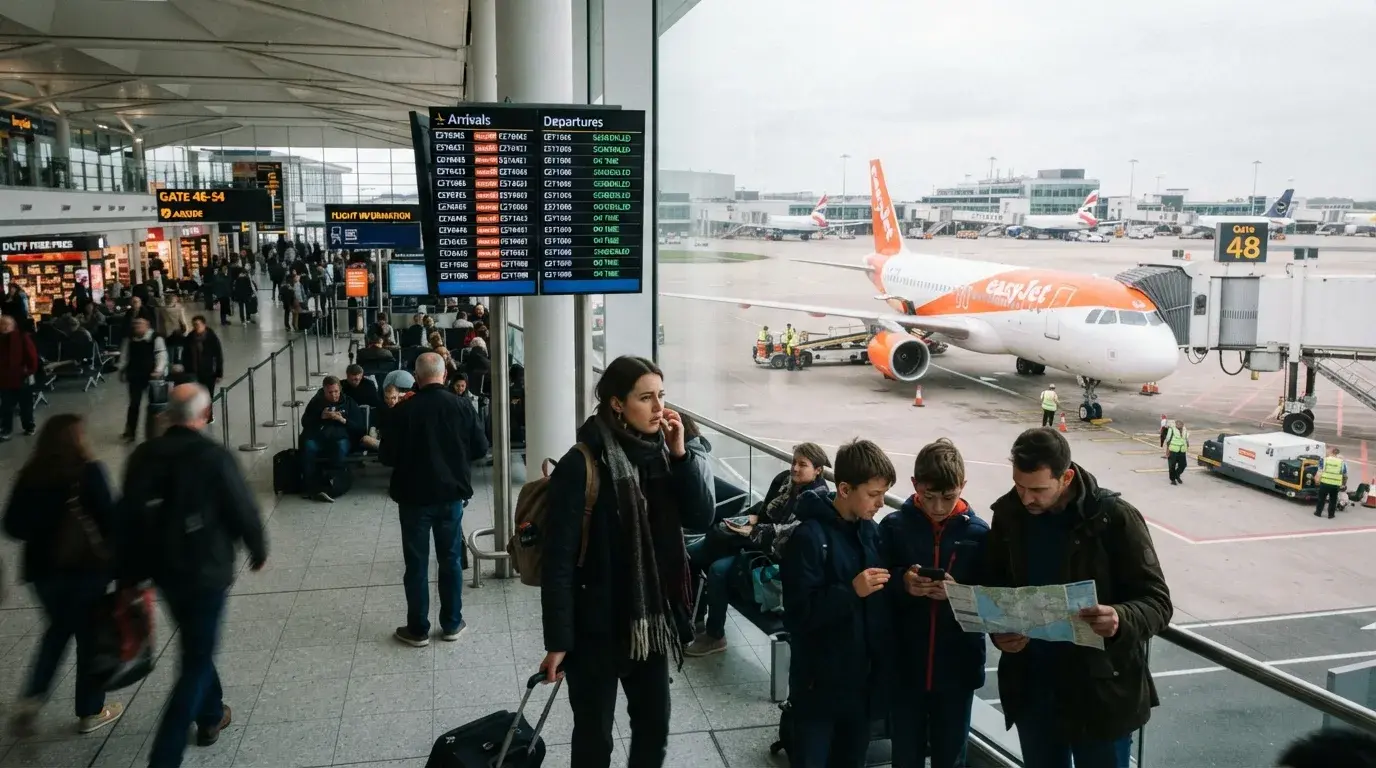
The European Union is preparing a major overhaul of its rules on airline ownership, with a clear goal: to prevent foreign investors from gaining effective control of carriers on the continent. The announcement comes at a time when the takeover of easyJet, the British low-cost airline, is on the table at a beleaguered board meeting. Travelers may well feel the effects of this decision, as European airlines are already weakened by rising operational costs and increased competition.
Brussels justifies this revision by the need to protect Europe’s “strategic autonomy.” A European official, speaking on condition of anonymity, clarified that the future regulation aims to ensure that European airlines remain under the control of local capital. “We must ensure we have sufficient leeway in terms of control,” he stressed. This measure comes in a context where several European carriers, including easyJet, rely on European licenses to operate their flights within the EU, despite majority non-European shareholders.
The revision, expected for autumn 2026, risks complicating the financial arrangements of airlines. EasyJet, for example, has capped non-European shareholder participation at 49.5% since Brexit. Yet the two US investment funds vying to acquire the airline—Castlelake and Apollo Global Management—propose transferring 51% of voting rights to European entities. However, the EU fears that effective control would still remain in the hands of the American buyers. A scenario that could repeat itself for other airlines like Wizz Air or Ryanair, whose ownership structures are similar.
Analysts point out that this reform could curb the ambitions of foreign investors while strengthening the position of groups already established in Europe. For travelers, the consequences could be manifold: less competitive fares, reduced service on certain routes, or even slower industry consolidation. A situation that arises as the European aviation market is already under strain, with high energy costs and volatile demand.
Why Europe Wants to Keep Control of Its Airlines
The EU’s stated objective is to preserve the sovereignty of its carriers amid the growing influence of foreign investors. This approach aligns with a broader strategy to protect strategic industries, similar to what has been observed in energy, telecommunications, or defense. “Aviation is a pillar of our economy and connectivity,” a European Commission spokesperson recalled. “We must ensure that our airlines remain masters of their own destiny, even in the face of complex financial arrangements.”
This desire for control is accompanied by growing mistrust of US investment funds, often seen as purely financial actors with little involvement in the operational management of airlines. EasyJet, for example, is a company listed in London, but its network relies largely on European licenses. A situation that makes its control by non-European capital particularly sensitive, according to Brussels regulators.
European airlines, already subject to strict rules on safety and sustainability, may now see their financing options shrink. Foreign funds could turn away from the sector or demand additional guarantees to secure their investments. A risk that could weigh on fleet modernization and network expansion, two key levers for remaining competitive against rivals like Ryanair or Transavia.
For travelers, this reform could translate into fare adjustments, especially if airlines are forced to renegotiate their financing costs. Regional routes or low-frequency flights could be the first to be affected due to their limited profitability. An evolution that occurs as the sector attempts to recover from years of health crises and geopolitical disruptions.
The easyJet Case: A Takeover Under Close Scrutiny
The acquisition of easyJet by Apollo Global Management, which outbid Castlelake with a £7.15 per share offer, highlights the stakes of this reform. The British low-cost airline, although registered in the UK, relies on European licenses to operate its bases and flights within the EU. Since Brexit, it has already had to adapt its ownership structure to comply with European rules, limiting non-European participation to 49.5%.
The two US funds propose a structure where 51% of voting rights would be transferred to European entities, led by industry executives such as Peter Bellew, former CEO of Malaysia Airlines. A similar scheme to that used by IAG, owner of British Airways, Iberia, and Aer Lingus. However, the EU remains skeptical: “This type of structure does not guarantee effective control by Europeans,” a European official explained. “We must ensure that governance remains local, including in practice.”
EasyJet’s board has selected Apollo’s offer as a negotiation basis, but the airline has stated it will wait for the offer to be formalized before engaging with regulators. “The board is examining both the value and feasibility of any offer, and feasibility involves being a European partner and being regulated as such,” said CEO Kenton Jarvis. A process that could take several months, in a context where the European aviation sector is already under pressure.
If the EU gives its approval, easyJet could become a testing ground for future European rules on airline ownership. But if the takeover is blocked, the British low-cost airline will have to seek other sources of financing or revise its growth ambitions. An uncertainty that could impact its passengers, particularly those traveling regularly between the UK and continental Europe.
What Are the Consequences for Travelers and European Airlines?
The repercussions of this reform could extend far beyond easyJet. Wizz Air, Ryanair, and other low-cost or long-haul carriers may see their takeover or partnership options restricted. European airlines, already facing high operational costs, could be forced to slow their expansion or favor alliances with local partners.
For travelers, the effects could be felt in several ways. First, on fares: if airlines are forced to renegotiate financing or investment costs, these additional expenses could be passed on to tickets. Second, on flight availability: less profitable routes, such as regional services or less popular time slots, could be reduced or eliminated. Finally, on service quality: reduced margins could limit investments in cabin improvements or onboard services.
Airlines may also be encouraged to strengthen partnerships with local groups, such as Lufthansa with its European subsidiaries or Air France-KLM with its regional hubs. A strategy that could lead to increased industry consolidation, with less diversity in offerings and fewer choices for passengers. “The goal is not to penalize airlines but to ensure Europe remains master of its skies,” a sector expert recalled. “However, the risk is creating a less dynamic and less competitive market.”
Travelers who favor low-cost flights or small airports could be the hardest hit. Airlines like Ryanair or Volotea, which rely on point-to-point routes and controlled costs, may see their business models disrupted. A situation that arises as the sector attempts to recover from successive crises in recent years, between pandemics, inflation, and geopolitical tensions.
European Aviation at a Crossroads
The EU finds itself at a pivotal moment in its aviation history. On one hand, it seeks to protect its strategic autonomy and ensure its airlines remain under local control. On the other, it must contend with fierce global competition, high energy costs, and volatile demand. This reform, if adopted, could strengthen the sector’s resilience but also weaken it in the short term.
European airlines will now have to navigate a more complex regulatory environment, where every financing or partnership decision will be scrutinized by regulators. For travelers, the challenge will be to monitor fare changes, route availability, and service quality. One thing is certain: the balance between protectionism and competitiveness will not be easy to strike.
In the meantime, passengers can continue to enjoy existing flights while keeping an eye on announcements from airlines and regulators. A reform of this magnitude will take time to produce effects, but it could reshape the European aviation landscape for years to come. And for airlines like easyJet, the outcome of this case could well determine their future for years ahead.
To follow the evolution of this news and learn how it could impact your next trips, regularly check updates from the European aviation sector on flywest.fr.
Be the first to comment on this article
On the same topic
- Ryanair Slashes Winter Frequencies to Counter Soaring Fuel Costs—Here’s How It Affects Your Travels
- Pegasus Airlines Acquires Smartwings: Turkish Low-Cost Giant Expands into Central Europe
- Emirates Weighs Swapping Boeing 787s for 777Xs: A Strategic Shift That Could Transform Long-Haul Travel
- Air Transat Makes Year-Round Montreal-Dakar Route Permanent: How to Book Before Prices Soar
- Air Astana Launches Two New Routes from Kazakhstan: Larnaca and Guangzhou at Low Prices
- Summer 2026 Jet Fuel Shortage Risk: Airlines on High Alert Amid Middle East Oil Crisis