Airbus Unveils Revolutionary Wings for Jets: The Future of Long-Haul Flights Will Be Faster and Cheaper
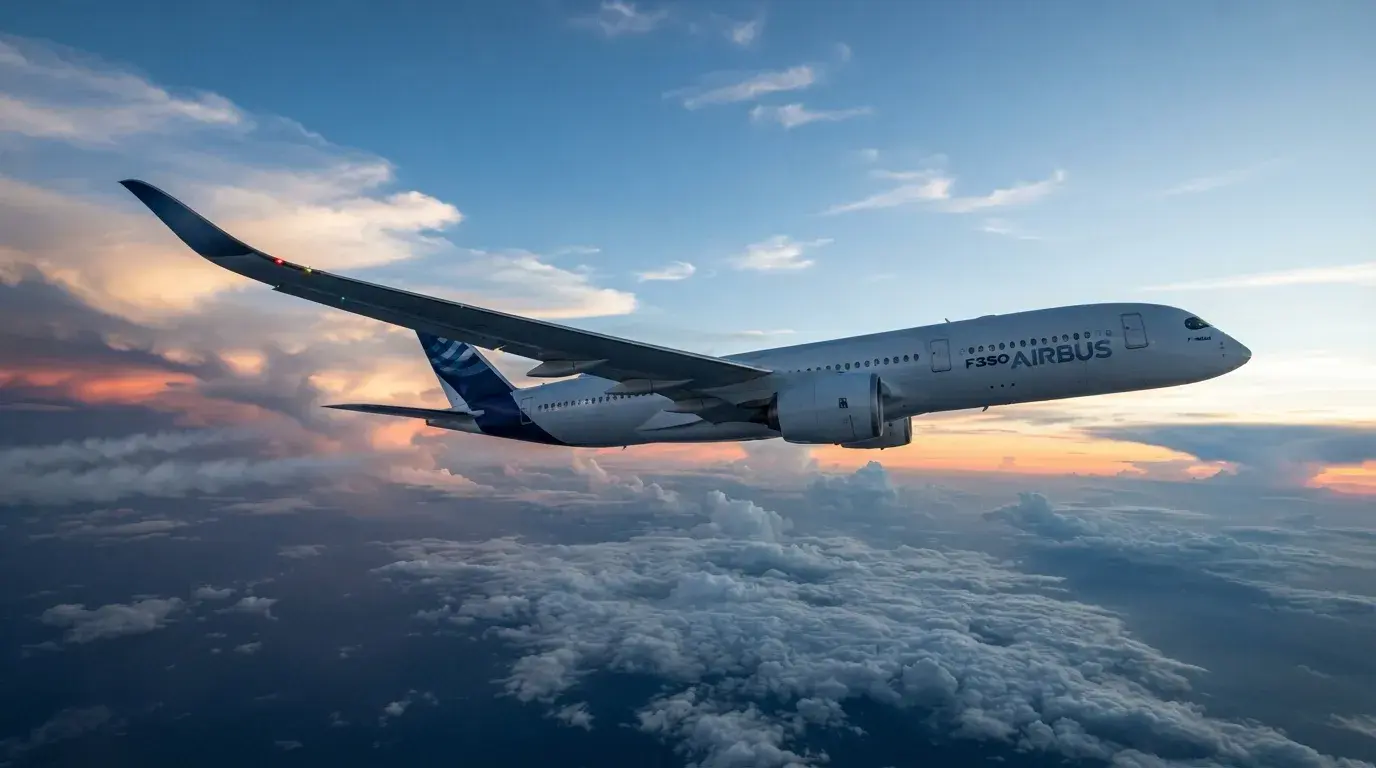
For over a decade, Airbus has been secretly preparing the next generation of its single-aisle aircraft, and the announcements made at Farnborough this week are far from minor technical adjustments. The flight tests now underway on an A321neo equipped with extended and partially foldable wings mark a turning point in the history of commercial aviation. Longer, thinner, and lighter, these new wings represent a break from existing architectures, promising unprecedented fuel savings on medium and long-haul flights.
The Wing of Tomorrow program, launched in 2014 with support from the UK’s Aerospace Technology Institute, has now amassed over £227 million in investment. Its goal? To validate real-world technologies that could equip the direct successor to the A320, expected by the end of the decade. For the European aircraft manufacturer, the aim is to reduce aerodynamic drag, increase lift, and optimize structure for aircraft capable of flying farther, faster, and with less fuel. The first results from the flight tests, expected in 2027, will be scrutinized by the entire industry, as the stakes are colossal: potential fuel savings of 15 to 20% could radically transform the profitability of airlines.
Why do these wings change everything? Because they tackle one of the last major levers for improvement available on single-aisle jets. While engines and avionics have already undergone revolutions, the wing has remained a slow-progress domain. With extensions measuring several meters, Airbus is banking on a hybrid architecture: longer wings in flight, but foldable on the ground to comply with airport infrastructure constraints. A bold solution that could well become the standard for the next decade.
A Technology Tested on an A321neo: The Next-Gen A321XLR Takes Shape
The choice of the A321neo as a test platform is no coincidence. This aircraft, already derived from an existing single-aisle model, allows Airbus to test aerodynamic and structural behaviors representative of future models. The wing extensions installed on the aircraft measure several meters and integrate advanced measurement systems to analyze in real time the effects on lift, drag, and fuel consumption. Airbus states that once deployed, these elements should enable a 5% reduction in drag, a significant gain for an aircraft of this size.
The manufacturer emphasizes that these wings are part of a broader industrial logic. Wing of Tomorrow is not just a research program: it also aims to develop new manufacturing processes capable of accelerating production rates and reducing costs. In a market where demand for single-aisle jets is exploding—especially for long-haul flights—the ability to produce faster and at lower cost will be a key success factor. The flight tests now underway are therefore also a test for the industrialization of these new technologies.
This initiative comes as Airbus accelerates the development of its future single-aisle jets, with a first flight expected before 2030. The manufacturer has already unveiled its eXtra Performance Wing demonstrator, a wing capable of changing shape in flight to adapt to aerodynamic conditions. A first remotely piloted flight is scheduled for later this year on a modified Cessna Citation VII, confirming Airbus’s commitment to exploring multiple technological approaches before finalizing definitive choices.
Why Airlines Are Waiting for This Technological Leap
The aviation sector is under pressure: rising fuel costs, growing environmental demands, and fierce competition between carriers mean every fuel-saving gain counts. For airlines, the arrival of more efficient wings represents a unique opportunity to reduce operational expenses while improving their carbon footprint. According to Airbus estimates, a 5% reduction in drag could translate into annual savings of several million dollars for a fleet of 100 aircraft.
The first customers are likely to be low-cost carriers and medium-haul operators, which operate flights with tight margins. An Airbus A321XLR equipped with these new wings could thus connect Paris to New York nonstop while consuming less fuel, while offering passengers enhanced comfort thanks to a quieter cabin. A winning equation for both travelers and operators.
The stakes are also environmental. Commercial aviation accounts for about 2.5% of global CO₂ emissions, and every technical improvement is closely watched by regulators and NGOs. With the gradual implementation of CORSIA standards, which impose emissions reductions for airlines, these new wings could help the sector meet its commitments. Airbus is targeting a 15 to 20% reduction in CO₂ emissions per passenger-kilometer by 2035, and these technologies are a central pillar of that goal.
A Tight Schedule for a Sector in Full Transformation
The flight tests now underway are a crucial step, but the road ahead is long before commercial entry into service. Airbus will need to validate the reliability of these wings over thousands of flight hours while obtaining the necessary certifications from regulatory authorities. The manufacturer is targeting certification around 2028–2029, with entry into service planned shortly after for the first production aircraft.
This acceleration comes at a time when Boeing, its American rival, is struggling to finalize development of its 777X, delayed by several years. As the 777X program faces repeated setbacks, Airbus could gain a major technological advantage with its revolutionary wings. An opportunity not to be missed for the European aircraft manufacturer, which is banking on innovation to solidify its leadership in the single-aisle market.
For passengers, the benefits will be manifold: cheaper flights, more direct routes, and a reduced carbon footprint. For airlines, it’s the promise of improved profitability and better competitiveness against high-speed rail and new transport players. An advancement that could reshape the aviation landscape for decades to come.
As the first results from the flight tests are expected in 2027, one question arises: will airlines be ready to invest in these new technologies? One thing is certain: in a sector as competitive as aviation, those who hesitate risk being left behind.
To follow the evolution of this program, regularly check updates from Airbus and expert analyses on FlightGlobal.
Be the first to comment on this article
On the same topic
- Boeing 737 MAX 10 Certification Nears: A Milestone for Global Aviation
- Airbus A350-2000 and A220-500: End of Twin-Aisle Monopoly?
- Embraer E195-E2 Surpasses 500 Orders: Why This Regional Jet Captivates Airlines Worldwide
- Air India plans to acquire 200 single-aisle aircraft, with a choice between Airbus and Boeing