Embraer E195-E2 Surpasses 500 Orders: Why This Regional Jet Captivates Airlines Worldwide
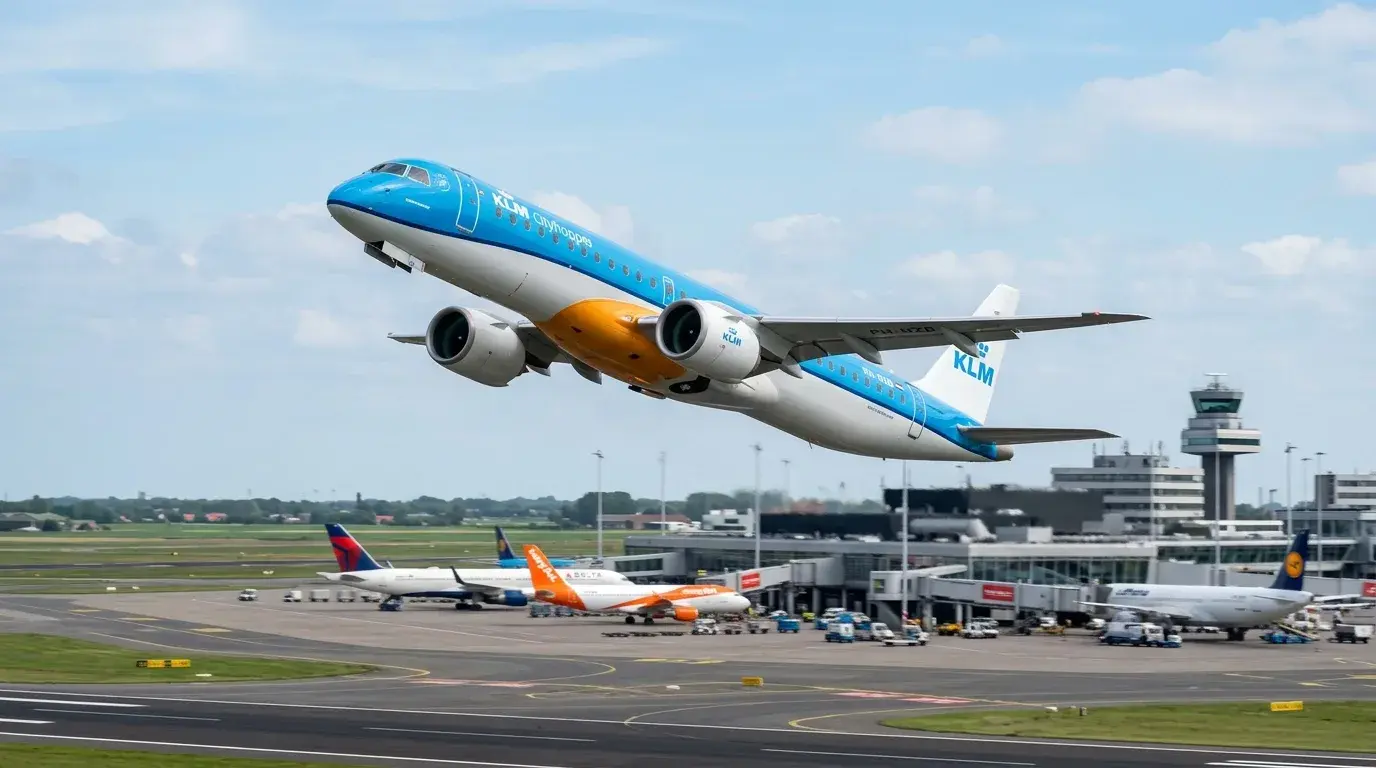
Brazilian manufacturer Embraer has reached a historic milestone with its E2 regional jet family, particularly the E195-E2, surpassing 500 firm orders. This achievement underscores the aircraft’s global appeal, driven by strong economic and operational advantages in a market seeking tailored solutions for medium and secondary traffic.
With over 200 aircraft already in service and a customer base of 24 airlines across all continents, the E195-E2 has established itself as a benchmark in the 100–150-seat single-aisle regional segment. Its positioning—bridging the efficiency of smaller jets and the capacity of long-haul narrowbodies—addresses a growing demand from carriers looking to launch new routes without overcapacity.
A model that combines performance and economy
The E195-E2 stands out with its unique cabin configuration: a 2-2 layout eliminates middle seats, enhancing passenger comfort while optimizing available space. This design also reduces seat-mile costs, a critical factor amid volatile fuel prices and margin pressures.
According to Embraer, the aircraft consumes up to 17% less fuel than its predecessors in the E-Jets family, while delivering superior operational reliability. These performance gains are powered by the Pratt & Whitney PW1900G engine, renowned for its energy efficiency and low carbon footprint. Combined with reduced maintenance costs and simplified servicing, the E195-E2 appeals to both low-cost carriers and legacy airlines alike.
“The milestone of 500 orders for the E2 family reflects the growing momentum for fuel-efficient aircraft tailored to the specific needs of regional and secondary markets,” says Arjan Meijer, President and CEO of Embraer Commercial Aviation. For the manufacturer, this success validates a commercial strategy focused on aircraft sized precisely for airlines’ operational realities.
Azorra: A key driver in the E195-E2’s growth
Among the key players fueling this momentum, U.S.-based lessor Azorra holds a central role. A specialist in small single-aisles and regional jets, Azorra recently placed a firm order for 15 E195-E2s, with purchase rights for an additional 15 aircraft. This brings its total commitment to the E2 family to 54 units, cementing its position as a major supporter of the program.
“We are proud to strengthen our partnership with Embraer and contribute to surpassing 500 orders for the E2 family,” says John Evans, CEO of Azorra. “This transaction reaffirms our confidence in an aircraft that delivers significant operational and economic advantages, particularly in fuel consumption and maintenance costs.”
Based in Fort Lauderdale, Azorra manages a portfolio of over 125 aircraft and 225 assets, including orders and commitments. Its strategic focus on the E195-E2 aligns with a targeted diversification into aircraft suited for regional and secondary markets—often overlooked by larger narrowbodies.
The lessor has also expanded its assets with 22 Airbus A220s ordered in 2022, alongside eight A220-300s acquired in May 2026 from Dubai Aerospace Enterprise (DAE). This approach reflects a commitment to offering airlines a comprehensive range of high-performance aircraft in the 100–150-seat category.
Direct competition with the A220, but with distinct advantages
The E195-E2 directly competes with the Airbus A220-300, another flagship in the regional single-aisle segment. Both aircraft share similar capacity and performance metrics, but the E195-E2 differentiates itself with superior cabin comfort thanks to its 2-2 configuration and the absence of middle seats.
“The E2 offers our customers significant operational and economic advantages, particularly in fuel efficiency and maintenance costs, compared to previous-generation regional jets,” explains John Evans. This claim is supported by Embraer data, which highlights a 17% reduction in fuel consumption and 20% lower maintenance costs compared to the E175-E2.
For airlines, the choice between the E195-E2 and the A220-300 often hinges on fleet strategy and commercial positioning. Carriers like Air Serbia or Azul Linhas Aéreas have opted for the E195-E2 to serve secondary markets, while others, such as Air France-KLM via Transavia, prioritize the A220 for its optimized operating costs.
A booming market driven by regional demand
The success of the E195-E2 is unfolding against a backdrop of rapid growth in regional air traffic. Analysts project this segment to expand by 5% annually through 2030, fueled by the opening of new point-to-point routes and rising demand for mobility in areas underserved by major hubs.
Airlines such as Binter Canarias, Helvetic Airways, and Porter Airlines have chosen the E195-E2 to serve secondary destinations across Europe, North America, and Latin America. Their goal: to provide an alternative to overcrowded long-haul flights while maintaining competitive fares for travelers.
“The E195-E2 enables airlines to launch new routes without overcapacity, matching aircraft size to actual market demand,” says an Embraer spokesperson. This argument resonates particularly with low-cost carriers and regional operators, often constrained by tight budgets.
Challenges ahead for Embraer
Despite this commercial success, Embraer faces several challenges to solidify its market position. The first is scaling up production. The Brazilian manufacturer aims for 80 annual deliveries by 2027, a target requiring significant investments in assembly lines and optimized supply chain management.
The second challenge is competitive pressure. While Airbus and Boeing dominate the single-aisle market, their focus lies primarily on the 150–200-seat and larger segments. The E195-E2 and A220-300 position themselves as credible alternatives for carriers seeking to serve secondary markets with appropriately sized aircraft.
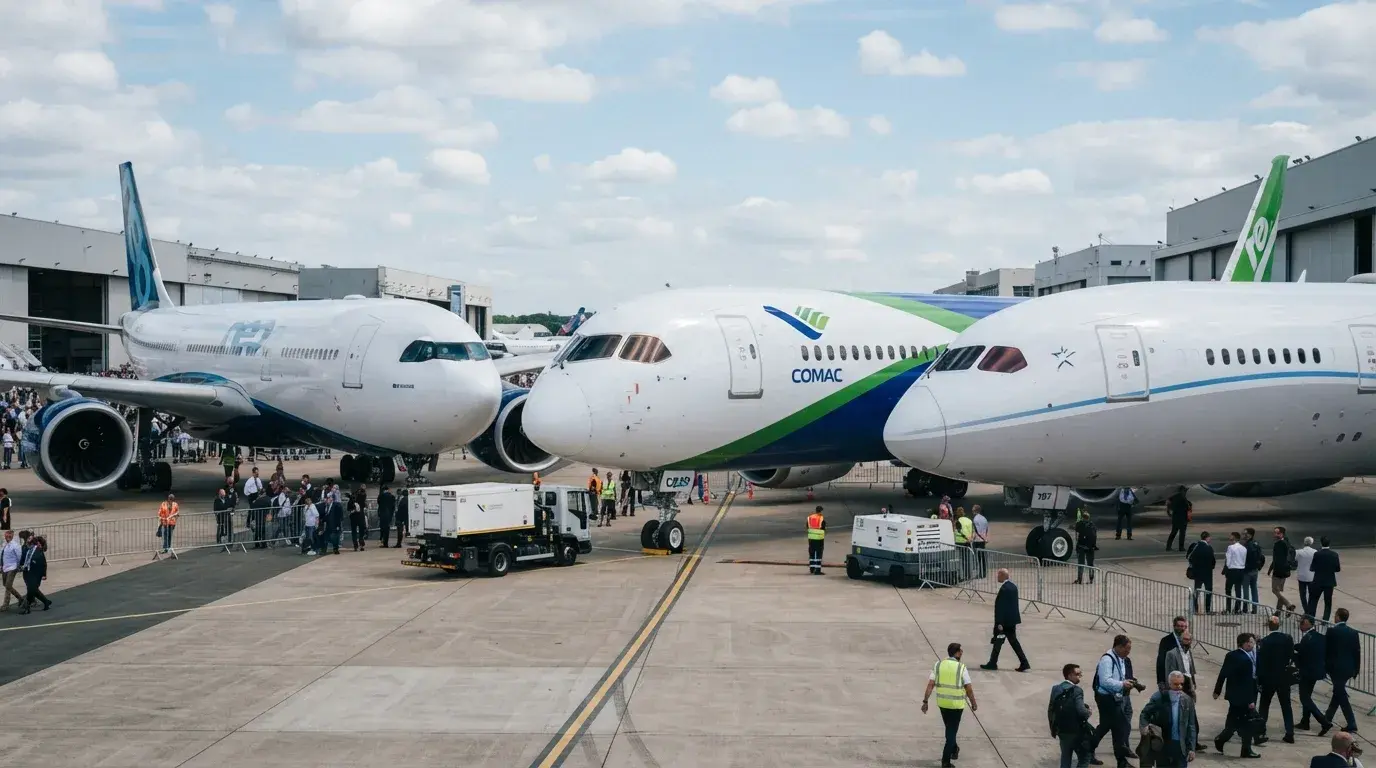
Finally, Embraer must contend with rising competition from Chinese and Russian manufacturers developing their own regional jets. Comac’s C919 and Irkut’s MC-21 aim to capture market share, particularly in Asia and Eastern Europe.
A promising future for the E195-E2
With over 500 firm orders, the E195-E2 has cemented its status as a key player in the regional single-aisle market. Its success stems from a winning combination: operational performance, cost efficiency, and adaptability to airlines’ needs—appealing to both legacy carriers and new market entrants.
For Embraer, the next hurdle is translating these orders into successful deliveries and sustained customer satisfaction. The Brazilian manufacturer is banking on strengthened partnerships with airlines and lessors to ensure a gradual ramp-up and optimal after-sales support.
“Surpassing 500 orders is a major milestone, but the real challenge lies in delivery and after-sales service,” notes an industry expert. “Embraer has proven its ability to innovate and meet market expectations. Now, it must demonstrate long-term operational reliability.”
www.embraercommercialaviation.com
The E195-E2 thus embodies a new era for regional air transport: an era where performance, economy, and adaptability are the guiding principles.
Be the first to comment on this article
On the same topic
- Boeing 737 MAX 10 Certification Nears: A Milestone for Global Aviation
- Airbus A350-2000 and A220-500: End of Twin-Aisle Monopoly?
- Airbus Unveils Revolutionary Wings for Jets: The Future of Long-Haul Flights Will Be Faster and Cheaper
- Air India plans to acquire 200 single-aisle aircraft, with a choice between Airbus and Boeing