Frontier Airlines Revolutionizes Airbus Fleet with Starlink Wi-Fi by 2027: What It Means for Budget Travel
Budget airlines have long shunned in-flight Wi-Fi, deeming it incompatible with their ultra-competitive business models. Yet Frontier Airlines is turning the tide by announcing the installation of Starlink Wi-Fi on its Airbus fleet starting in 2027. A game-changer that could redefine passenger expectations for connectivity, even on the cheapest flights in the market.
This decision is part of an ambitious agreement with SpaceX, which also involves four other low-cost carriers in the Indigo Partners portfolio. Together, these airlines—Frontier (U.S.), Volaris (Mexico), Wizz Air (Europe), JetSMART (Chile), and Cebu Pacific (Philippines)—plan to equip over 1,000 aircraft with Starlink Aviation. A landmark project that could mark a turning point in the low-cost flying experience.
The first Frontier Airbus equipped with this technology is expected to enter service in early 2027. A first for the airline, which until now was among the last major U.S. low-cost carriers without in-flight Wi-Fi. Whether the service will be free or paid remains uncertain, but precedents set by U.S. carriers like United Airlines and American Airlines suggest free access for loyalty program members.
Why This Decision Matters for the Low-Cost Sector
In-flight connectivity was once a luxury reserved for traditional airlines. Low-cost carriers justified their refusal to offer Wi-Fi on economic grounds: every kilogram added for antennas and connectivity systems increased aircraft weight, fuel consumption, and costs. Yet this stance is becoming increasingly unsustainable as passenger expectations evolve.
Indigo Partners, the investment firm behind this agreement, has calculated that standardized technical solutions and economies of scale now make Starlink Wi-Fi viable for entire fleets. Bill Franke, managing partner of the fund, summarizes the strategy: “Starlink will provide our portfolio airlines with reliable, high-speed connectivity, enhancing the customer experience aboard Wizz, Frontier, Volaris, JetSMART, and Cebu.”
This move comes as low-cost carriers face pressure to upgrade their offerings. Majors like Emirates, Lufthansa, and Delta are rolling out innovations to attract passengers, from premium seating to high-speed in-flight connectivity. Low-cost airlines have little choice but to adapt to avoid losing customers to an increasingly diverse competitive landscape.
Frontier, for instance, is also preparing to introduce “first-class-style” seating as early as next year, according to reports by CNBC. An evolution that underscores how the ultra low-cost model is mutating, gradually integrating elements once reserved for traditional carriers.
Starlink Aviation: A Disruptive Technology for Aviation
The Starlink satellite network, owned by SpaceX, is now a major player in in-flight connectivity. Unlike traditional satellite solutions, which offered limited bandwidth and high latency, Starlink promises ground-like performance even over oceans or polar regions. A technological leap that could reshape the market balance.
Over thirty airlines worldwide have already signed agreements with Starlink, including United Airlines, American Airlines, and Hawaiian Airlines. United, in particular, is accelerating deployment across its fleet, with a goal of equipping over 1,000 aircraft by 2027. The free connectivity for MileagePlus members on Starlink-equipped planes highlights how legacy carriers are leveraging additional services to foster loyalty.
For Frontier and its low-cost peers, the stakes are twofold: maintaining competitive pricing while offering a more premium experience. The Starlink deal allows them to access proven technology at controlled costs, thanks to the scale of the operation. A boon for carriers whose margins hinge on strict cost management.
Cebu Pacific, Southeast Asia’s first low-cost carrier to adopt Starlink, emphasizes “one of the largest global commitments to next-generation in-flight connectivity,” suggesting this collaboration could become an industry standard.
A Step Closer to Converging Business Models
This shift raises a key question: Are low-cost airlines becoming lighter versions of traditional carriers? The answer is nuanced. On one hand, the introduction of Wi-Fi and premium services reflects a desire to meet the demands of an increasingly discerning clientele. On the other, Frontier and its partners retain optimized cost structures, with fares still among the lowest in the market.
The challenge for these airlines will be striking the right balance between upgrading their offerings and maintaining their price competitiveness. Poor execution could erode their competitive edge against legacy carriers or squeeze margins if connectivity costs aren’t offset by higher fares or ancillary revenue.
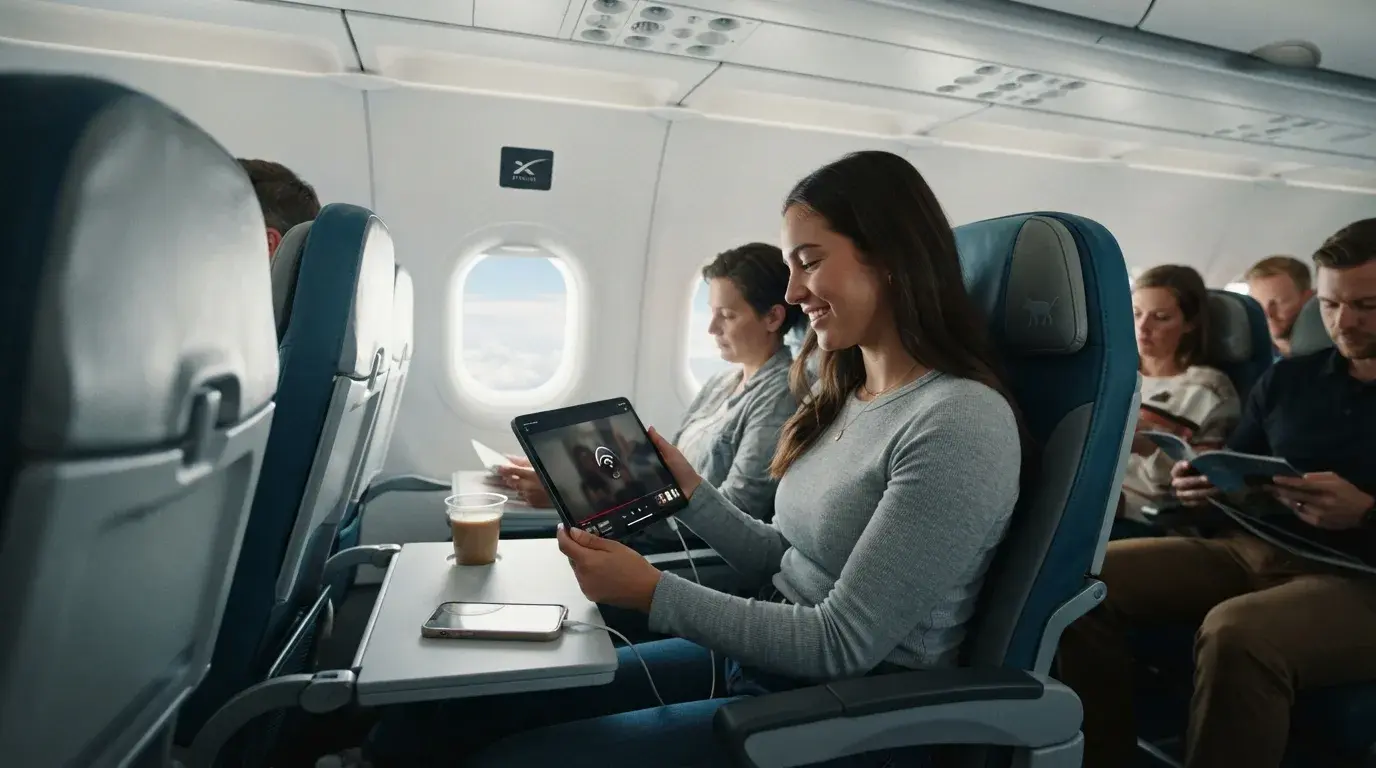
For passengers, however, the arrival of Starlink Wi-Fi on low-cost flights is excellent news. The ability to work, stream content, or stay connected with loved ones during long-haul or short-haul flights—without a significant fare hike—is now within reach. A development that could reshape travel habits, especially for frequent flyers and families.
As airlines compete to innovate and attract passengers, the Starlink agreement signed by Frontier and its partners marks a turning point. While the traditional low-cost model is evolving, it retains a critical advantage: the ability to rapidly integrate cutting-edge technology without sacrificing its core mission—affordable fares. The question remains whether this technological revolution will be enough to redefine the flying experience for millions of passengers worldwide.
What This Means for You as a Traveler
If you’re a frequent flyer on budget airlines, here’s what this evolution could bring starting in 2027:
High-speed in-flight connectivity, comparable to ground-level performance, even on long-haul flights. No more disconnecting during your flight—whether for work, social media, or streaming your favorite shows.
A more premium experience, with added services that blur the line between low-cost and legacy carriers. Priority boarding, more spacious seating, and access to exclusive content are just a few upgrades on the horizon.
Enhanced loyalty programs, blending attractive fares with high-end services. Frequent flyer tiers may soon include Wi-Fi perks, such as free connectivity for premium members.A reduction in the digital divide in the skies. Until now, low-cost passengers often had to forgo connectivity or pay exorbitant fees for limited service. With Starlink, this could change, offering equitable access to digital connectivity for all.
For airlines like Frontier, the challenge will be executing this transition without losing sight of their DNA: low fares and maximum accessibility. If they succeed, they could redefine industry standards for years to come.
One thing is certain: Low-cost aviation has never been closer to legacy carriers. And for passengers, that’s excellent news.
How to Stay Updated on This Technological Revolution
Keep track of the latest developments regarding Starlink Wi-Fi deployments on Frontier Airlines, Wizz Air, and other Indigo Partners carriers by checking their official websites and social media channels. The first installations are slated for 2027, but details on pricing, coverage, and features are expected to be announced in the coming months.
In the meantime, if you’re planning a trip with one of these airlines, check whether your flight will feature the new technology. A revolution is underway—and it could change the way you fly.
Be the first to comment on this article
On the same topicaircraft
- British Airways Revives East Africa Routes: Kilimanjaro and Zanzibar from London
- Disappearance of flight MH370: the families call for the search to continue at sea
- Emirates unveils a summer menu featuring British seasonal strawberries
- A dog dies in the hold of a plane: a petition to improve animal transport safety
- Jazeera Airways establishes a new route between Kuwait and Budapest
- Latam rolls out first Dreamliners upgraded with premium business cabins