Airbus A380: Why Europe Imposes Urgent Inspections on 24 Aircraft
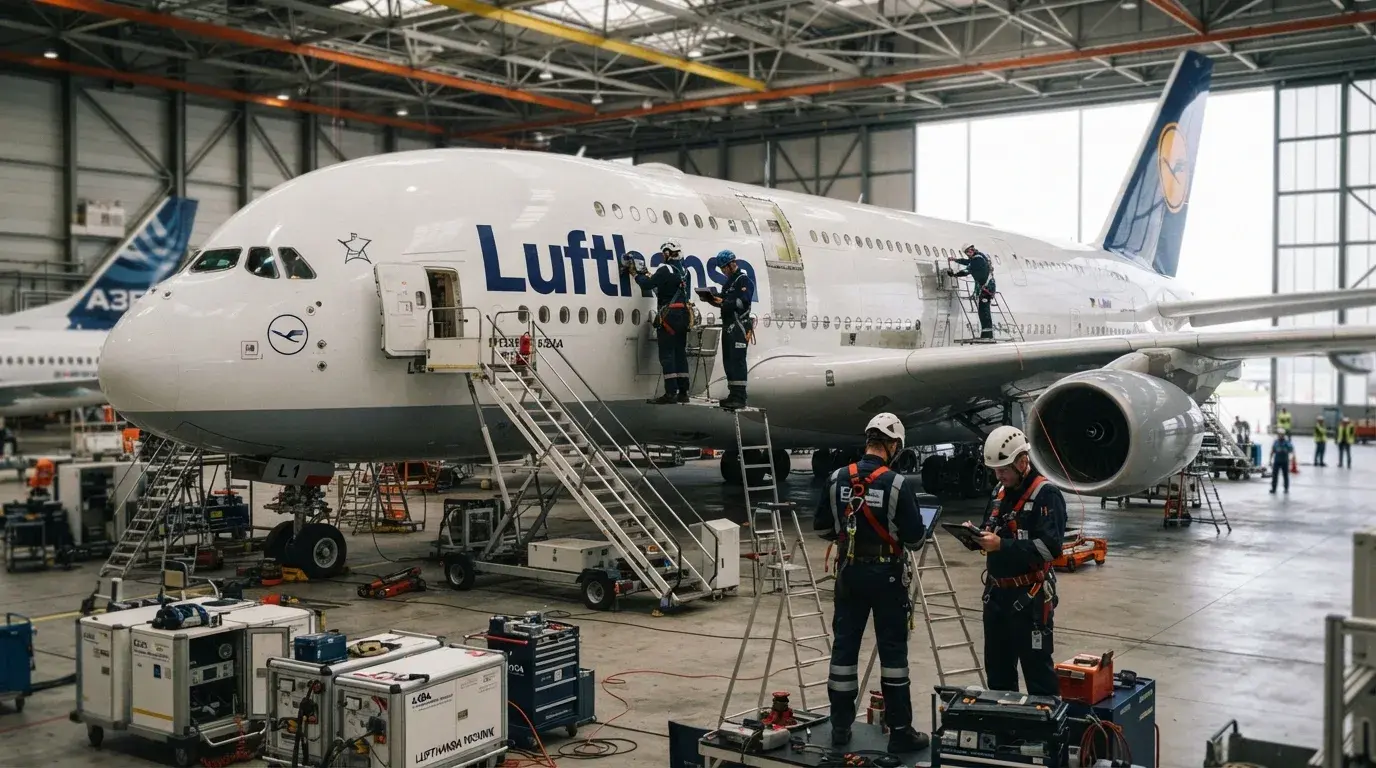
The European Union Aviation Safety Agency (EASA) has mandated urgent inspections for 24 Airbus A380s following the discovery of abnormal cracks in wing spars. This directive, now extended to eight additional aircraft, underscores persistent structural concerns for the superjumbo amid declining operations and high maintenance costs.
European aviation authorities raised the alarm after detecting an excessive number of cracks in the wing spars of an in-service A380, far exceeding standard thresholds. This prompted EASA to expand its accelerated inspection program from 16 to 24 aircraft. Among those now affected are Airbus A380s operated by Emirates, Qantas, and Etihad Airways, as well as aircraft still in extended storage.
These inspections, which must be completed by January 31, 2027, for the eight newly added aircraft, do not imply that all are defective. EASA clarifies that the extension aims to identify other aircraft potentially exposed to the same issue, given the A380 fleet’s accumulated years of service and intensive flight cycles.
Cracks Reveal Structural Wear
The root cause of these cracks remains undetermined, but experts attribute them to material fatigue linked to the aircraft’s age. The A380, which entered service in 2007, was designed for a 25-year operational lifespan with an estimated 15,000 flight cycles. However, some of these aircraft have already surpassed 10,000 cycles, and their operations intensified post-COVID-19 as airlines sought to recoup investments.
Wing spars, critical components of the wing structure, are particularly vulnerable to mechanical fatigue. Undetected cracks could compromise the aircraft’s structural integrity, especially during takeoff and landing phases, where stress is at its peak. EASA emphasized that « if these defects are not detected and corrected, they could reduce the structural integrity of the wing », a statement that echoes the risks of negligence.
Airlines must now submit inspection results to Airbus within 30 days. If a defect is identified, urgent repairs will be required to avoid grounding the aircraft—a scenario already experienced by several operators, including Emirates, which temporarily grounded some of its A380s in 2021 due to similar issues.
Enhanced Monitoring for Stored Aircraft
EASA’s directive is not limited to active aircraft. It also mandates inspections before any A380 stored for over twelve months is returned to service. This measure aims to mitigate risks associated with corrosion or material degradation during prolonged inactivity, a phenomenon known as « long-term storage ».
Affected aircraft must undergo an initial inspection within 36 months of returning to service, followed by repeated checks every 42 months at most. This requirement adds to the existing inspections introduced in December 2025, after cracks were detected in several in-service A380s.
For airlines, this heightened oversight represents an additional financial burden as the A380 struggles to regain momentum. Since 2020, Airbus has halted production of the aircraft, and operators are gradually shifting toward more economical models like the A350 or Boeing 787. Emirates, the largest A380 customer, continues modernizing its fleet, but its plan to replace the quadjets with twinjets like the A350-900 or Boeing 777X is already well underway.
A Provisional Measure with Far-Reaching Consequences
EASA describes its decision as a « provisional measure » and indicates that further actions may follow based on inspection results. Airbus is urgently working on technical solutions to reinforce the affected spars, though no official date has been announced for a potential large-scale structural modification.
For passengers, these inspections should not impact bookings unless an aircraft is unexpectedly grounded. Airlines must now incorporate this new constraint into their maintenance plans, even as the A380’s operational costs remain among the highest in the market.
Amid an industry increasingly focused on decarbonization and energy efficiency, the future of the A380 remains uncertain. Operators now face a complex equation: structural wear, prohibitive costs, and competition from newer models.
What to Do If Your A380 Flight Is Affected by an Inspection
Airlines subject to these inspections are required to notify passengers of any delays or cancellations due to technical checks. Here’s how to minimize disruptions:
First, regularly check your email or the airline’s app for real-time updates. If your flight is canceled, options include rebooking on another flight, a full refund, or a travel voucher, depending on EU regulations.
If you’re already at the airport, visit your airline’s counter for immediate assistance. Carriers are legally obligated to provide support (meals, accommodation if necessary) in case of significant delays. Request documentation to facilitate claims with your travel insurance.
Remember, these inspections are ultimately a safety measure. While burdensome, they ensure the aircraft transporting you meets the strictest standards.
Be the first to comment on this article
On the same topic
- Berlin-Brandenburg revolutionizes security checks: liquids and electronics stay in bags
- US air traffic control outage: 15,000 flights canceled in 48 hours as airlines scramble to save Thanksgiving
- Airbus A330-900: Record 480-Passenger Capacity Set to Disrupt Long-Haul Flights
- Emirates restores 91% of pre-conflict capacity despite Middle East tensions: the secret recipe for resilience
- A380: FAA Mandates Urgent Engine Part Replacements After Uncontained Engine Failure
- 737 MAX Sets Delivery Record with 363 Aircraft in Nine Months as FAA Validates Safety Despite New Software Bug